Lloyd Evans

Lloyd Evans

Lloyd Evans is The Spectator's sketch-writer and theatre critic

Timeless and dated

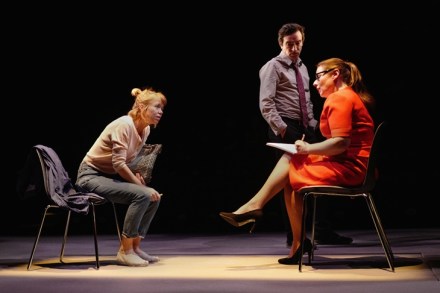
Tennessee Williams’s breakthrough play is a portrait of his dysfunctional family. A young writer, Tom (Williams’s real name), lives with his effusively domineering mother and his painfully coy sister, Laura. Mother, once a famous beauty, gets Tom to find an eligible chap for Laura. Tough call. Beautiful Laura has a deformed ankle and she’s just flunked out of secretarial college after suffering the embarrassment of vomiting over her type-writer. She now pines away at home forming sterile friendships with a colony of animal statuettes lodged in a glass case. This set-up has the delicious simplicity of a comedy sketch. The conflict between the unstoppable mother and the self-effacing daughter promises fun galore.

Jeremy Corbyn blows a golden chance to roast Theresa May

How to sabotage a deadly ambush. This was Jeremy Corbyn’s contribution to the political play-book today. He came to Parliament lethally armed. A cache of secret messages apparently between a Government wonk and the leader of Surrey County Council suggest some very shady goings-on. Mr Corbyn’s task was simple. Read out the intercepts and watch Mrs May squirm. He duly recited the incriminating information. And it was astonishing. It was unanswerable. The PM was accused of conspiracy. How would she plead? Well, she didn’t. She couldn’t say a word because Mr Corbyn was busy wittering on, muddling the issue, and giving his foe a priceless gift. Time. Time to think. Time to escape.

Playing dead

It could be the nuttiest idea ever. The protagonist of this American musical is Death, who secretly reprieves a beautiful Italian princess, Grazia, and spends the weekend at her father’s palace where a house party is in full swing. The dad knows the gatecrasher’s identity. But Death introduces himself to the others as a suave Russian duke. All the womenfolk promptly fall in love with him, including Grazia, who sets out to bag the mysterious foreigner. Where can this strange plot go next? Nowhere. Once Grazia learns that Death has come to terminate her existence the story will end. So the script is padded out with additional entanglements between a sprawling crew of sub-personalities.

Jeremy Corbyn offers up another dismal showing at PMQs

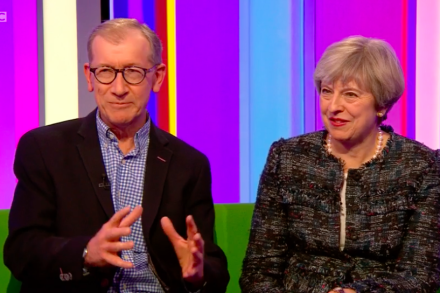
Mrs May has spent the week meeting naughty presidents. Today she was made to pay for it. Parliamentarians were queuing up to scold her for missing a great opportunity to bleat, pout, whine and nag on the world stage. She’s been to America where she failed to lecture Donald Trump on his meanness to Muslims and his impatience with climate change dogma. She was also supposed to bring up his waterboarding habit and his rapacity with women. Then she went to Turkey where her haranguing of President Erdogan was insufficiently shrill. Labour MPs seem to want the PM to traverse the globe like an irascible fitness instructor, bull-horn in hand, barging into presidential suites and ordering programmes of moral correction. This kind of poison ivy diplomacy wouldn’t work.

Amphibious assault

David Spicer’s farce Raising Martha opens with a skeleton being disinterred on a frog farm by animal-rights activists. They hope to force the frog farmer, an ageing dope fiend, to set his amphibious livestock free. Got all that? It’s complicated. And there’s more. The skeleton turns out to be the long-dead mother of the farmer, who alerts his shifty brother and calls in the cops as well. A loquacious twerp, Inspector Clout, arrives to investigate and the tangled narrative starts to unfold. This is an uneven play but the good bits are excellent. Stephen Boxer is amusingly deranged as the hallucinating frog man. The animal-rights activists are wittily portrayed as misanthropic nuisances.

PMQs sketch: In which Jeremy Corbyn rebrands the plan to make Britain ‘an offshore tax haven’

Mr Corbyn has spent a week shuddering at goblins that don’t exist. At least outside his head. But he wants his posse of demons to exist in our heads too. So he keeps conjuring them up. He says Mrs May is about to turn Britain into ‘an offshore tax haven.’ Being a Puritan he hasn’t noticed that this has an attractive, Hefner-ish feel. It suggests white sands and azure waves, the tinkling of steel-drums, and bottles of Red Stripe being served at ten cents a time by pouting lovelies straining out of their bra-cups. To be fair, Corbyn’s team of wordsmiths have spotted the problem. So the boss has been given a tastier version which he deployed at PMQs. Mrs May is about to make us ‘a bargain basement tax haven off the shores of Europe.

Remembrance of things past

The Kite Runner, a novel by Khaled Hosseini, has sold more than 30 million copies worldwide. Now it arrives on the West End stage, a doggedly efficient piece that somehow lacks true dazzle. The narrative style involves thick wodges of plot being delivered at the audience like news bulletins on the half-hour. The emotional range is limited and the characters never challenge our expectations. The setting is Kabul in the 1970s. We meet nice Amir, a personable everyman, whose family have foreseen the rise of theocratic despotism and are plotting to escape. We hope they do. We’re attracted to Amir’s garrulous, whisky-drinking dad. ‘All crime is a form of theft,’ he philosophises. We find the psychotic street bully Assef utterly appalling.

Corbyn’s team are trying – and failing – to turn him into a famous wit

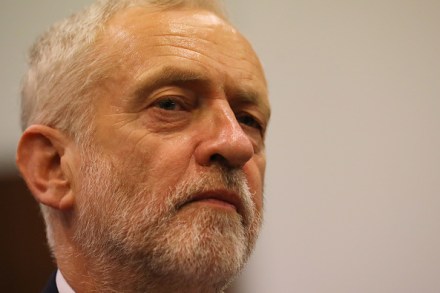
Poor grey sad Mr Corbyn. So angry. So useless. And so weird as a visual spectacle. His sharp-featured head looks, from a certain viewpoint, like an anvil pebble-dashed with porridge oats. But guess what? Today he scored a victory against Mrs May. And guess what? He blew it. First he revealed his team’s latest attempt to turn him into a famous wit. He claimed that Mrs May had yesterday marginalised parliament while claiming to restore its primacy. Then the pay-off. ‘Not so much the Iron Lady as the Irony Lady.’ Why is that a lousy gag? Bad mouth-feel. No punchy consonants. But it looks deceptively good on the page so Mr Corbyn’s comedy apprentices must have hoped it would fly. Then, perhaps accidentally, he skewered her.

Drama queen

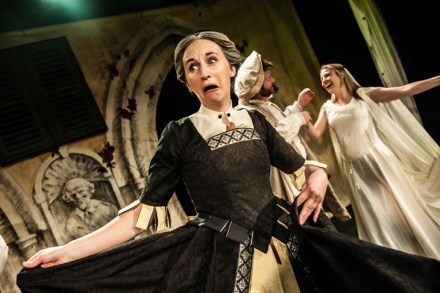
God, what a dusty old chatterbox Schiller is. Like Bernard Shaw, he can’t put a character on stage without churning out endless screeds of cerebral rhetoric. But unlike Shaw, he has no sense of humour, nor any instinct for the quirks and grace notes that create a personality. Mary Stuart is a psychological drama with a single issue. How soon, and with what political consequences, can Elizabeth execute her treacherous cousin Mary? Schiller’s characters sound and feel identical: super-brainy, highly confident know-alls who treat each problem like a gang of Chancery briefs discussing a particularly knotty insolvency case. Director Robert Icke’s regimented production imposes high-street fashions on England in the 1560s.

Jeremy Corbyn can’t beat the robot May at PMQs

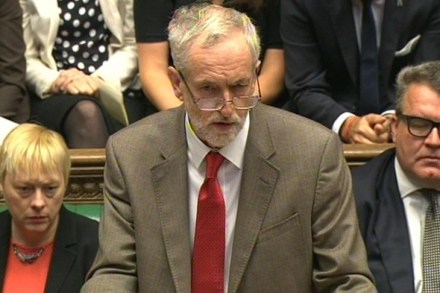
‘Nice to get such a warm welcome,’ said Jeremy Corbyn as jeers and hoots greeted him at PMQs. Ironic applause, as Corbyn knows. His enemies love him and his colleagues can’t stand him. ‘And a happy new year,’ he added. He could do with one of those himself. Yesterday, even before the dawn had broken, he managed to sink his own re-launch. On Radio 4’s morning show he hinted that he might favour unlimited fines for anyone earning a penny more than himself. A few hours later, having noted that fat-cat council leaders and millionaire trade unionists had failed to endorse this policy, he dropped it and talked about pay differentials instead. Corbyn focused on the latest outbreak of misery in the NHS.

Hedda Garbler

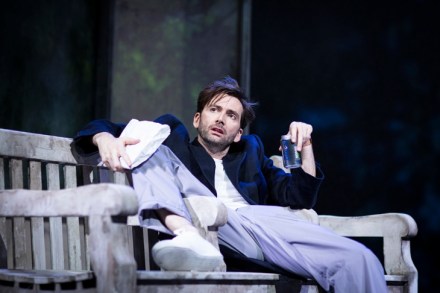
Hedda Gabler is one of the most influential plays ever written. It not merely illuminated an injustice, the enslavement of women within marriage, it fomented the revolutionary achievements of feminism. It deserves to be done as Ibsen intended. This updated version from Ivo van Hove locates Hedda in one of those posh urban dream homes that resemble an art gallery. Stage left, buckets filled with flowers. Centre, an abandoned plinky-plonk piano. At the rear, a lamp the size of a traffic bollard. Scruffy off-white masterpieces deck the walls. Everything looks chic and scaled-up. Tesman is a penniless American academic married to tetchy Hedda who pads about barefoot, in her nightie, grousing. Effortful gestures abound.

Deplorable entertainment

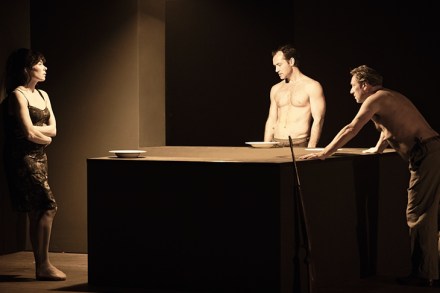
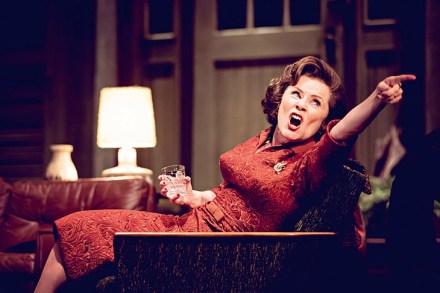
Buried Child is a typical Sam Shepard play. The main character, Dodge, is a brain-damaged alcoholic cripple stuck in a Midwest shack with a half-witted xenophobic wife shrieking at him from the coal cellar. The wife makes an early speech about her son who ‘married a Catholic whore’ and got stabbed to death by her on his honeymoon. This sets the tone for the play. Every character is a shrill, chippy barbarian and every speech is an exercise in tragicomic one-upmanship. The audience for Shepard’s work consists of social voyeurs who want to gawp at the underclass from a safe distance. The play purports to be a mystery but the family secret is revealed in the title. Even so, Shepard proceeds as if there were a puzzle to solve. He keeps offering us ‘clues’.

PMQs sketch: Confident Corbyn tries to cook up a Christmas crisis

Corbyn’s improvement continues. He thumped away at a single issue today – social care – in a determined attempt to corner Teresa May and stick the word ‘crisis’ on her jacket, like a brooch. A crisis for the elderly, he said. A crisis for families. A crisis for the NHS. ‘A crisis made in Downing Street.’ His delivery still havers and wavers a lot but the drum-machine technique, banging out identical noises in a hypnotic rhythm, was effective. She met his assault with verbal trinkets composed by back-room smart Alecs in Westminster: the future Osbornes and Camerons. Rejecting the word ‘crisis’ she called it 'short-term pressure'. She also mentioned ‘sustainability’, ‘integration’ and ‘reassurance’.

Angst and cant

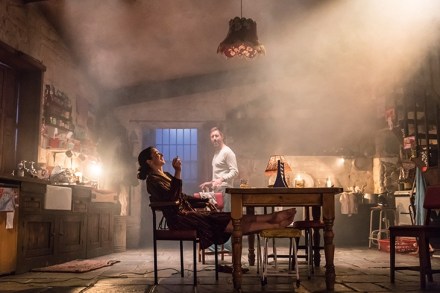
What if? is the engine of every great story. What if the toys came to life when their owner left the room? What if the prince’s uncle killed the king, seduced the queen, and stole the crown? Lucy Kirkwood asks: what if an elderly atomic physicist volunteered to take charge of the team decommissioning a stricken nuclear power plant in order to spare the lives of younger workers? Quite a complicated set-up. The play takes an hour to reach its starting point. First it feels like an oldies love triangle with a post-apocalyptic twist. We’re in a farmhouse near the site of a nuclear disaster. Rose, a wrinkly beauty, arrives unexpectedly and is greeted by fun-loving Hazel. Both are retired physicists who worked at the plant but haven’t met for 38 years.

Emily Thornberry’s PMQs performance should worry Jeremy Corbyn

The PM is abroad. Her vacant throne was occupied by David Lidington, the agreeably lightweight Leader of the House. He’s confident, fast-talking, well-briefed but glib and untidy-looking. He doesn’t improvise well. Physically he’s an unrestful presence. He hops and twitches and pecks and dabs like a pigeon attacking a box of Chicken McNuggets. For comic effect he likes to turn sideways with both arms outstretched as if entreating somebody in the wings. A speaking coach would tell him to calm down, put his hands in his pockets and stop head-butting imaginary bees. He made no errors today. He didn’t exactly shine. Bumptious competence was his level. Opposite him was Emily Thornberry whose warm buttery voice, like melting fudge, belies her forensic acuity.

Of ice and men

An ice floe. Two anglers. Months to kill. That’s the premise of Nice Fish by Mark Rylance and Louis Jenkins. The off-beat script is full of bleak and quirky insights. Rylance, who stars as the bungling Ron, admits that sometimes he gets so bored he bangs nails through frozen bananas. His pal compares dogs with wolves by observing that wolves are pessimists, jaws low to the ground, like homeless scavengers, whereas dogs are chin-up go-getters, natural corporate players, keen to win promotion in a worldwide enterprise called ‘Man’s Best Friend’. There’s a piece of obsessively nerdy rhetoric about 36-hour fishing permits which sounds like Peter Cook at his best. These treats appear early on.

PMQs Sketch: Striking attitudes in the Chamber

Sometimes PMQs is about policy. Sometimes it’s about posturing. Today everyone was striking attitudes like mad. Jeremy Corbyn over-stated the levels of suffering in the country. He painted a picture of workhouse Britain where ‘four million children’ live ‘in poverty’. He means ‘relative poverty’, an elastic term, which covers every child in the land, including those of David Cameron who are ‘poor’ relative to the children of Bill Gates. God-squad veteran, Chris Bryant, argued that the state shouldn’t just improve our lives but our deaths as well. He took us back to a funeral he once conducted during an adolescent phase when he thought he was a vicar. ‘Everyone was in tears,’ he boasted.

Precious metal

Who could resist School of Rock? For me it was a chance to see a heavy-metal musical written by the best-known headbanger in the House of Lords, Julian Fellowes. The movie features Jack Black as a failed rock guitarist who bluffs his way into a private school and turns a class of robotic snoots into a prize-winning band. It’s one of the most joyous stories ever filmed. This version, faithfully scripted by his lordship, rises to the same level and delivers a night of sheer rapture. The thing is like a drug. Every performance sends skyrockets of happiness zinging up and down your spine. David Flynn has an echo of Jack Black about him but he brings added stores of charm and humour to Dewey. Preeya Kalidas is wonderfully nasty as Ned’s hideous girlfriend, Patty.

PMQs sketch: Does peace in Syria depend on the World Cup?

Corbyn did quite well today. He got all frothed-up about the NHS and put some real oratorical venom into his closing attack. It began as an incomprehensible ‘battle of the budgets’ between the Labour leader and Mrs May. They were like a pair of drunken sailors comparing scars. The PM claims to have added a £2 bn premium to the NHS’s requested total of £8 bn. No you haven’t, said Corbyn, you cut it by £4.5 bn. The full tally of reductions, according to him, stands at £22bn. Mrs May upped the stakes and said half a trillion (£0.5 trn) was being spent on health during the lifetime of the parliament.

Space oddity

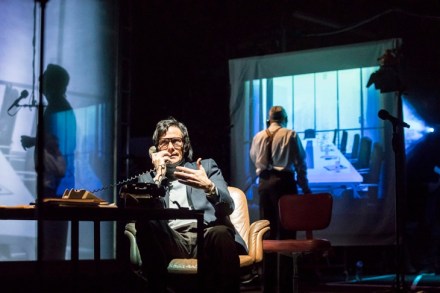
One of David Bowie’s last works, Lazarus, is a musical based on Walter Tevis’s novel The Man Who Fell to Earth. Enda Walsh has written the script. The lead character, Newton, is a derelict celebrity addicted to gin who occupies a big brown apartment full of bickering attendants. It’s unclear who or what Newton is. Human or alien? Something in between? His ontological status is a further puzzle. He may be alive, dead, half-dead, non-dead, half-undead or semi-not-quite-half-unalive. This is a problem, dramatically. A character who exists outside the mortal realm can’t make choices or perform actions that affect himself and others. He’s not a personality, therefore, just a puzzle wearing some clothes. Beige clothes in this case.