Lloyd Evans

Lloyd Evans

Lloyd Evans is The Spectator's sketch-writer and theatre critic

PMQs: Blustering Boris stymies Starmer

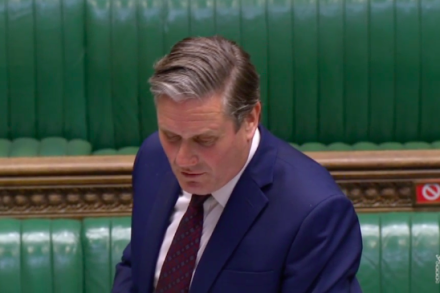
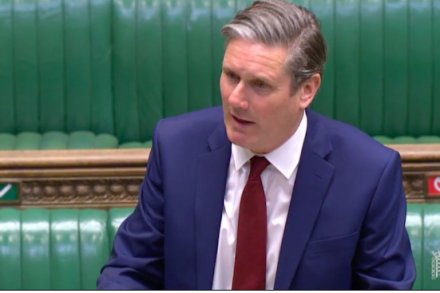
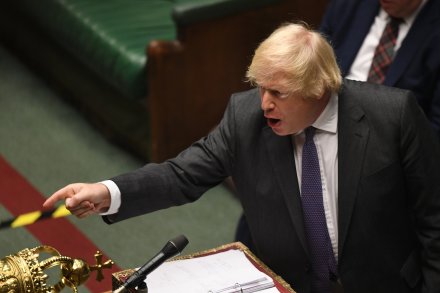
Barristers say there are two types of performers in court. The rhinos use brash, crude, overpowering blows. The snakes are subtle, unpredictable and deadly. Today at PMQs, the two beasts met. Boris came out of the jungle at full charge. ‘I think the honourable gentleman has been stunned by the success of the test and trace operation,’ he bellowed. He was responding to Sir Keir Starmer’s criticism of the government’s testing regime. ‘Contrary to his prognostications of gloom,’ Boris went on, ‘it has got up and running much faster than expected.’ Sir Keir, all serpentine cunning, asked him about the failure of the app to trace every relevant contact. Boris thrashed and snorted. Starmer's certainly a class act.
The Madness of George III is much easier to like than King Lear

The longest interval in theatre history continues. Last week the National Theatre livestreamed a 2018 version of The Madness of George III produced by Nottingham Playhouse with Mark Gatiss in the title role. The script, written by Alan Bennett as a response to King Lear, is much easier to like than the original. An engaging family comedy, with a sad bit in the middle, it benefits from a wonderfully happy ending. The good king is cured, the bad doctors are vanquished, order is restored. A real crowd-pleaser. Bennett’s research gives it the feeling of a documentary drama as he examines the difficulties faced by monarchs who wielded real political power. Family feuds spilled over into public affairs, and if the king happened to run an empire the consequences could be global.

Keir Starmer has no idea how to use normal language

A testy, ill-tempered PMQs. Sir Keir Starmer began by welcoming the anti-viral breakthrough achieved by British scientists. He got an instant slap-down. ‘I’m glad he’s finally paying tribute to the efforts of this country in tackling the coronavirus,’ said Boris, finding Sir Keir guilty of anti-British sentiment. The PM was road-testing a new jingoistic approach today. He believes his handling of the pandemic is the greatest achievement since the invention of the steam engine. And the furlough is the jewel in this glorious crown. ‘Eleven million jobs protected by a scheme unlike anything anywhere else in world!’ he enthused. Perhaps Sir Keir would be asked to ‘take a knee’ for the job retention programme.

What are the new rules on race and performance?

What are the new rules on race and performance? In the world of TV, everyone is busy apologising, self-censoring and denouncing their previous work. Ant and Dec have deleted routines in which they imitated Japanese girls and people of colour. The comedian Leigh Francis has expressed contrition for satirising Craig David in Bo' Selecta! (which was nominated for a Best Comedy Bafta in 2004). Matt Lucas and David Walliams have withdrawn sketches featuring dark-skinned characters. A new order is being created. A new hierarchy of privileges and prohibitions based on ethnicity is taking root. We are strengthening the vice we sought to eliminate. The new rule appears to forbid actors from playing characters whose racial origins they don’t share. Or does it?

As a lyricist, Ian Dury had few equals in the 20th century

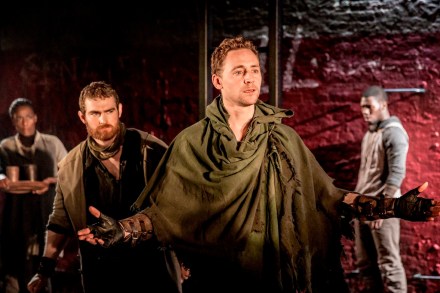
The National Theatre’s programme of livestreamed shows continues with the Donmar’s 2014 production of Coriolanus starring Tom Hiddleston. The play is not a favourite. The story concerns a victorious Roman general who accepts the role of consul but when his political career falters he takes revenge by befriending his defeated enemy, Aufidius, and marching on his own city. There’s too much bitterness and aggression here, and no romantic sentiment at all. The only significant male/female relationship is between the great conqueror and his preening, pushy mother, Volumnia, who boasts about her son’s triumphs as if they were scouting badges or gold stars won for laying out the nature table. Coriolanus is an unsatisfactory tragic hero.

Sir Keir Starmer’s split personality at PMQs

It’s official. The Labour party now has two leaders. Both are knights. But it’s hard to say which is the real Sir Keir Starmer. Not even Sir Keir Starmer seems to know. Good Sir Keir is the kindly, decent comrade who wants to aid his fellow man at a time of crisis. Wicked Sir Keir is the dastardly villain who plots to unhorse his foe with a poisoned lance or a hidden dagger. At PMQs he began as Good Sir Keir. He thanked Boris for extending the furlough and for voicing his opposition to racial prejudice. Then he got all dastardly. He read out a fistful of statistics proving that Britain has suffered the world’s worst corona-shambles. Our excess death toll, at 63,000, is shockingly high. Then this: ‘Last week he said he was proud of his record.

Corbyn takes the revolution online

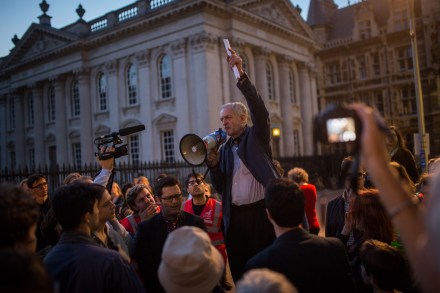
Three faces peered out of the screen. At noon, last Saturday, Facebook hosted a digital debate between a trio of grandees from the Stop the War Coalition. Former Labour leader, Jeremy Corbyn, appeared in a plain white room that matched his open-necked shirt. The novelist Arundhati Roy spoke from Delhi. And the veteran activist, Tariq Ali, began the session by telling viewers that thousands were watching all around the globe. The great campaigners spent 70 minutes trying to create world peace from their kitchen tables. Tariq Ali is no longer the dashing figure of the 1960s who won fame protesting against the Vietnam war. A snowy mane now crowns his head. And he wears a copiously sprouting white moustache which makes him resemble a retired gunfighter in a Dodge City saloon.

So good and so raw that avoiding it might be the wisest course: Sea Wall reviewed

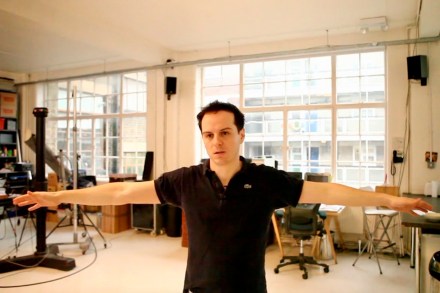
Sea Wall, by Simon Stephens, is a half-hour monologue about grief performed by Andrew Scott. The YouTube clip has been viewed more than 250,000 times. The habitual quirks and irritants of Stephens’s writing are all here: the inept jokes, the laddish swearing, the fascination with 1970s pop, the preference for males over females and the improbable back stories of the characters. The narrator is an Irish cameraman who earns money photographing ‘cushions and digital alarm clocks’ for shopping catalogues. He tells us a bit about his wife and daughter (‘she was a Caesarean’), but he’s far more interested in his father-in-law, Arthur, a scuba-diving maths teacher who retired from the British army with the rank of lieutenant-colonel.

Starmer is struggling against Boris at PMQs

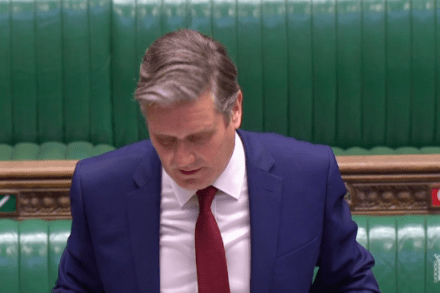
A testy, ill-tempered PMQs. Sir Keir Starmer accused Boris of presiding over a corona-shambles. The PM fired back and asked the Labour leader to show ‘signs of co-operation’ with the government’s efforts. Sir Keir was able to cite a ‘sign of co-operation’. A letter written to the PM two weeks ago about helping to reopen schools. He hadn’t received a reply. ‘I’m surprised he should take that tone,’ said Boris aggressively. ‘I took the trouble to ring him up and we had a long conversation in which I briefed him about all the steps we were taking...He thoroughly endorsed our approach.’ Sir Keir sniffed grandly that the letter had been ‘confidential’. And he waved a piece of paper. The letter, presumably.

Like a project the BBC might have considered 30 years ago and turned down: The Understudy reviewed

Hats off to the Lawrence Batley Theatre for producing a brand-new full-length show on-line. Stephen Fry, with avuncular fruitiness, narrates a dramatisation of David Nicholls’s novel The Understudy, published in 2005. It’s a back-stage comedy about a newly written sex romp inspired by the life of Lord Byron.The show, predictably enough, is entitled, Mad, Bad And Dangerous To Know. Here’s an excerpt. Byron is lying athwart his naked Italian mistress when the Muse summons him to draft a sonnet. ‘I must write here,’ he declares, ‘between a pair of pert peaches nestled.’ This doesn’t quite catch the tone of period drama in its present form.

The best Macbeths to watch online

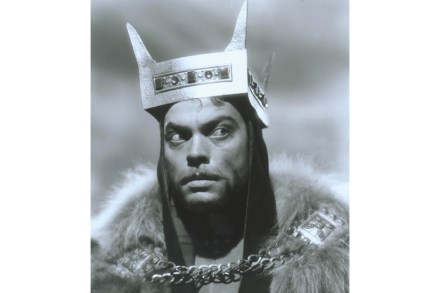
The world’s greatest playwright ought to be dynamite at the movies. But it’s notoriously hard to turn a profit from a Shakespearean adaptation because film-goers want to be entertained, not anointed with the chrism of high art. Macbeth is one of the texts that frequently attracts directors. Justin Kurzel’s 2015 version (Amazon Prime) didn’t triumph at the box office despite two fetching performances from Bamburgh Castle in Northumberland and the snow-wreathed mountains of Skye. The trailer is a marvel. Two exhilarating minutes of virile swordplay, ravishing scenery and dramatic cathedral interiors. The film itself is a cold, muddy slog. Michael Fassbender plays the thane as a gruff Celtic robo-hunk married to a skinny, nun-like beauty, Marion Cotillard.

Keir Starmer’s big weakness was exposed at PMQs

It has come down to a classroom contest. The swot versus the wag. The smart Alec against the rugger captain. The chemistry nerd who wants to join the cool kids behind the bike-sheds. Sir Keir has been praised for his ‘forensic’ attacks on Boris at PMQs. What is ‘forensic’? ‘Forum’ means a market-place and later it referred to an arena where trials were held. ‘Public square’ more or less covers it. And though Starmer is adept at court-room dissections he’ll never appeal to the throng. He isn’t box-office. His great distinction is also his curse. He’s like the prosecutor in a fraud trial methodically piling up an impenetrable tonnage of evidence while the jurors daydream, the clerks doodle and the judge dozes.

The National Theatre’s live-streaming policy is bizarre

The National’s bizarre livestreaming service continues. On 7 May, for one week only, it released a modern-dress version of Antony and Cleopatra set in a series of strategy rooms, conference centres and five-star hotel suites. The lovestruck Roman was played by a louche, gruff, brooding Ralph Fiennes. Why is this man so watchable? He lacks the least mark of distinction. Face, height, physique and vocal ability are all in the middling range. In real life he could easily have assumed the role of the research assistant’s deputy. Perhaps it’s the Reggie Perrin ordinariness that makes his presence bewitching. Shakespeare was on unusually patchy form when he assembled this huge, rambling history play.

PMQs: Starmer’s swipes leave Boris unbowed

Keir Starmer is a very rum package. His body and his manner seem to belong to different organisms. His physique is martial, sturdy, invincible. The square jaw, the trunk-like neck, the unsettlingly symmetrical face, the blue but eerily lifeless eyes. But his personality has no trace of manliness at all. He seems grannyish, nervy, over-delicate, like an unobtrusive footman who finds himself lord of the manor following a paternity test. There’s something about him that doesn’t ring true. His voice is like the creak of a door in a chapel of rest. But he’s an effective debater. He enjoys using statistics to inflict horrors on his opponent. Today, he unleashed himself against the Prime Minister. Last week, Boris had suffered a corona shambles. He needed a convincing win.

How Tom Stoppard foretold what we’re living through

A TV play by Tom Stoppard, A Separate Peace, was broadcast live on Zoom last Saturday. I watched as my screen divided itself into four cubes in which appeared the actors, performing from home. The play was written in 1964 and it’s well suited to the split-split screen format because no physical contact occurs between the characters. Director Sam Yates added some rudimentary music and a bit of wobbly background scenery. Mr Brown (David Morrissey) is a mysterious Englishman who asks to be admitted to a private hospital in the middle of the night. Though he has no symptoms he’s given a bed, and he pays his bills in cash. ‘There’s nothing wrong with you,’ complain the medics. ‘That’s why I’m here,’ he says.

Keir Starmer’s big weakness is his kindness

PMQs began with a tribute from Speaker Hoyle who seemed thrilled to see Boris back at work and in Bunterish good health. ‘The whole country is delighted at his recovery,’ he added. A quick trawl thorough Twitter would disprove that optimistic claim. Sir Keir Starmer, in his debut against Boris, asked how the government could claim ‘success’ against Covid-19 when Britain is filling more coffins than any country in Europe. Boris wriggled a bit and said international comparisons were unreliable. Sir Keir held up a coloured graph showing a range of mortality-rates across the continent. ‘The government has been using slides like this,’ he said. Then he asked about the numbers dying in care-homes.

Worth watching for the comments thread alone: NT’s Twelfth Night livestream reviewed

‘Enjoy world-class theatre online for free,’ announces the National Theatre. Every Thursday at 7 p.m. a play from the archive is livestreamed. I watched Twelfth Night, from 2017, starring Tamsin Greig as a female Malvolio. What a handsome, absorbing and brilliantly staged production this is. Greig’s comically petulant Malvolia won the plaudits, rightly, while the underrated Tim McMullan turned Sir Toby into a wry, wobbly, loveable drunkard, like a rock star enjoying a month on the lash. Having seen the original, I preferred the online experience, not least because of the noisy comments thread beside the screen. ‘How do you get Russian subtitles?’ ‘When’s the interval?’ ‘Why a female Malvolio?’ ‘Watching from Brussels.

Keir Starmer’s PMQs performance was painfully wooden

‘Such happy news amid such uncertainty’. The Speaker began PMQs with this tribute to Carrie and Boris’s baby. But his talk of ‘happy news amid such uncertainty’ might have referred to MPs tuning in via webcam whose living areas have been denuded of clutter. Last week, viewers got an eyeful of their MPs’ soft furnishings which proved a major distraction from politics. Honourable members have now realised that their utterances are much less interesting than their wallpaper. Today most of them appeared in plain white surroundings. Cheryl Gillan, a rare exception, had set up her camera in what looked like a magical grotto decorated with turquoise box-files. The first secretary, Dominic Raab, was quizzed by Sir Keir Starmer.

The best “unwoke” comedy to watch during lockdown

Comedy is booming during lockdown. The clubs may be closed, indefinitely it seems, but the internet has come into its own. And the backlash against the liberal consensus is gathering pace. Here are seven of the best unwoke comedians. All are available on YouTube. The snag is that each clip is preceded by an advert for Monday.com or a bossy lecture from a web entrepreneur eager to enrol you in a free seminar which will make you a billionaire. Indian-born Sindhu Vee makes jokes about her Danish husband which might be interpreted as racist. ‘His entire parenting method is, “Darling, please be very happy, here’s some Lego.”’. When Vee got a British passport she was infuriated that he hadn’t followed suit.

The best theatre of the 21st century

Not looking great, is it? Until we all get jabbed, theatres may have to stay closed. And even the optimists say a reliable vaccine is unlikely to arrive before Christmas. As the darkness persists, here’s a round-up of my leading experiences over nearly two decades as a reviewer. There’s been a surge of output. More theatres have opened, especially on the London fringe, and several have created annexes for experimental work. Musicals have proliferated. The rise of the box-set has been excellent for the West End. Global hits such as Game of Thrones have created a host of British stars with enough clout to sell out a three-month run in London. Shakespeare hasn’t fared so well.