Lloyd Evans

Lloyd Evans

Lloyd Evans is The Spectator's sketch-writer and theatre critic

Rishi reveals his calculating streak

Before the budget, the TV pundits like to tell us about divisions between the PM and his next-door neighbour. The story is that boom-and-bust Boris can’t wait to splurge cash on a set of mega-projects that would put a Persian emperor to shame. Build a bridge. Burrow a tunnel. Concrete over an estuary and plonk an airport on top. He wants to tarmac his way out of trouble. But the smooth and neatly combed Chancellor, Rishi Sunak, plans to create fiscal stability and to take things from there. He looked every inch the central banker as he delivered his budget today with his gleaming hair and immaculate blue suit. Next to him, Mark Carney would have looked like a tramp. Sunak offered a welcome glimpse of sunshine.

Even Adrian Lester’s sweetness, grace and nobility can’t rescue Almeida’s Hymn

The Almeida is fighting back against lockdown with a sprawling family drama about two long-lost siblings. Adrian Lester plays Gilbert Jones, a successful entrepreneur, who runs a clothing business and a stationery shop in London. At his dad’s funeral he meets his half-brother, Benny (Danny Sapani), who was brought up in care but is now married with kids. The two bros become pals. They meet for salads at coffee shops where they swap news about each other’s families. They visit the gym and do stretching exercises while discussing their diets and their problems finding spaces to park. Benny, who appears to be a fitness coach, takes charge of these low-energy workouts. He holds up a scarlet cushion and Gilbert punches it feebly.

Why is Keir Starmer so bad at PMQs?

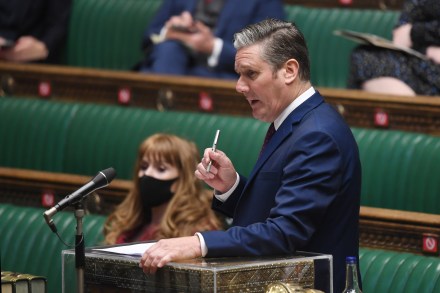
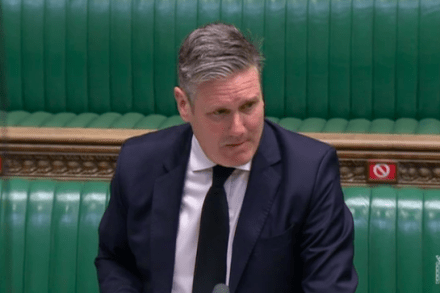
Sir Keir is having a wobble. That’s obvious. The Labour leader holds an equestrian title, so he naturally feels at home on his high horse. Today at PMQs he loftily commanded Boris not to raise taxes in the budget. That was hilarious. A Labour leader begging a Tory Prime Minister not to implement Labour policy. If Sir Keir had produced a viola from his trousers and played ‘Waltzing Matilda’ he couldn’t have looked more ridiculous. Boris was so stunned that he could barely speak. ‘Well, I don’t know about you Mr Speaker,’ he bumbled. Then he pointed out that in 2019 Sir Keir had ‘stood on a manifesto to put up taxes by the biggest amount in the history of this country.

This fabulous play is like a Chekhov classic: The One Day in the Year reviewed

The One Day In the Year is an Australian drama about the annual commemoration of the Gallipoli campaign in 1915. It was written in 1958 but it could have been dashed off last week. What makes it thrillingly topical is that the personality of Churchill and the truth about Britain’s colonial past are central to the story. The main character, Alf, is a veteran of the second world war who works as a lift operator. He detests the new Australia and he calls the younger generation a ‘stink lot of imitation Yanks’. For him, Churchill is the greatest Englishman in history. But his rebellious son, Hughie, describes Britain’s wartime prime minister as ‘a big bloated bloodsucker’.

Bryan Fogel on turning Jamal Khashoggi’s murder into a film

Bryan Fogel seems to have done it all. It’s hard to think of a showbiz figure with a more varied career. He began as a stand-up and moved to play-writing and then to directing movies. In 2013, he reinvented himself as the producer of hard-hitting documentaries that focus on international scandals and cover-ups. He talks to me via Zoom from Los Angeles about his latest movie, The Dissident. ‘I was seeking what my next film was going to be – something that spoke to human rights and freedom of expression. It checked all those boxes’. The subject is the death of Jamal Khashoggi, the dissident journalist who was murdered in the Saudi embassy in Istanbul in 2018. ‘He’d left his country to be able to speak freely.

Perfect to fall asleep to: Good Grief reviewed

Good Grief is a new drama starring Sian Clifford who shot to fame as the older sister in Fleabag. The script by Lorien Haynes is described by the producers as ‘sharp, funny, brutal, irreverent and quintessentially British’. The action begins after a funeral where a handsome young Asian guy named Adam, chats to a fellow mourner, Cat, who looks about ten years older than him. Cat has set up Adam with a blind date that he didn’t enjoy. ‘I was peeling her off me,’ he says, ungallantly. But Adam’s sexuality is rather a puzzle. His wife, Liv, has died and he boasts to Cat about Liv’s endless romantic conquests. At parties Liv would spend ages telling Adam which men she’d recently seduced.

Starmer changes his PMQs tactics

Sir Keir has changed his tactics. At long last. Today marks a year since the first Covid measures were introduced to parliament and the Labour leader has finally realised that the pandemic doesn’t work for him. Even the most brilliant ambush will be dismissed as opportunistic and unpatriotic. So he dropped the superbug altogether. And he trimmed down his usual bloated rhetoric and raced through his questions by 12.11 p.m. So we got five minutes less of the usual Starmer stodge. Boris was a bit wrong-footed by this nimbler and less loquacious opponent. But Sir Keir’s chosen topics — extending the furlough and keeping business rates low — stood no chance of embarrassing the PM. Wait for the budget, shrugged Boris.

The pointlessness of PMQs

It’s a different game at PMQs. With fewer than 40 members present, the debates feel more like a committee meeting than a full-throated parliamentary session. It’s bad for democracy if the highlight of the parliamentary week looks so static and uninspiring. When the weather cheers up they should move to a secure location outdoors, (like the gardens of Buckingham Palace), where more members could attend and the sessions would be livelier. Meanwhile, MPs are chafing under the restrictions. They’ve started to mess about like schoolkids in detention. They play games. They needle each other. They stretch the rules, and they dare the Speaker to shut them up or tick them off. Today they debated border closures.

Netflix should turn this into a series: Southwark Playhouse’s Fabulist Fox Sister reviewed

The Fabulist Fox Sister is a one-man show about the three American women who are credited with inventing the trade of spiritualism. It all happened by accident. A younger sister discovered that by cracking her toe joints on the floorboards she could generate noises that scared her parents. Kate Fox, the eldest, claimed the sounds were made by a lonely ghost who wanted to communicate with the living. She invited the neighbours around to contact their deceased relatives. The ploy worked and the sisters took their fake routines to New York where they became a huge success. Even the threat of exposure by the press didn’t dent the public’s belief in their powers.

How Facebook became a freedom-gobbling corporate monster

Southwark Playhouse is beating the latest lockdown with a zingy new musical about social media. The performers, Francesca Forristal and Jordan Paul Clarke, remember the far-off days when Facebook was just a harmless supplement to ordinary social interactions. How did it turn into a freedom-gobbling corporate monster? We meet the Zuckerbergs, Mark and Priscilla, as they usher a TV crew into their mansion like a pair of politburo bigwigs showing tourists around a glue factory in North Korea. The down-to-earth billionaires offer bland answers to scripted questions. ‘How do you raise children when you can give them anything?’ Mark reveals that the mini-Zuckerbergs are treated like normal kids.

Keir Starmer’s unseemly performance at PMQs

It was a day of awful numbers. And even more gruesome cliches. The Labour leader started it. ‘Yesterday we passed the tragic milestone of 100,000 deaths,’ said Sir Keir Starmer. Then he informed us that, ‘this is not just a statistic.’ He explained that each dead person has connections to other individuals who remain alive. He gave three examples. ‘A mum, a dad, a sister.’ Then he gave four more. ‘A brother, a friend, a colleague, a neighbour.’ Next he premiered a well-crafted denunciation of government failings that relied on the repetition of ‘slow’ at the start of each phrase. ‘Slow, slow, slow’, he boomed, like the tolling of a death-knell o’er a frosty graveyard.

Actors will be in trouble if the Bridge Theatre’s latest experiment catches on

Flight has been hailed as a new form of dramatic presentation — prefab theatre. It’s great to look at. A set of model boxes containing stick figures and colourful landscapes slides past the seated viewer while a voiceover reads the narrative. No thesps are required, which may be a relief to producers and directors but the acting profession will be in trouble if this experiment catches on. The story, adapted from Hinterland by Caroline Brothers, follows two Afghan teenagers, Kabir and Aryan, who decide to walk to Europe in search of a better life. All they have is $2,000 in cash and a spare pair of trainers each. Along the way, they keep up their spirits by chanting the somewhat roundabout route they plan to take once they’ve left the Asian landmass.

Silencing Ian Blackford is one upside to PMQs tech troubles

Parliament, 0. Computer Bugs 1. That was the score at PMQs today after a software glitch turned the debate into a cyber-shambles. The disaster unfolded as Ian Blackford asked his two questions. The SNP member, wearing a smart three-piece suit, joined the chamber from his sumptuously appointed country seat in the Hebrides. Blackford is known as a champion of the people and today he had a golden opportunity to stir up trouble for Boris. The very fishermen whom the PM had promised to enrich after Brexit are facing ruin because paper-wonks at sea-ports are holding up the transit of fresh fish. A perfect issue for the SNP.  But Blackford ignored the plight of Scottish trawler men and turned instead to the presidential inauguration.

Inside the first Corbynite International

Jeremy Corbyn launched his 'Project for Peace and Justice' on Sunday with a Zoom conference featuring a starry panel of left-wing activists. The online format is a weak and feeble beast compared with a live rally. You miss the crackle and excitement in the air. You long for the cheers and whoops of a properly pumped-up crowd. Instead we got the beaming face of Baroness Blower, a former teacher, who introduced the participants from a desk in her sitting room. After each speech she offered sugary compliments like a kindly aunt feigning wide-eyed surprise while opening her birthday presents. ‘That was absolutely fantastic,’ she said as Scarlett Westbrook finished the opening contribution. Ms Westbrook is a rabble-rouser-on-the-make who has spotted an opportunity.

Starmer is yet to learn the art of PMQs

Where to begin? That was one of most absorbing PMQs of recent times. Three top moments: the Speaker rebuked the PM for improper language. The Labour leader was humiliated by one of his own backbenchers. And Ian Blackford asked a good question. That’s right. It finally happened. The SNP leader in the House of Commons — the great windbag of the Western Isles — made history by raising a sensible point. The Scottish shellfish industry, he said, has been shafted by Brexit. The problem? Red-tape. Last Monday a hapless trawlerman had to watch while his £40,000 haul turned rotten on the dockside as a posse of EU form-fiddlers fretted over their paperwork. Scottish lobstermen now prefer to steam across the North Sea and land their pink crustaceans in Denmark.

Stick it on the BBC: Love Letters at Theatre Royal Haymarket reviewed

Love Letters by A.R. Gurney began life as an epistolary novella about two childhood friends, Andy and Melissa, whose on-off romance is traced through an exchange of letters lasting 50 years. In 1988, the script was turned down by the New Yorker magazine: ‘We don’t publish plays.’ Gurney hired an actress, Holland Taylor, and together they performed the script in a public library. From there it transferred to Broadway in 1989. It’s a minimalist’s dream. There are no costumes, and no set, and the actors can read the script without rehearsing or memorising their lines. This makes it a popular choice for galas and charity events. Elizabeth Taylor staged a version with James Earl Jones in 2007 to raise money for her Aids foundation.

Deserves to be a permanent winter fixture: Potted Panto at the Garrick reviewed

Potted Panto is a 70-minute parody presented by two burlesque comedians. Jeff is a tall, playful bungler and his colleague, Dan, is a squat, dour authoritarian who likes to see everything done efficiently. They leap on stage and declare their plan to present a compendium of the best-known Christmas shows. ‘All six of them,’ says Dan. ‘No, all twelve,’ contradicts Jeff, unfurling a list that includes classics from the TV schedules like A Christmas Carol and Das Boot. He insists that these non-pantos are included in their panto rundown. And so a war of opposites begins. Jeff is all appetite and instinct while Dan stands for reason and method. Or, in shorthand, Jeff is an infant and Dan is an adult.

Why does Ian Blackford get a free pass at PMQs?

The Speaker was busy at PMQs. He jumped in at the start and told Michael Fabricant, the orange-haired member for Lichfield, to stop rambling and get to the point. He admonished an SNP member for addressing the Prime Minister as ‘you.’ Convention dictates that ‘you’ in the Commons means the Speaker himself. ‘You keep saying 'you'. I’m not responsible for any of this,’ Lindsay Hoyle said. And he jokingly called Boris, ‘Father Christmas,’ after a Tory suggested that the PM was like Santa for school kids. So there seemed to be a semblance of seasonal cheer in the chamber. And then Sir Keir Starmer stood up and read out a list of apocalyptic tidings like a town-crier during the Black Death.

Why I’m backing Corbyn’s ‘peace and justice’ project

He’s back. A year after losing a second general election in a row, Jeremy Corbyn has launched his ‘Project for Peace and Justice’ with a video on YouTube. He appears in a natty off-white jacket, with a tinge of blue, like a referee at the Henley Regatta. Speaking in a low, measured voice, as if reading a story to children, he recites an inventory of global problems which he proposes to solve. Behind him is the project’s slick new signage. The P and the J form an elongated oval, in smart white-striped livery, like the classic layout of the 1970s Scalextric track. This attractive piece of artwork must have cost a packet. And somebody has to pay for it. Which is where you and I come in.

Like eating 58 luxury chocolates: The Flying Lovers of Vitebsk reviewed

The Flying Lovers of Vitebsk begins with a phone conversation between a pretentious art critic and a man called Marc. This turns out to be Marc Chagall, the expressionist painter, who was born in Vitebsk in Belarus in 1887. It would have been helpful to include his name in the title. Emma Rice, the director, relies on her usual blend of dances, songs and pretty lighting to tell her tale. She has very low expectations of her audience. The sad characters cry. The happy characters laugh. The amorous characters dance rapturously. Everyone sings a lot. The script consists mainly of plot points written in clunky, airless prose. ‘It was the best exhibition I’ve ever had,’ announces Marc after an early success in Berlin.