Lloyd Evans

Lloyd Evans

Lloyd Evans is The Spectator's sketch-writer and theatre critic

PMQs: Boris blustered his way out of trouble

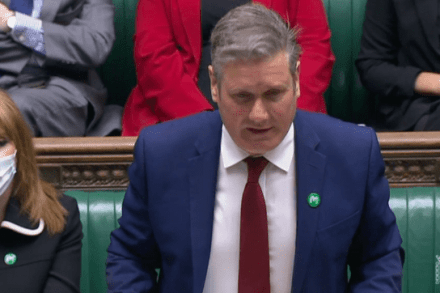
What were they? Model broomsticks? Mini cricket bats? The chewed ends of lolly-sticks? At PMQs today many MPs arrived with odd sprigs of material attached to their clothing. The badges turned out to be ‘wheat-pins’ which are part of ‘Back British Farming Day’. Sir Keir Starmer had attached his device firmly to his jacket. Very sensible. Boris had lazily shoved the thing into his breast pocket. It slowly descended into the depths of the lining and disappeared. The session began sombrely as members expressed their sympathy with Boris over his recent bereavement. Sir Keir Starmer took just three seconds to turn it into a story about himself. ‘I offer my condolences to the Prime Minister on the loss of his mother,’ said the Labour leader.

Tsunami of piffle: Rockets and Blue Lights at the Dorfman Theatre reviewed

Deep breath. Here goes. Winsome Pinnock’s new play about Turner opens with one of the most confusing and illogical scenes you’re ever likely to see. A teacher on a school trip is showing her pupils a Turner painting displayed in a gallery housed inside a ship donated by the producers of a film starring a famous actress, Lou, who happens to be on board wearing a sumptuous outfit for an awards ceremony, which she plans to avoid for fear that a coveted prize will be handed to a rival. Lou invites the school teacher to an after party that is scheduled to start when the awards ceremony ends. She then gets distracted by the sight of movement on the surface of the Turner canvas. The painted figures, frets Lou, appear to be shifting and jerking.

Starmer and the Speaker struggled for the same reason at PMQs

PMQs thundered back to life today. Boris was clearly thrilled to be there. Sir Keir seemed to be up to his eyeballs in self-doubt.  Evidently the Labour leader preferred the old pandemic days when the chamber was like a coroner’s court or a half-empty library at Lambeth Palace. The atmosphere back then was calm, studious and considered. This afternoon the playground riot was in full swing. It opened with a Boris special. He was asked by Craig MacKinlay if the next generation could seriously rely on cars powered by Duracell batteries and by houses heated with warm zephyrs that rise by magic through air-vents in the floor. Boris crushed this cynical view and he urged MacKinlay to ‘embrace the Promethean spirit of technological optimism.

Glib and snarky: Andrew Lloyd Webber’s Cinderella, at Gillian Lynne Theatre, reviewed

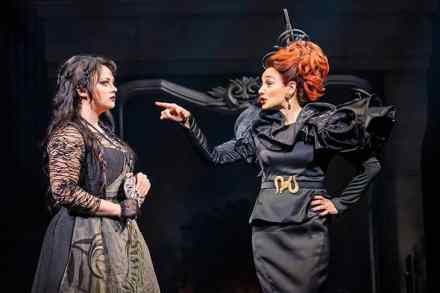
It’s a rum beast the new Andrew Lloyd Webber musical. Cinderella is set in Belleville, a European city of 18th-century vintage, whose inhabitants are fixated with the body beautiful. Cinderella, a pasty Goth, rejects this ethos and vandalises a statue that commemorates a handsome prince who recently died in battle. Cinders is punished by being chased into a forest and tied to a tree but she’s rescued by her best friend, Prince Sebastian, who will inherit the throne as soon as he marries. Sebastian and Cinders are pals whose friendship is destined to blossom into romance. They can’t see this. We can. And that’s the story. Oscar-winner Emerald Fennell has created a heap of trashy, unsympathetic characters.

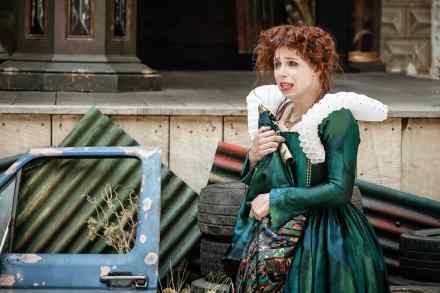
Captures the rapturous gaiety of the original: Globe’s Twelfth Night reviewed

The new Lily Allen vehicle opens in a spruced-up terrace in the East End. Allen plays a self-satisfied yuppie, Jenny, whose cynical husband has invited two ghastly friends over for a bitchy booze-up. At first sight this looks like a Hampstead comedy from the 1970s but it’s a horror story, and it has a huge black hole at its core. A classic horror yarn should be driven by a single, powerful premise. In Ira Levin’s Deathtrap, a failing playwright has to bump off a talented rival to restore his fortunes. In Psycho, a bland motel is terrorised by a deranged and violent loner. Even Shakespeare dipped into the horror genre. In Hamlet, a vacillating prince is ordered to commit murder by his father’s ghost.

How we killed comedy theatre: Nigel Planer interviewed

Nigel Planer is on a mission to bring farce back to the West End. ‘There’s a lot of snobbery in comedy,’ he tells me when we meet at a hotel bar near the Old Vic. ‘People say, “Oh that’s comedy. It can’t have any meaning”.’ The actor and writer is still best known for playing Neil the hippie in the 1980s sitcom The Young Ones and he can recall a time when farce was a staple of London theatre. ‘I remember going along and really enjoying myself, you know, a nice big cast, actors falling over, characters treating someone differently because they think it’s someone else. All that stuff simply delights. But it’s become unfashionable.

Homeric levels of misery: Paradise, at the Olivier Theatre, reviewed

The National Theatre has given Sophocles’s Philoctetes a makeover and a new title, Paradise. This must be ironic because the location is hell on earth. The action starts in a dirt circle sprawling with smashed military gear where a group of plump female vagrants are waking up in a clutch of filthy old tents. They’re living on a Caribbean island which also houses a prison for migrants. In a nearby cave dwells an exiled Homeric archer, Philoctetes, who survives by eating squirrels which he kills with his handmade bow. A committed anti-vegan, Philoctetes shuns the plentiful rice, garlic and mangos that grow naturally in the tropics. Enter two British soldiers in contemporary battle fatigues, who want to track Philoctetes down. The Brits are called Odysseus and Neoptolemus.

The death of the Edinburgh Fringe

The Edinburgh Fringe has returned after last year’s cancellation but it’s hard to find evidence of the festival on the streets. The atmosphere is weird, unsettling, ghost-like. The defining feature of the city in August is the constant din of music, but as soon as I arrived at Waverley Station I noticed that the pulsing backbeat was missing. The bars that throb with disco and heavy metal have shut up shop. So have the pubs that host free comedy shows from noon till midnight. The insistent tom-tom rhythm has been supplanted by a void. Edinburgh is on mute. Before Covid, there were more than 3,500 shows to choose from. This year’s total of nearly 800 seems like a healthy bounce-back but very few of these productions will run for the full three weeks.

Sinatra, Bacon and a YouTube star: Edinburgh Fringe Festival round-up

Sinatra: Raw (Pleasance, until 15 August) takes us inside the mind of the 20th century’s greatest crooner. The performer, Richard Shelton, catches Sinatra in confessional mode in the 1970s as he looks back on his chequered career. In the early days, a promoter suggested the stage name ‘Frankie Satin’ but his tough-minded mother, Dolly, vetoed the idea. The show’s best sections investigate the harrowing details of his tangled and doomed romance with Ava Gardener. Fame and wealth never sweetened Sinatra’s prickly character. ‘Drink is my worst enemy,’ he quips, necking whisky from a tumbler. ‘But, like the Bible says, you’ve got to love your enemies.

Ian McKellen is riveting: Hamlet, at Theatre Royal Windsor, reviewed

Ian McKellen in his early eighties plays the Dane in his mid-twenties. A production with such a strange innovation should be conventional in all other details so that the virtues and demerits of the experiment can be judged in the right context. But Sean Mathias’s show adds extra puzzles. Elsinore is a modern palace ruled by Claudius, in a charcoal suit, and Gertrude in a chic emerald dress, pinched at the waist. Nice togs. But the audience knows how a constitutional monarchy works and that a rightful heir succeeds automatically and peacefully. So why are these murderous nutcases roaming the corridors plotting to slit each other’s throats? That contradiction goes unexplained.

The Marble Arch mound is a less-than-monumental hoax

The pictures show a rough, angular knoll of turf heaped on a noisy roundabout at the junction of Park Lane and Oxford Street. This is ‘Marble Arch mound’ created by Westminster Council to revive interest in a chaotic motorised intersection at the northeast corner of Hyde Park. Now, after two days of unhappy punters trudging up the thing, the artificial hill has been closed until next month.  The senior tenant of the roundabout is the white triumphal arch designed by John Nash in 1827 but the newly arrived mound seems to want visitors to ignore its august neighbour. The website gives no details about Nash’s structure which originally stood outside Buckingham Palace and was moved to its current home in 1851.

One for hardcore Tennessee Williams fans only: The Two Character Play reviewed

It can be difficult to remember that Tennessee Williams, the great songster of the Deep South during the 1950s, was still churning out plays when he died in 1983. In the 1960s he was past his peak and he began to experiment with form, perhaps hoping to compete with fashionable youngsters like Tom Stoppard and Harold Pinter. Hampstead Theatre staged the world première of his absurdist melodrama The Two Character Play in 1967. And now, a mere 54 years later (an interlude that hints at its merits as a crowd-pleaser), the show has returned to its cradle. Sam Yates directs. This is an obscure and sometimes baffling script that features some excellent innovations and ideas.

What a comic treat: The Game of Love and Chance at the Arcola reviewed

Lady Sylvia is a gorgeous aristocrat whose hand is sought by the charming Dorante whom she has never met. To avoid the stiff formalities of courtship, Lady Sylvia swaps places with her maid and observes Dorante from the safety of pretended servitude. But instead of falling for Dorante, she becomes enamoured of his manservant. However, there’s another wrinkle coming in Marivaux’s classic comedy. Deronte’s manservant, unbeknown to Lady Sylvia, is actually Dorante himself, who has pulled an identical switcheroo with his valet. The story is so hopelessly contrived that its sheer artificiality becomes part of the joke. This production of The Game of Love and Chance, directed by Jack Gamble, captures the fun-loving spirit of the original.

PMQs: The tragedy of Richard Burgon

PMQs is sixty years old. Speaker Hoyle opened the proceedings with a reminder that the weekly cross-examinations began in July 1961. Boris wasn’t there. Well, he was, but via Zoom. A televised shot of his head was beamed from Chequers to a flat-screen screwed to a high gallery. This was unfortunate for Sir Keir Starmer who needed to tackle the blond amplitude of Boris in person. Instead, he had to wrestle with an image, to punch at a vacancy and to skewer a shimmering square of coloured pixellations. It was like headbutting a cushion. Sir Keir was armed with some excellent complaints about the government’s ping debacle. Millions of citizens have equipped themselves with a pocket robot that can place them under house arrest at a moment’s notice.

A shrill, ugly, tasteless muddle: Romeo & Juliet reviewed

What shall we destroy next? Romeo & Juliet seems a promising target and the Globe has set out to vandalise Shakespeare’s great romance with a scruffy, rowdy, poorly acted and often incomprehensible modern-dress production. It starts with two lads having a swordfight using curtain poles. Enter the Prince who fires a gun and halts the action. Then the preaching starts. ‘Rather than trying to understand the nature of the violence, the Prince threatens the community,’ says an actor. These intrusions continue. ‘Patriarchy,’ says someone else, ‘is a system in which men hold power.’ The slogan appears on a screen as well.

PMQs: Boris fluffed his response to England taking the knee

Who won the Euros? Race-baiters clearly. Sir Keir Starmer spent most of PMQs trying to label Boris as a bigot. The Labour leader craftily wove several arguments into one. He claimed that by failing to condemn fans who booed the BLM-inspired rite of genuflection, Boris was responsible for the abuse suffered by black players after the match. The PM had many powerful and obvious lines of defence. But he failed to use them. He fluffed it completely. He ignored a BBC report suggesting that most of the online abuse originated abroad. He didn’t mention that BLM is a political movement whose Marxist supporters want to close prisons and abolish police forces. Nor did he say that booing such an idiotic manifesto is simply common sense.

This play is a wonder: Bach & Sons at the Bridge Theatre reviewed

Bach & Sons opens with the great composer tinkling away on a harpsichord while a toddler screeches his head off in the nursery. The script becomes a broader portrait of a richly creative and competitive family where everyone is bright, loud, witty, inventive, good-natured and affectionate. Bach teaches the elements of composition to his gifted sons. ‘Rules provoke expression. They challenge your ingenuity.’ And the audience is unobtrusively schooled in the elements of counterpoint by four actors singing ‘Frère Jacques’. Bach considers Carl’s work good but workmanlike. Wilhelm is better, a wayward, inspired and anarchic talent. When Carl hears this verdict he falls into a jealous rage but it doesn’t last.

Boris wriggled off the hook again at PMQs

Freedom Day on 19 July was the opening issue at PMQs. Boris welcomed the return to normality and the Labour leader offered to support a ‘balanced and reasonable’ end to lockdown. But he accused the government of being ‘reckless’. Hang on, cried Boris, Sir Keir was all in favour of Freedom Day last Monday. Can’t he make up his mind? Sir Keir tried to re-baptise the ‘Delta strain’ the ‘Johnson variant.’ Which is unwise politics. After trying the new label once he dropped it. Perhaps a pushy intern had suggested it. Neither leader scored a victory today.

The perils of playing a Prime Minister

Jonny Lee Miller is to play John Major in Series Five of the Crown. In the 1990s, when Major was prime minister, Miller got his big break as Sick Boy in Danny Boyle’s iconic film, Trainspotting. So it looks like a counterintuitive piece of casting. The dour and insipid Major will be played by an actor who achieved fame as a jobless heroin-addict. When Major entered Number 10 in November 1990 he seemed like a bank of cold grey fog after the storms and excitements of the Thatcher years. But his image as a boring bean-counter is inaccurate. The real life John Major is attractively masculine. Though not exactly a pin-up, he has a strong jaw and a shapely, symmetrical face. He’s tall and stockily built (he was a sportsman in his youth), and there's a definite twinkle in his eye.

Staged: a handful of VIP events is no substitute for normality

Wimbledon is back. The start of the tournament in June marks the opening of the British summer, sending a signal to everyone that it’s time to take it easy: enjoy a glass of fizz, some strawberries and some sporting drama on the grass. And this year, for the first time, we witnessed a roar of applause from the crowd on Centre Court for Britain’s vaccine success. It looks very much like life as normal. The same was true at Wembley stadium, where thousands of fans cheered on England this week when they beat Germany. A few plays have opened as well. Several politicians were in attendance at the Garrick for the opening night of Maggie & Ted, a play about Ted Heath’s rivalry with Margaret Thatcher. Behind the scenes, ministers have been planning this for months.