Lloyd Evans

Lloyd Evans

Lloyd Evans is The Spectator's sketch-writer and theatre critic

The blandness of Hugh Bonneville

From our UK edition

Shadowlands, by William Nicholson, is a solid and unsurprising account of the brief marriage between C.S. Lewis (known as Clive), and the American poet Joy Davidman. Her cancer diagnosis overshadowed their romance but they snatched a few lustful holidays together before she expired in an NHS hospital in 1960. Hugh Bonneville, as Clive, delivers his standard three-note performance – bemused decency, bumbling hesitation, ironic charm – which tells us nothing about the author’s inner life. Bonneville has succeeded in building a huge presence in the movie industry from an almost complete dearth of actorly qualities. He’s not handsome, sexy, tough, athletic, amusing, mysterious, evil or even slightly unpleasant. He’s not brilliant or stupid. He’s not admirable or despicable.

James Heale, Lisa Haseldine, Simon Heffer & Lloyd Evans

From our UK edition

25 min listen

On this week’s Spectator Out Loud: James Heale reflects on Nigel Farage's leadership team; Lisa Haseldine argues that Europe is in denial over its defence; Simon Heffer looks at the extraordinary rise – and tragic fall – of the first Labour Prime Minister, Ramsay MacDonald; and finally, Lloyd Evans reviews the plays I'm Sorry, Prime Minister and American Psycho. Produced and presented by Patrick Gibbons.

James Heale, Lisa Haseldine, Simon Heffer & Lloyd Evans

Should I be a Jew, Muslim or Hindu? 

From our UK edition

Time is running out. We all have to meet our maker at some point, and although I’m fit as a fiddle I like to plan ahead. God has many brands and many names and I want to show up at the right shrine and to use the correct form of address. Technically, I don’t believe in a creator, because my rational mind accepts the agnostic theory. Existence is an attribute of entities that are bound by time and space. God is unbound by time and space, therefore existence is not among his attributes. QED. And yet something in me rejects this logic and yearns to believe – just in case. What if he really is up there? I should pick a team.

Dazzling: I’m Sorry, Prime Minister at the Apollo Theatre reviewed

From our UK edition

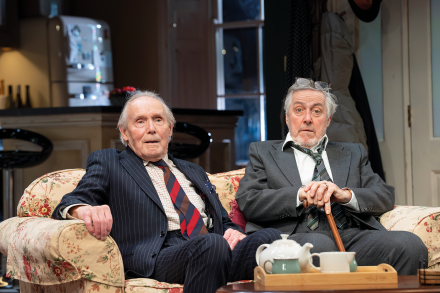
Jim Hacker is back in the West End. I’m Sorry, Prime Minister, written by Jonathan Lynn (who co-wrote the original TV series), brings us the former PM in semi-retirement as the Master of Hacker College, Oxford. Jim, now Lord Hacker, is facing a revolt by the students and the senior fellows who claim to have been offended by his high-table banter. He was overheard making positive comments about the British Raj and suggesting that the word ‘negro’ should not be expurgated from the work of James Baldwin. Both opinions are blasphemous according to the killjoy theocrats who govern our political discourse. Jim is ordered to quit his post but he refuses and the college authorities offer him a chilling compromise.

No chemistry between the performers: Arcadia at the Old Vic reviewed

From our UK edition

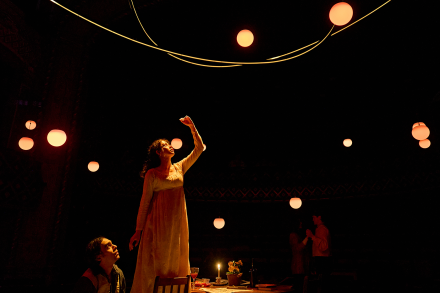
The Old Vic’s production of Arcadia by Tom Stoppard has a vital component missing. The house. Stoppard’s brilliant historical comedy is set in a country manor owned by the Coverly family and the script examines, among other things, the evolution of decorative taste during the 18th and 19th centuries. But no architecture is present on stage. The audience has to imagine what the show fails to supply because the Old Vic’s interior has been redesigned ‘in the round’ with a central playing area encircled by pews as seats. This leaves no room for a large-scale set. Arranging the venue like a boxing ring ensures that parts of the action are invisible to parts of the audience.

Marvellously conservative: Cable Street reviewed

From our UK edition

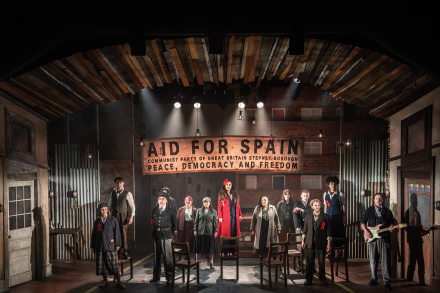
Cable Street is a musical that premièred last year at the Southwark Playhouse and has now migrated to the Marylebone Theatre. Fans of beautiful staging will be instantly smitten by the amazing achievement of the designer, Yoav Segal. The script by Tim Gilvin and Adam Kanefsky tells the story of a violent stand-off in October 1936 between cockney activists and Oswald Mosley’s British Union of Fascists. The authors treat the East End during the depression as a panto or a moral fairy tale. It’s good vs evil. The socialists are hard-working, golden-hearted heroes who rise up against the wicked landlords and their cruel rent hikes. The fascists are angry, misshapen losers led by a waddling baldie in a stick-on moustache. The socioeconomic background is hard to decipher.

If this play is correct, the Foreign Office is a joke

From our UK edition

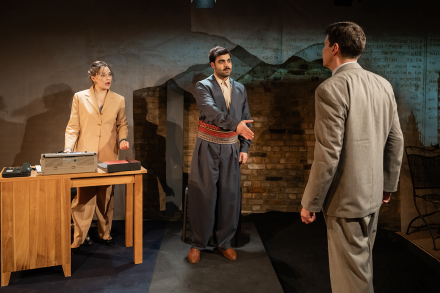
Safe Haven is a history play by Chris Bowers who worked for the Foreign Office and later for the UN as a human-rights activist. The two careers seem to be interchangeable. His drama follows an idealistic and oversensitive Oxford graduate, Catherine, who joins the diplomatic service during the first Gulf War in 1991. Catherine believes that the Foreign Office exists to throw money at basket-case countries that lack the maturity to govern themselves. The entire department acts as a sort of puppy rescue service for dysfunctional nations overseas. All her colleagues accept the wisdom of this approach even though it has the same effect as casting diamonds into quicksand. Catherine responds to historic events like a homeowner assessing a new lamp for the guest bedroom.

Why is this low-grade Ayckbourn play in the West End?

From our UK edition

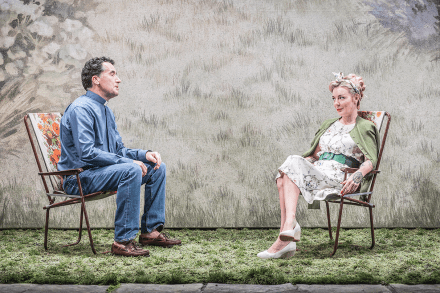
Woman in Mind is a dyspeptic sitcom set in 1986 starring Sheridan Smith as Susan, a moaning Home Counties housewife who slips into a Yorkshire accent when she gets cross. Susan sunbathes in her leafy garden sipping coffee and carping about everyone close to her. She loathes her scowling sister-in-law, Muriel. She can’t bear her husband Gerald, a cerebral vicar, and she refuses to revive their moribund sex life. She constantly badmouths their grown-up son, Ricky, who lives with a community of mute hermits in Hemel Hempstead. How did this scout-hut show reach the West End? In Act One we learn that the rules of Ricky’s community forbid him from speaking to his parents. But in Act Two the story changes.

The rebellion will have a craft stall

From our UK edition

A new party has entered UK politics. Take Back Power seeks to ‘tax the rich and fix Britain’ and they’re planning a revolution that will replace parliament with ‘a house of the people’. Once the regime has been overthrown, Take Back Power will divide the country’s wealth in favour of the poor. About 300 supporters showed up at their launch event last Saturday in a semi-derelict municipal building in Tower Hamlets. Their media game is pretty good. The hall was dominated by a big screen that beamed pithy slogans and memorable statistics to the crowd. ‘James Dyson hoovered up £13.3 billion.’‘John Ratcliffe is hoarding £17.04 billion.’ Their marketing team know that precise figures are more persuasive than rounded-up sums.

Oh, Mary!’s climax is an inspirational bit of comedy

From our UK edition

High Noon, directed by Thea Sharrock, is a perfectly decent version of a trusty western which celebrates its 74th birthday this year. An elderly sheriff, Will Kane, marries a priggish beauty, Amy, on the day of his retirement but his marital plans are overturned by news that a dangerous convict, Frank Miller, has been released from jail and hopes to shoot Will dead. Amy is a devout Quaker and she grumbles bitterly as Will cancels their honeymoon and heads back to town to deal with the evil Frank. But Frank is not the brightest criminal in New Mexico. News of his plans have spread and everyone knows that he’ll show up at midday aboard the express train.

My advice to the next generation

From our UK edition

Everyone went to the same school as someone famous. In my case it’s Spider-Man, Tom Holland, who joined my former school about 30 years after I left. Back in the mid-1970s, the most famous old boy was another superhero, Major Pat Reid, who’d been captured by the Germans during the war and briefly imprisoned in Colditz. His bestselling memoir popularised the notorious jail and led to a TV series, an Action Man model and various other spin-offs. He was known as the only man to have escaped from the Nazis and turned it into a board game. He showed up on sports day, in July 1975, to give us a pep talk and hand out prizes to the school’s top athletes. I wasn’t among them, of course. My great days as a sportsman lay ahead of me. They still do, in fact.

Why has the National got it in for Oirish peasants?

From our UK edition

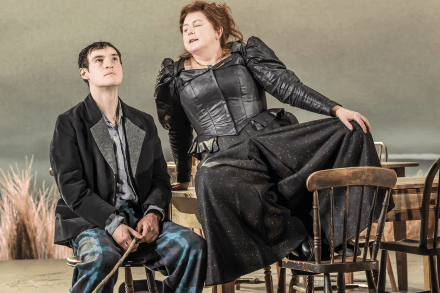
The Playboy of the Western World is like the state opening of parliament. Worth seeing once. Director Caitriona McLaughlin delivers a faithful production of John Millington Synge’s grand satire about dim-witted Oirish peasants and, perhaps unwisely, she spreads the show across the entire length of the vast Lyttelton stage. It looks as if it’s being performed on a railway platform. The drama consists of several broad, daring and improbable steps. A handsome farmer’s boy, Christy, rolls up in a sleepy village in Co. Mayo and claims to have murdered his father. The lustful local girls treat him as a hero rather than an outlaw and compete for his hand in marriage. When Christy wins a prestigious donkey race he sets the seal on his pluck and manliness. Then, disaster.

The bitter truth about New Year’s Eve

From our UK edition

New Year’s Eve is the party we don’t need but can’t get rid of. The location varies according to geography. City-dwellers gather in public squares and cheer at midnight as the skyrockets explode overhead and add more fumes to the blanket of urban smog. In the countryside, revellers meet in freezing farmhouse kitchens and drink bathtub gin while grumbling mutinously about soaring taxes and declining freedoms. Compared with Christmas Day, the procedure is maddeningly vague. There are no special dishes or designated drinks In Britain, the festivities have a distinctly Caledonian flavour. Hogmanay is a Scots word of uncertain origin. The theme tune, ‘Auld Lang Syne’, means something like ‘past time’ or ‘time long since.

One for hardcore Stoppard fans: Indian Ink reviewed

From our UK edition

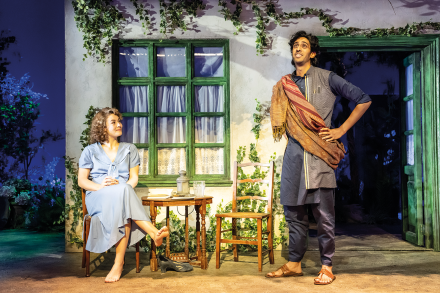
Unusual. After the press night of Indian Ink by Tom Stoppard, no one leapt up and cheered. The crowd applauded politely at the amusing dialogue and the marvellous acting in Jonathan Kent’s handsome three-hour production but there was no standing ovation. The script feels like a literary novel overstuffed with detail. Flora Crewe is a ravishingly beautiful but utterly sexless poet who floats around India in the 1930s provoking the adoration of lustful men. But she doesn’t evolve or change during the action. And she’s maddeningly indifferent to the romantic attention she excites. A maharajah tries to impress her with his fleet of Rolls-Royces. A dashing English captain proposes marriage and she laughs in his face.

Until Truss faces her enemies, she remains an irrelevance

From our UK edition

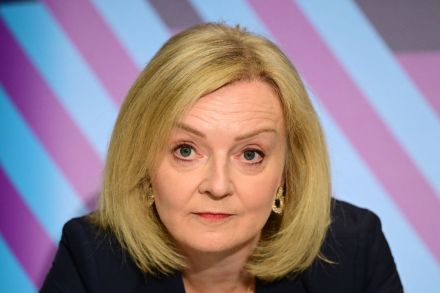
Liz Truss is back. The ex-prime minister hosted a new current affairs show last night on Just The News, a multi-platform outlet. She’s not the first ex-PM to try her hand as a TV star. After Harold Wilson resigned, he briefly compered Friday Night, Saturday Morning, a BBC chat-show, which was considered a failure. Liz’s debut performance was a mixture of invective, self-justification and political brainstorming.  She opened with a barrage of bitter rhetoric.  ‘Britain is going to hell in a handcart,’ she announced, before adding coyly, ‘despite the valiant efforts of a certain prime minister in 2022.’  She laid into the ‘fake news BBC.’ ‘When they’re not lying about Donald Trump, they’re covering up sex criminals in their own midst.

What’s the greatest artwork of the century so far?

From our UK edition

15 min listen

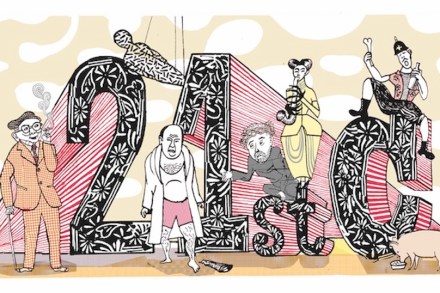
For this week's Spectator Out Loud, we include a compilation of submissions by our writers for their greatest artwork of the 21st century so far. Following our arts editor Igor Toronyi-Lalic, you can hear from: Graeme Thomson, Lloyd Evans, Slavoj Zizek, Damian Thompson, Richard Bratby, Liz Anderson, Deborah Ross, Calvin Po, Tanjil Rashid, James Walton, Rupert Christiansen and Christopher Howse. Produced and presented by Patrick Gibbons.

Paddington – The Musical is sensational

From our UK edition

Who doesn’t love Paddington? The winsome marmalade junkie has arrived at the Savoy Theatre in a musical version of the 2014 movie. First of all, the show is sensational. Absolute box-office gold, full of joy, mirth and spectacle. It’s also quite pricey but never mind. Sceptics who feel indifferent to children’s fiction will be relieved to learn that the dyspraxic Peruvian asylum seeker doesn’t feature much in the story. Paddington’s main attribute is his physical clumsiness and once he succeeds in destroying the crockery and furniture at the Browns’ family home, he runs out of narrative possibilities. His fur is invitingly combustible. Could someone set him on fire? Not quite.

Ivo van Hove tries and fails to destroy Arthur Miller

From our UK edition

All My Sons, set in an American suburb in the summer of 1947, examines the downfall of Joe Keller, a wealthy and patriotic arms manufacturer. During the war he was falsely accused of selling wonky parts to the US military which caused the deaths of 21 airmen. He blamed his partner for the blunder but when the truth emerges he also finds out why his eldest son, Larry, went missing in action. The plot is one of the greatest inventions in world drama and it deserves to be presented with candour, simplicity and naturalism. Director Ivo van Hove dislikes Miller’s decision to set the play on Joe’s front lawn where the neighbours mingle, chat and exchange secrets. In his version, the vacated stage is overlooked by a huge blank wall decorated to resemble a doormat.

A sack of bilge: End, at the Dorfman Theatre, reviewed

From our UK edition

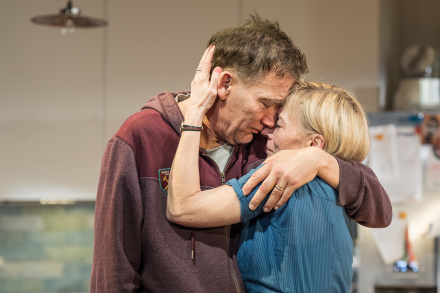
End is the title chosen by David Eldridge for his new relationship drama. Clive Owen and Saskia Reeves star as Alfie and Julie, a pair of wildly successful creative types who live in a mansion near Highgate. Both are 59. Alfie is a retired DJ who made a fortune touring the world at the height of the ecstasy craze and Julie earns a living from crime fiction. But she’s bored with detective stories and wants to publish her memoirs and to write a state-of-the-nation novel set during the 2012 Olympics. Despite their amazing careers, both characters are moaning dimwits who swear constantly and have nothing of value to say about their lives, their professions, or anything else. Listen to them discussing an unseen character named Boring Tone.

The babyishness of Hunger Games on Stage

From our UK edition

The Hunger Games is based on a 2008 novel  about a despotic regime where brainwashed citizens are entertained with televised duels between teenagers. Not a bad idea. We go behind the scenes and watch Katniss (Mia Carragher) being selected to fight Peeta (Euan Garrett) who secretly adores her. As soon as the plot starts, it seizes up. Instead of a gripping tragedy about two lovers forced to kill each other on TV, we’re given a masterclass in the show’s elaborate format. The duellists take part in interviews, coaching sessions, target practice, public parades and a popularity contest which permits them to attract ‘sponsors’ whose role is opaque. At the same time, we get a civics lesson.