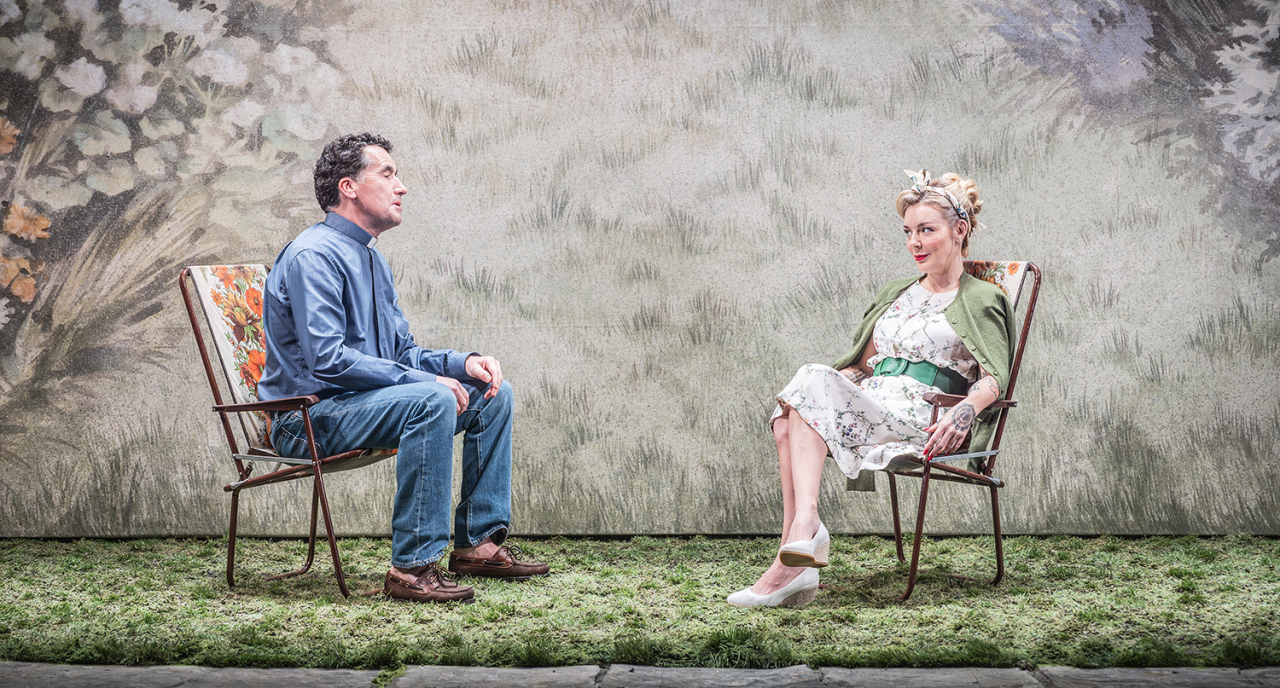


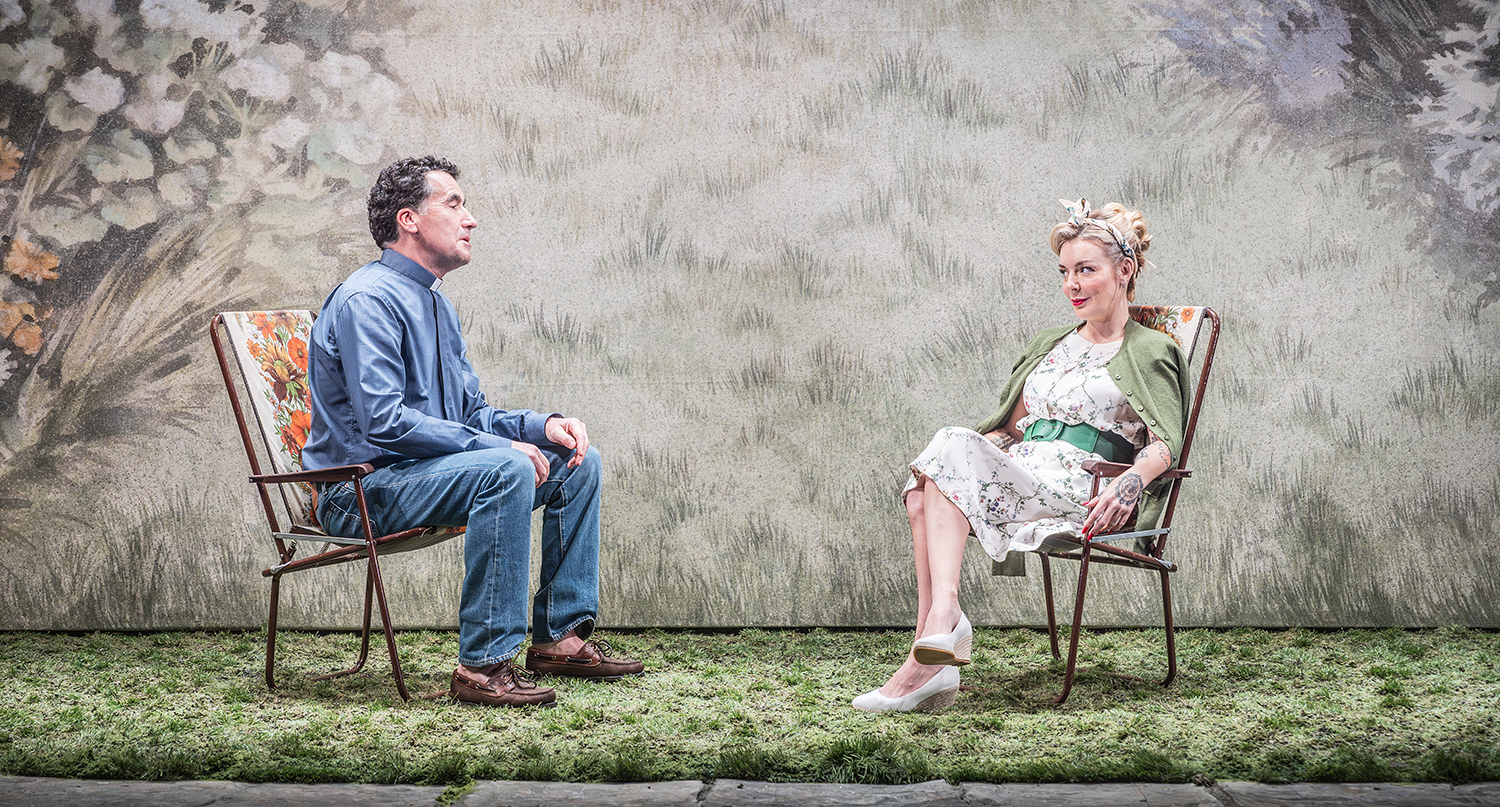
Woman in Mind is a dyspeptic sitcom set in 1986 starring Sheridan Smith as Susan, a moaning Home Counties housewife who slips into a Yorkshire accent when she gets cross. Susan sunbathes in her leafy garden sipping coffee and carping about everyone close to her. She loathes her scowling sister-in-law, Muriel. She can’t bear her husband Gerald, a cerebral vicar, and she refuses to revive their moribund sex life. She constantly badmouths their grown-up son, Ricky, who lives with a community of mute hermits in Hemel Hempstead.
How did this scout-hut show reach the West End?
In Act One we learn that the rules of Ricky’s community forbid him from speaking to his parents. But in Act Two the story changes. Ricky shows up and breaks his vow of silence by informing his prickly mother that he intends to emigrate to Thailand with his new bride. Susan speculates about the latest addition to the family. ‘Gauche,’ she sniffs. ‘A bit jowly,’ she adds. She has yet to meet her daughter-in-law but her instinct is to load up her shotgun and fire off a few pre-emptive rounds of abuse.
No wonder Ricky wants to put as much distance as he can between his bride and his venomous mother. He announces that he plans to work ‘as an odd-job man’ in south-east Asia which sounds like a made-up career. Perhaps he made up his marriage as well to give himself cover as he escapes Susan’s poisonous orbit for ever.
It’s hard to tell what’s real in this show because half of the action is a fantasy taking place in Susan’s damaged head after she received a blow from a garden rake. Her warped mind imagines an alternative family with two charming children and a devoted husband of Caribbean heritage. The fantasy bits are performed in front of a moveable screen marked ‘Safety Curtain’ which looks like a technical error. Susan’s imaginary children find her adorable, and her black husband likes to ravish her on the lawn during thunderstorms. ‘I’m making love to the devil!’ she cries. How did that inflammatory line evade the censors?

The dream sequences are a constant and vexatious puzzle to the viewer. Susan passes from reality to fantasy without changing her costume or her demeanour but the other characters can’t make the same transition. Apart from one. In her dream world, she sees a bearded Asian fraudster (Romesh Ranganathan), who masquerades as an English GP named Dr Bill Windsor. She imagines that this weird fantasist exists in her real life too. All deeply confusing. The fake doctor attempts to grope Susan while pretending to give her a physical examination but the awkwardness of the assault is lost beneath multiple layers of simulation and imposture.
The author, Alan Ayckbourn, has included a number of jokes in his play. And the number is two. The first is about the metaphysics of Christianity and the second concerns Muriel’s signature dish: burned omelettes served with Earl Grey tea leaves. Both gags are delivered by Tim McMullan as Susan’s pretentious other half who spends his time writing a 600-year history of the parish. McMullan’s amused insouciance and his subtle disdain for his revolting wife are brilliantly done. His skinny jeans are just right too.
Sheridan Smith plays the toxic, parasitical Susan reasonably well but she doesn’t look very Home Counties. Her bare arms and legs are covered in tattoos that resemble wallpaper patterns painted on her skin by a prankster while she was asleep. Long sleeves and opaque tights would conceal these anachronisms. Cost? £100. No one could be bothered. The same goes for the other blunders in this careless production. The play amounts to nothing but the low-grade grumblings of a posh, idle brat whose hatred of her relatives is keenly reciprocated. How did this scout-hut show reach the West End?
Already Perfect is a misery memoir with tunes. Levi is a washed-up musical prodigy who suffers a back-stage meltdown on the eve of his new Broadway show. As he reaches for the crack pipe, he’s caught by his partner who asks why he can’t write great tunes like he did when he was starting out. Levi duly rediscovers his talent and improvises a musical about his younger self.
Levi recounts his struggles growing up gay in rural Tennessee in the 1990s when he hid his sexuality from his bigoted family. He tried conversion therapy with a community of Christian freaks and he met a number of gay men who cruised the therapy groups on the hunt for fresh meat. Levi moved to LA and worked openly in the gay-porn industry but the story focuses on the years of struggle and concealment in Tennessee. Underlying the drama is a deep hankering for the bad old days when gay sex was taboo and when every fling was risky, rebellious and exhilarating. Being gay is boring these days. The new thing is oppression nostalgia.






Comments