Lloyd Evans

Lloyd Evans

Lloyd Evans is The Spectator's sketch-writer and theatre critic

The National Theatre deserves to have its budget cut

The arts cuts have arrived. The biggest loser is English National Opera whose annual award of £12.6 million will be replaced by a grant of £17 million, over three years, to cover the costs of a move from London to a regional centre, probably Manchester. ENO boss Stuart Murphy has complained that it’s unfair to confiscate money from a company that admits under-21s for free. But while it’s kind of him to give unsold seats to youngsters, it probably doesn’t justify an annual award of millions. In theatreland the prestigious Donmar Warehouse has lost every penny of its subsidy. And the National Theatre is to forfeit £850,000 but retains the bulk of its annual budget which stood at £17 million in 2020-21.

PMQs: Starmer’s astonishing Nigel Farage imitation

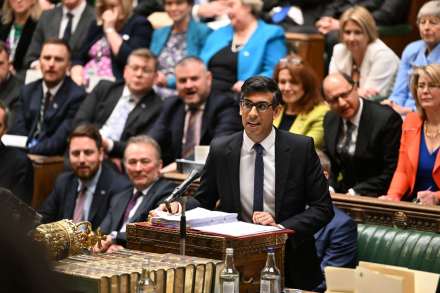
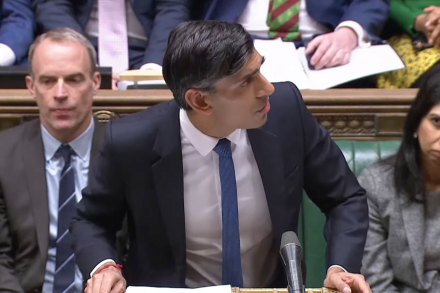
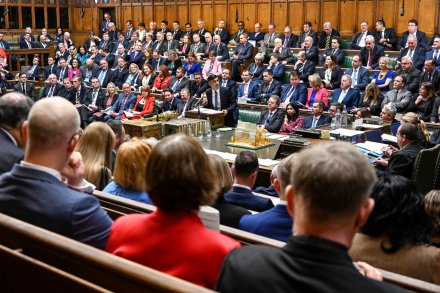
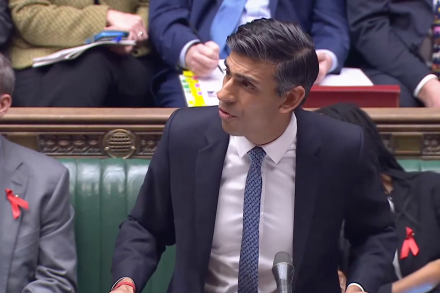
The small boats have landed. PMQs was dominated by the migration issue and the flotillas of dinghies struggling across the channel each day. So far this year over 40,000 doughty oarsmen have braved the seas in inflatable rafts. And they’re not just desperate to flee France with its rude waiters, pretentious language and over-complicated cheese menus. There’s another motive. We were about to hear it in plain language from the despatch box.  Sir Keir started it. At first he merely sought to destabilise Suella Braverman and reinforce the clamour for her removal.  ‘The Home secretary says our asylum system is broken. Who broke it?’ he asked.  Rishi Sunak, usually lightening-quick, paused for a second. ‘Let’s look at the record on immigration,’ he said.

The dialogue ripples with energy: King Hamlin, at the Park Theatre, reviewed

King Hamlin is a shock-horror drama about gang crime in London. Hamlin, aged 17, has left school without learning any useful facts or skills. He even lacks a shirt to wear so he shows up for a job interview looking like a vagrant and starts to swear at his future boss. No work for him. He dreams of studying computer software but he doesn’t own a laptop and seems incapable of getting one. His life is devoid of functioning adults. There’s no teacher, relative, or competent older friend to advise him. No father, of course. His poor dad was knifed to death because he was ‘too good for the hood’. Which is a new cause of crime in London. An excess of virtue can get you stabbed, it seems.

Kids will enjoy this new show at the West End’s newest theatre more than adults: Marvellous, @sohoplace, reviewed

London has a brand-new theatre – yet again. Last summer, a cabaret venue opened in the Haymarket for the first time. More recently, the Marylebone Theatre near Regent’s Park held its debut show. And now Nica Burns of Nimax Theatres has announced a new venture, @sohoplace, which she says is the first West End venue to open for 50 years. The playing area is a hoop-shaped enclosure with rising tiers of seats overlooking a deep oblong pit. Cage fighting and mud-wrestling could be staged here to great advantage. The poster for the debut show, MARVELLOUS, features the title in bright pastel letters with a yellow balloon, a pair of clown’s shoes and a perky budgerigar.

How long before Rishi fatigue sets in?

The Prime Minister has an Asian background. You wouldn’t know that if you listened to the Tories at PMQs because none of them thought it a big deal – not even Rishi himself. But Sir Keir Starmer instantly used the issue to scold the rest of mankind.  ‘Britain is a place where people of all races and beliefs can fulfil their dreams,’ he said, sounding bitter and angry. ‘And that’s not true in many countries,’ he added. A strangely aggressive type of jingoism. His attitude was replicated by a second Labour MP and by two SNP members. It’s a curious habit of some of those on the left: they focus on race to an unhealthy degree.

This production needs more dosh: Good, at the Harold Pinter Theatre, reviewed

Good, starring David Tennant, needs more dosh spent on it. The former Doctor Who plays John, a literary academic living in Germany in 1933, whose cosy life is disrupted by troublesome females. His mum is a cranky basket case dying in hospital and his wife is a manic depressive who can’t look after their kids. Both women speak with Scottish accents. John has a fling with a third Scotswoman who studies Goethe at his university. Weirdly, all three women – mum, wife and girlfriend – are played by the same actress. Couldn’t the producers fork out for a proper cast? They certainly didn’t spend more than a fiver on the set, which looks like an abandoned bomb shelter made of cardboard.

The gripping spectacle of Truss’s fight for survival

A week of sheer hell for the Tory leader. Plots and rumours have swirled around Westminster. Rebels are said to be roaming the corridors and gathering support for an anti-Liz putsch. And yet she’s still here. Our death-row Prime Minister strode into the chamber apparently dressed for her own funeral. Black trouser suit, white cotton blouse. She got into trouble as soon as she opened her mouth. Her ritual answer, ‘I will be meeting ministerial colleagues and others’ brought howls of laughter from the Labour benches. Sir Keir Starmer stood up to deliver a brief and fatal inquisition. He began with a pun about a book covering her career which will be ‘out by Christmas’. But, he wondered, will ‘out by Christmas’ be the title or the release date?

Mirthless, artless farrago of jabber: The Doctor, at Duke of York’s, reviewed

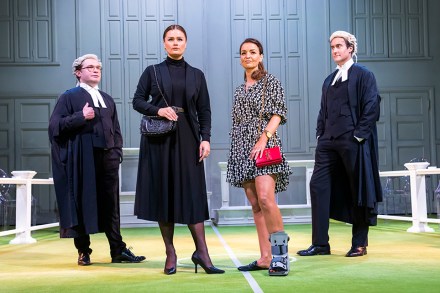
The Doctor is an acclaimed drama from the pen of writer-director Robert Icke. We’re in a hospital run by a famous medic, Dr Ruth, whom the Cockney characters call ‘Dr Roof’. Two major problems beset Dr Roof who has to raise funds for a new private wing while grappling with her partner’s early-onset dementia. A Catholic priest barges in and demands to visit a dying patient. Dr Roof refuses. Then she punches him in the face to prove who’s boss. Her ill-advised left hook plunges the hospital into crisis, and the senior staff gather in the boardroom to sort out the mess created by Dr Roof’s violent temper. All the doctors wear white coats, like pantomime boffins, which seems an unlikely costume nowadays.

Liz Truss’s epic blandness

Liz Truss faced her first proper grilling at PMQs. Her debut, last month, was a softball affair but today Keir Starmer went in with both fists swinging. He asked her to endorse Jacob Rees-Mogg's view that ‘turmoil in the markets has nothing to do with the Budget’. ‘What we have done,’ said Liz, pleasantly, ‘we have taken decisive action to make sure that people are not facing energy bills of £6,000 for two years.’ Sir Keir, already hopping mad, blasted her for ignoring his specific point. ‘Avoiding the question, ducking responsibility, lost in denial,’ he said viciously. He mentioned a young couple from Wolverhampton, Zac and Rebecca, who last week were offered a mortgage only to learn that it had been withdrawn. Liz was to blame.

A show for politicians: John Gabriel Borkman, at the Bridge Theatre, reviewed

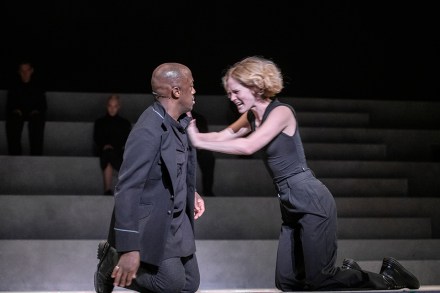
Clunk, clunk, clunk. John Gabriel Borkman opens with the obsessive footfalls of a disgraced banker as he prowls the attic of a shabby townhouse. On a beaten-up sofa lies Gunhild, his estranged wife, who guzzles Coke and watches TV game shows. The whole place stinks of stagnation and failure. The reclusive Borkman was once the country’s best-known banker until envious colleagues accused him of embezzlement and got him sent to jail for five years. After his release, he began a life of self-destructive solitude. The family are more riven with feuds than the royals. Gunhild loathes her twin sister, Ella, while Borkman blames both women for his downfall. His one hope, his son Erhart, openly shuns him and prefers the company of a sexy local seductress.

Is Liz Truss a real grown-up?

Tough call today for Liz Truss. She had to relaunch her premiership at her very first conference as leader. She walked on stage to the sound of the disco hit Moving On Up and for a horrific moment it looked as if she might do the Maybot dance. Luckily she remained still. To greet the applauding Tories she wore a smirk that seemed curiously poised between self-doubt and self-love. ‘I quite can’t believe I’m here – but I’m fabulous anyway.’ She'd chosen a stylish frock of mud-brown and sported the notorious necklace – with a zero dangling from its gold rivets – which is said to reflect her chances of winning a general election. Growth is her brand identity.

Worthy of Wilde: Eureka Day, at the Old Vic, reviewed

Eureka Day is a topical satire set in a woke school in America. An outbreak of mumps has led to calls for a vaccination programme that will prevent the school from being quarantined and shut down entirely. The script, written in 2018, has acquired new layers of meaning since the Covid terror. It opens with a playful sketch in which four white teachers and a black parent try to agree how many ethnic categories should be recognised by school officials. Their friendly conversation conceals a toxic seam of racial suspicion and hostility. The writer, Jonathan Spector, is probably a rock-sold liberal who wants the world to know that the woke cult has gone too far. The play’s highlight is a 20-minute passage of comedy which reaches a peak of hilarity that would make Oscar Wilde envious.

A masterpiece: Rose, at Park Theatre, reviewed

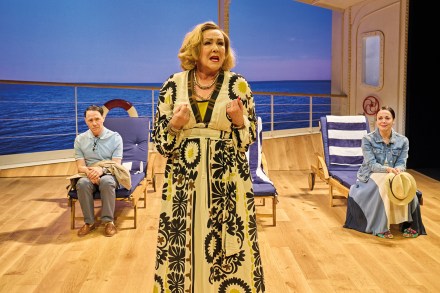
Look at this line. ‘I’m 80 years old. I find that unforgivable.’ Could an actor get a laugh on ‘unforgivable’? Maureen Lipman does just that in Rose, by Martin Sherman, a monologue spoken by a Ukrainian Jew who lived through the horrors of the 20th century. In the opening sections, Lipman plays it like a professional comic and she fills the theatre with warm, loving laughter. Rose’s dad is a hypochondriac who spends all day in bed. ‘He never stopped dying but as far as we could tell there was nothing wrong with him.’ Eventually he loses his life when a wardrobe stuffed with pills topples on to him. ‘He was crushed to death by medicine.

For the state funeral mourners, the endurance is part of the ritual

The queue snakes for miles along the South Bank. Thousands of ordinary people are giving up hours of their time to spend a moment with the Queen’s coffin as it lies in state. Few mourners are dressed up. One or two wear suits and black ties. Some carry flowers. There’s the odd veteran with his polished medals on display. Mostly they’re the type of people you’d see outside a Waitrose car park in a market town. No one jumps the queue, which would be easy to accomplish, but that’s not the point. A public display of endurance is part of the ritual. Victoria Street is closed to traffic. Opposite the entrance to Westminster Abbey a huge platform is being built to give TV cameras a clear view of the cortege when it arrives on Monday.

Why is the BBC using Paddington to remember Her Majesty?

Here comes Paddington – again. Earlier this year, to celebrate her platinum jubilee, the Queen agreed to be filmed taking tea with Paddington in a sketch whose final punchline was a joke about marmalade sandwiches. Her Majesty told the bear she always carries one in her handbag, just in case.  On film she was excellent, unshowy, watchable but not predictable, with an obvious knack for comedy. The short film was doubtless inspired by the Queen’s acclaimed performance alongside Daniel Craig, as James Bond, during the opening ceremony of the 2012 Olympics. But there’s a big difference between a British spy and a Peruvian bear. https://www.youtube.com/watch?

A tremendous show that will attract serious attention from the West End: Rehab – The Musical reviewed

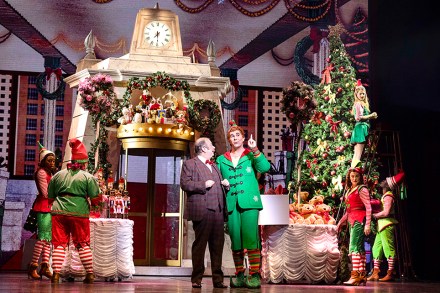
Rehab: The Musical opens with a boyband star, Kid Pop, getting busted for possession of cocaine. The judge sentences him to a course of treatment at the Glade which he attends with great reluctance. Giving up marching powder is the last thing on his mind. ‘I said no to drugs but they just wouldn’t listen.’ His sharky agent, Malcolm Stone, wants to prolong Kid Pop’s notoriety by sending an undercover ‘addict’ to the Glade to spy on him and leak stories to the press. Stone hires a luscious sex bomb, Lucy, to take on the job, and it’s obvious that Kid Pop will seduce her and their affair will end in redemption for both parties. Predictable enough, perhaps, but the couple’s journey is a joy to experience.

Rhapsodic banalities: I, Joan, at the Globe, reviewed

‘Trans people are sacred. We are divine.’ The first line of I, Joan at the Globe establishes the tone of the play as a public rally for non-binary folk. The writer, Charlie Josephine, seems wary of bringing divinity into the story too much, and he gives Joan a get-out clause to appease the agnostics. ‘Setting aside religiosity we’ll settle for more of a street god, a god for the queers and drunks… a god for the godless.’ What can ‘a god for the godless’ mean? No idea. Joan throws in a few more hipster platitudes about ‘elevating our humanity, finding the unity hidden inside community, remembering our collective connectivity fuels courageous creativity [sic]’.

Liz Truss’s first PMQs felt like a dress rehearsal

That felt like a dress rehearsal. Liz Truss sailed through her first PMQs which will probably be her easiest. It may turn out to have been her best. When she arrived, the House burst into ecstasies of joy as if she’d just found the cure for malaria, solved the Jack the Ripper case and liberated Hong Kong. The questions lobbed at her were as soft as pizza dough, and each was prefixed with a note of congratulation and welcome. The mood was warm enough even to thaw the frost that covers Theresa May. Suspending her sulk for a moment she made an ironic observation. ‘Why does she think it is that all three female prime ministers have been Conservative?’ Her ‘mind-the-gap’ style is not easy to warm to.

Our prison culture is more barbaric than it was in 1823: Elizabeth Fry ‘The Angel of Prisons’ reviewed

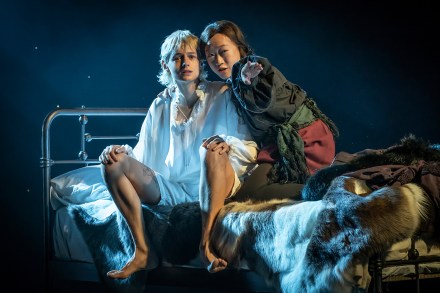
The Angel of Prisons dramatises the life of the penal reformer Elizabeth Fry, who lived near Canning Town. She married a wealthy Quaker, Joseph Fry, who encouraged her philanthropic work which she managed to pursue while raising 12 children. Early in life, Fry had been a party girl who loved dancing, and this production shows her practising her moves to a soundtrack of thumping contemporary music. The script, by James Kenworth, blends present-day London vernacular with the dialect of the early 19th century. It’s easy to watch and it delivers heaps of information without any hint of lecture-hall formality. When Fry visited the mixed-gender Newgate Prison near the Old Bailey she found her vocation.

The show works a treat: Globe’s The Tempest reviewed

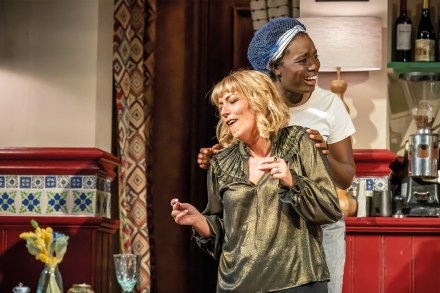
Southwark Playhouse has a reputation for small musicals with big ambitions. Tasting Notes is set in a wine bar run by a reckless entrepreneur, LJ, whose business bears her name. In real life, LJ’s bar would go bust within weeks. It serves vintage wines to a clientele of wealthy tipplers who chug back large tureens of Malbec and claret but who eat no food. The staff help themselves to free champers and Burgundy whenever they choose, and the boss fusses around like a mother hen making sure her brood are safe and content. Bad punctuality is never punished and the staff improvise each shift as they go along. But the emotional atmosphere of LJ’s feels right.