Lloyd Evans

Lloyd Evans

Lloyd Evans is The Spectator's sketch-writer and theatre critic

Branagh can’t quite banish the spirit of Noel Edmonds: King Lear, at Wyndham’s Theatre, reviewed

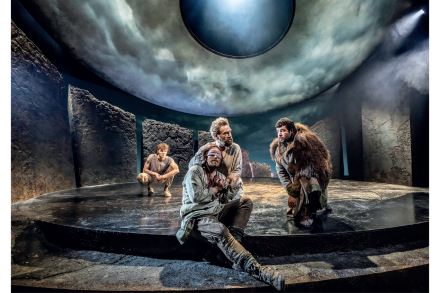
Branagh vs Lear. The big fixture in theatreland ends in a win for Shakespeare’s knotty and intractable script which usually defeats any attempt to make it coherent or dramatically pleasing. This truncated version is a two-hour slug-fest set in the stone age – and it sort of works. The warriors fight with sharpened walking sticks and they stab each other using twigs whetted to a fine point. If you ignore the steel buckles and the writing paper, which were clearly invented earlier, you’ll find it just about believable. On stage, Branagh can’t quite banish the spirit of Noel Edmonds and he adds to the cheeky-chappie persona with a thick golden quiff (possibly a wig) and a mink collar that seems to have been backcombed and scented with talcum powder.
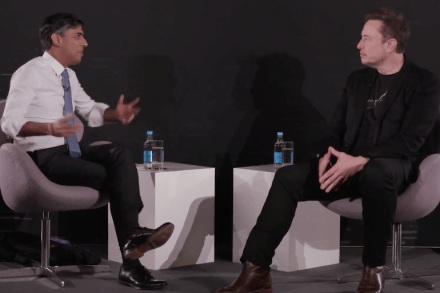
Elon and Rishi’s unseemly love-in

Two of the world’s great unelected power-brokers met last night at Bletchley Park. Elon Musk and Rishi Sunak held a joint interview after the international conference about AI. Their topic was regulation. ‘What should a government like ours be doing?’ said the PM. What an odd start. Why is the Prime Minister asking a foreign billionaire to pre-empt parliament by shaping our internal regulations for us? But Elon seems to get a free pass. He’s regarded as a disinterested operator who supports the powerless against the mighty. And his air of eccentric innocence is fortified by his appearance. He hadn’t bothered to shave. His jowls are rimmed with bum-fluff and he grins constantly like an excited schoolboy. No stylist gets anywhere near him.

Real women do not behave like this: Lyonesse, at the Harold Pinter Theatre, reviewed

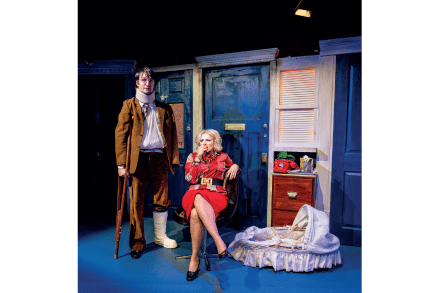
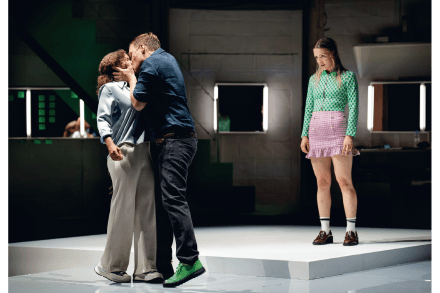
Lyonesse by Penelope Skinner takes a while to get going. The central character, Elaine, is a washed-up British actress (Kristin Scott Thomas) who lives in a crumbling mansion in Cornwall where she dreams of making a comeback as a movie star. She contacts a clueless researcher, Kate, and asks her to drive down from London to write a screenplay about her reclusive existence in the sticks. Kate meets Chris, a mixed-race lesbian poet who works as Elaine’s chauffeur, factotum, and companion. Chris also keeps the moths away from Elaine’s collection of 12 dead parrots, stuffed and caged. It’s a piece of absurdism that doesn’t know how absurd it is After nearly an hour of stage time, Elaine is ready to narrate her life story with Chris on duty as her stagehand.

It’s a bit late for Dominic Cummings to apologise

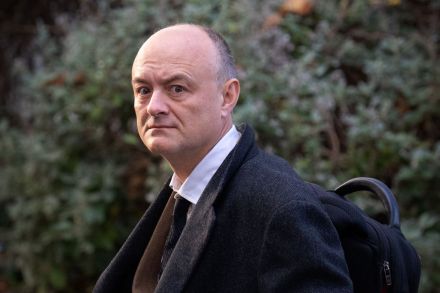
Dominic Cummings showed up at the Covid Inquiry dressed in his signature white shirt. Plus, in a nod to formality, he’d added a shoe-string tie , rakishly askew. He was interrogated by Hugo Keith KC, a lawyer with a plausible manner and an expensive tailor. He looked like one of those shiny new MPs with an answer for everything. The kind who switches parties as easily as changing energy suppliers. Keith obviously hoped to make Cummings blush by reading out his famously sarcastic emails. He recited this from the archive. ‘The cabinet’, wrote Cummings, ‘is largely irrelevant to policy or execution… it’s seen by everyone in No 10 as not a place for serious discussion.’ Cummings stuck to his guns on the stand.

The shallow truth about Rachel Reeves

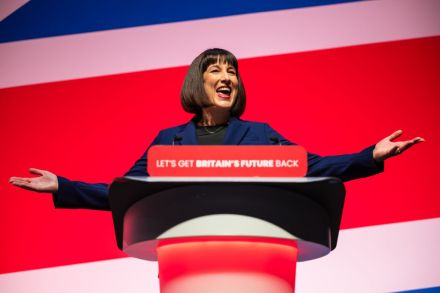
Sexism struck early in Rachel Reeves’s life. Last night the shadow chancellor gave a talk about her new book on female economists, and she recalled an early brush with toxic masculinity. Aged eight, competing in a public chess tournament, she faced a little boy who foresaw a swift and easy victory. ‘Lucky I’m playing a girl’, he said. Reeves duly thrashed him. ‘He didn’t say it again after that,’ she told the crowd. At Oxford and the LSE she was a keen sexism detective and she noted with dismay that there were no women teaching economics at either university. Things got worse at the male-dominated Treasury where her colleagues created a new computer graphic, BOEQM (Bank of England Quarterly Model.

Rishi Sunak has lost his fizz

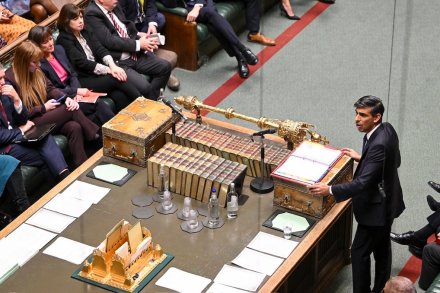
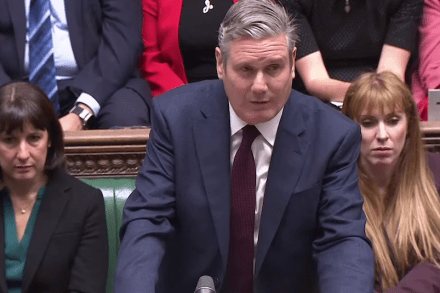
A harrowing session at PMQs. Rishi Sunak seemed subdued and de-energised. His fizz had gone flat. The usual hip-wriggling shuffle at the despatch had been replaced with a hunched, anxious pose. Heavy shoulders. Head drooping. The Middle East crisis has snapped his elastic. The issue Sir Keir had ducked was Gaza. Too hot to handle Sir Keir, by contrast, was beaming like a City embezzler celebrating his daughter’s wedding. Spreading one arm wide, he turned munificently towards his backbenchers and welcomed the victors from last week’s by-elections. He poked fun at the defeated Tory in Tamworth, Andrew Cooper, who had dismissed the complaints of voters who can’t buy food but can afford a mobile phone.

If only Caryl Churchill’s plays were as thrillingly macabre as her debut

The first play by the pioneering feminist Caryl Churchill has been revived at the Jermyn Street Theatre. Owners, originally staged in 1972, feels very different from Churchill’s later work and it recalls the apprentice efforts of Brecht who started out writing middle-class comedies tinged with satirical anger. Churchill sets her play in the cut-throat London property market where prices are soaring and tenants are apt to be evicted if they can’t cover sudden rent rises. Marion is an estate agent who secretly buys a house occupied by her former lover Alec who is married to Lisa. Their third child is on the way. Marion hatches an evil plan to kick the family out and to claim Alec back as they sink into financial ruin.

Starmer channels Blair on Israel

The gears were grinding hard at PMQs. Sir Keir Starmer shifted his party decisively away from its Corbynista past and pledged full support for Israel after the recent atrocities. He said he was ‘still mourning the terrorist attacks’. And having met relatives of British hostages held by Hamas, he was unequivocal. ‘Release them immediately.’ Sunak hid behind legal sophistries It’s a shame that his rhetoric felt so polished and poetic. Almost like song lyrics. ‘Too much blood, too much darkness,’ he crooned. ‘The lights are going out and innocent citizens are terrified they will die in the darkness, out of sight.’ And he indulged in a lot of glib verbal counterpoint. ‘Hamas are not the Palestinian people and the Palestinian people are not Hamas.

They call me the ‘problem teetotaller’

My guts went on strike last July. I was staying in a hotel and I spent several days sprawled on the bed, vomiting occasionally, eating and drinking nothing and barely able even to wet my lips with water. Meanwhile, a bottle of Prosecco offered by the management stood untouched next to the widescreen TV. I started to wonder if this was my Frank Skinner moment. My farewell to booze. In his memoirs, Skinner describes how he gave up drinking by accident in his twenties when a virus confined him to his bed for a week and destroyed his interest in alcohol. Restored to health, he went back to the pub to meet his friends but he shunned drink because he’d realised it was superfluous. As rehab stories go, Skinner’s is bizarre because it’s so quiet and unassuming.

Scherzinger is superb but why’s the set so dark and ugly? Sunset Boulevard, at the Savoy Theatre, reviewed

Sunset Boulevard is a re-telling of the Oedipus story set in the cut-throat world of Hollywood. Pick a side in this tortured yarn. There’s Norma, a burned-out sex-goddess, who wants to make a comeback as a teenage ballerina in a dance epic. Or there’s Joe, a penniless scribbler, who becomes Norma’s reluctant toyboy while he works on her doomed screenplay (which stands for a stillborn child). Clinging to Joe is Betty, a drippy girlfriend who represents escape and artistic integrity. The final piece in the jigsaw is Norma’s discarded husband, Max, who stands for sadistic and destructive obsession. Each day he sends Norma a new batch of counterfeit love letters from non-existent fans.

As gripping as an Agatha Christie thriller: Shooting Hedda Gabler, at the Rose Theatre, reviewed

The unlovely Rose Theatre in Kingston is a modest three-storey eyesore. The concrete foyer looks like an exercise area on a North Sea oil platform, and the auditorium itself is a whitewashed rotunda that resembles the chapel in a newly built prison. Yet this cheerless, functional space is perfect for a mischievous new satire, Shooting Hedda Gabler, about recent developments in the acting trade. The central character, Hedda (Antonia Thomas), is a washed-up American starlet who wants to gain artistic credibility by taking the lead in a pretentious film version of Hedda directed by Henrik, a tyrannical Norwegian auteur. ‘There is no script,’ he announces on the opening day. But he’s lying.

Dreary Keir Starmer makes Iain Duncan Smith sound exciting

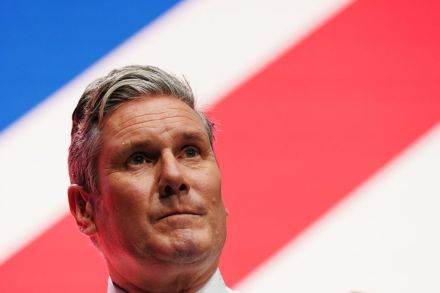
It might have been an inside job. The saboteur who threw a handful of glitter over Sir Keir Starmer at the start of his speech turned the Labour leader into a hero for a few seconds. The assailant was frogmarched away while protesting in a very expensive accent. ‘True democracy is citizen-led’ he brayed, using the cultivated tones of a duke giving orders to his grouse-beaters. On the podium Sir Keir shrugged his jacket to the floor and revealed a manly torso. His white shirt was bulging in all the right places (and a few of the wrong ones). He stood before the conference like a veteran wrestler, an undefeated champion, a sturdy prize-fighter who throws upstart challengers out of the ring. They loved him for it.

London’s ‘Free Palestine’ protest descended into farce

Central London succumbed last night to a mob of protestors celebrating the outrages perpetrated by Hamas on Saturday. That was the verdict of many news outlets. ‘Night of Fury’ ran the Daily Mail’s headline. ‘Police separate warring groups’ said the Daily Express.  The protest outside the Israeli embassy in Kensington lasted more than two hours and although it was boisterous it never, as far as I could see, turned ugly. About three thousand people blocked High Street Kensington and blew whistles, waved flags and handed out ‘Boycott Israeli Apartheid’ stickers. Pranksters attached them to the backs of policemen, for fun. The embassy itself, tucked away in a private avenue, was protected by locked gates and a cordon of 18 policemen who wore ordinary uniforms.

Rishi the revolutionary? Come off it

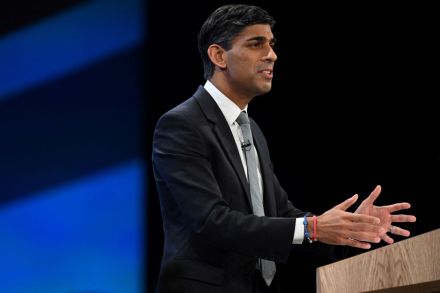
It was preposterous. A prime minister at the head of a party that’s been running the country for 13 years posed as a revolutionary today. Rishi Sunak presented himself to the Tory conference as a dashing anarchist, an upstart rebel, a fearless saviour who wants to wrest power from an authoritarian clique and hand it back to the people. ‘Our mission is to fundamentally change our country’, he cried. Evidently he’d forgotten that the Tories have been in office for the last decade-and-a-bit. To the surprise of no one, he announced that HS2 will be scrapped. The Birmingham-to-Manchester leg is no more, he declared. ‘The right thing to do when the facts change is to have the courage to change direction.

Godot with gags: It’s Headed Straight Towards Us, at Park200, reviewed

It sounds like a barking-mad student sketch but the final product is marinated in wisdom and maturity. It’s Headed Straight Towards Us is a mellow riot of a play. The setting is a rocky glacier in Iceland during the filming of a corny sci-fi movie. Hugh (Sam West) is a cerebral thesp who specialises in playing butlers and high-status toffs. On set, he meets his best friend from drama school, Gary (Rufus Hound), whose career has declined to the point where he’ll accept any role going. Tragic Gary used to be a star who earned a fortune as a cockney villain in the 1980s but he succumbed to alcoholism and ill discipline, and he now has little in common with Hugh who lives in London with a couple of pet dogs and a solicitous male lover.

What you won’t learn from Channel 4’s Partygate drama

Partygate has morphed from a half-forgotten scandal into a new drama-documentary which airs on Channel 4 tomorrow night. This rehash of old news depicts Boris Johnson as an amiable tyrant, played by Jon Culshaw, who presides over a gang of chaotic law-breakers as they hold riotous parties in Downing Street at the height of lockdown. The fizz of topicality has vanished from this story which came to an end last year when Boris was forced to relinquish the keys of Number Ten. So viewers already know whodunnit, why he dunnit, and what happened after he dunnit.  Still, the show has a decent stab at dramatising the nitty-gritty details. To create a sense of freshness, the script introduces us to a fictional intern, Grace, whose video diary follows her early days in Downing Street.

Freddy Gray, Kate Andrews & Lloyd Evans

20 min listen

This week Freddy Gray takes a trip to Planet Biden and imagines what would happen if little green men invaded earth and found a big orange one back in the White House (01:15), Kate Andrews finds herself appalled by the so-called ‘advice’ routinely handed out to women that can be at best, judgemental, and at its worst, slightly bullying (12:51), and Lloyd Evans spills the beans on searching for love on his recent blind date, courtesy of the Guardian (07:13).

Judgment call: the case for leaving the ECHR

42 min listen

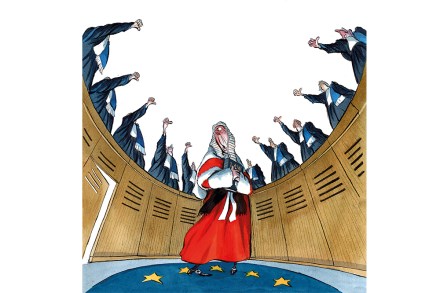
On the podcast this week: Lord Sumption makes the case for leaving the ECHR in The Spectator's cover piece. He says that the UK has strong courts and can pass judgement on human rights by itself and joins the podcast alongside Dr Joelle Grogan – legal academic and head of research at UK in a Changing Europe – to discuss whether the Strasbourg has lost its appeal. (01:22). Also this week:  Rory Sutherland takes a look at the rise of dynamic pricing in the magazine, a new trend where prices can surge at peak times and a phenomenon which has now made its way into pubs. He says that it’s not necessarily the cost that matters, but the way it is framed and is joined by Times business columnist Ryan Bourne to debate.

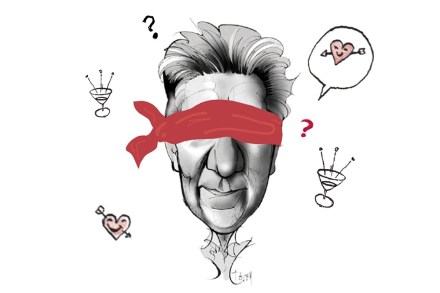
Could I find a girlfriend on a Guardian Blind Date?

Free grub, free booze and the chance to fall in love. That’s the deal offered by Blind Date, a matchmaking strand in the Guardian that brings together lonely hearts and asks them to spill the beans. When I applied for this enticing freebie I had no expectation of being chosen, but my email was answered within hours. Amazing. Randy singletons are in short supply among Guardian readers. I was asked to describe my ‘interests’, which are rather limited. I tend to avoid travel, sport, art, museums, cars, planes, movies, pubs, music, parties, dancing, eating out or holidays. I’m never invited to dinner by anyone or ‘for the weekend’, thank God. I avoid TV, and my idea of hell is ‘a walk in the countryside’.

Cheesy skit: A Mirror, at the Almeida Theatre, reviewed

The playwright Sam Holcroft likes to toy with dramatic conventions and to tease her audiences by withholding key information about the characters. This tinkering seems to scare the critics into praising her scripts even though they feel like clumsily written thrillers or botched sci-fi yarns where the rules keep changing. Her technique appeals to high-minded theatres such as the Almeida because it enables A-level drama students to fill their notebooks with impenetrable guff about ‘metatextuality’ and ‘poly-ironic approaches to narrative’. It could be Noises Off by an author who wants to be Brecht or Pirandello Holcroft’s new satire, A Mirror, opens with a bogus wedding that gets disrupted when a gang of cops march on stage and cancel the ceremony. A strange start.