
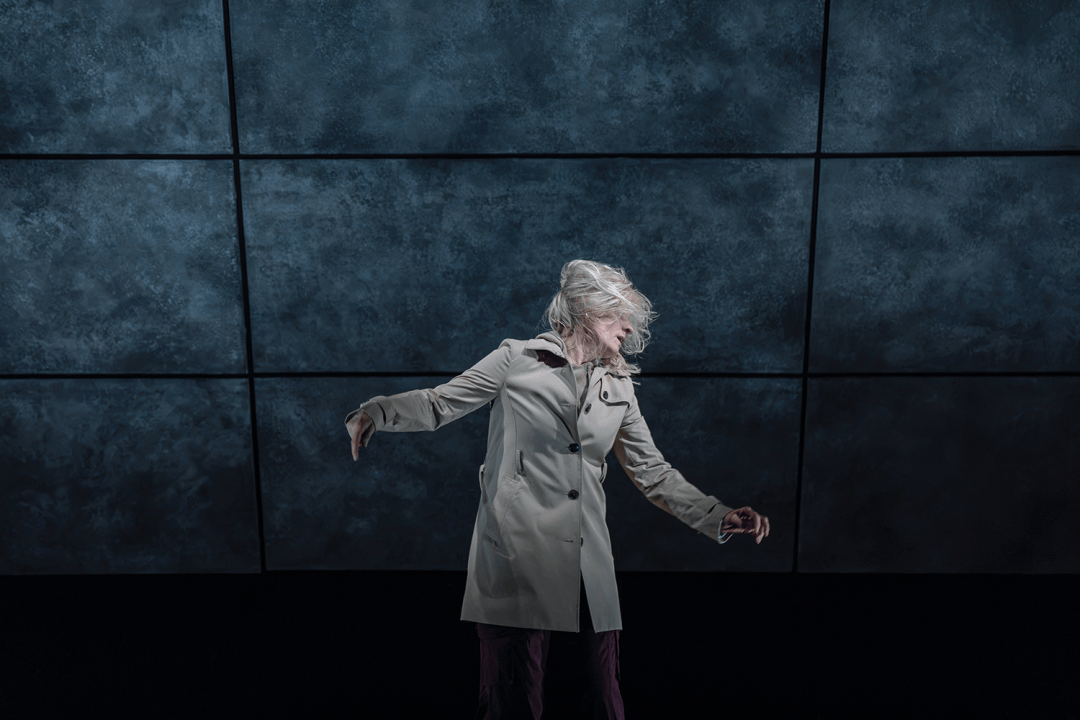
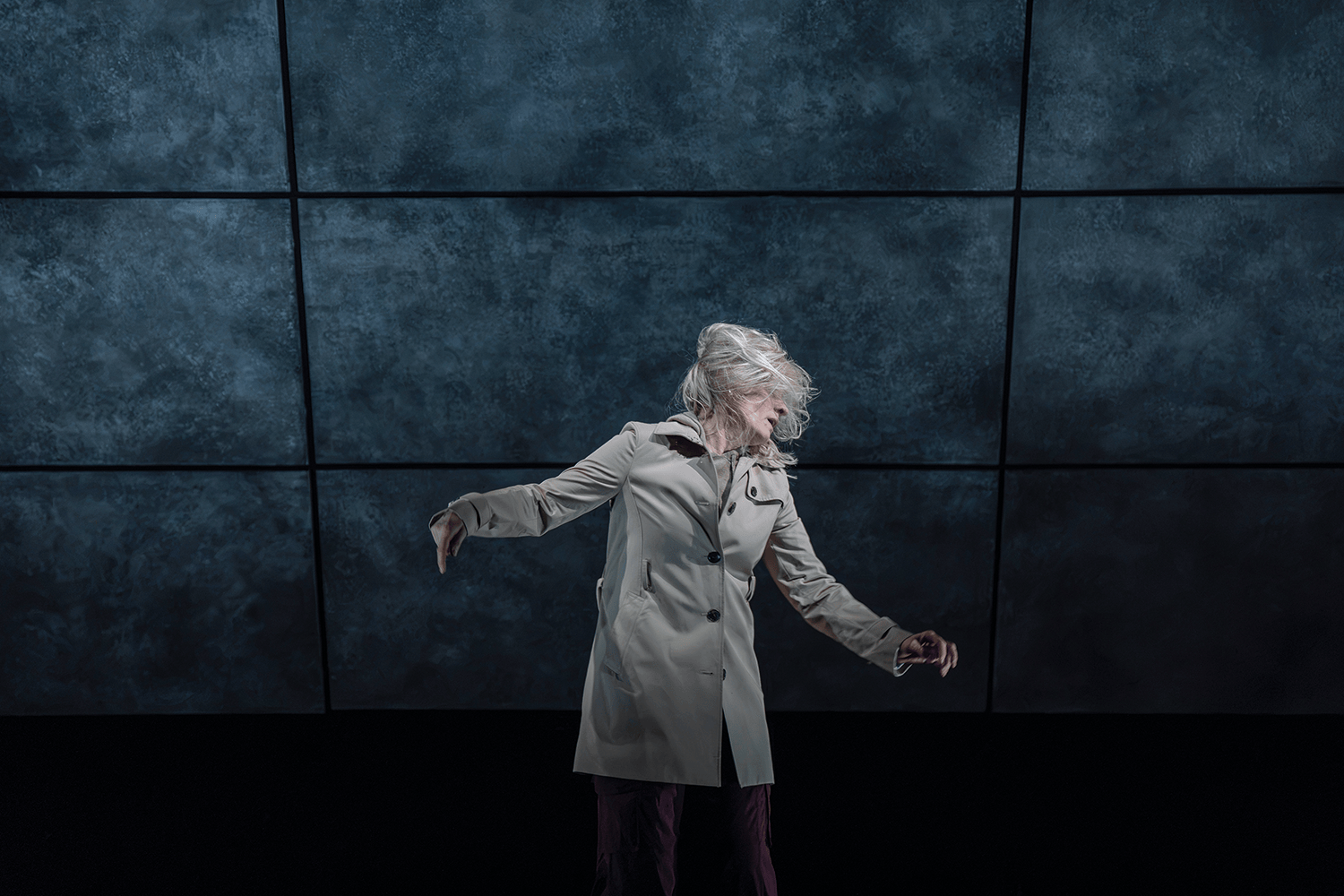
Helen Edmundson has given her new play an ingenious title, Some Woman. The phrase may be admiring, ‘that is some woman’, or dismissive, ‘she’s just some woman’.
The central character, Julie, is a timid domestic drudge who reinvents herself as a plucky feminist heroine. The storytelling is a little amateurish at times and the long opening scene feels like an artless parade of personalities. One by one, Julie’s ghastly relatives walk into the kitchen. Her prickly daughter, Kate, plans to emigrate to Spain with her insufferably talkative boyfriend Nathan, who dresses in a brown pin-stripe suit and boasts of his powerful contacts. Next comes pale little Ginny, a poetry-writing teenager, who holds the family to ransom by refusing to eat. And finally Richard, the toxic ex-husband, who pays the occasional visit to convince himself that he’s a caring father. He wants to give the unemployable Ginny some encouragement by urging her to study poetry. ‘A BA in creative writing,’ he suggests, ‘plenty of job possibilities there.’ The audience howled with laughter at that fantasy.

The plot begins when Julie reveals that she had an ugly encounter with a rude schoolboy on a train platform. She telephones the headteacher and he sets up a supervised meeting between Julie and the aggressive schoolboy. But the lad fights back and sues Julie for ‘battery’. The police are summoned. Julie admits that she grabbed the boy’s arm during the altercation and he claims that she tried to throw him on to the railway tracks.
Julie is charged with ‘threats to kill’. And the story takes off at a gallop. Julie is caught in a judicial nightmare that feels all too plausible. Her family try to rally around her but their advice is either useless or destructive. Kate accuses Julie of chronic anger problems while Nathan encourages her to countersue the boy for defamation. These are great scenes to watch, and the show will keep viewers talking long after the curtain falls because Julie’s legal difficulties could ensnare any one of us. And although the characters are repellent, including the tearful and self-pitying Julie, they are skilfully drawn and they feel like people from everyday life. We all know twerps like Nathan, the interfering chatterbox. And it’s easy to recognise the oily headteacher who uses the noun ‘action’ as a verb.
Julie hates taking personal responsibility and she blames others for problems she inflicts on herself. At university, she got poor grades because she was pregnant during the exams and she appears to regard her sexuality as a force beyond her control, like hay fever or the price of milk. She concludes that the boy would not have insulted her had she been male. But would she have seized his arm had he been an adult? She doesn’t consider this question because she’s playing ‘loser wins all’. And the boy is engaged in the same deadly game. It’s horribly gripping.
Anne-Marie Duff plays Julie as a generic northern misery guts – which is about right. She gets strong support from Hannah Onslow as the aggressive Kate and from Tobi King-Bakare as the wittering Nathan. Stephen Wight (Mr Blake) delivers a great performance in the second half but his role bends the story out of shape and ruins its integrity and power. With neater plotting, this might have become a great drama rather than a fascinating curiosity.
With neater plotting, this might have become a great drama rather than a fascinating curiosity
Lungs on Legs is a gruelling monologue about Cadel Evans who won the Tour de France in 2011. The show is ably performed by Connor Delves who uses three different bikes and a huge overhead screen that broadcasts footage of the races to the audience. Cadel comes across as a hot-headed maniac with few soft edges to his character. He struggles to make friends, to avoid injuries and to obey the nit-pickers who rule his sport. He wins a stage in the Vuelta, a Spanish road race, but the regulators find fault with his plastic water container. He incurs a ten-point penalty that costs him his winning position.
Bad luck follows him all over Europe. On a mountain road, he takes a spill that damages his forearm, his elbow and his shoulder, and he finishes the day’s exertions with pus oozing from an open wound. While peddling up the Alps he has to endure the idiotic advice of his support team over the radio. ‘Focus,’ shouts his coach into his earpiece. ‘And don’t forget to eat and drink.’ Soon he starts looking for a better team.
The show offers a vivid impression of the physical demands endured by elite cyclists. Delves crouches on his saddle, pumping like a madman, glugging fluid from his water bottle and spitting the residue out across the stage. Don’t sit too near the front. If you know a teenager who wants to enter the Tour de France, this show may prove the perfect deterrent.





Comments