

A neighbor betrayed me to her 16-year-old son. “Lloyd knows about politics,” she told the youngster. “He can help you with your essay.” I was introduced to a spotty teenager who appraised me suspiciously through a pair of smudged NHS glasses. “What’s the essay about?” I asked. “Politics,” he said. That seemed to leave the field wide open. “Contact a few members of the House of Lords and ask them to name their greatest achievement.” He nodded. “Sounds good, thanks,” he said with an air of finality, like a chef asking a new minion to sweep the floor. I accepted defeat. My plan had been to give him a sagacious ruling from on high. “Listen, m’lad. Always do your homework or you’ll end up doing someone else’s.” But he understood that better than me.
I contacted 30 peers and received half a dozen replies. Quite a low tally. But perhaps it’s encouraging that most of them are too busy to answer bothersome letters from random voters. Norman Lamont said that joining the Commons was his outstanding achievement: “I was first elected when I was 29 and I still remember the thrill of taking my seat in the greatest parliament in the world.”
Lord (Michael) Levy, who once managed the pop icon Alvin Stardust, named the academies program: “Helping turn schools that were in disrepair into very good buildings with good educational programs for the future of our children.”

William Hague sent a short paragraph printed on his own notepaper, presumably to spare the Exchequer the burden of his correspondence: “I regard my greatest achievement as the Disability Discrimination Act of 1995, which I drafted and took through parliament.”
Ian Botham wrote: “Cricket was great.” The sport gave him a platform “to collect the huge amount of monies from my charity walks to help combat the most common form of childhood leukemia.”
Neil Kinnock sent a discursive two-page reply about his stint as Labour leader which “enabled the party to rebuild and thrive and laid the basis for Tony Blair’s landslide victory in 1997.” He added a footnote which seems strikingly topical. As EU commissioner he brought in rules that oblige the French to stop the Channel crossings: “Under the enforced laws, unseaworthy or badly crewed vessels are not permitted to operate anywhere around the coasts and shipping lanes of Europe. If they do not satisfy the high standards, they are detained in a port.”
Estelle Morris, education secretary from 2001 to 2002, named her election to the Commons as her finest hour: “It is a great privilege for people to trust you to represent them in parliament.” When she left the cabinet, she was mocked for suggesting in her resignation letter that she lacked the skills to lead her department. “I have not felt I have been as effective as I should be,” she wrote to Tony Blair. But to modern eyes, this looks like a refreshing and principled act of self-sacrifice by an MP who put the national interest before personal ambition.
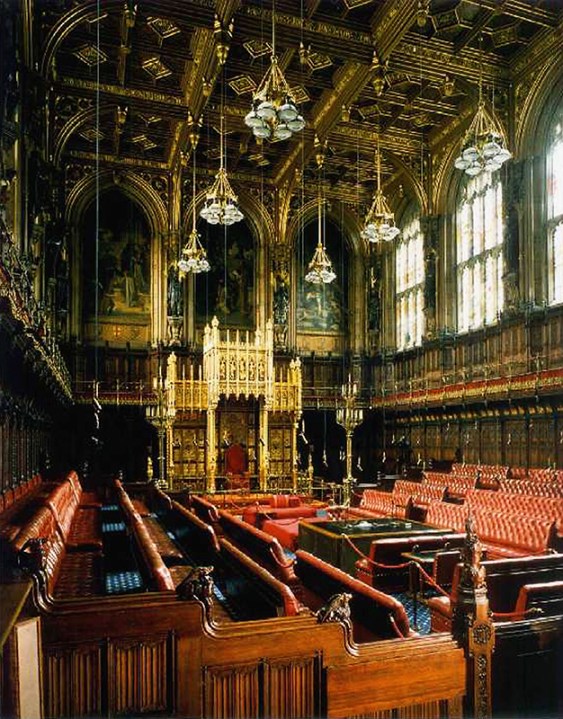
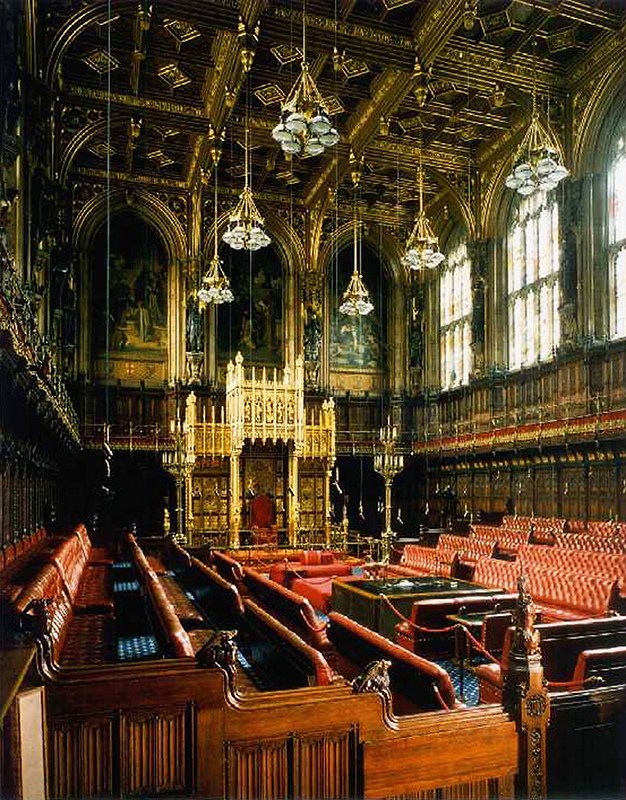
I had expected some peers to mention their duty to amend legislation, which is their constitutional role, but perhaps that work seems negligible or irrelevant to them. I included this point in a “topics for discussion” paper to help the spotty teenager develop a coherent line of thought in his essay. I guessed that his politics teacher was a frustrated Trotskyite revolutionary, so I tilted my arguments in favor of abolition.
First, the EU parliament is unicameral, which suggests that an upper chamber is superfluous. Second, Washington manages with 535 members of Congress while our system supports 1,450 parliamentarians (800 peers and 650 MPs) and yet America’s economy is eight times larger than ours. Perhaps by shrinking our bloated parliament, we might expand our slender GDP. Third, peers do the House a disservice by calling it “the best club in London,” as if it were an upmarket Wetherspoons where members can sip plonk and exchange gossip. If the House is just a boozer, they should fund it themselves.
Perhaps it’s encouraging that most of them are too busy to answer bothersome letters from voters
At present, the club is paid for by non-members who are barred from enjoying the amenities. This seems unfair, to put it mildly, or larcenous, to put it non-mildly. The Lords repay us by scrutinizing and perfecting the badly drafted bills sent to them by the Lower Chamber. But why must we subsidize two assemblies, with more than 1,400 members, to write our laws correctly? The Lords are wise, prosperous and vastly experienced souls whose invaluable advice should be granted to the people for free. Perhaps they need to discover the joys of volunteering. My personal view is that the Upper Chamber should continue, but with a new mechanism to protect everyone from harm. Peers-on-strings. Attach members of the House of Lords to elastic leads that will allow them to stray as far as Pimlico before reeling them safely back to the Palace of Westminster.
I collected the peers’ letters, along with my notes, and carried the bundle to my neighbor’s house. “Too late,” said the spotty teenager when he answered the door. “You missed the deadline.” That was it. Conversation over. In a way, his valediction was a masterstroke of gamesmanship. I had missed the deadline. Not him. He was golden. It was all my fault.





Comments