
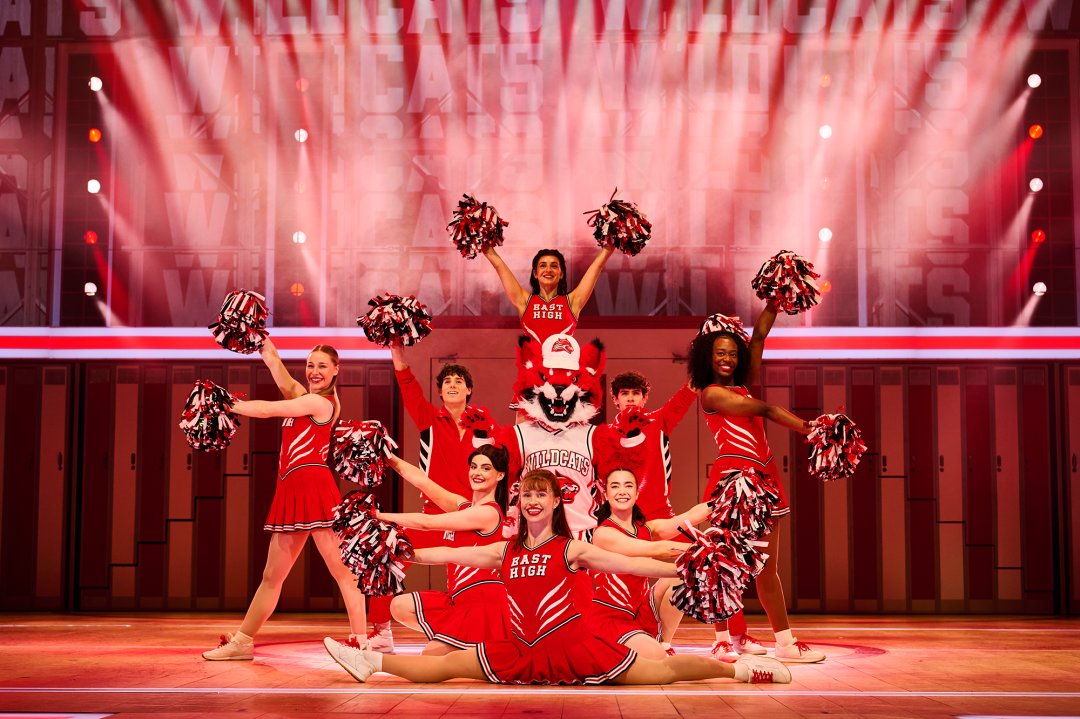
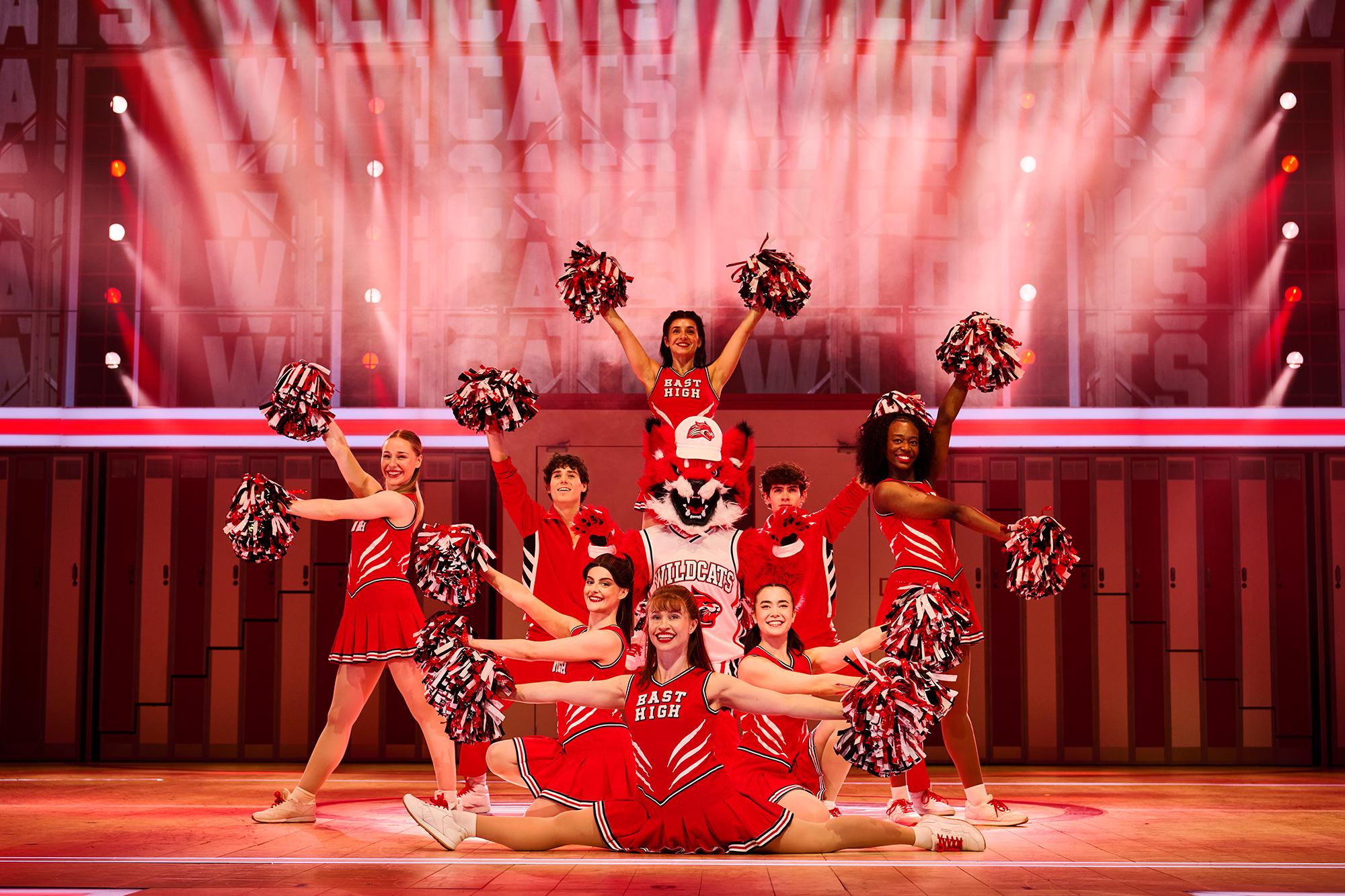
High School Musical is a stage version of the 2006 Disney TV film set in a fictional seat of learning, East High. The school is simmering with romantic ardour and the story begins when a strange clash of dates appears in the timetable. The sports team are playing a crucial match on the same day as the auditions for a production of Juliet and Romeo – a feminist version of Shakespeare’s play which promotes women and sidelines men.
The flamboyant drama teacher, Ms Darbus, refuses to change the date because she detests the sports master, Coach Bolton, who happens to be the father of the school’s best singer, Troy. By coincidence Troy is also the team’s star player. Ms Darbus’s evil scheme is to ruin the match by making Troy abandon the game in favour of her audition. Troy is attracted to the shy, nervous Gabriella who wants to play Juliet on stage but her dream is threatened by the prickly show-off, Sharpay.

The main characters have been deliberately sanitised and stripped of any quirks or rough edges. Troy is a hulking goofball who smirks a lot. Coach Bolton (played by Harry Judd from the boyband McFly) comes across as a stereotypical angry suburban nobody. And the self-doubting Gabriella (Leonor Correia) seems like a bland sugary teen with a knack for maths. The script suggests that she may be ugly but Correia has the looks of a supermodel. So why does she lack self-confidence? KayCee Stroh has fun sending herself up as the laughably pretentious Ms Darbus. Caitlin Tipping shines as the arrogant and domineering Sharpay, who struts around like a born star. Tipping easily outclasses the rest of the company and she works well with Luke Bayer, as Ryan, her camp twin brother.
The atmosphere in the theatre is relentlessly euphoric and upbeat. Before the show began, a group of perky cheerleaders trotted on to the stage and drilled the crowd in the protocols of jubilation. We were ordered to yell, whoop, clap and hand-jive in the approved manner. It felt like a prison exercise, but the audience seemed to enjoy being forced to simulate happiness. The show is aimed at mothers with teenage daughters. If you meet that description, you won’t be disappointed. Males of all ages will find this a bore.
The Pianist is a musical based on the Oscar-winning film starring Adrien Brody as Wladyslaw Szpilman. In this version, Daniel Krikler plays the high-minded pianist whose relatives are sublimely gifted Polish Jews. They fail to post the obvious danger as the Germany army rolls into Poland and they end up crammed inside a filthy apartment in the Warsaw ghetto.
Wladyslaw narrates the show and introduces us to his near-perfect relatives. His brother, Henryk, is a spirited rebel. His sister, Regina, shows great promise as a violinist. His father seems unduly optimistic and he hopes that the Nazis will settle displaced Jews on fertile land in the east. His mother is more cynical and she weeps occasionally.
Then disaster strikes. The family are shoved aboard a cattle truck heading for an extermination camp. Wladyslaw escapes thanks to a random stranger who intervenes at the last minute. This sets a pattern for the rest of the story. Wladyslaw is a maddeningly passive figure who strolls through one of the worst atrocities of the 20th century with a disinterested shrug.
It’s tempting for a producer to turn a popular movie into a musical but the original may cast too long a shadow
Saved from the cattle truck, he lands a job as a construction worker inside the ghetto. Asked to smuggle weapons, he gives his assent immediately. A Nazi guard demands to search his bag but finds nothing. Lucky Wladyslaw escapes again. Later, a fan of his music saves his life by supplying him with vodka and food.
At odd times, the ghosts of his relatives reappear on stage and offer him lines to speak and ideas to consider. This is a touching device: one’s murdered family are able to influence one’s everyday life. But it ruins the drama because it strips Wladyslaw of purpose or intention.
Helped by another ally, he takes refuge in a large house furnished with a grand piano. ‘The Gestapo are coming,’ he’s told. Instead of legging it, he sits on the piano and smokes a cigarette. His first ever. He smokes 100 of them straight off. Why? Perhaps to symbolise his supreme indifference to life and death but his internal thoughts are a closed book.
A beautiful blonde arrives with a secret to divulge. She’s pregnant, she says. ‘How wonderful,’ he replies. Is this his child? Perhaps. Nothing matters to him so it’s impossible to feel involved in the astonishing events that are unfolding around him.
The songs add very little to the atmosphere of risk-free blandness here. It’s tempting for a producer to turn a popular movie into a musical but the original may cast too long a shadow. This show feels like a warning. Copycats beware.






Comments