Lisa Haseldine

Lisa Haseldine

Lisa Haseldine is The Spectator's online commissioning editor - foreign affairs.

Why is Russia ignoring the anniversary of the Ukraine war?

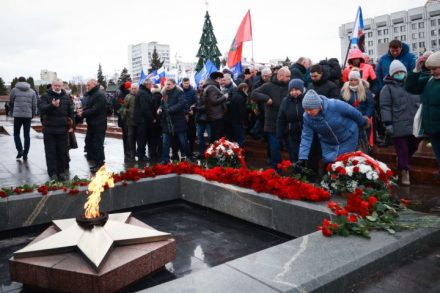
If you read the Russian newspapers this morning, you would be forgiven for thinking today was a day like any other. You would have almost no clue that 24 February marks the one year anniversary of Putin’s bloody, stalling invasion of Ukraine, in which nearly 200,000 of the country’s men have so far been killed or injured. Not a single Russian newspaper carried any articles commemorating the anniversary this morning. The closest they got to directly acknowledging it was to report the news that Putin wouldn’t be giving a speech today to mark the occasion.  While surprising, Putin’s decision not to commemorate the start of his invasion is, admittedly, not totally unexpected.

Did Putin just START a nuclear arms race?

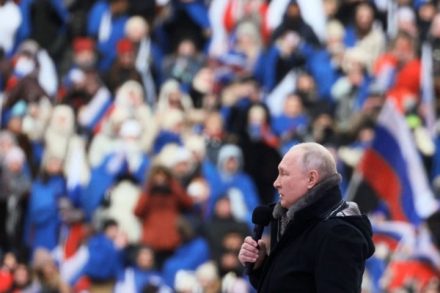
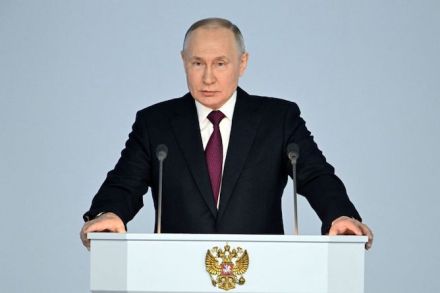
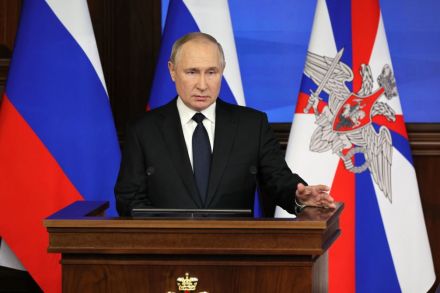
The war with Ukraine is here to stay – and Russians better get used to it. That was Vladimir Putin’s message to the Federal Assembly when he addressed them this morning for the first time in nearly two years. Kremlin watchers looking for obvious signs of where Putin wanted to take his ‘special military operation' in Ukraine may have been disappointed. But Russia's president did use his speech to ratchet up tensions with the United States – by announcing that Russia is suspending its involvement in the New START nuclear arms deal with America. ‘Our relations have degraded and that’s completely and utterly the fault of the US’, he thundered.

Is Putin scared of Ukrainian bombs?

Putin’s war has finally made its way to the Russian home front. A leak from the Kremlin reveals that Russia’s regional governments are being ordered to conduct surveys of and update bomb shelters across the country. Speaking to the independent newspaper the Moscow Times, one Kremlin source said this audit had been going on since at least last spring. Renovating Russia’s bomb shelters is, however, easier said than done. A relic of the Soviet Union, the country’s shelters were decommissioned in the 1990s, with many being leased or sold to the private sector and many more falling into disrepair.

Putin can’t keep Russians in the dark forever about the Ukraine death toll

Nearly 188,000 Russian soldiers have been killed or injured since the start of Vladimir Putin’s invasion of Ukraine eleven months ago, according to the latest estimate by US intelligence. This devastating toll amounts to an average of over 500 Russian dead or wounded soldiers for each of the 341 days Russia has been at war with Ukraine. Russia is also believed to have lost as many as two thirds of its tanks on the battlefield in the past eleven months. Perhaps unsurprisingly, the Kremlin has yet to acknowledge these figures that were confirmed in a UK cabinet meeting this morning, even to deny them. The last time the Russian Ministry of Defence acknowledged any army casualties at all was on 21 September.

Is Putin about to gamble on a second mobilisation wave?

Is Vladimir Putin finally about to announce a second mobilisation wave? Ukraine has been warning for weeks that up to half-a-million more troops could be forced into the army. Jitters are growing in Russia that a call-up might be imminent: rumours are circulating that the Kremlin might shut Russia’s borders and resort to a second round of mobilisation. The Kremlin has denied these reports: but Putin is increasingly getting desperate. He needs to find a way to turn this war around. He also needs to fulfil defence minister Sergei Shoigu’s quota that an army of approximately 1.5 million is needed ‘to guarantee the fulfilment of tasks to ensure Russia’s security’ – and defeat Ukraine.

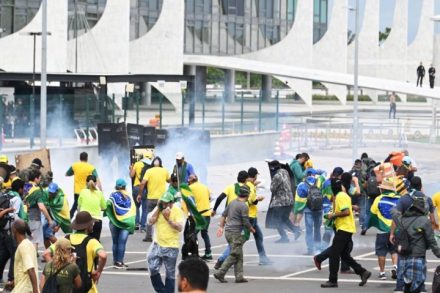
In pictures: Bolsonaro supporters storm Brazil’s presidential palace

A few days after the anniversary of the 6 January events in Washington DC, thousands of Jair Bolsonaro supporters stormed Brazil’s congress, its presidential palace and supreme court to protest against the inauguration of Lula da Silva. They were evicted within hours, but that they got so far - in the face of a heavy military police presence - made worldwide news. Here are pictures of events as they unfolded: 3:30 p.m. local time: Protesters dressed in Brazil's national green and yellow colours are repelled with tear gas outside Planalto Palace, official residence of the Brazilian president. Da Silva, 77, himself was not in the city yesterday, visiting flood victims in the state of São Paulo. He was elected in October with 51 per cent of the vote. Credit: Getty images 4 p.m.

Putin violates his own Christmas ceasefire in Ukraine

Vladimir Putin’s 36 hour ceasefire in Ukraine, which came into effect at noon today, didn’t last long: less than two hours in, the Russian army broke it. The temporary truce had been announced yesterday by the Russian president to allow soldiers and civilians to celebrate Orthodox Christmas and attend church.  But shortly before 2pm local time, air raid sirens sounded across Ukraine, including in the capital Kyiv. Artillery fire and shelling were reported in the eastern cities of Bakhmut and Kramatorsk in the Donetsk region, later confirmed by the Ukrainian presidential administration. One unverified video quickly surfaced, showing two Ukrainian soldiers who claimed to be recording the sound of shelling in Bakhmut.

Moscow is playing a risky blame game in Makiivka

At one minute past midnight on 1 January, as Putin uttered the last words of his new year’s address, Ukraine sent six Himars rockets into the Russian-occupied territory of Donetsk. Four landed on a vocational school in the town of Makiivka, which had been acting as a temporary Russian military base, reducing its buildings to rubble. The domestic fallout for Russia is proving messy. From the moment they announced news of the strike, the Russian Ministry of Defence (MoD) has made considerable efforts to downplay the death toll and pin the blame for the incident on the dead Russian soldiers themselves. They, the MoD says, are the reason Ukraine knew where to find them.

Putin’s wish for 2023

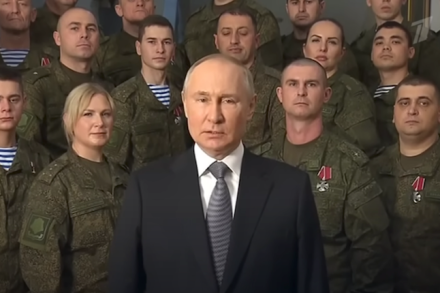
Following an unusually quiet December for the Russian president, Vladimir Putin has emerged to deliver his traditional New Year’s Eve address. The first since his invasion of Ukraine ten months ago, many across Russia’s eleven time zones will today be glued to TV screens and internet live-streams at five minutes to midnight to hear what he has to say. With 2023 already beginning in half of those time zones, we too have been able to view his speech. In years gone past, Putin’s typically predictable and formulaic pre-recorded New Year’s Eve speech has been a staple fixture of Russia’s countdown to midnight. It is a useful touchstone for Putin and the Kremlin to feign a connection with the Russian people.

How can the West help Russians to defeat Putinism?

Watching Tchaikovsky’s ballet The Nutcracker is a Christmas tradition for many. But this year, people are being urged to stay away: Ukraine’s culture minister Oleksandr Tkachenko published an open letter earlier this month asking the West to boycott Tchaikovsky and wider Russian culture until the war in Ukraine is over. ‘This war,’ he said, ‘is a civilisational battle over culture and history’.  He's right: since February, the Russian state is doing its best to annihilate Ukrainian culture in every possible way: banning and seeking to destroy the Ukrainian language, artists, authors and music. But how far should we go in response? Is a crackdown against Russian culture a wise idea, or does it play into Putin’s hands?

Is Putin hiding away?

December is usually a busy month for Vladimir Putin, but not this year. In the run-up to Christmas, Russia’s president typically holds his annual press conference. But this time the event has been cancelled. Putin’s annual presidential address to the Russian federal assembly – that was pushed back from the summer – has also been canned. And Putin will also be absent from the traditional New Year’s Eve ice hockey game on Red Square. Putin’s yearly telethon, where ordinary Russians can phone in and have a chat with the president (indefinitely postponed from earlier in the year), too has been axed. Such events in the Kremlin calendar are annual touchstones for Putin to ‘connect’ with the Russian people.

How to make the most of Vienna’s Christmas markets

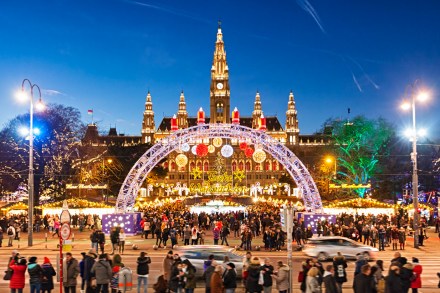
Oh, Vienna. Home to Mozart, Beethoven, Haydn, Freud, the Danube, waltzing and coffee house culture, to name but a few. Famous for its history and culture, the Austrian capital’s cobbled streets fizz with stories of ages past.  In my opinion, there is no better time to visit than in the winter – and the run-up to Christmas in particular. This city knows how to do Christmas. The streets are lit with a plethora of Christmas lights, some of which have acquired fame in their own right (I am told a friendly rivalry exists between the fans of the chandeliers on Graben – designed to create the impression of a gigantic outdoor ballroom – and the ‘curtain of lights’ around the corner on Kohlmarkt).  But the biggest draw of all are Vienna’s Christmas markets.

The best cookbooks to give this Christmas

I love a good cookbook. In an age where endless variations on any recipe are no more than a few clicks away on the internet, there is still a certain magic to buying, or receiving, a physical, curated collection.  Cookbooks can teach you something in a way that individual online recipes can’t. Whether exploring a new cuisine or trying a new technique, cooking from a cookbook means you can build up a whole repertoire of dishes and hone new skills. I love that you can annotate the pages, and it doesn’t matter if they get mucky (I find you can always tell the best recipes in a book by how dog-eared and food-splattered the pages are).

What can we expect from Hunt’s Autumn Statement?

Later this morning Jeremy Hunt will deliver his first Autumn Statement as Chancellor. With the focus firmly on the dire state of the economy, pressure is on Hunt to deliver on his promise to reduce inflation (which yesterday hit 11.1 per cent) and restore stability. As Kate Andrews writes in this week's magazine, the Chancellor's measures are likely to see a new era of austerity ushered in due to a number of a trailed tax hikes and public spending cuts. In recent days, Hunt has been laying the ground work for what is likely to be a difficult times ahead. So what can we expect from today's statement?

How Russia responded to the Polish missile incident

Yesterday, during the largest wave of missile strikes conducted by Russia since February, a shell flew six kilometres over the Ukrainian border into Poland, killing two people. Before any facts had been established, there was confusion in the Russian media whether to report on the story with outraged protestation or excitement. To begin with, Russian commentators reacted with glee. TV presenter and known Kremlin mouthpiece Margarita Simonyan gloated on social media, referencing recent Ukrainian shelling on the Russian border and taunting ‘Now Poland has its own Belgorod region, what did you expect?’. Nevertheless, several hours after the news broke, a statement came from the Russian Ministry of Defence denying responsibility for the missile.

Russia receives the cold shoulder at Bali’s G20 summit

In the warmth of the Balinese sunshine, Russia has received an unsurprisingly frosty reception at the G20 summit. We are barely a few hours into the summit and the tension is already acute. The source of this tension, of course, is Russia’s invasion of Ukraine.  This is the first G20 held since the beginning of the Ukraine war earlier this year. Ahead of the summit, some member states were already questioning whether Russia should still be allowed to retain its membership of the group. Meanwhile, in light of the war, Ukraine was invited to participate in this year’s summit as a guest. Perhaps in anticipation of this, it was announced last week that Russian president Vladimir Putin would not be attending. Foreign Minister Sergei Lavrov has gone in his place.

How many Russians have fled Putin?

Ever since the war in Ukraine started there have been reports about Russians emigrating, either fleeing conscription or simply dismayed at the conflict and Vladimir Putin’s authoritarian turn. Moscow has previously dismissed reports that as many as 700,000 could have fled. But that figure no longer looks so far-fetched in the light of data just released by the FSB saying 9.7 million trips out of the country were made in the third quarter of this year (July to September), almost double the number made between April and June.  This figure was slipped out over the weekend and has so far gone unreported in the English-language press. It’s significant as it covers 21 September, the day that Putin announced his military enlistment plan.

‘Wrong visit, wrong time’: What Germany makes of Scholz’s Beijing trip

This afternoon, German Chancellor Olaf Scholz goes to China. His one-day visit to Beijing is the first by a democratic leader since the outbreak of the Covid pandemic nearly three years ago. But before he has even touched down on Chinese soil, Scholz’s trip is going down badly back home.  ‘It’s the wrong visit at the wrong time,’ declared the broadsheet newspaper Die Welt. Scholz will be the first Western leader to meet with President Xi since he secured his unprecedented third term in power. For many China-watchers, Xi’s consolidated rule and zombification of the country’s Communist party marks a watershed moment for the country – not one, according to Die Welt, that Germans think Scholz should be lending any support to.

Putin’s house of mirrors

If there is one thing we have learnt since Vladimir Putin invaded Ukraine in February, it is that very little he says bears any relation to the truth. For nearly a year, the Russian President has been constructing his own house of mirrors: his rhetoric gives no indication of what is fact or fiction, bluff or candour, hard truth or hot air. Each speech he gives further distorts the reality he presents. Yesterday, Putin spoke at an event held by the Moscow-based think tank Valdai Discussion Club. The theme of his speech was ‘A post-hegemonic world: Justice and security for everyone’. Whose hegemony does this refer to? That of the West – or ‘our opponents’ as Putin ‘carefully’ called them with a smirk. Who is providing ‘justice and security for everyone’?

A ‘workaholic and nerd’: What Russia makes of Rishi

‘Handsome, rich, lucky, traitor.’ That’s how the Russian broadsheet newspaper Kommersant chose to describe the new Prime Minister Rishi Sunak after he launched his leadership bid. In a biographical article charting his rise to power, the paper covers his childhood attending Winchester College – the ‘most important event of his life’ apparently – moving through his time at university and marriage, and into his entry into politics. The moniker of ‘traitor’ refers to his resignation from Boris Johnson’s cabinet in July this year before his own first leadership bid. Noting how different both prime ministers are, the paper states that ‘the strange thing is not that Sunak turned against Johnson, but that he turned against him so late’.