Lara Prendergast

Lara Prendergast

Lara Prendergast is executive editor of The Spectator. She hosts two Spectator podcasts, The Edition and Table Talk, and edits The Spectator’s food and drink coverage.

Spectator archive: Political fanaticism was the real villain in JFK’s death

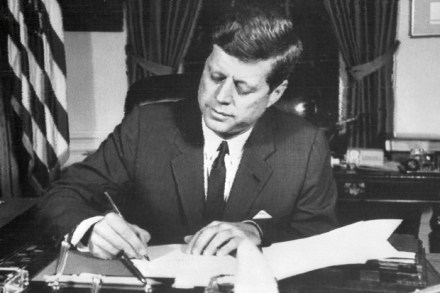
In the wake of President Kennedy's assassination, there was much speculation about whether it was politically motivated. As Robert Conquest points out, the real villain isn't political orientation, but political fanaticism. Here we reprint Conquest's notebook, from the week after Kennedy's death: November 29, 1963 (There is a) current tone of anti-Americanism, which implies they are a terrible lot because one of them killed the President. But quite a few millions didn't -- and indeed voted for him and supported his policies, or opposed them in a decent fashion. But an even more unpleasant and significant thing has been the way in which the killer's motives have been prejudged, over here as much as anywhere. to suit the political bias of the commentator. Before any actual.

Spectator archive: There is no sensible way to measure JFK as a President

'How many years,' asks Murray Kempton 'before anyone would want to read a book about the day Mr. Kennedy was shot?'.  As it transpired, not many. Here we reprint his Spectator column, entitled 'The Roman Way', written in the aftermath of Kennedy's death: Washington November 29, 1963 Mile television, trying as all of us have and 1 failing as all of use must, ceased to talk late on a Saturday night and gave itself over to photographs of various corners and columns of the White House while a voice recited 'Oh captain, my captain, the fearful trip is done', which is Walt Whitman on Abraham Lincoln and the grand style. But no time is like the time one endures oneself; one's own time is personal not historical, one's house and not a temple, the ship has not weathered every storm. Mr.

Spectator archive: JFK’s assassination was political nihilism in its purest form

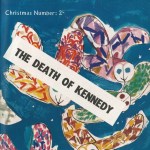
The assassination of President Kennedy came just as the Christmas 1963 edition of the Spectator was going to press - we had to paste a new headline over a colourful, cover. Here we reprint our leader from this issue: The death of John F. Kennedy, President of the United States of America, inevitably produces banality in the leader- writers who have to comment upon it. The meaninglessness of the action is complemented by an inability to write meaning- fully about it. What we have seen in Dallas in the State of Texas is an expense of spirit in a waste of shame, political nihilism in its purest form with all the human suffering which nihilism entails.

‘Miley Cyrus vs Lily Allen’ is not a worthy battle for feminism

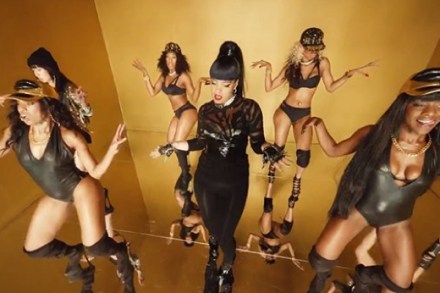
If ever there was reason to believe that feminism has lost its way, then it is found in the current debate about bottoms. It all began with twerking – the sexualized dance that no one had heard of until popstar Miley Cyrus squeezed into some PVC underwear, and twerked to Robin Thicke’s song Blurred Lines. The term entered the Oxford Dictionary of English in August. Bottoms are now all over the place. Last night was the annual Victoria’s Secret show - and, much to the delight of news desks, there were bottoms aplenty. It has become increasingly difficult to open a paper without seeing news about belfies (bum-selfies), bum implants and of course, twerking.

The Silk Road has been busted – but its legacy to the international drug trade will remain

Since 2011, the Silk Road has infuriated governments the world over by allowing digital pirates to operate above the law. It has been – in effect – an eBay for Afghani heroin, cocaine and all manner of illegal goods. Hosted in the virtual tunnels of the ‘Deep Web’, transactions are made in BitCoin and up until yesterday, it was doing roughly 60,000 a day. But now, it seems, the cops have swooped. Yesterday afternoon Ross William Ulbricht, known by the pseudonym ‘Dread Pirate Roberts’ was arrested – on charge of being the owner. Drugs were the site’s bread and butter, making up 70 percent of sales. But you could buy all manner of items including art, erotica and jewellery; banned copies of 18th century literature occasionally circulated.