Lara Prendergast

Lara Prendergast

Lara Prendergast is executive editor of The Spectator. She hosts two Spectator podcasts, The Edition and Table Talk, and edits The Spectator’s food and drink coverage.

Let’s call the Turner Prize what it really is – an uninspiring ode to a multimedia world

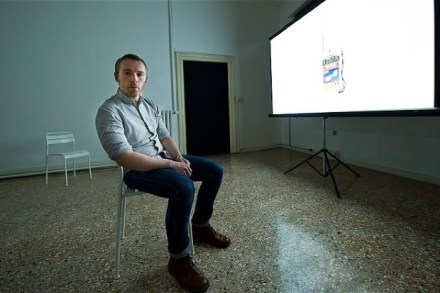
The Turner Prize shortlist has been announced, and includes a video artist who uses YouTube clips, an artist who pairs spoken word with slide shows and photography, and a historical documentary about African art. Among the four nominees for the most ‘prestigious and provocative’ contemporary art prize, not one of them is a traditional painter or sculptor. In short, the Turner Prize seems to have morphed into a film and photography prize. The Tate seem to be aware of this. The nomination announcement said the four artists' methods ‘suggest the impact of the internet, cinema, TV and mobile technologies on a new generation of artists’. Of course, there’s no reason why a piece of sculpture or a painting can’t respond to the onslaught of multimedia too.

Red hair is having a renaissance

Much like supporting Millwall or contracting Parkinson’s Disease, red hair has traditionally been seen by the prejudiced as an affliction worth avoiding. The biographies of Mary Magdalene, Van Gogh and Sylvia Plath will confirm this. Rod Liddle sticks it to the gingers in his column this week: ‘I took my youngest son to a football match on Easter Monday. It used to be something I wryly called a ‘treat’ when the kids were younger, but we usually lost in such depressing circumstances each time that I would then feel the need to give them another treat immediately afterwards, to alleviate the misery. Bowling or pizza or something. Not any more.

Sexism is ‘in your face’ in Britain because it’s up for discussion

Sexism is more ‘in your face’ in Britain than in other countries, a United Nations investigator has claimed. I can see why the UN’s Rashida Manjoo might think this – for better or worse, sexism is a topic that features frequently in British publications. I imagine the Pakistani, Egyptian and Sudanese press don’t give it quite as much coverage. I’m going to assume this was the official’s logic: we write about it a lot, ergo it must be prevalent. Her research would have been easy. All those tweets about #EverydaySexism. A cabinet with fewer women than men. Page Three! We’ve got a problem. Send help. Except that we really don’t. Feminism has reached its fourth wave, and by and large, women are doing ok.

Nigel Evans: I am not seeking to return to the position of Deputy Speaker

Nigel Evans, who was cleared last week of sexual assault and rape, has described the last 11 months as torturous, and believes the case should never have been brought to trial. Speaking on the Today programme, Evans said he didn’t ‘blame the prosecution for throwing everything including the kitchen sink at him’ but ‘even when they did that, it simply did not work’. He has now asked Keith Vaz to look at the issue of anonymity in such cases. He also stated that he was not seeking to return to his position as Deputy Speaker of the House of Commons, but is keen to use his prominent position to speak out on behalf of others who ‘go through the mill’.

Gas gangrene, shell shock and flinty women: BBC One’s new Sunday night offering is no soother

Sunday nights. What are they for? Eggs. Tea. Toast. Nerves about the week ahead. Something comforting on TV.  But comfort comes in many forms. For some, it’s twee life at Downton Abbey. For others, it’s the thrill of Homeland. With the BBC’s latest Sunday-night offering, comfort takes on a new guise: one that includes gas gangrene, shell shock, flinty women and war-damaged men. It won’t rock you to sleep. The Crimson Field, BBC1’s latest six-part drama, took us to the support system that existed behind the front line during the first world war. It’s 1915, and young women from Britain’s upper and middle classes have been drafted in as VADs — Voluntary Aid Detachments — to nurse casualties from the trenches.

Let women fight on the front line, but only if they pass the tests

The head of the British Army has given the clearest sign yet that women will soon be given the right to fight on the front line in a combat role. General Sir Peter Wall, chief of the general staff has said that lifting the ban on women serving in combat units was ‘something we need to be considering seriously’. It is. Women can already serve on the front line with the artillery and as medics, engineers, intelligence officers and fighter pilots. So let’s open up all areas to women – but only if they can pass the tests to prove they are up to it. No quotas; no easier trials. There will be women who pass, and women who don't. The ones who pass of course deserve to fight in frontline combat units . The ones who don't may well be suited to other areas of the military.

The University of Cambridge must choose its donors wisely

Just over three years ago, when I was editor of Varsity, Cambridge's student newspaper, we ran a story documenting how Dmytro Firtash was using his Cambridge connections to bring libel charges to British courts. Here's an extract: 'A billionaire donor to the University of Cambridge has filed a libel lawsuit against a Ukrainian paper, the Kyiv Post, citing his donations to the University as one of the reasons he has chosen to pursue the case through the British courts. Dmytro Firtash, a gas-trading oligarch with strong connections to the President of Ukraine, has donated on a number of occasions to the University to help fund Cambridge Ukrainian Studies, based within the University's Department for Slavonic Studies. His most recent donation was in October 2010, when he donated £4.

The selfie protest

How to protest these days? You can’t rely on our music industry to kick out a good protest song, and the film industry does a pretty feeble job. So once again, it’s down to the people. In the past few years, we’ve seen a couple of examples of how Generation Y protest: Case Study 1: The 2011 riots. Case Study 2: The 2010 tuition fees protest. Quite old school in style, and not hugely effective, but both at least showed there was still some fire in the belly of Britain’s yoof. There’s a new case study to add to the Generation Y protest list. 3: The Selfie Protest. It’s simple, and perhaps therein lies its supposed ‘brilliance’. You can protest, without even getting out of bed. Very John Lennon.

Jeremy Deller is lost in Walthamstow

At the Venice Biennale last year, Jeremy Deller presented English Magic in the British Pavilion. It was an aggressive look at contemporary Britain and featured protest art based on socialist politics. It’s fitting, then, that the show has transferred to the William Morris gallery in Walthamstow; no doubt the libertarian socialist would be proud to see Deller’s work displayed in his old house. Despite thoughtful intentions, though, the transfer doesn’t quite work, and Deller’s art seems uncomfortable in its new setting. The mural depicting Morris in the Venetian lagoon, clutching Roman Abramovich’s enormous yacht (above), makes little impact.

Cervical cancer doesn’t discriminate, so why does the smear test?

Here’s a piece of confusing medical doctrine: in England, smear tests are offered to women from the age of 25. In Scotland, it’s 20. A couple of months ago, I checked myself in for a smear test, aged 23. The receptionist was easy to convince: ‘In Scotland,’ I said, ‘the age limit is lower. I’d like to have a test done.’ She understood, and booked me in. But when it came to the appointment, there was no convincing the nurse. I asked why there were different age limits for different parts of the UK. She had no answer. Do the women of Scotland have an increased susceptibility to cervical cancer? No, she didn’t think so. So why then? No answer.

The Budget must address the cost of living – especially for the young

Transport It is ruinous travelling by train these days. Have you tried it? My advice: don’t. Aside from re-nationalising the railways, the Budget could make some gesture of goodwill to the countless people whose entire earnings are being sucked up by our trains. One pal, who isn’t earning much, is commuting from Hampshire to London. It’s costing him around £450 a month – not much when you consider he probably takes home about £800 after tax. For him, I’d like National Railcards available to all those earning under £22,000. I’d also like off-peak train tickets to be fixed at 2/3rds of peak train ticket prices. Other countries have lower priced train travel - why can’t we?

Tony Benn – feminist

You may not have agreed with the late Tony Benn’s politics, but as Mary Wakefield points out in her interview with him, ‘his faith in humanity had deep roots’. And here’s an example of it. Back in 2001, Benn took it upon himself to erect a plaque in the broom cupboard where Emily Wilding Davison hid during the night of 2 April 1911, the night of the Census, so that she would be registered as a resident at the House of Commons. As a woman - with no right to elect who could stand in Parliament - it appealed to her sense of irony that she would be recorded as a resident. Speaking in the House of Commons in 2001, Benn said: 'I have put up several plaques—quite illegally, without permission; I screwed them up myself.

History of Art shouldn’t just be a subject for posh girls

There’s a campaign running at the moment to rebrand History of Art and clear up some of the myths surrounding the subject. It’s seen as a posh subject, studied by posh girls, and with good reason too: A-level History of Art is offered at only 17 state secondary schools out of more than 3,000, plus a further 15 sixth–form colleges. By contrast, over 90 fee-paying schools offer the subject. I not only studied it at school, but went on to read it at university. And yes, the majority of the people I met while studying it were posh girls from privileged backgrounds. At university, the course was read by a number of foreign female students too, but their backgrounds were similar: privileged girls hailing from wealthy cities around Europe – Paris, Milan, Berlin.

Why shouldn’t people have a flutter on the Pistorius trial?

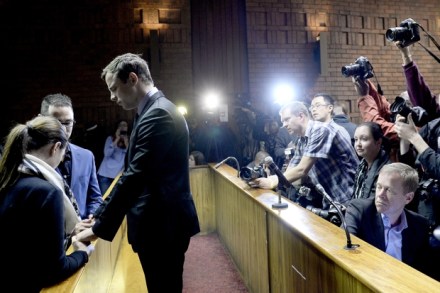
You can bet on all manner of scummy things on Paddy Power: when Fergie and Andrew will remarry; how Julian Assange will leave the Ecuadorian embassy (odds for him leaving in a diplomatic bag are currently 20/1). Now you can also bet on the outcome of the Pistorius trial. I’ve got a fiver on the Blade Runner getting off. I jest. But given the extensive coverage lavished on the trial so far, is it any wonder that people are starting to have a flutter. The scrutiny has been astonishing – with live television and radio broadcasts available for anyone who cares. South Africa even has a 24-hour TV channel devoted to coverage and commentary of it.

An arts degree isn’t a waste of time. But neither is an apprenticeship

A friend and I joke that there are two types of jobs: fun ones, and school fees ones. We (penurious journalists) say this to our friends (pecunious lawyers, bankers, consultants), and find immense comfort in it. Perhaps I should have sacked off my History of Art degree, and done something vocational – ergo ‘worthwhile’ as Katie Hopkins will no doubt argue at the Spectator’s debate on Tuesday, ‘An arts degree is a waste of time and money’. I’d be raking it in by now. But then I apply the intellectual faculties developed while studying my degree, and realise that this is, of course, poppycock. After all, most of my friends who are now raking it in as lawyers, bankers and consultants didn’t study these subjects at university.

Tutus, loo rolls and a roomful of balloons

A tip: go see Martin Creed’s retrospective at the Hayward in the company of a child. I didn’t, but I tagged on to a merry gaggle of five-year-olds being guided round by their mums. I watched as they pointed at the enormous rotating beam with a neon sign that reads ‘MOTHER’. ‘Jump up and touch it, Mummy,’ said one girl. As we carried on, we came across a machine playing rude raspberry sounds. Peals of laughter rang out. Nearby, a man was playing the piano slowly, semitone by semitone. The little girl in the tutu tapped him on the shoulder and asked if he was part of the show. He was, he said. Upstairs, the mothers heeded the warning suggesting those under 18 avoid the outdoor video installation.

The dream pill may not always be worth it

A couple of years ago, I was put on the third-generation contraceptive pill Yasmin. ‘It’s good for your skin and stabilises your weight,’ the doctor said. And it’s true. I’ve found it to be wonderful. Most of my friends are on similar types of third–gen pill, like Femodene and Marvelon; many swear by them. Out of the 3.5 million women in the UK using the combined contraceptive pill, 1 million are on third–gen versions. But things aren’t all rosy. In the past week, all British GPs have been ordered to warn anyone taking these popular pills that they are at risk of developing potentially fatal blood clots. The statistics make for an uneasy read.

Let’s ignore George Clooney’s vapid comments about the Elgin Marbles

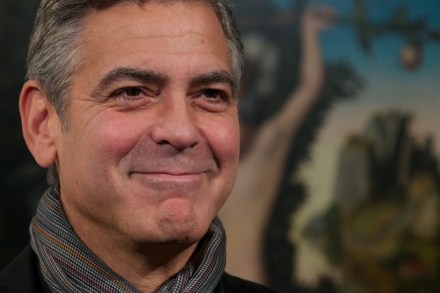
George Clooney may be many things, but an art historian he is not. Speaking at a press conference promoting his new film The Monuments Men, both he and co-star Bill Murray waded into the long-running row about the Elgin Marbles. The British Museum should hand them back, they both said. Murray began with a twee plea: ‘They’ve had a very nice stay here, certainly. London’s gotten crowded. There's plenty of room back there in Greece. England can take the lead on this kind of thing - letting art go back where it came from. The Greeks are nothing but generous. They would loan it back once in a while.' Clooney then waded in with a measly dose of cultural finesse: 

‘Even in England, the polling is in favour of returning the marbles to the Pantheon [sic].

Feminism must pay attention to the boys let down by our education system

The Universities and Colleges Admission Service (UCAS) has released its latest admission statistics, and they aren’t pretty. Of the 580,000 people that applied for places at British institutions, 333,700 of them were women. Only 246,300 men applied, a difference of 87,000. The figures show that the gender gap is particularly wide among poorer households. Perhaps this is some small victory for the women’s movement – after all, more women in tertiary education means more women with decent career prospects. But what about the men? If feminist ideology defends equal political, social and economic rights for women, then by that token, they should want equal political, social and economic rights for men. Equality can’t be lopsided.

Why doesn’t Kim Sears propose to Andy Murray?

Is there a more tragic tale being played out in the British press than that of heroic Andy Murray and his doting, wispy girlfriend Kim Sears. He caused a stir earlier this week by suggesting that he would marry the poor darling after this year’s Wimbledon, only to reveal that it was in fact a joke. Ha. This comes after a long string of will he/won't he headlines, and lots of breathy concern for poor, sweet Kim. There is a solution to Kim’s pain. It’s a bit zesty. It would certainly slog it to those media pundits who see her as a limp fish: She could ask him to marry her. A radical thought. But women shouldn’t be scared of popping the question. And neither should men be scared of accepting a proposal.