Why the lockdown isn’t over yet
13 min listen
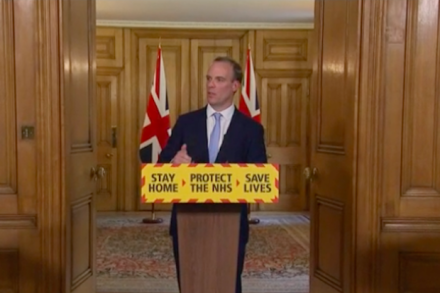
Dominic Raab confirmed in today's press conference that the lockdown is not being lifted just yet. On the podcast, Katy and James explain why.

Katy Balls is The Spectator’s former political editor.
13 min listen
Dominic Raab confirmed in today's press conference that the lockdown is not being lifted just yet. On the podcast, Katy and James explain why.
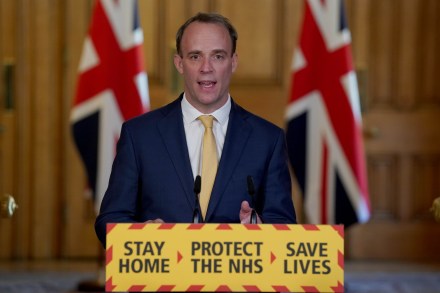
This afternoon Dominic Raab will chair a Cobra meeting where the issue of lifting the lockdown will be raised. When Boris Johnson first announced social distancing measures he said the arrangement would be re-examined in three weeks' time. Yet no one in government believes there is any prospect of an imminent lockdown lift – instead an extension is coming. If any change is on the menu it's likely an enhancement of the current arrangement – such as limits on the use of cars – ahead of the sunny Easter Bank Holiday weekend. The view in No. 10 is that talk of an exit strategy is premature when the UK has not yet even reached its peak in coronavirus fatalities. Polling suggests that the majority of the general public still support the lockdown.
15 min listen
The Chancellor ended today's press briefing with the words: 'Our economic plan and the plan for charities we announced today are built on one simple idea: that we depend on each other.' On the podcast, James explains why he thinks coronavirus is the dawn of a new kind of Conservatism.
12 min listen
One of the biggest decisions in the government's approach to tackling coronavirus is when and how to lift the lockdown. But this is also one of the most divisive issues within Cabinet. With the Prime Minister not yet out of hospital, this will be one of the things that Dominic Raab can't decide in his stead.

12 min listen
Boris Johnson was moved to intensive care on Monday night as his condition worsened. What do we know of the situation, and where does government go from here?
After Boris Johnson's admission to hospital, Dominic Raab tried to use Monday's daily press conference to reassure the public that the Prime Minister was still firmly in charge: 'I can tell you that the PM had a comfortable night in hospital, and he’s in good spirits. He’s still in hospital under observation. He is being given regular updates on developments, and he continues to lead the government. I can reassure the British people that the Government remains united in a single overriding priority, which is to defeat the coronavirus and see this nation through the challenge ahead.' However, the message was complicated by the Q and A.
16 min listen
With Boris Johnson currently hospitalised with no sign of release any time soon, Foreign Secretary Dominic Raab is the 'designated survivor'. But at today's press conference, he admitted he hadn't spoken to Boris Johnson since Saturday. So who is running the government?
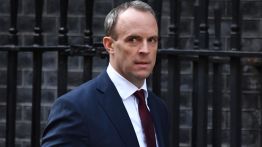
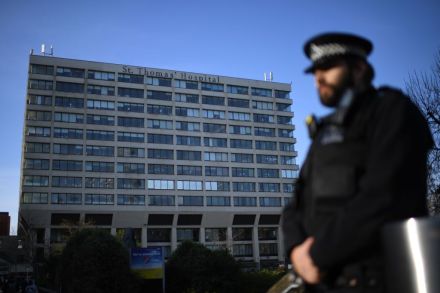
Following the Prime Minister's admission to hospital on Sunday, Boris Johnson remains in St Thomas’s hospital 'for observation'. While a No. 10 spokesman insists that he remains in 'good spirits' and continues to be in touch with colleagues, questions remain when it comes to whether he will be forced to take a few days out for his recovery. Downing Street has been at pains to say that Johnson remains in charge but in truth his de facto deputy Dominic Raab is already taking on an increased role behind the scenes. The Foreign Secretary chaired the morning coronavirus meeting with the heads of each sub-committee.
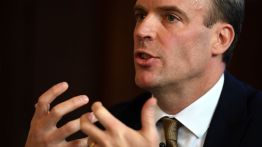
With pressure growing on the government to forge an exit plan out of the current lockdown, antibody tests have been regularly cited by ministers and officials as a means to return to some form of normality. Boris Johnson says a home testing kit which would identify whether an individual has suffered from the disease – and therefore has some form of immunity – would be 'a game changer'. The government has ordered millions of such tests on the condition that they work. However, news today from an academic advising the government on antibody testing makes clear that those hoping for a quick resolution are to be left disappointed. Professor Sir John Bell, of Oxford University, advises the government on life sciences.
12 min listen
Tonight, the Prime Minister is admitted to hospital for tests; the Queen gives a statement to the nation; and Catherine Calderwood steps down as Scotland's Chief Medical Officer after having been found to flout her own social distancing rules.

20 min listen
As expected, Keir Starmer has won the Labour leadership contest. But it's not an easy time to become the new leader of the Opposition. What are his first challenges?
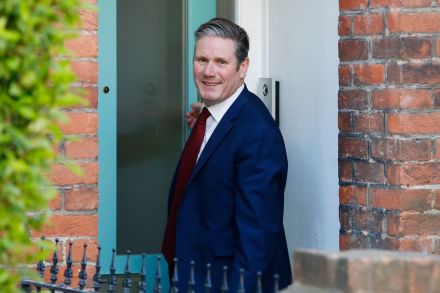
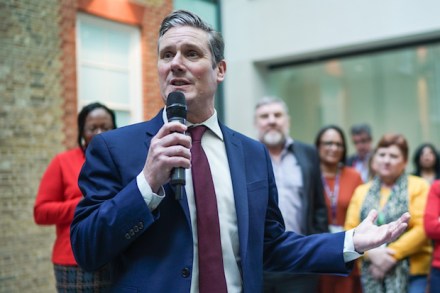
As expected, Sir Keir Starmer has been announced as the new leader of the Labour party. The former shadow Brexit secretary won on first preference votes with 56 per cent of the vote to Rebecca Long Bailey on 27 per cent and Nandy on 16 per cent. Angela Rayner has been elected as deputy leader on third preference votes. Starmer quickly emerged as the favourite in the contest after the preferred Corbyn candidate Long-Bailey failed to make an impression. The margin by which Starmer has won means that he has a strong mandate when it comes to his leadership. Privately Starmer's allies have suggested that the clearer his win, the more drastic the change he will try to bring about.
After a week of criticism over the government's lack of mass testing, Matt Hancock and deputy chief medical officer Jonathan Van-Tam used Friday's press conference to try and move the focus to other methods for tackling the coronavirus outbreak. The Health Secretary reiterated that social distancing remains the best way to prevent spread of the disease and called on the public to resist the sunny weather this weekend and remain indoors. When it comes to treating those already infected, Hancock said clinical trials could be key. Hancock said the UK is a world leader in clinical trials and there has been a big push within government to unlock this potential to help with the recovery route out from the outbreak.


16 min listen
Unlike the UK and most of Europe, Sweden hasn't locked down its population. What explains its difference in approach? Plus, what does the government's coronavirus exit strategy look like?
12 min listen


Another day, another set of dreary headlines for the government over its handling of the coronavirus pandemic. As well as publications that tend to be hostile to the Conservatives, the Telegraph today splashes with criticism of the testing shortage, saying there are 'Questions without answers'. Yet despite all the noise, the polls tell a rather different story. YouGov's political tracker says that for the first time in nearly a decade, Britain approves of its government. Boris Johnson's government has a net approval rating of +26 – the highest YouGov has recorded in the 1,400 times it has asked: do you approve or disapprove of the government's record to date?
17 min listen
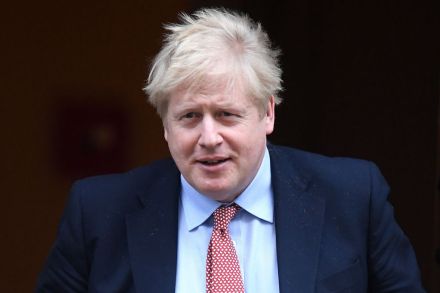
The daily government press conference had a familiar theme today: politicians and advisers struggling to answer questions on the scale of coronavirus testing in the UK. Michael Gove and deputy chief medical officer Jenny Harries both spoke of the importance of testing, but struggled to explain what they plan to do to stop the UK lagging behind countries in Asia, as well as Germany, when it comes to testing. Gove suggested there was a shortage of the relevant 'chemical reagents' while Harries said the focus – given current capacity – was rightly on testing of NHS staff. There was good news in terms of the number of ventilators with Gove promising that thousands of new ventilators are to be delivered to the NHS in the next week.


12 min listen
Those who tuned into the government's daily press conference were given a glimpse of what will come to pass if Boris Johnson has to take a break from his duties as a result of his coronavirus diagnosis. The government's 'designated survivor' Dominic Raab led the conference – providing an update on Foreign Office efforts to bring Brits stranded abroad back home. A £75 million fund has been set up with the aim of bringing tens of thousands home. However, the main update came from Chief Scientific Officer Patrick Vallance who gave a presentation on the effect social distancing has had in the UK so far through four graphs. Vallance said there had been promising signs when it comes to slowing transmission of the virus.
