Katy Balls

Katy Balls

Katy Balls is The Spectator’s former political editor.

Matt Hancock’s good news day

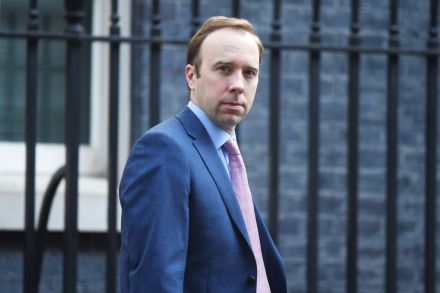
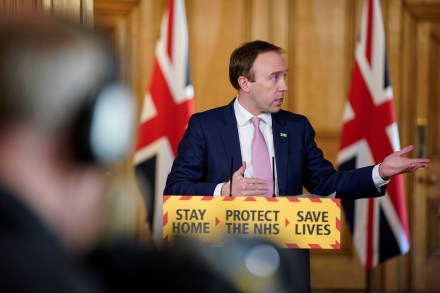
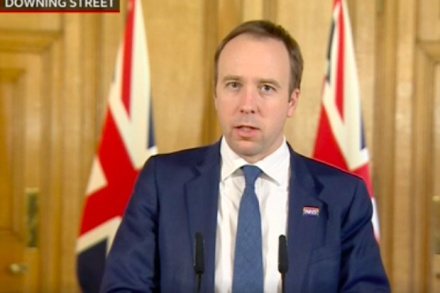
After weeks of speculation over whether Matt Hancock would meet his target of 100,000 daily tests by the end of the month, the Health Secretary today had good news. He told viewers that not only had the target been met – it had been done with over 20,000 tests to spare: 122,346 tests in total were carried out yesterday. In his comments at the press conference, Hancock appeared at times to be giving an acceptance speech at an awards ceremony. He thanked the multiple government figures, outside organisations and health workers who had made this feat possible. Given the heat Hancock has received in recent weeks both in the media and from colleagues over the target, it's understandable that he wanted to make the most of his moment of vindication.
Why Covid cuts are off the cards

How will the UK recover after lockdown? Although social distancing is expected to continue for months, talk has turned to how the government will deal with its coronavirus debts. The Treasury is seeking to raise £180 billion over the next three months to meet its pledges – putting the UK on course to see its budget deficit rise to a level never seen before in peacetime. Some estimates put borrowing this financial year at over £300 billion, far outpacing the years following the financial crash. This has led a number of public figures to predict a return to the Cameron and Osborne era with mass cuts in the years ahead.

The way out: what is the Prime Minister’s exit strategy?

37 min listen

James Forsyth writes in this week's cover piece that the government 'is going to go South Korean on the virus'. In other words, test, track, and trace. But as James points out, this raises the obvious question of why we weren't doing this already. On the podcast, Cindy Yu talks to James and the Economist's Adrian Wooldridge. Adrian argues that the West is too slow at learning the lessons of elsewhere in the world, a costly mistake as Asian states like Singapore offer instructive lessons in governance. As this global pandemic lays bare the differences of national approaches, it's a timely discussion.

Boris Johnson sets the bar for any lockdown easing

The Prime Minister used his appearance at the daily government press conference to confirm that the UK is past the peak of coronavirus infections. However, those hoping for a rapid easing of the lockdown are to be left disappointed. Johnson spoke of the need to avoid a second peak and promised a menu of options to be unveiled next week. He said that this would still not include specific dates as any easing will depend on infection data. As James says in this week's Spectator cover piece, data will be crucial to informing these decisions. The underlying principle that will guide these decisions: the rate of infection – also known as the 'R' rate.

The competitive world of Covid brides

I had planned to spend this Saturday in a large white dress, sipping rosé and cutting into a three-tier rhubarb pavlova. Instead, I’ll be drinking gin on my sofa as family members dial in to offer commiserations to me and my fiancé. I am a Covid bride — one of the many whose weddings have been put on hold because of the lockdown. While the pandemic has had devastating and irreversible effects on people’s lives, it has also left many engaged couples with nowhere to go. In our case, the marriage licence application had been sent, the father of the groom’s slideshow completed, bridesmaids’ dresses finally agreed on (this may have been the hardest bit of all) and the table plan was under way.

A warning from Germany on lockdown easing

Those ministers hoping Boris Johnson's return to work will herald an imminent easing of lockdown measures face an uphill struggle. With the Prime Minister meeting colleagues this week to solicit advice before deciding which restrictions can be eased, news from Germany is likely to bolster those arguing for a more cautious approach. Only a week after its easing began with the reopening of shops and schools, Germany may have to re-tighten its lockdown because the virus is spreading too fast. The country’s virus reproduction rate – measuring how many the average person with Covid-19 infects – has increased to 1.0. Any value above 1.0 is seen as leading to an exponential increase in infections. Angela Merkel has said a rise to 1.

Will coronavirus make politicians fix social care?

14 min listen

Social care has always been a difficult issue for incumbent governments in recent years. The coronavirus pandemic brings this to the fore. As ONS figures show that more than 5,000 deaths have happened in UK care homes in April, Cindy, James, and Katy discuss what this means for future social care policy on the podcast.

Boris Johnson’s new approach to lockdown easing

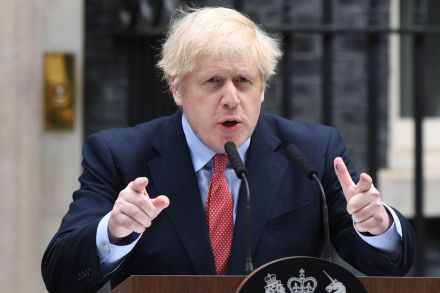
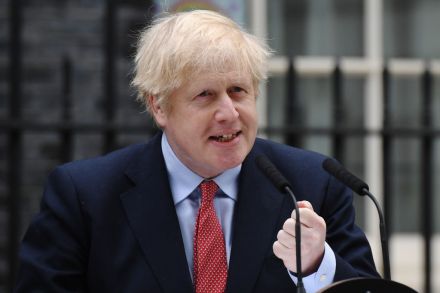
The Prime Minister is back at his desk in No. 10 today and kicked off his first full working day since his coronavirus hospitalisation with a statement to the nation. Addressing cameras outside 10 Downing Street, the Prime Minister paid tribute to First Secretary of State Dominic Raab for leading the government in his absence and the general public for adhering to social distancing. He said here were clear signs to suggest the country is 'passing through the peak' and heralded the achievement of the NHS not becoming overwhelmed in this period. But going forward, Johnson urged caution. He confirmed reports over the weekend that the UK is nearing the end of the first phase of its response to the virus. Despite this, people ought not to expect a sudden lockdown easing.

Predictable politics returns as Brexit talks stall

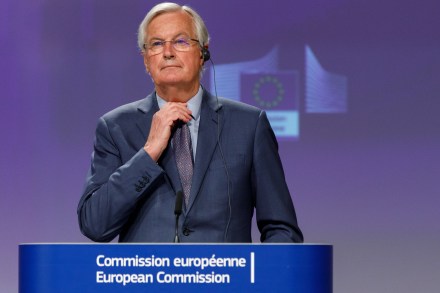
Although the coronavirus pandemic means that we are living in uncertain times, some things remain predictable. As is the case with the current Brexit talks where Michel Barnier has bemoaned a lack of progress. As round two of the UK-EU negotiations comes to a close, the EU's chief negotiator has voiced his disappointment – while a UK government spokesperson says 'limited progress was made in bridging the gaps' between the UK and the EU. While there are still two rounds of talks to go before the end of the transition period in December, at present the two sides remain far apart. The UK is pushing for a Canada-style free trade agreement and should that fail has said it will pivot to an Australia-style deal (which would rely heavily on WTO terms).

Can Boris unite the Cabinet?

15 min listen

The Telegraph reports this morning that Boris Johnson is planning to be back at work by Monday next week. He couldn't come back sooner - with the Prime Minister laid up, the Cabinet has split over the question of easing the lockdown (as James Forsyth writes this week). So can Boris unite his team behind one coronavirus strategy?

The Ruby Wax Edition

27 min listen

Ruby Wax is an actress, comedian, and mental health campaigner, for which she received an OBE. On the podcast, she tells Katy about her difficult upbringing which put Carrie Fisher's to shame, the moment she realised she couldn't act, and her campaigning work, especially during these stressful times.

What’s Nicola Sturgeon’s exit strategy?

15 min listen

The Scottish government's document 'Looking Beyond Lockdown' tries to do what it says on the tin. But it comes at an inconvenient time for the government in Downing Street, just as it is facing accusations that it hasn't been clear enough with the public about what is needed to end the lockdown. On the podcast, James and Katy reveal the pressures that the devolved governments' actions put on the national government, in general and in this crisis, and we also discuss the new test, track, and trace approach.

Nicola Sturgeon offers a glimpse of what lockdown easing will mean

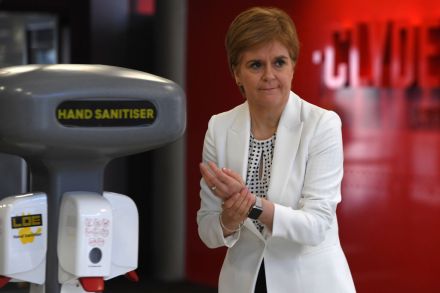
One issue the government is reluctant to discuss publicly is an exit strategy out of the lockdown. Inside 10 Downing Street, there's a sense that it's become a media obsession when the day-to-day focus ought to be encouraging the public to practise social distancing. During Wednesday's press conference, chief medical officer Chris Whitty did discuss how long social distancing could be in place for, suggesting it would likely be for the calendar year as it was 'wholly unrealistic' to expect lockdown restrictions to be lifted wholesale. Today Nicola Sturgeon has gone further than any Conservative minister is currently prepared to. The First Minister has started to set out what a gradual lifting of lockdown could look like.

Is Matt Hancock the government’s ‘fall guy’?

14 min listen

Is Matt Hancock the government's 'fall guy'? As Katy Balls details on Coffee House, the Health Secretary's 100,000 target has rubbed up some in government in the wrong way, with the Daily Telegraph's front page today reporting that an insider close to No 10 has dubbed it 'irrational' and 'arbitrary'. So what's going on behind the scenes?

Is Matt Hancock really being lined up as the government’s ‘fall guy’?

Is Matt Hancock being lined up as the 'fall guy' over coronavirus? That's the suggestion being made today following a number of stories questioning the Health Secretary's performance. The most striking of which is the Telegraph splash on a Downing Street source describing Hancock's 100,000 test target as 'irrational', 'arbitrary' and a mistaken response to media pressure. The paper also quotes a former cabinet minister questioning Hancock's general approach: 'There is a view growing in Cabinet that Matt has gone off on one – a sort of Messiah complex, as one described it to me'. Ministers are now suggesting Hancock could be moved from Health before any public inquiry begins.