Is America spending too much money?
From our UK edition
17 min listen
Freddy Gray speaks to the Spectator's Economics Editor Kate Andrews about President Biden's Infrastructure Bill and the US debt ceiling.
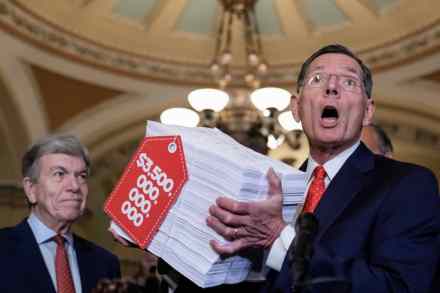

Kate Andrews is deputy editor of The Spectator’s World edition.
From our UK edition
17 min listen
Freddy Gray speaks to the Spectator's Economics Editor Kate Andrews about President Biden's Infrastructure Bill and the US debt ceiling.

From our UK edition
30 min listen
As the UK faces a rising energy crisis with gas supplies in short supply, questions are arising of not just how we mitigate the problem in the short term but how we hedge against it in the long term? What role might nuclear energy play? What’s slowing down its development? Is it the technology? The funding? Or public attitudes towards nuclear energy. Can hearts and minds be swayed in its favour?Kate Andrews is joined by Mark Jenkinson MP, vice chair of the All-Party Parliamentary Group on Nuclear Energy and formerly a self-employed contractor in the nuclear supply chain; Wade Allison is emeritus professor at the University of Oxford; and Julia Pyke is the nuclear development director at EDF.This podcast is kindly sponsored by EDF.
From our UK edition
39 min listen
In this week’s episode: is Boris Johnson running on empty or is a weak opposition giving him the momentum he needs? Kate Andrews asks in her cover story this week if Boris Johnson’s government has run out of ideas – as well as petrol. Katy Balls also writes in the magazine that the opposition seems unable to take advantage of the government’s failures. Katy and Kate join William on the podcast to give their takes on the state of both parties. (00:51) Also this week: what is behind China’s latest crackdown on cryptocurrency? Ian Williams writes in this week’s Spectator that the CCP’s latest move to criminalise anyone dealing in cryptocurrency is to clear the decks for China’s new, state-sanctioned digital currency.

From our UK edition
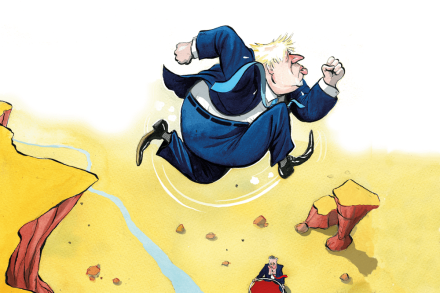
The Prime Minister is thought to thrive on chaos. If so, then he should be in his element. Wholesale gas prices have risen sixfold, winter heating bills are set to be the highest on record. Millions of people across the country are wondering what they might have to forgo to pay for heat. Supermarkets are warning of food shortages. There are 100,000 missing HGV drivers. The army has been called in to help, but has only 150 tanker drivers available. Queues for petrol jam the roads, and medics can’t get to work. The Prime Minister might thrive on chaos, but Tory members do not. ‘Tory grassroots are furious,’ says one MP. Not just about the prospect of energy bills rising, but about the increase to National Insurance too.
From our UK edition
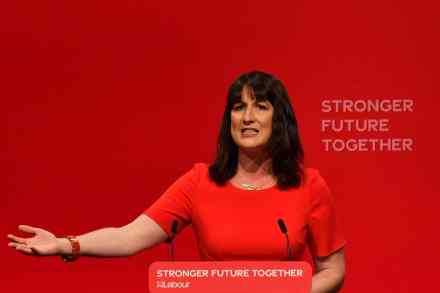
Labour avidly disagrees with the Tories’ plan to fill budget gaps by hiking National Insurance. So what would they do differently? This was one of the many tasks Rachel Reeves had today as the shadow chancellor delivered her speech at Labour party conference. Reeves not only had to set out an alternative tax-and-spend policy but also take aim at the financial decisions made by Boris Johnson’s government. Did Reeves succeed? No doubt her job was made much easier over the weekend as an energy crisis, which the government should have seen coming, continued to splash across the front pages, exacerbated by fuel shortages at the pumps brought on by a lack of truck drivers.
From our UK edition
Are you ready to relive 2020? That’s what Adam Tooze is offering as he tells the story of Covid-19 through the spectacular and terrifying economic consequences created by the global health crisis. For many, the answer will be a simple no. But for others looking to make sense of an utterly surreal year, Shutdown might seem an obvious place to start. Unfortunately, the book offers less analysis and more ranting than would normally be expected from an economic digest — especially one written about one of the most startling shocks to the economy the world has ever seen. Some readers may like the rant.
From our UK edition
17 min listen
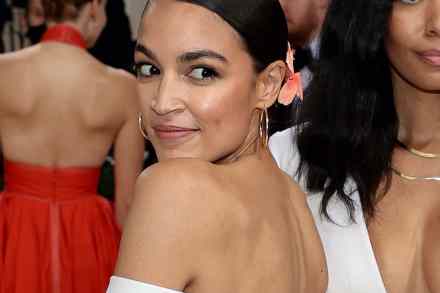
Freddy Gray sits down with The Spectator's economics editor Kate Andrews to discuss the American economy. During the pandemic, inflation grew rapidly - but the latest reports show that it is on its way down again. Is this just a dip before another spike? And is the Met Gala the right venue for championing the poor?
From our UK edition
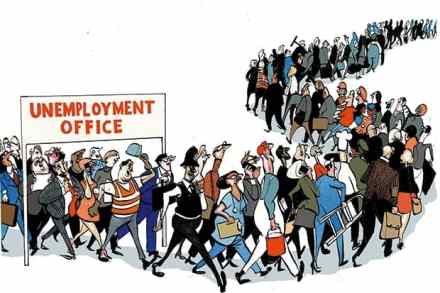
The pandemic continues to cause surprising events in the labour market — and challenges too, many of which were wholly unanticipated when the Covid crisis began. Today’s update from the Office for National Statistics on labour market numbers is case-in-point: the unemployment rate again, down to 4.6 per cent from May to July. Forecasts of nearly 12 per cent unemployment, once predicted by the Office for Budget Responsibility, are long in the past. The furlough scheme has starved off an unemployment surge and there’s good reason to think it’s been avoided altogether. Over one and a half million people were still on furlough at the end of July.
From our UK edition
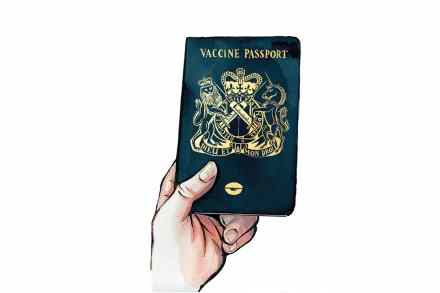
On BBC One’s Andrew Marr show Sajid Javid confirmed that plans for domestic vaccine passports in England were on the way out, even before they were formally brought in: ‘We should keep it in reserve,’ he said of the government’s plans to link vaccine status to entry into nightclubs, but ‘I’m pleased to say we will not be going ahead with plans for vaccine passports.’ Vaccine passports have been a roller-coaster policy for months now, with claims made by members of the Cabinet at the start of the year that they weren’t being considered: that nothing so ‘discriminatory’, in the words of vaccine minister Nadhim Zahawi, would be implemented.
From our UK edition
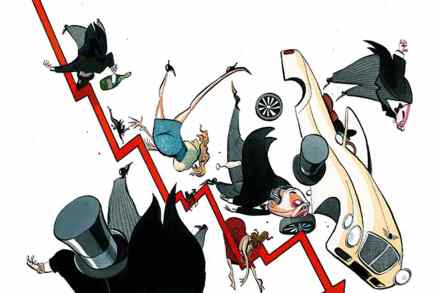
The arrival of ‘freedom day’ on 19 July enabled people to return to concerts, festivals, and ditch social distancing, but these rediscovered freedoms did not revive the economy. The ONS said this morning that growth was just 0.1 per cent in July, far lower than the consensus forecast. It was particularly disappointing given the growth seen in the locked-down months of June (one per cent) and May (0.6 per cent). The Pingdemic – and concerns about the Delta variant – cancelled out any animal spirits around reopening. August’s GDP boost is going to need to be much stronger for the more bullish forecasts to pan out Nightclubs reopened and the entertainment sector was up nine per cent, but the end of stamp duty hit real estate.
From our UK edition
33 min listen
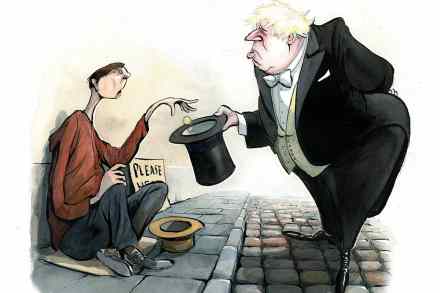
On this week's episode: why is the Prime Minister so desperate to support the assetocracy? In The Spectator’s cover story this week, after Boris Johnson revealed his plan to pay for social care with a National Insurance increase, Fraser Nelson says there has been an inversion of the welfare state. Is it right to ask the working poor to pay more taxes to help cover the social care of people who could easily fund it themselves? Kate Andrews, The Spectator’s economics editor, joins Fraser to discuss. (00:47) Plus, why is our knowledge of Soviet atrocities so poor? Attempting to fix this, James Bartholomew has been interviewing and recording the stories of survivors of Soviet oppression and torture.
From our UK edition
Another day, another tax hike. This is presumably not how Boris Johnson saw his first term in office going; he’s reneged on manifesto promises left and right, including one that defines modern Conservatism: a healthy scepticism of tax rises. The new health and social care levy of 1.25 per cent for employers and employees (so, really, a 2.5 per cent levy) is now part of an emerging trend. This is not a one-off tax, but the follow-on from a March Budget that included £25 billion worth of tax hikes. In fact, it’s record-breaking. The levy is estimated to raise an additional £12 billion a year extra for the Treasury's coffers.

From our UK edition
19 min listen
On this week's episode, Kate Andrews argues that the government's social care reform plans simply don't add up (00:55). Mary Wakefield makes the case for church doors to reopen (06:55) and Caroline Crampton reviews Tom Chivers's new book, London Clay (13:25).

From our UK edition
Boris Johnson pledged to 'fix the crisis in social care' over two years ago. Next week, the Prime Minister is set to announce his plan to do just that. In doing so, he is also expected to opt for a major break from his manifesto pledge not to raise key taxes. So what is Boris's solution, and will it work? The Prime Minister remains wedded to the 2011 Dilnot reforms to answer today’s problems. This includes bringing in a cap on the cost one would be required to pay for their social care. At least a 1p tax hike on National Insurance is also expected, to raise around £6bn. This pot of money will be used firstly to tackle the NHS’s ever-growing waiting list (over five million now, and counting) and then be diverted to cover social care costs.

From our UK edition
34 min listen
On this week's episode: should animal lives be considered as valuable as human lives? It’s often said that Britain is a country of animal lovers, but have we taken it too far? Pen Farthing’s evacuation has shown how some people value animal lives more than human lives. William Moore writes our cover piece this week, arguing that the public outcry is emblematic of our faith-like approach to animal rights in Britain. He joins the podcast together with the FT's Henry Mance, author of How to Love Animals. Plus, will the government’s proposed tax reforms solve the crisis in social care? In this week’s issue, Kate Andrews argues that instead of solving the crisis in care, the plans will only worsen intergenerational inequality.


From our UK edition
As Covid-19 swept through care homes in the spring of last year, the public watched on with horror and helplessness. About a third of all Covid deaths in England took place among residents of these homes. It was worse overseas. In Spain, care home residents accounted for 40 per cent of Covid deaths last year. In the Netherlands and Sweden, it was around 50 per cent. In Canada, almost 60 per cent. But this doesn’t provide much comfort. Britain may belong to a large club of countries that got their pandemic policy wrong — but the results, regardless, were deadly. The huge holes in Britain’s social care system have been exposed. They had been expanding for decades but comprehensive reform was avoided time and time again.
From our UK edition
Andy Haldane’s departure from the Bank of England opened up one of the most influential roles in guiding UK monetary policy — and that role has now been filled. Huw Pill has been announced as the BoE’s new chief economist, taking up the post from next Monday. Some of the snap reaction is focusing on Pill’s similarities to those who came before him. Despite resources being poured into diversity teams to recruit a mix of applicants, it was Pill who was selected, a former Goldman Sachs economist and most recently a senior lecturer at Harvard Business School. Pill won't take kindly to ideas about reneging the Bank of England's independence But his ideology may prove very different from the other eight members of the Bank’s Monetary Policy Committee.
From our UK edition
14 min listen
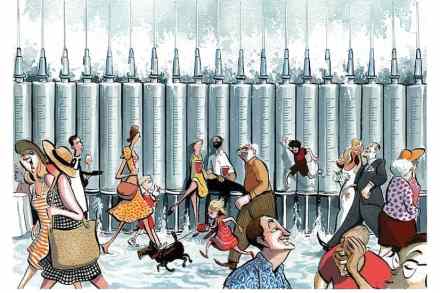
New data from Israel shows that the Delta variant is getting through the protection offered by double jabs, even though the vaccines do lessen symptoms. But the study, of more than 800,000 cases, suggests those who have recovered from Covid have stronger protection than those who have not: jabbed or unjabbed. Will this make it harder to justify "no jab, no job" policies, if those at risk of losing their jobs say they can prove they were diagnosed positive and now have antibodies? Isabel Hardman talks to Fraser Nelson and Kate Andrews.
From our UK edition
11 min listen
After the attack on Kabul's airport by Isis-K, President Biden addressed the world last night and mourned for the 13 US marines who were killed. But with this grim event already being politicised by the Republicans, what will the lasting damage to the president legacy be?Isobel Hardman in conversation with Kate Andrews and Fraser Nelson.

From our UK edition
How fast does Covid vaccine protection wear off? New data from the Zoe Covid Study, published today, tries to quantify the extent to which the Pfizer and AstraZeneca vaccines wane over time. It’s a comprehensive study that accounts for PCR test data from over a million double-jabbed people. The results? After roughly six months, Pfizer protection against symptomatic illness fell from 88 per cent to 74 per cent. For AstraZeneca, it was a dip from 77 to 67 per cent after around five months. It’s important to note what, specifically, this study is measuring. It is a look at infections, not serious illness.