Kate Andrews

Kate Andrews

Kate Andrews is deputy editor of The Spectator’s World edition.

The Hancock era is over

From our UK edition

Could the NHS backlog be even worse than we feared? It’s been reported that the pandemic has pushed a total of five million people onto NHS England waiting lists. But speaking to BBC Radio 4 on Tuesday, health secretary Sajid Javid revealed a new figure, which was not previously in the public domain: As a fresh set of eyes coming in, the thing that shocked me most was the huge waiting list and the number of people that did not come forward because of the pandemic. We estimate there’s some seven million people that did not come forward to the NHS to be helped with things like cancer, with heart disease. Think about the deaths that have been sadly caused by that. It’s hard to wrap one’s head around that figure.

Winding down furlough will reveal the post-pandemic economy

From our UK edition

The furlough scheme begins to wind down today, as employers will now pay 10 per cent of their staff’s salaries, while the government continues to stump up 70 per cent of their wages. Employees won’t notice a change to their income, which will still be 80 per cent of their monthly wage, with a cap of £2,500. The question, however, is to what extent employers feel the financial sting, and whether it leads them to scale back their workforce. The numbers on furlough have been coming down steadily since economic activity liberalised in April. According to official government estimates, May alone saw one million people come off the scheme, as indoor hospitality and more of the services industries were allowed to reopen. But around 2.

Hancock has made a mockery of his own rules

From our UK edition

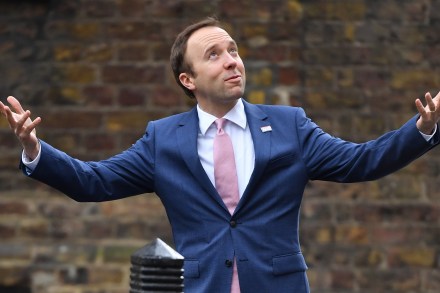
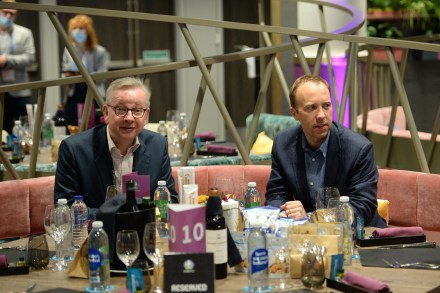
How much trouble is Matt Hancock in? The Sun splashes this morning on the Health Secretary’s affair with aide Gina Coladangelo. The paper has obtained screen grabs from leaked Whitehall CCTV footage showing very little the way of social distancing. The images are from the start of May, when laws were still in place to enforce social distancing. Hancock has issued a brief statement this morning, apologising for breaking the rules: ‘I accept that I breached the social distancing guidance. I have let people down and am very sorry. I remain focused on working to get the country out of this pandemic and would be grateful for privacy for my family on this personal matter.

Boris must face the truth about the ‘triple lock’ pensions promise

From our UK edition

The Tories have a pension problem – and it’s not strictly financial. Over the coming weeks, the cost of pension promises is likely to be in the spotlight. The pensions ‘triple lock’, which the Prime Minister reportedly refuses to scrap, means that the state pension is upgraded each year in line with average earnings, the Consumer Price Index or by 2.5 per cent – whichever is higher. This year, it’s likely that earnings will be the highest of these figures by a long way. Here we encounter a problem: the triple lock was not designed with a pandemic in mind. The crazy world of 'Coronomics' has led to the biggest recession in 300 years, yet average wages increased quite dramatically; they are currently up 5.6 per cent on the year.

The Covid divide: there’s one rule for the elite, another for us

From our UK edition

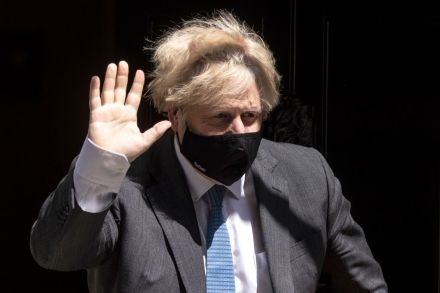
This week was meant to be the moment when we could celebrate the return of freedom. Instead, we’re left still navigating a maze of rules. Couples are working out what a ‘Covid-secure wedding’ means (spoiler: no dancing or hugging). Family reunions — once planned for Christmas, then delayed to Easter — are being pushed back into the autumn. Birthday parties have been axed again. No one wants to break the law, or risk asking others to do so. Ministers make a great show of obeying the rules. The weekend before Boris Johnson announced the delay to ‘freedom day’, he was bumping elbows with Joe Biden and Justin Trudeau at the G7 in Cornwall, posing for socially distanced photos. It was the picture of Covid security.

The new leviathan: the big state is back

From our UK edition

48 min listen

It seems we are in a new President/Prime Minister alliance of big government spending, should we be excited or concerned? (00:44) Also on the podcast: Are the UK tabloids going woke? (15:00)? And in the wake of the pandemic are we ready to have a grown up conversation about death?(31:11)With Spectator Political Editor James Forsyth, Spectator Economics Editor Kate Andrews, former Editor of the Sun Kelvin MacKenzie, former Editor of the Observer Roger Alton, writer A.N. Wilson, science journalist Laura Spinney and Palliative Care Physician Kathryn Mannix and author of a With The End In Mind. Presented by William Moore.Produced by Cindy Yu, Natasha Feroze and Sam Russell.

Delay, data and the need for transparency

From our UK edition

Boris Johnson delayed 21 June, he said, because the data did not merit a full reopening. The specific data government is tracking to make these decisions remains unknown, so we are left to guess. But it’s hard to imagine the decision was disconnected from the rising Covid infection rate across the UK, due to the Indian variant’s increased transmissibility. The UK has gone from having some of the lowest Covid rates in Europe to now having the highest in just a matter of weeks. But is the story that simple? Data from areas hit hardest and fastest by the Indian variant suggest some reasons to be optimistic. In Bolton, the seven-day average for Covid cases leveled off (and started falling) weeks before the government settled on a 21 June delay.

The true cost of cheap money: an interview with Andy Haldane

From our UK edition

Britain’s economy is growing at the fastest rate in 200 years. Job adverts are 29 per cent above their pre-pandemic levels and employers say they can’t reopen because they can’t find staff. Wages are rising at the fastest rate in ten years. But here’s the question: how much more support does the economy need from the Bank of England’s printing press? Should the BoE stick to its pledge to bring QE up to £895 billion or stop £50 billion short? Its members met to discuss this last month and decided (as they always do) to press ahead — by eight votes to one.

The risky business of delaying 21 June

From our UK edition

It seems almost certain that ‘freedom day’ will be delayed. So now we consider the details. On the latest episode of Coffee House Shots, we debate the implications of extending restrictions and what that would mean – not just for the summer – but for the rest of the year. Fraser Nelson makes the case for caution on the podcast (and on Coffee House here), arguing that the Delta variant has changed the equation and the PM should be given the benefit of the doubt, as well as a little more time to get a 'reasonable grasp of the risks and trade-offs.' There was broad agreement between us that the issue isn’t so much the date itself.

Should we delay 21 June?

From our UK edition

29 min listen

On Monday, the Prime Minister will announce whether the 21 June unlocking is to go ahead. Because of the increased transmissibility of the Delta Covid variant, cases in the UK are continuing to rise. Does it make sense to wait for data to confirm that the link between cases, hospitalisations and deaths has been broken, or should we confidently reopen? Fraser Nelson, Katy Balls, Kate Andrews and Cindy Yu discuss.

Will the third wave stop our economic recovery?

From our UK edition

The UK economy continued to rebound in April, with this morning’s update from theOffice for National Statistics showing GDP grew 2.3 per cent — slightly better than the consensus prediction of 2.2 per cent. The reopening of non-essential shops and outdoor hospitality on 12 April contributed to the boost. GDP now sits 3.7 per cent below its pre-pandemic levels, the closest we’ve come to achieving full recovery. Forecasters are increasingly confident that we’ll be back to pre-pandemic levels in 2021, even possibly before Q4. Capital Economics says ‘early indicators suggest that GDP growth was strong in May as well,’ when more indoor activity opened and numbers on indoor and outdoor socialising relaxed further.

The forgotten joy of spontaneity

From our UK edition

If you ask people what they’ve missed out on since the pandemic, they’ll probably lament their cancelled plans. Weddings postponed, birthday parties axed and family reunions moved to Zoom. Me, I’ve missed the unplanned. The spontaneity that knocks your routine, muddles your diary and lands you tipsy in the pub on a Monday night when you were supposed to be at the gym. For more than a year, our lives have been ruled by the principle of ‘safety first’. Accidents — even the fun ones — have been avoided at all costs. It has been illegal to act on a whim or at least, in the better times, very strictly regulated.

The hidden costs of the G7 tax deal

From our UK edition

Calls to reform corporation tax are nothing new and don't just come from the left. The inefficient and bureaucratic nature of the tax has been highlighted by free-market advocates for years, as it becomes increasingly obvious that, in the age of multinationals and digital tech giants, the structure is no longer fit for purpose. Action is now being taken. This afternoon the advanced economies which form the G7 agreed a new structure for taxing big corporations. The historic deal will see a major shift in the way companies are taxed: away from the existing model in which they are taxed in accordance with where their product is created to a new system based on where they are operating.

Dominic Cummings’s explosive claim about the Bank of England

From our UK edition

Amidst all the explosive claims made by Dominic Cummings during today’s select committee hearing, one towards the beginning of the seven-hour session seemed rather unintentional. When asked by Rebecca Long-Bailey MP about what economic assessments were made when considering the first lockdown, Cummings responded that there was no straight-forward ‘document floating around’ which laid out the ‘economic costs’.

Playing catch-up: getting on top of cancer waiting lists

From our UK edition

29 min listen

18 months on from its first Covid case and Britain appears to finally be on the verge of victory over the pandemic. But while Covid deaths, hospitalisations and cases have all plummeted, the year-long disruption to the wider health service has led to stark predictions of another health emergency - a looming crisis in undiagnosed cancers. With Cancer Research warning of a ‘devastating’ situation, the urgency of the matter is beginning to make headlines. But just how bad is the problem - and what, if anything, can be done to reduce it? To find out,The Spectator brought together a panel of experts to discuss the situation, and to see whether some of the lessons from the pandemic might also play a role in addressing it.

Around the corner: what will the future of transport look like?

From our UK edition

29 min listen

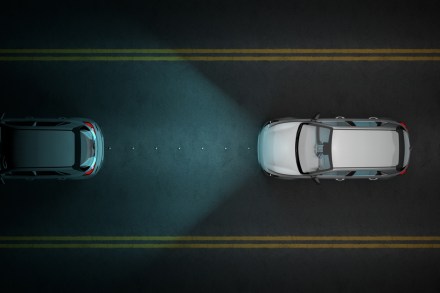
What does the future of transport look like? From electric vehicles to driverless cars, a smarter way to get around the city may be just around the corner. The future of transport will be more efficient, more digital and greener - but what are the challenges that still stand in the way?Kate Andrews talks to Rachel Maclean, the Minister for Transport, Roger Hunter, VP for Electric Mobility at Shell, and Professor David Levinson, a civil engineer at the University of Sydney.This podcast is sponsored by Shell.

In defense of decaf

We all have our daily rituals. We’re told they’re a necessity to live a healthier, happier, more productive life. Some pride themselves on an early start, a morning jog, or a half hour spent journaling in their wellness notebook. Not a morning person, I’d be nervous to jot down — and read back — my view of the world at 7 a.m., so I’ve never taken up the fad. But I reserve no judgment for those who do. Why then, is there such judgment about my routine, which every day involves fueling up on decaffeinated coffee? To be fair and objective, I’m guilty of nothing more than ‘fitting in’. Coffee ranks as one of the most popular drinks worldwide, with more than 400 billion cups consumed every year.

decaf

Can Boris keep his roadmap on track?

From our UK edition

Boris Johnson's favourite phrase since he released his roadmap out of lockdown has been ‘cautious but irreversible’. These are the three words that supposedly describe the UK’s six-month timeline to freedom since it went into lockdown at the start of the year.  But the phrase was notably absent from tonight’s press conference. Instead, the Prime Minister warned that the rise of the Indian variant B1617.2 could pose a ‘serious disruption to our progress, and could make it more difficult to move to step 4 in June.’ The government’s worries, as Johnson laid out tonight, are what he described as ‘important unknowns’. The key question is to what extent the virus is more transmissible than the other variants.

Inflation fears grow

From our UK edition

Two months ago The Spectator reported on what was keeping Rishi Sunak awake at night ahead of the Budget: an inflation resurgence that could damage Britain’s economic recovery as it comes out of the pandemic. He deliberately designed his March Budget with inflation in mind, trying to make the UK’s finances ‘Biden-proof’ if inflation or interest rates started to move, and the cost of servicing the country’s debt became remarkably more expensive.At the time, Sunak was a lone voice on the matter. His inflation fears put the decision to raise tax into perspective, but many remained critical of his rather cautious approach. Inflation seemed a strange focus as the conditions for major change appeared glaringly absent.

When will the economy recover to pre-pandemic levels?

From our UK edition

New growth figures were released this morning show that the economy contracted 1.5 per cent in Q1 this year and remains 8.7 per cent smaller than it was in Q4 2019 (the last quarter not to be impacted by the pandemic). Alongside this update, the Office for National Statistics also released its latest set of monthly figures, which saw GDP rise by 2.1 per cent in March — the biggest boost since August last year — taking the economy to 5.9 per cent below pre-pandemic levels. That GDP fell by just 1.5 per cent overall once again illustrates the extent to which businesses have developed a resilience to lockdowns. The first quarter of this year saw much economic activity either wildly distorted or banned outright.