Kate Andrews

Kate Andrews

Kate Andrews is deputy editor of The Spectator’s World edition.

Five lockdown questions the cabinet must ask

From our UK edition

The cabinet will meet this afternoon, with more restrictions and even a new lockdown on the agenda. But have ministers been given the information they need to make an informed decision? There are rumours of briefing documents being sent around over the weekend with a pro-lockdown bias (i.e., heavy on the worst-case scenarios and not much said about potential side-effects). But the Times today reports that this time around the cabinet wants a full discussion — with at least ten ministers demanding a better quality of briefing before decisions are made that affect the lives of millions. The below is a list of questions that ministers need answered: 1. What is Sage’s central scenario for Omicron — and what assumptions lie behind it?

Christmas Special

From our UK edition

90 min listen

Welcome to the special Christmas episode of The Edition! In this episode, we look at five major topics that dominated the news this year and the pages of The Spectator. First up a review of the year in politics with our resident Coffee House Shots' team James Forsyth, Katy Balls and Isabel Hardman. We discuss how Boris seemed to make such a strong start to the year through the vaccine rollout, but squandered this goodwill with several own goals. We also touch on some of the big political moments of the year: Partygate, the Owen Paterson affair and of course Matt Hancock. (00:39) Next, we go global and look at three of the major powerhouses that took headlines this year. The EU, who ends the year in a panic over Russia, extreme Covid measures, and upcoming elections.

Has Boris made you better off?

From our UK edition

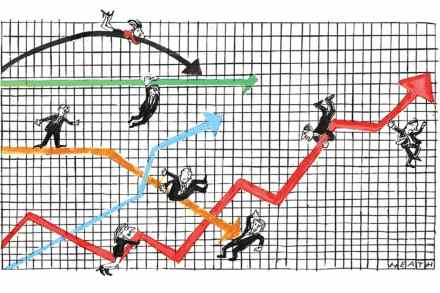
Despite the political misery for Boris Johnson as he ends the year, he has a big hope: that salaries will boom in 2022. At Conservative party conference in October, he told fellow Tories what to expect. Yes, the country has gone through a phase of economic chaos — and as a result some supermarket shelves have been empty and truck drivers have been hard to find — but this was actually good news, he claimed, because it marked the start of a new, high-pay economic model. ‘We are not going back to the same old broken model with low wages, low growth, low skills and low productivity,’ he boasted.

Can the Bank of England get a grip on soaring inflation?

From our UK edition

Yet again, inflation has surged past expectations – this time hitting 5.1 per cent in November, a ten-year high, up from 4.2 per cent in October. This threatens a political crisis as well as tough economic times: unless inflation is quelled, next year will be one of declining living standards for most people. Anyone whose pay is not rising by at least five per cent will, in effect, feel like they’ve experienced a pay cut. It was assumed that five per cent would be about as high as inflation would go but all this is proving hard to predict. This has gone past the Bank of England’s peak forecast, which wasn’t expected to be hit until next year.

Health and the big social divide

From our UK edition

27 min listen

We've long known that where you live, who you live with, how you grow up, and how much money you have can have long lasting consequences for you health. Those that live in inner city neighbourhoods are far more exposed to health risks such as air pollution or drug abuse compared to leafy suburban residents.Does this connection between socioeconomic background and health fall on the responsibility of healthcare professionals and policymakers? Do nurses and doctors now also have to think about air pollution and green spaces? And is this holistic view of health helpful and indeed possible?In a special episode of Spectator podcasts, Kate Andrews is joined by a panel of experts in this field. Charmaine Griffiths is the chief executive of the British Heart Foundation.

‘Get boosted now’: Boris Johnson’s third jab plan

From our UK edition

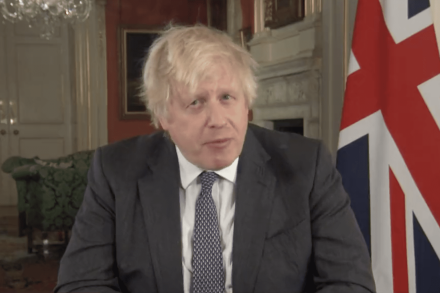
‘Get boosted now’ is the government’s new slogan. In tonight’s address to the nation, Boris Johnson announced that he was bringing forward his timeline of offering a booster jab to all eligible adults by one month: from the end of January to New Year’s Eve. The heavy push for third doses is the government’s latest attempt to curb the spread of the Omicron variant, which early evidence suggests is more likely to transmit amongst double-vaccinated people (though there is still no evidence, either way, that the variant undercuts vaccine efficacy for protecting against severe illness). The focus on booster jabs suggests that, temporarily at least, No. 10 has accepted that vaccines remain the way out of the Covid crisis, as once promised.

The economy was stagnant even before Plan B

From our UK edition

The economy is tantalisingly close to returning to pre-pandemic levels, now just 0.5 per cent off recovery. But this last hurdle may be the most difficult to overcome. The economy was more or less at a standstill in October, with GDP climbing by a measly 0.1 per cent. Services output grew by 0.4 per cent, mostly thanks to an uptick in GPs heading back to their surgeries for face-to-face appointments. While services recovered to pre-pandemic levels in October, the underlying figures don’t look so rosy: production output fell 0.6 per cent, while construction took its biggest hit since the first lockdown, falling by almost 2 per cent. These are disappointing figures in their own right, made far worse by what we know is going to hit businesses in the weeks ahead.

Will the public take Plan B seriously?

From our UK edition

After holding strong for two weeks, fears over the Omicron variant look set to change the government’s course on Covid restrictions. Reports this morning suggest that Plan B could be implemented as early as tomorrow, including advice to work from home and — more controversially — the introduction of vaccine passports. The timing is interesting: rumours about the possible decision landed hours after a video clip — showing the Prime Minister’s former press secretary joking about last year’s alleged Downing Street Christmas party with No. 10 aides — was leaked. Downing Street still adamantly denies the party took place.

Hospital pass: The NHS is on life support

From our UK edition

41 min listen

In this week’s episode: Is the current NHS crisis a bug or a feature? In the Spectator’s cover story this week, our economics editor Kate Andrews writes about the state of the NHS and why even though reform is so clearly needed it's nearly politically impossible to try to do so. She joins the podcast with Isabel Hardman who is currently writing a book on the history of the NHS. (00:53)Also this week: How is the nation feeling about the Omicron variant? The news of the Omicron variant has not only worried the public about what may become of their Christmas plans, but the government has also reacted by bringing in new travel restrictions and mask mandates.

Hospital pass: The NHS is on life support

From our UK edition

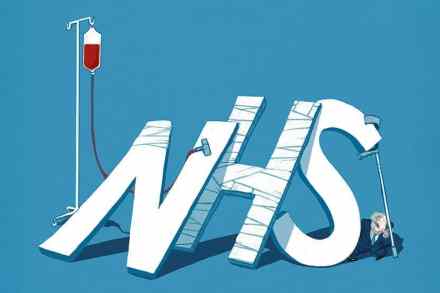
The cabinet meeting this week turned into a surprisingly frank conversation about the National Health Service. Rishi Sunak was asked to give his thoughts on the future of health and social care. He gave a candid assessment of the dangers of being blind to the NHS’s many shortcomings. It’s political blasphemy to criticise the NHS. But once Sunak started, others joined in. Jacob Rees-Mogg added his concerns. Steve Barclay, the new Cabinet Office minister, and Kwasi Kwarteng, the Business Secretary, also contributed. By the end of the meeting, the ministers had heard each other say out loud what they have long been thinking: that the NHS, as it stands, is failing.

The gap between Boris and business widens

From our UK edition

Boris Johnson kickstarted the Confederation of British Industry's annual conference this week with a surprising performance. The plan was to emphasise his government’s commitment to regenerating the economy, post-pandemic, with a green agenda. In practice, it was a confused and muddled speech which even the speech-giver (let alone the audience) found difficult to follow. The highlights were dominated by awkward moments: Johnson asking the room early on who had received their booster shots, only to quickly follow up that everyone looked ‘young and thrusting’ – presumably to cover for an insufficient number of hands in the air.

Could high public borrowing be a sign of trouble ahead?

From our UK edition

On the surface, the UK’s economic recovery appears to be on track. The Office for National Statistics revealed this morning that retail sales were up 0.8 per cent last month, beating expectations of a 0.5 per cent rise. Consumer confidence and the number of people heading back to the shops continues to rise, with the proportion of online retail sales falling to 27.3 per cent. This is substantially higher, however, than the pre-Covid level of just under 20 per cent. Non-food stores saw the biggest sales increase – 4.2 per cent – boosted, in part, by early Christmas sales. Toys, clothes and sports equipment all saw increases.

Inflation rises again. The BoE has questions to answer

From our UK edition

Inflation is back, and while some people continue to cling to the idea that its resurgence is a temporary phenomenon, today’s figures further stamp out that optimism. Consumer inflation was up to 4.2 per cent in the year to October, a surge from just over 3 per cent the month before. This takes inflation to its highest level since 2011, with prices only set to rise further heading into 2022. Why has the Bank been so insistent about the temporary nature of this round of inflation? Much of the rise is due to increasing energy costs, which were always expected to worsen this winter: global shortages continue to bite as the world opens up again post-lockdowns.

Eighteen months of inflation is not ‘transitory’

From our UK edition

The big central banks have been insisting for months now that the rise in inflation is temporary, and will fade once the great awakening of the world economy starts to settle down. The Federal Reserve, Bank of England and the European Central Bank have looked on as inflation has overshot their forecasts. But when the opportunity to tame it with an interest rate hike approaches, the banks pass it up, reiterating instead that it is ‘transitory’ — the monetary equivalent of ‘it’ll be fine’. With inflation now at a 30-year high in the United States — 6.2 per cent — it’s starting to look like a pretty big bump. But should we worry? Is this just a glitch of lockdown unwinding itself?

Fact check: are the NHS chief’s Covid claims correct?

From our UK edition

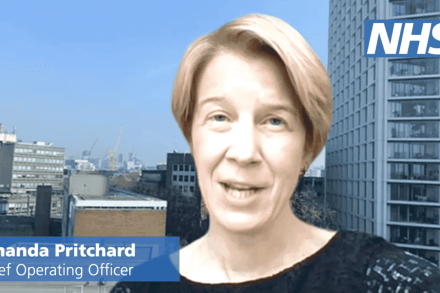
The seven-day rolling average suggests Covid cases peaked around 23 October and have been in decline for almost two weeks. Despite this, there are frequent claims that Britain’s Covid rates are continuing to skyrocket. So what's going on? As always with the virus, every shift in the data must be taken with a pinch of salt; there’s always a chance things could take a turn for the worse. But some data is set in stone: that is, the virus’s trajectory last year and how it compares to what’s happening now.  Today, a strange update was given by Amanda Pritchard, the new head of NHS England.

Smart meters – how far have we come?

From our UK edition

32 min listen

Over 25 million smart meters have been installed in homes across Britain. Does this mean that smart meters have been a success? In 2019, The Spectator hosted Smart Energy GB on a podcast to discuss their rollout and now we are back again to reflect on what we have learnt over the years and where there are still challenges.Have people’s understanding of smart meters changed? And are they really as efficient as they seem? Joining Kate Andrews to discuss where smart meters can fit into the net zero ambition is Fflur Lawton, head of public affairs at Smart Energy GB; Adam John, a reporter at Utility Week; and Jerome Mayhew, a Conservative MP who sits on the Environmental Audit Committee. This podcast is sponsored by Smart Energy GB.

Lessons from the pandemic: collaboration in healthcare

From our UK edition

27 min listen

Over the past months, under the weight of a global pandemic, scientists and medical professionals have had to rethink the way they do things. We found not one - but numerous - vaccines within the space of a year; new treatments have been discovered, some repurposed from existing drugs; and manufacturers and politicians alike have had to think creatively to plug the gaps of the pandemic. There must be lessons we can learn from this experience - things that big pharma and scientists can do better in the future, having this time round done so in emergency circumstances. That’s the topic of this special episode of The Spectator’s podcast, sponsored by the pharmaceutical company Novartis. I’m delighted to be joined by a panel of expert guests.

Energy prices: Will there be a cost of living crisis this winter?

From our UK edition

32 min listen

As the global shortage of gas continues to drive up energy costs, we take a look at these rising energy prices and the cost of living crisis that looms over the UK. How can we protect people from fuel poverty when bills are predicted to rise by hundreds of pounds? Moreover, as COP26 kicks off, how can this crisis be framed within the government's plans for a green future? Kate Andrews speaks to Rebecca Sedler, the director for policy and regulation at EDF, Alan Brown MP, shadow SNP spokesperson on energy and climate change and Jonny Marshall, who is a senior economist at the Resolution Foundation. This podcast is sponsored by EDF.