Kate Andrews

Kate Andrews

Kate Andrews is deputy editor of The Spectator’s World edition.

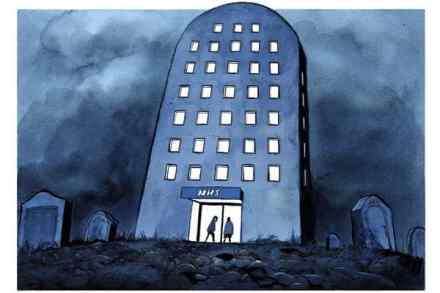
It is all about you: building a patient-centred NHS

From our UK edition

33 min listen

Conversations about ‘modernising’ the NHS have been happening for almost as long as the NHS itself. The 2019 Long Term Plan put so-called ‘patient-centred care’ at the forefront, writing that: 'The NHS also needs a more fundamental shift in how we work alongside patients and individuals to deliver more person-centred care, recognising – as National Voices has championed – the importance of "what matters to someone" is not just "what’s the matter with someone".'All well and good, but then, came the pandemic. The new health secretary Sajid Javid has said that that waiting list will rise to 13 million people in the coming months.

Cop out: Why can Alok Sharma swerve Covid rules?

From our UK edition

The ‘party elite’ narrative has resurfaced this morning, after the Daily Mail splashed its findings that COP26 president Alok Sharma has travelled to a grand total of 30 countries over the past seven months, skipping quarantine upon return. Sharma is under pressure on two counts: first, that as the cabinet minister responsible for the United Nations Climate Change Conference held in Scotland this November, his example of plane-hopping between nations doesn’t quite gel with the government’s message of reducing carbon emissions. But it’s the Covid element that really sticks. Thanks to loopholes in the legislation, ministers are exempt from quarantine measures when they arrive back in the UK.

The NHS has never been the ‘envy of the world’

From our UK edition

Usually when the Commonwealth Fund releases its ‘Mirror, Mirror’ study of healthcare systems, it makes waves across the UK media. You might not recognise the formal title of the study, but you’ll be familiar with its findings: this outlier research tends to rank the UK National Health Service as one of the best healthcare systems in the developed world. It’s a hallowed report for much of the UK medical community and commentariat, reaffirming their unquestioning devotion to the NHS as a truly unique system and the ‘envy of the world’.

America’s surprisingly disappointing GDP growth

From our UK edition

America’s economy has officially recovered to its pre-pandemic levels, as Q2 GDP figures saw an annualised increase of 6.5 per cent. This is a positive update, on the face of it, but that’s more or less where the good news stops. The country’s GDP figures have come in notably below the consensus of what was expected, which was something closer to 8.5 per cent.  The news comes just a day after the International Monetary Fund forecast the United States and the UK would lead advanced countries with their rate of economic recovery, revising its estimates for the States upwards to 7.0 per cent this year and 4.9 per cent next year.

Vaccine passports could threaten the employment recovery

From our UK edition

Alongside the UK’s latest step in reopening, optimistic forecasts have been rolling in concerning the economy’s timeline for returning to pre-pandemic levels. This morning, we got another positive indication that businesses are resuming normal operations. The latest update on furlough figures shows 1.9 million workers are still on the scheme as of the end of June — the lowest level of people having their wages paid by the state since furlough was first introduced during last year’s spring lockdown. The number of people on the scheme fell by half a million last month, and by roughly three million since March. The continued fall is hardly surprising, as each month since April more economic activity has been permitted.

Whitehall’s Covid gloom could harm our economic recovery

From our UK edition

As the government continues to put forward an extremely cautious narrative about re-opening, more evidence emerged today that the economy is surging ahead. The International Monetary Fund has once again upgraded its forecast for Britain's growth this year: its April prediction of 5.3 per cent growth in 2021 has now been revised upward to 7 per cent. If correct, the UK could boast one of the fastest growing economies amongst major countries, with a recovery looking to be on par with the United States. Today’s update from the IMF fits a trend. Just this weekend the EY Item Club forecast 7.6 per cent growth this year – the fastest rate of growth in Britain for 80 years.

Can businesses achieve Net Zero?

From our UK edition

40 min listen

Responsible for 17 per cent of the UK’s carbon usage, government will be looking to the private sector to reduce its emissions in the years to come. But what does it really mean for a business to achieve ‘net zero’? Should companies - and their sectors - account only for their direct emissions, or must they also measure their indirect impact, related to supply chains or digital carbon footprints? How should businesses address their historic emissions - and what might this mean for once carbon-intensive sectors? In partnership with Velux.

Was the government right to delay ‘freedom day’?

From our UK edition

23 min listen

It's our first 'freedom' weekend, but it was only a few weeks ago when our own Fraser Nelson and Kate Andrews clashed heads over the most sensible way to open up. Kate thought we should stick to the 21st of June, Fraser argued that the later opening date made sense. Now it's time to see who was right? This cage match was refereed by Katy Balls.

Could cases have peaked?

From our UK edition

13 min listen

Daily cases have fallen again today, leading to cautious optimism that - perhaps - cases in this exit wave have peaked. Cindy Yu talks to Katy Balls and Kate Andrews.

What the NHS pay rise says about Boris Johnson’s priorities

From our UK edition

Well, that didn’t take long. Two days ago, a leaked report revealed that the government was considering using a national insurance tax hike to pay for the NHS backlog and social care. Now it looks as though the money could be diverted elsewhere.  The anticipated increase of at least one per cent on national insurance would transfer an additional £6bn from taxpayers to the Treasury. But today, the Times reports that £1.5bn of that sum may not go to hip replacements or speeding up the timeline for cancer patients to access treatment. Instead it could help fund the three per cent NHS pay raise, which has been promised by health secretary Sajid Javid.

Party time: what is the cost of freedom?

From our UK edition

34 min listen

How free are we after freedom day?(00:27) Also on the podcast: Why does it take hours to refuel your car in Lebanon?(10:19) and finally… Is British gardening wilting or blooming?(21:21) With The Spectator's economics editor Kate Andrews, Michael Kill, CEO of the Night Time Industries Association, journalists Paul Wood and Tala Ramadan, author James Bartholomew and gardener and writer Ursula Buchan.

The right to party depends on following the party line

From our UK edition

For most of this year, Boris Johnson’s proudest boast has been that Britain had the fastest vaccine rollout of almost any country in the world. The jabs were seen as our passport to freedom and the end of restrictions. Early indications among both old and young suggested similar excitement to get vaccinated. When Twickenham stadium opened a pop-up vaccine centre in May to offer 15,000 jabs to the over-18s it drew longer queues than the rugby. Ministers were delighted with the enthusiasm. If this was any sign of what was to come from youth uptake, they thought, the rest of the rollout would be plain sailing. But now there’s a problem. Plenty of jabs are still on offer, but fewer people want them. Vaccine rollout has slowed to a third of its former pace.

A tax rise for care won’t solve the problem

From our UK edition

The tax burden in the UK is nearing a 70-year high — but that’s not stopping ministers from mulling over plans to hike taxes further. According to reports this morning, Boris Johnson and Rishi Sunak are close to agreeing an increase to national insurance to help address the NHS backlog (five million patients in England, and counting). They also want to fill the long-standing black hole in the social care budget: something Johnson promised he’d address nearly two years ago to the day when he first entered Downing Street. The rumours have immediately led to criticism of the government’s willingness to break its manifesto pledge, not to raise income tax, national insurance or VAT.

The freedom divide: Why are politicians able to side-step their own rules?

From our UK edition

Poor Robert Jenrick. This morning we learnt that, like the rest of the public, the housing secretary (and his department) is not signed up to the exclusive pilot scheme that was set to allow Boris Johnson and Rishi Sunak to skip quarantine. If Jenrick gets pinged, the rules will apply to him, just as they did to more than 500,000 people who were told by NHS Test and Trace to self-isolate in the first week of July. Yet Jenrick still had to defend Johnson and Sunak on BBC One’s Andrew Marr show this morning, about an hour before Downing Street U-turned and announced they would self-isolate after all. It was a tough gig.

Is it up to the state to tackle obesity?

From our UK edition

21 min listen

The government has been advised by Henry Dimbleby, founder of LEON food chain, to introduce a new tax on sugary and salty foods. While the Prime Minister has distanced himself away from the proposal, it has caused a lively debate in The Spectator's office. Tune in to hear Fraser Nelson, James Forsyth and Kate Andrews debate the limits of the state when it comes to our health and our diets; how much obesity is related to class; and whether it really is impossible to find vegetables in Tooting.

In the post-pandemic economy, the workers are the boss

From our UK edition

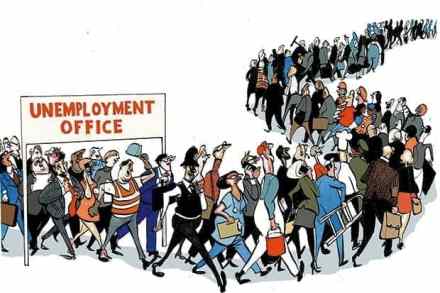
The world of coronomics continues to surprise us. Last summer forecasters warned of a wave of redundancies after the biggest economic crash in 300 years. Peak unemployment — spurred on by lockdowns — was expected to near 12 per cent, ushering in a new era of chronic financial pain and instability for millions of workers. But the Treasury’s furlough scheme has kept the headline figure down. Unemployment has hovered around 5 per cent, less than half the original prediction. The problem this summer isn’t mass unemployment but worker absenteeism. Job vacancies are now more than a third above pre-pandemic levels. There is no shortage of available work, only a shortage of those willing to do it. At the last count, 2.

Britain is ill-prepared to deal with rising inflation

From our UK edition

Inflation is on the rise again. For the third consecutive month, the Consumer Prices index outpaced the forecasters’ consensus, landing at 2.5 per cent in June, up from 2.1 per cent in May.  It’s not just that inflation is overshooting expectations that should trouble us, but that its pace of growth is so fast: at the start of the year, the headline rate was still close to the ground, coming in at 0.7 per cent in January and March, and 0.4 per cent February.  It is becoming harder for the Bank of England to stick to its prediction that inflation will peak around three per cent Now, it’s ahead of the Bank of England’s target – and there are no signs of retreat.

Can the City of London be the world’s first to deliver climate commitments?

From our UK edition

56 min listen

The way the City of London measures success is constantly changing. A new generation of discerning consumers has skyrocketed the importance of environmental, social, and corporate governance (ESG) to company decision-makers. The finance sector is increasingly being seen as the next frontier in climate action. As the City navigates the post-Brexit landscape and our pandemic recovery it will also be tasked with redefining its role on the world stage. How will the government's net-zero commitment and the targets in the Paris Agreement factor into corporate decision-making? How will banks and other financial institutions change how they weigh up sustainable investment choices? And what impact could all this have on the broader economy?

Follow the science – it’s time to unlock

From our UK edition

Shortly before Boris Johnson and Keir Starmer were slugging it out in PMQs — debating whether the mass-lifting of restrictions on 19 July is indeed a good idea — the Office for National Statistics released their latest antibody survey, the details of which support the Prime Minister’s argument for reopening. It is now estimated that roughly nine in ten adults in England, Wales and Northern Ireland had antibodies in the week beginning 14 June (eight out of ten in Scotland). Moreover, antibody prevalence is on the rise in younger age groups. The percentage of adults testing positive for antibodies aged 35 and older ranges between 94 per cent and 99 per cent — with the most antibody protection detected for the elderly.

What is the purpose of test and trace?

From our UK edition

At yesterday’s press conference, Boris Johnson announced that his government was shelving plans for domestic ‘Covid certificates’ (i.e. vaccine passports), at least for the time being, although this won’t stop private businesses or venues from deciding to use them.  We also learned today that it won’t stop the creation of a two-tier system (as Lara Prendergast warned months ago) for the ‘jabs and jab nots’. New policies have been confirmed that will allow for the double-jabbed to skip quarantine if they’ve been in contact with someone who tests positive for Covid-19 (with exemptions granted to under-18s as well).