Kate Andrews

Kate Andrews

Kate Andrews is deputy editor of The Spectator’s World edition.

Max Jeffery, Kate Andrews, Maggie Fergusson

From our UK edition

16 min listen

On this week's episode, we hear from Max Jeffery on his first impressions visiting Israel. (00:45)Then Kate Andrews on her difficult relationship with Newcastle Football Club. (04:58)And finally, Maggie Fergusson's review of the new book Blacksmith: Apprentice to Master: Tools and Traditions of an Ancient Craft.

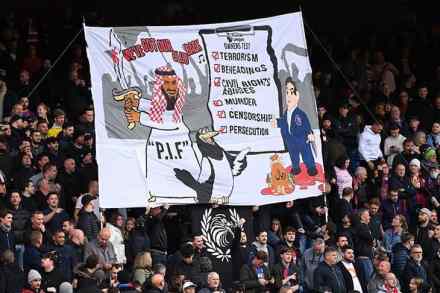
The burden of being a Newcastle United fan

From our UK edition

The second thing I learned about football, after moving to London, is that you can never, ever switch your allegiance. That was unfortunate, because the first thing I discovered was that I liked Newcastle United and had already chosen them as my team. It’s been fairly relentless pain ever since. In 2016, I watched Newcastle get relegated. They bounced back to the Premier League the next season, but it’s been utter mediocrity ever since. I’ve followed them from stadium to stadium, unwavering in my support, cheering on often extremely boring and disappointing football. I like the idea of loyalty in sports; to ditch a team because they depress you would show weakness of character. It doesn’t matter how awful Newcastle are, I thought, nothing could put me off.

Verdict: Rishi Sunak’s Budget

From our UK edition

21 min listen

Rishi Sunak's Budget, as much as it was trailed ahead of time, still had a couple of surprises - including a return of the 0.7 per cent aid budget and a cut to the universal credit taper rate. Katy Balls talks to James Forsyth and Kate Andrews about the high and lowlights from today's Budget.

Six things we learnt from the Budget

From our UK edition

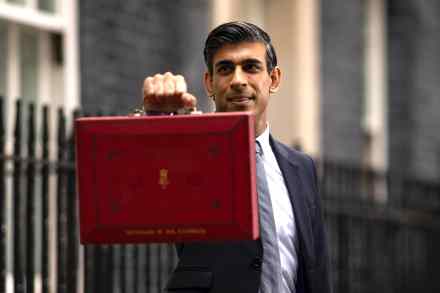
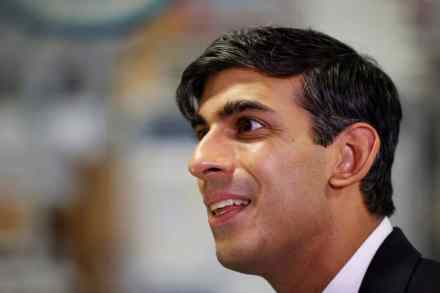
Another big fiscal event for Rishi Sunak today, as he delivered his Budget and the details of a three-year spending review. For the first time, Covid-19 wasn’t in the spotlight. Instead it was framed as a big-spending event, confirming plans briefed before the Budget — £7 billion in capital spending for the NHS, end of the public sector pay freeze — and announcing a series of new plans, including the return of increased foreign aid spending at 0.7 per cent of GDP by 2024-25. But break down the numbers and there are even more surprises in store. Here are the six things we learnt from today’s Budget: The tax take hits a record high Tax as a percentage of GDP is heading towards a staggering 70-year high, up from 33.5 per cent pre-pandemic.

Responsible Rishi’s Budget balancing act

From our UK edition

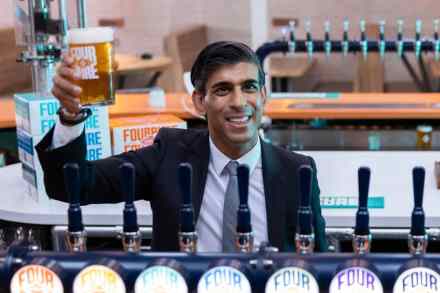
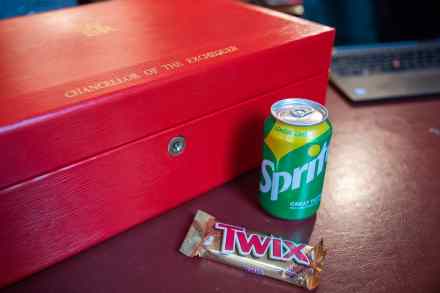
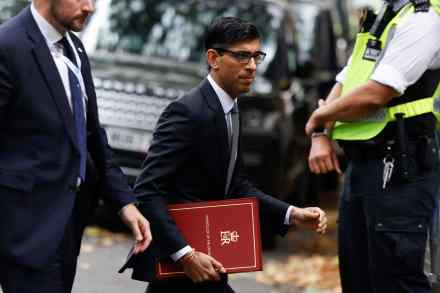
Rishi Sunak has released photos of his Budget prep, as he prepares to stand up in the House of Commons tomorrow to deliver not just the government’s latest fiscal decisions, but the results of its three-year spending review. (Photos include a shot of his pre-Budget Twix and Sprite snack, which Sunak revealed to Katy Balls on Times Radio over the weekend). As I say in the Telegraph today, this Budget is a difficult balancing act for the Chancellor. On the one hand, he has some big-spenders to please, not least the Prime Minister, who is adamant that the Conservative party’s days of austerity have come to an end.

What can we expect from Budget Week?

From our UK edition

13 min listen

It's Budget Week and Rishi Sunak has already telegraphed a lot of what we can expect from it, branding it as a good news affair including NHS spending and minimum wage reform...but who stands to feel the pinch? Katy Balls sits down with James Forsyth and Kate Andrews to discuss the Budget as well as the rising Covid numbers and the chances of the implementation of the government's Plan B.

Is Rishi ready to splurge?

From our UK edition

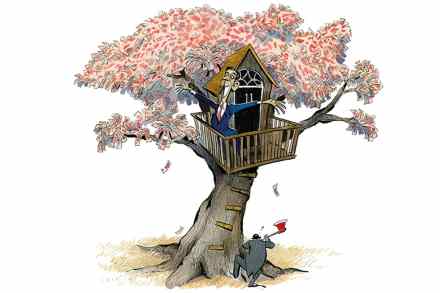
Is Rishi Sunak losing his battle within the Cabinet to promote fiscal responsibility? We’ll find out this week, when he unveils his Budget and three-year Spending Review on Wednesday, but there were hints this morning that more spending is coming down the track. Speaking to Andrew Marr on BBC One, Sunak laid out the principles that guided his Budget process this time round: ‘Strong investment in public services, driving economic growth by investing in infrastructure, innovation and skills, giving businesses confidence and then supporting working families. Those are the ingredients of what makes a stronger Budget and that’s what we will deliver next week.

Rishi’s Budget wriggle room

From our UK edition

Whisper it, but Rishi Sunak looks to be heading into the Budget next week with the public finances in a far better state than once predicted. The Office for National Statistics update on public sector net borrowing showed September’s total — £21.8 billion — coming in several billion pounds below the Office for Budget Responsibility's official forecast and economists’ consensus. It fits a trend: total borrowing for 2021/22 is over £40 billion lower than expected, giving Sunak far more leeway than he thought he’d have at the start of the year. On the whole, tax receipts have been higher than forecast, as growth (while somewhat lacklustre over the past few months) has broadly been strong, with the UK still in the lead for recovery.

Can fast food ever be green?

From our UK edition

36 min listen

Can the company that feeds the world beef burgers lead hospitality in reaching net zero? That’s what McDonald’s hopes to do as they lay out their Plan for Change 2021. With 1400 restaurants, over 23,000 British and Irish farmers and four million customers visiting them every day, will it be enough? Or is it just a drop in the ocean? McDonald’s strategy will result in a number of sustainability-oriented improvements in four key areas: Planet, People, Restaurants, and Food. We’ll be taking a look at each one of those, in addition to discussing the challenges the fast-food giant will face in championing net-zero. Kate Andrews is joined by a panel of three guests to discuss this and more: Duncan Baker, Conservative MP for North Norfolk.

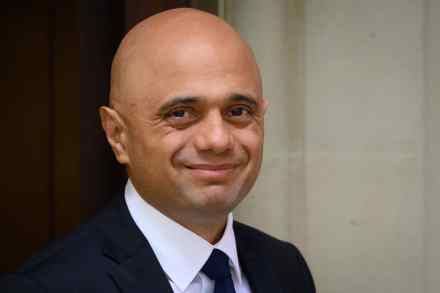
Sajid Javid is right to make the NHS more accountable

From our UK edition

The health secretary has announced more money for the National Health Service. It’s a story we’ve heard time and time again – but this time the details are different. Sajid Javid has committed an additional £250 million for GP health practices to assist them in expanding their hours and upping the number of face-to-face appointments they offer. In-person appointments plummeted during lockdown and have never recovered: they are now hovering around 60 per cent, compared to 80 per cent pre-pandemic. So what’s new? In short, the money comes with more accountability. A league table is being created to rank surgeries on how many in-person appointments they offer.

Is the economic recovery still on track?

From our UK edition

Compared with July, August’s GDP boost looks much healthier — but that’s not saying much. Originally thought to have stagnated at 0.1 per cent, the economy in July actually shrank by 0.1 per cent, according to the latest update from the Office for National Statistics. If inflationary pressures continue to surge, the Bank may have no choice but to act Still, August’s GDP increase of 0.4 per cent puts the economy back on the upwards trajectory, now estimated to sit 0.8 per cent below pre-pandemic levels. Despite so-called ‘freedom day’ arriving halfway through July, people continued to socially distance in order to avoid being mandated back into their homes.

The good and bad news about Britain’s labour market

From our UK edition

Now that the Chancellor's furlough scheme has come to an end, are employers rushing to lay off those workers whose wages have been paid, at least in part, by the government?  The good news for Rishi Sunak – and the taxpayer, who footed the bill for this multi-billion pound scheme – is that the early evidence suggests they are not: in the three months leading up to August, the headline unemployment rate dipped again. It is now down to 4.5 per cent, having peaked just over five per cent last winter. The picture in the labour market isn't necessarily all rosy Figures from the Office for National Statistics will still take several months to show the true impact of the scheme ending at the end of September.

A global corporation tax is a terrible mistake

From our UK edition

International cooperation is alive and well – at least when it comes to raising taxes. One hundred and thirty six countries have now signed up to a global minimum corporation tax of 15 per cent, proposed by G7 countries in June and pushed heavily by the UK Treasury. This is another step forward for what is thought to be the biggest overhaul to the international tax system in a century. The installation of a corporate tax floor is part of a comprehensive effort to reform how multinational companies are taxed: that is, to more precisely target where profits are being made (instead of where products are being created).

Has an unemployment crisis been avoided?

From our UK edition

Rishi Sunak always said furlough wouldn’t save every job, especially as the pandemic changed the way we live and spend. Now that the scheme – which paid the salaries of millions of workers across the UK – has come to an end, was Sunak right? Early evidence suggests businesses are bringing their employees back to work, either into their old jobs or repurposing them into new roles. According to the BBC, the 31 companies that took at least £1 million of furlough money last month (including airlines, which are still only running around half as many flights as in 2019) aren’t yet planning on making mass redundancies – even though the scheme has finished.

Sunak faces the free-marketeers

From our UK edition

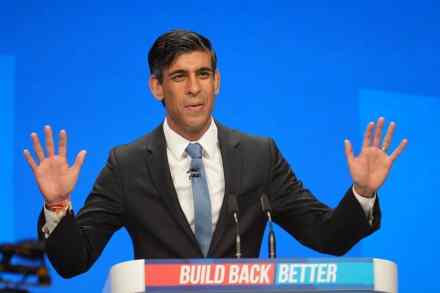
Rishi Sunak didn’t give too much away tonight when he spoke in the 'ThinkTent' at Conservative Party Conference. The Chancellor is known for being cautious with his words, and has been increasingly tight-lipped in the weeks leading up to his October Budget. But his presence at the fringe event was telling in itself. Sunak was only billed for one public fringe event this year, co-hosted by the Institute of Economic Affairs and Taxpayers’ Alliance. Their ‘ThinkTent’ boasts some of the most free-market, libertarian events you’ll find at conference: both organisations are strong advocates for a low-tax, smaller state. So, not necessarily an obvious place to find the Chancellor who has overseen record peacetime spending over the past 18 months.

Sajid Javid takes the fight to Sage

From our UK edition

Are Covid restrictions coming back this autumn? It’s a far from settled question as we move into the colder, influenza-dominated months. But if there are those calling for tiers and lockdowns in winter, it seems increasingly likely that they’ll be coming up against, among others, the new health secretary. Gone are the days of the health secretary being in lock-step with Sage.

Rishi takes inspiration from Thatcher – with one key difference

From our UK edition

There are two Tory conferences simultaneously taking place in Manchester, within the same conference hall and inside the same fringe events. One is attended by elated activists, who are revelling in the December 2019 victory they never got to celebrate at party conference last year. The other is attended by increasingly agitated grass root faithfuls, who are up in arms about their party hiking taxes: especially the National Insurance rise on workers and employers, set to kick in next year.Unsurprisingly, most ministers are tapping into the mood of the first group. They hail the success of the party on fringe panels and at drinks receptions.

What’s this EFFing crisis about?

From our UK edition

15 min listen

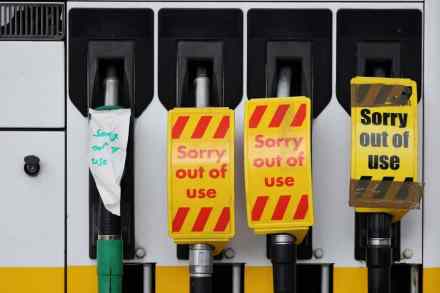
Ministers are bracing for the ‘EFFing crisis’ - that’s energy, fuel and food. As shortages are set to continue for months ahead, the knock-on effects have started to snowball. Will families have a turkey for Christmas? Will inflation cause the costs of living to spiral out of control? Can businesses cope with labour shortages? Katy Balls is joined by James Forsyth and Kate Andrews to discuss.