Kate Andrews

Kate Andrews

Kate Andrews is deputy editor of The Spectator’s World edition.

Impeccable history of the free market – and from the BBC too

The launch of Radio 4’s Invisible Hands series has been both blessed and cursed by timing. It tells the story of Britain’s ‘free market revolution’, just as President Donald Trump overhauls the free trade consensus of the past 40 years and world leaders grapple with how to respond. The problem is the hypotheticals posed at the start of the first episode – that free market capitalism ‘might be in crisis’; that ‘the global free market might be under threat’ – are already out of date. It’s settled. Free trade is out, tariffs are in. Welcome to the trade wars. The world could do worse than look to the ‘Invisible Hands’ for a solution to the crisis.
Why has Trump backed down on tariffs?

Two days ago, talk of a 90-day pause on Donald Trump’s ‘recipricoal tariffs’ was branded ‘fake news’ by the White House. This afternoon, the President has confirmed a 90-day pause on the higher tariff rates on all countries apart from China. ‘Based on the lack of respect that China has shown to the World’s Markets, I am hereby raising the Tariff charged to China by the United States of America to 125 per cent, effective immediately,’ the President shared. This is an increase on Trump’s part, from the 104 per cent levy announced overnight, which China countered with an 84 per cent tariff on American imports, which is set to go into effect tomorrow.

Is Trump the new Truss?

15 min listen

The fallout from Trump’s tariffs continues. Last week, Donald Trump ended the free-trade era that has underpinned growth for decades (and potentially also heralded the end of globalisation). Markets around the world have taken a nosedive, prompting fears of a global recession. The only (brief) reprieve was when stock markets rallied because of a misunderstanding regarding comments made by Trump’s economic adviser. Once these had been clarified, the Nasdaq dipped once again. Republicans are starting to turn on Trump – including Elon Musk, who has been sending out some coded tweets. The strength of the reaction from the markets has drawn comparisons between Trump and Liz Truss, whose mini-Budget spooked the markets so comprehensively that she had to backtrack after just ten days.

control chaos

Trump loves chaos. What happens when he loses control?

From our US edition

“Don’t be a PANICAN,” the President shared on his Truth Social account this morning, as the Dow was dropping 900 points. This is Donald Trump’s new word for his tariff critics, who he has grouped together as the “new party based on Weak and Stupid people!” There is another way, the President insists: “Be Strong, Courageous, and Patient, and GREATNESS will be the result!” It’s another post in a long line of all-caps messages shared by the President over the weekend. “ONLY THE WEAK WILL FAIL!” was Friday’s update. “WE WILL WIN. HANG TOUGH,” was Saturday’s inspirational message.

Can Trump defend his tariff calculations?

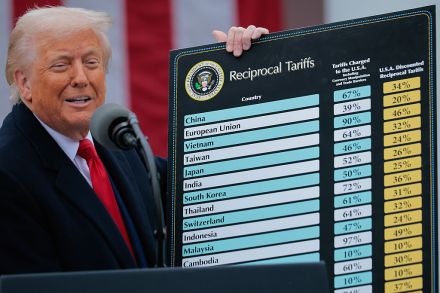
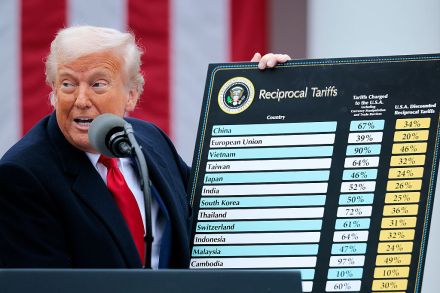
When President Trump held up an easel in the White House Rose Garden illustrating each country’s ‘tariffs charged to the USA’ and the new ‘U.S.A. discounted reciprocal tariffs’, there appeared to be some small print underneath the first column, barely readable. Then printed copies started to circulate the garden. Underneath the column showing each country’s ‘tariffs charged’, it read: ‘including currency manipulation and trade barriers’.  It was clear that the figures published by the Trump Administration were their interpretation of tariff calculations. It was also immediately clear that some countries were going to dispute the figures. But exactly what had been calculated was not immediately obvious.

Trump has bet the house on tariffs

‘My fellow Americans, this is Liberation Day’, Donald Trump told the audience that had gathered in the Rose Garden for his official signing of his executive order to put import levies on goods imported to the United States from around the world. There was no hesitation, there were no caveats: only utter enthusiasm from both the President and almost his whole cabinet, who cheered Trump on as he declared 2 April ‘the day America’s destiny was reclaimed’. Vice President J.D. Vance, Health Secretary Robert F. Kennedy, Secretary of State Marco Rubio, Secretary of Homeland Security Kirsti Noem and House Speaker Mike Johnson were just some of the attendees, who all sat in the front row.

What to expect on ‘World Tariff Day’

13 min listen

This week will see ‘World Tariff Day’ – as those in Westminster are not-so-excitedly calling Wednesday – when Donald Trump will announce a wave of new tariffs. Trump is expected to reveal plans for reciprocal tariffs aimed at addressing what he sees as an ongoing trade imbalance between the US and other countries. He argues that it is ‘finally time for the Good Ol’ USA to get some of that MONEY, and RESPECT, BACK. GOD BLESS AMERICA!!!’. It had looked as though the Prime Minister’s softly-softly approach to US relations was working and that we might avoid Trump’s levies... that was until the UK was included in the 25 per cent tariff on cars and auto parts imported into the US, along with steel. There is some hope, however.

What went wrong for MAGA in Pennsylvania

From our US edition

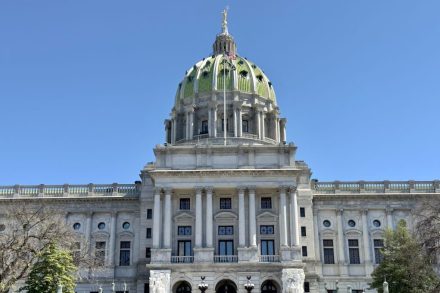
What’s changed in Lancaster, Pennsylvania? The Republican-leaning district in a purple state has been turned on its head by a surprise win for the Democratic party: for the first time since the late 1970s, a local Democratic mayor, James Malone, will take up a place in the State Senate, after a special election was held on Wednesday this week.  This is not just an overturn of decades’ worth of party consensus. It seems to be a monumental shift away from the consensus in Lancaster just four months ago, when Donald Trump won the district by 15 points. It was only a one-point drop from his 16-point margin in 2020, when he won the county and lost the state.

pennsylvania

Can Britain dodge Trump’s tariffs?

14 min listen

Reports in the papers today say that the British government is considering scrapping its digital services tax – largely levied at American tech companies – in return for an exemption to Trump's tariffs that come into effect on April 2. Would this be an effective – or desirable – move on the British part? James Heale speaks to Katy Balls and Kate Andrews. Produced by Oscar Edmondson and Cindy Yu.

Is Trump’s tariff zeal beginning to wane?

From our US edition

The President can’t stop talking about his favorite word – tariffs – although this week his comments are having a new effect. Rather than plummeting, the stock market is showing signs of life – climbing by more than 1 percent – on the news that Donald Trump’s plans for “reciprocal” tariff seemed to have been scaled back significantly.  For weeks the President has been suggesting that come April 2, trade retribution would really kick in: any country that has an “unfair” trading partnership with the United States (Trump was even thinking of extending this to taxes like VAT) would see an equal import tariff imposed on the country.

Is Trump still winning?

23 min listen

The new Spectator US team, Kate Andrews and Freddy Gray are in Washington to discuss Trump's economy, why the Democrats aren't good opposition and whether the MAGA excitement is still alive.

Will Trump’s spending bill luck run out?

From our US edition

It isn’t just a weekend of warmer weather for the President, who took off for Mar-a-Lago yesterday evening. It is possibly a weekend full of calmer news. The decision from Democratic minority leader Chuck Schumer to let the spending bill advance in the Senate allowed the six-month extension to get over the line last night, as the Senate voted 54-46 to see it through. This seemed to give markets a temporary sense of relief as well, as growing expectation that the bill would pass saw stocks rally. Both the S&P 500 and Nasdaq had their best day gains since Donald Trump took office again, while technology stocks also appeared to make a major comeback by the time markets closed yesterday.

shutdown

Will better-than-expected inflation numbers calm the markets?

From our US edition

Has Donald Trump’s return to the White House triggered a second round of inflation? Not yet, according to the Bureau of Labor Statistics, which revealed this morning that the consumer price index rose to 2.8 percent in February — 0.1 percent less than markets had expected. The rise is being described as "stable," as annualized core inflation (which excludes more volatile prices like food and energy) rose to 3.1 percent — also a smaller rise than expected. While inflation on the year is ticking up slightly, it remains in the ballpark of what has been expected.

Can the MAGA coalition survive a recession?

From our US edition

The color red splashed across every news channel yesterday, as Donald Trump’s seemingly blasé attitude towards a possible recession wiped $4 trillion off the United States’s stock market. All day and all night, the airwaves were dominated by talk and speculation over the future of the US economy, as the President pushes forward (and pulls back) certain parts of his tariff agenda.  It’s the sheer uncertainty that has investors spooked, leading to one of the worst days on Wall Street in years. The details of this “period of transition” for the economy that the President alluded to are so vague, and so unclear, that you can make of the comments almost whatever you want.

recession

Who would be a Conservative? – Kate Andrews vs Michael Gove

25 min listen

It’s a special (and emotional) edition of Coffee House Shots this Saturday because it is the last with Kate Andrews on this side of the Atlantic. She joins our editor Michael Gove and political correspondent James Heale for a debate on ideology. Kate – a liberal, in the classical British sense – explains exactly why she is not a Conservative and the various tenets that distinguish liberalism from conservatism, whilst Michael makes the case for being a 'pessimistic' conservative.  So, what makes a liberal? What makes a conservative? And was Hayek right in saying that while there isn’t much to choose between these two political creeds, ultimately, they need each other.  Produced by Cindy Yu and Oscar Edmondson.

Could spending cuts herald a ‘winter of discontent for Labour’s left’?

15 min listen

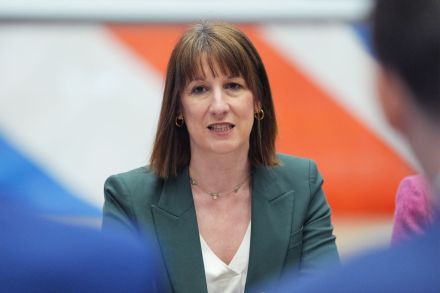
With reports of ‘billions’ of spending cuts earmarked for the Chancellor’s Spring Statement, taking place later this month, Michael Gove and Kate Andrews join Katy Balls to discuss what exactly Rachel Reeves could cut. With little fiscal headroom and sluggish forecasts of growth, Reeves doesn’t appear to have many options. It’s likely that welfare will be targeted, and there are reports that Labour’s opposition to new North Sea oil & gas licences may be relaxed to stimulate growth. One area that appears off the table is defence – following the Prime Minister’s pledge to cut international aid in order to fund new defence spending.  But if all these reports are true, where does that leave Labour ideologically?

Trump’s whirlwind Congress speech infuriated Democrats

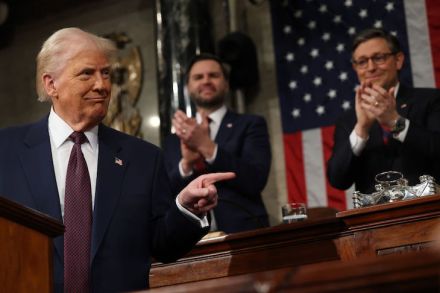
Donald Trump’s address to Congress last night was made up of his greatest hits since returning to the Oval Office. Just over six weeks’ worth of public policy filled a 100-minute speech in what is being reported this morning as one of the longest Congressional addresses in history. The President touched on practically every topic, from the Ukraine war to buying Greenland.  ‘America is back,’ he told the joint-session, to cheers of ‘USA’. Based on the tone of his speech, the Trump we saw on the campaign trail is also making a comeback. The President loves a rally, and this address felt as though it was crafted not for the audience in front of him, but for his supporters watching from home.

Can Starmer stick to his promises to Ukraine?

14 min listen

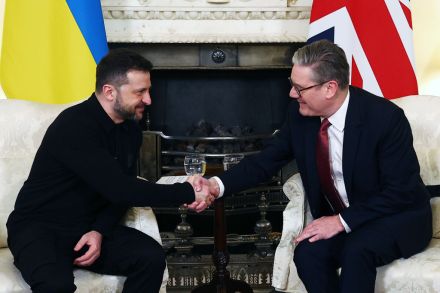
Along with the French President Emmanuel Macron, Keir Starmer seems to be spearheading Europe's diplomatic efforts to secure a lasting peace deal for Ukraine in light of the new American administration's animosity towards Zelensky. Among the proposals being discussed are a peace-keeping force in the country, as a part of efforts to show the Trump administration that Europe is taking responsibility, as it were, for its own security. But will Starmer really get the Americans on board? And if not, does he risk over-promising to Ukraine? James Heale talks to Kate Andrews and Katy Balls. Produced by Cindy Yu.

Was Zelensky ambushed at the White House?

16 min listen

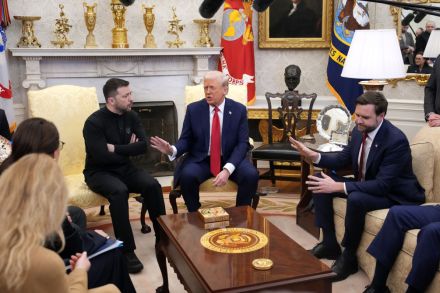
Zelensky's much anticipated meeting at the White House finished in an angry clash between the Ukrainian President, JD Vance and Donald Trump. The Vice President accused Zelensky of leading 'propaganda tours' and culminated in the Ukrainian President leaving the White House without a signed minerals deal. Was Zelensky ambushed? European leaders quickly scrambled to show their solidarity for Ukraine, whilst attempting to maintain good relations with America. How high are the stakes for Starmer ahead of the peace summit held by No.10 on Sunday?

Can J.D. Vance be part of the peace talks?

Practically every aspect of that Oval Office meeting between Donald Trump and Volodymyr Zelensky was surreal. The blow up at the end was certainly the most shocking, but watching the American President repeatedly bite his tongue – until he didn’t – was also very strange.  Holding back opinion is not normal behaviour for the American President. Yet we watched Trump speak very cautiously throughout the meeting, refusing to take sides, but more importantly, resisting the urge to push back when Zelensky insisted there would be no compromise to end the war or highlighted that the rare earth deal did not go far enough to ensure Ukraine’s safety.