Kate Andrews

Kate Andrews

Kate Andrews is deputy editor of The Spectator’s World edition.

Trump’s tariffs & Mamdani’s New York – can anything destroy America’s economy?

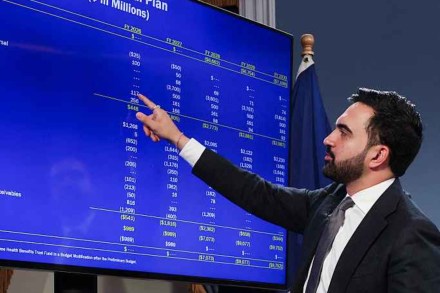
Is the US economy immune to harm? It has been tested this year under Trump's trade tariffs, and inflation fears. Kate Andrews, former economics editor of The Spectator now opinion journalist at the Washington Post and host of the Make it Make Sense podcast returns to Spectator TV with Michael Simmons to discuss the US economy, whether Mamdani is as bad as Zack Polanski, Andrew Bailey vs Kevin Warsh the UK's growth figures.
Trump's tariffs & Mamdani's New York – can anything destroy America's economy?

How Javier Milei won

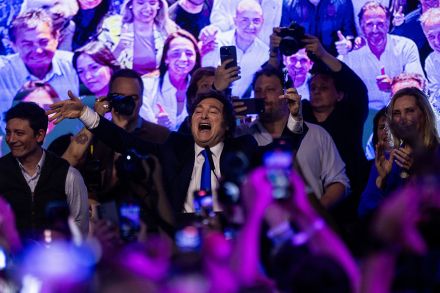
In this episode, US arts editor Luke Lyman is joined by Kate Andrews, formerly of The Spectator, to discuss President Javier Milei’s landslide victory in the Argentinian elections this week. The polls were wrong – how did the self proclaimed anarcho-capitalist survive? Plus, Luke and Kate discuss Kamala Harris’s suggestion that she could run again in 2028.

Is Trump on a roll?

30 min listen

Was this Donald Trump's most phenomenal week yet? Freddy Gray and Kate Andrews discuss the President's success in orchestrating a Gaza peace plan, his 'Mean Girls style' of dealing with world leaders, and how to interpret his comments about not being 'heaven bound'. They also talk about how Trump might bailout Argentina - but only if Javier Milei wins upcoming elections.

Nationalizing America will cost us dearly

From our US edition

“I have the right to do anything I want to do,” Donald Trump told reporters in the White House cabinet room last month. “I’m the President of the United States.” Other branches of the federal government might disagree, but their representatives are strangely mute. “What Trump wants, Trump gets” is the motto that has defined the first eight months of the President’s second term. The overhaul of global trade? Sorted with an executive order and a pen. Poor job numbers? Fire the messenger, hire your own. Feeling the acute absence of a ballroom? Take “a little walk” on top of your White House, look out at your vast kingdom, and decide where the marble floor and golden beams will go. But domination of the federal government is simply not enough.

nationalization

Britain’s war on free speech is worse than you think

From our US edition

Where do you strike the balance between expression and security? It is a question Americans don’t need to ask. Our Constitution is plain and unambiguous about our fundamental rights to say what we want, write what we like, to gather in protest and – sweet relief – to mock our government.  Not everyone is so lucky. Not even our friends. “It doesn’t give me any great joy to be sitting in America and describing the really awful, authoritarian situation that we have now sunk into,” Britain’s Nigel Farage told the House Judiciary Committee yesterday afternoon, as he detailed the speech crackdown being carried out in the UK. “At what point did we become North Korea?

free

Will Trump fall for Putin’s trap?

29 min listen

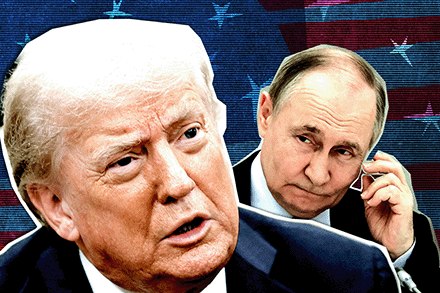
Donald Trump has met both Vladimir Putin and Volodymyr Zelensky this week, raising hopes of progress in ending the Ukraine war – but is it really a breakthrough, or a trap? US deputy editor Kate Andrews speaks with associate editor Owen Matthews – author of this week’s cover story Putin’s Trap – and Sergey Radchenko, professor at Johns Hopkins. They discuss why Putin’s charm offensive may be designed to paint him as the 'reasonable' negotiator, leaving Zelensky isolated, and whether Europe or Trump himself will fall for it.

Donald Trump (Getty) eu

Does Trump’s handshake deal with the EU put America first?

From our US edition

What’s really at stake in these trade deals? That is what we are slowly discovering as Donald Trump’s handshakes with America’s trading partners are turned into specific and detailed agreements. Today we are getting the details of one of the biggest deals struck so far: a trade agreement with the famously protectionist European Union, which agreed in principle to a deal back in July, with the caveat on both the US and EU side that taxes on key sectors were still up for discussion. Those discussions, it seems, have produced some details. Despite early threats that America would impose tariffs of 250 percent and 100 percent on EU imports of pharmaceuticals and semiconductors respectively, the headline duties for both have been reduced to 15 percent.

The fog of tariffs

From our US edition

It was an all-caps kind of evening for the President. “RECIPROCAL TARIFFS TAKE EFFECT AT MIDNIGHT TONIGHT!” Donald Trump wrote on Truth Social last night, minutes before the clock struck 12am. “BILLIONS OF DOLLARS, LARGELY FROM COUNTRIES THAT HAVE TAKEN ADVANTAGE OF THE UNITED STATES FOR MANY YEARS, LAUGHING ALL THE WAY, WILL START FLOWING INTO THE USA. THE ONLY THING THAT CAN STOP AMERICA’S GREATNESS WOULD BE A RADICAL LEFT COURT THAT WANTS TO SEE OUR COUNTRY FAIL!” The Santa imagery is interesting, and fitting. For decades now, one could be forgiven for thinking some kind of magic was being conjured up, as consumer choice skyrocketed while prices plummeted at the same time, and once-deemed luxury items became accessible for the vast majority of households.

Tariffs

Has the Bank of England forgotten what its job is?

15 min listen

Some excitement on Threadneedle Street today after the Bank of England cut interest rates to 4 per cent. The Bank’s Monetary Policy Committee (MPC) has just voted five to four – after a revote – for what is the third cut this year. This takes interest rates back down to levels not seen since the beginning of 2023. Concerns about an increasingly slack labour market seem to have driven the MPC’s decision. This sounds like good news – and Starmer will welcome it as such – but the Bank’s apparent comfort with loosening policy in this context is baffling says Michael Simmons. Its own forecasts show inflation climbing back to 4 per cent by September – double the official target.

Trump, MAGA, and US foreign policy

Kate Andrews speaks to Damir Marusic, assignment editor at The Washington Post and co-founder of Wisdom of Crowds. They examine Donald Trump’s surprising foreign policy moves in his second term: his position on the Israel-Gaza conflict, why he's armed Ukraine despite MAGA frustration, and whether his instincts are reshaping Republican foreign policy for good.

What should we make of Trump’s trip to the UK?

Donald Trump is in Scotland, holding court at Turnberry. He's welcomed Sir Keir and Lady Victoria Starmer to his golf course, and had a long discussion with reporters at a wide ranging press conference, that covered Russia, Gaza, and his long running feud with London mayor Sadiq Khan. To unpack it all, Freddy is joined by political editor Tim Shipman, and deputy US editor Kate Andrews.

The truth about the Trump ‘trade deals’

From our US edition

They say three times makes a pattern. So what should we make of the President’s trade agreements, three of which he confirmed this week, as the August 1 deadline for "reciprocal tariffs” looms?  If there remained any confusion about his agenda, he helpfully laid it out in all caps. “I WILL ONLY LOWER TARIFFS IF A COUNTRY AGREES TO OPEN ITS MARKET. IF NOT, MUCH HIGHER TARIFFS!” he wrote on Truth Social. “USA BUSINESSES WILL BOOM!” Given the size of the lettering, and the similarities to the deals secured with Indonesia, the Philippines and Japan this week, we should take Donald Trump at his word on this one. Put simply: so long as other countries cut taxes for their businesses, he will hike taxes on American businesses ever so slightly less.

trump trade

Soul suckers of private equity, Douglas Murray on Epstein & are literary sequels ‘lazy’?

44 min listen

First up: how private equity is ruining Britain Gus Carter writes in the magazine this week about how foreign private equity (PE) is hollowing out Britain – PE now owns everything from a Pret a Manger to a Dorset village, and even the number of children’s homes owned by PE has doubled in the last five years. This ‘gives capitalism a bad name’, he writes. Perhaps the most symbolic example is in the water industry, with water firms now squeezed for money and saddled with debt. British water firms now have a debt-to-equity ratio of 70%, compared to just 4% in 1991. Britain’s desperation for foreign money has, quite literally, left Britain ‘in the shit’.

Trump

Trump is in a good mood. What’s up?

From our US edition

 The President is usually set on "winning," but he has settled this week for a draw. Columbia University and the administration reached a settlement yesterday that, in theory, brings a months-long battle between the academics and politicos to an end.On the face of it, Columbia has still pulled the short straw. The university will pay a $200 million fine over three years to address the allegations that it was in breach of anti-discrimination laws, specifically in regards to the safety of Jewish students on campus.Moreover, Columbia has agreed to a "jointly selected independent monitor" that will watch over the university’s actions as it implements new student assessments and hiring policies.

How the Bank broke Britain, Zelensky’s choice & the joys of mudlarking

49 min listen

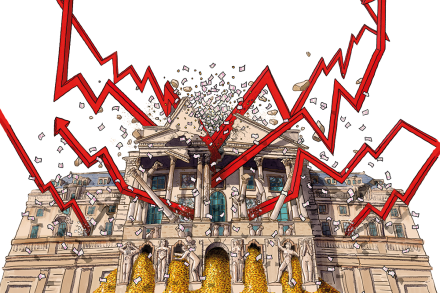
First up: how the Bank of England wrecked the economy Britain’s economy is teetering on the brink of a deep fiscal hole, created by billions of pounds of unfunded spending – never-ending health promises, a spiralling welfare bill and a triple lock on the state pension, which will cost three times as much as originally estimated. Although politicians ‘deserve much of the blame for the economic state we’re in’, it’s Andrew Bailey – Michael Simmons argues in the magazine this week – who ‘has enabled their recklessness’. He joined the podcast to discuss who really broke Britain with Kate Andrews, Deputy Editor of The Spectator’s world edition and former Economics Editor. (01:15) Next: has Ukraine lost faith in Zelensky?

Trump – the conventional foreign policy President?

28 min listen

Trump has said he's "very, very unhappy" with Russia, and threatened severe tariffs against them if there's no deal on Ukraine within 50 days. He's also sending more weapons to Ukraine in coordination with NATO. What's behind his change of heart on foreign policy, and how's his MAGA base responding? Freddy Gray is joined by deputy US editor Kate Andrews, and Sergey Radchenko, professor at the Johns Hopkins School of Advanced International Studies. You can watch this episode here.

Has Trump given up on tariff deadlines?

From our US edition

“TARIFFS WILL START BEING PAID ON AUGUST 1, 2025,” Donald Trump shared on Truth Social this morning. “There will be no change... No extensions will be granted. Thank you for your attention to this matter!” It’s a rather definitive statement from the President. But we’ve been here before. The original 90-day extension of “reciprocal tariffs” (better described as trade deficit figures with a percentage symbol attached) was also supposed to be a hard deadline. The President suggested only last week that there were no plans to push implementation back again. But here we are: a new date, a new deadline and a mixed market reaction.

tariff