Justin Marozzi

Justin Marozzi is the author of Captives and Companions: A History of Slavery and the Slave Trade in the Islamic World, published by Allen Lane on 9 July.

The last thing Yemen needs is more war. But that is what it’s getting

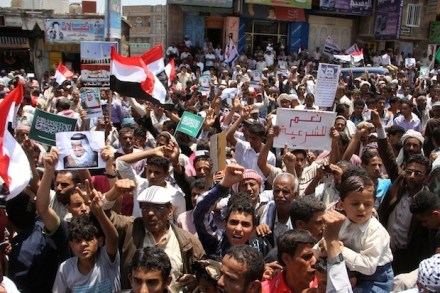
After years of hearing how terrible Western interventions are in the Middle East (Exhibits A, B and C the fiascos of Iraq, Afghanistan and post-Gaddafi Libya), it will be interesting to see how a Saudi-led all-Muslim intervention fares in Yemen. My prediction is it won’t be much better than those of the infidels. For a start we are dealing with the poorest country in the Arab world. Whereas Iraq sits on a lake of oil, squandering the proceeds with a venality that is ghastly to behold, Yemen is running out of water, let alone oil. With an estimated GDP per capita of $2,500, the country comes 187th in the world. The figure for Saudi Arabia, incidentally, is $31,300. The last thing Yemen needs is more war.

Mecca: from shrine to shopping mall

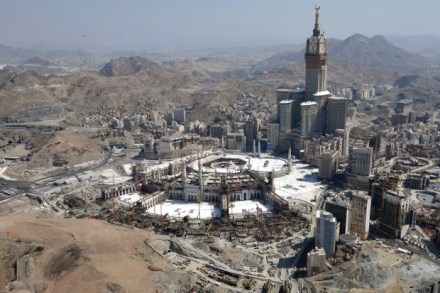
Mecca is the greatest paradox of the Islamic world. Home to the Kaaba, a pagan-era cube of black granite said to have been built by Abraham and his son Ishmael, it is the lodestar to which 1.6 billion Muslims direct their five daily prayers. Mecca is the single point on the planet around which Muslims revolve — quite literally for those able to perform the once gruelling, now simply expensive, pilgrimage or haj. Yet the prodigious, world-illuminating gifts of Islamic civilisation in the arts and sciences, from architecture to astronomy, physics to philosophy, came not from Mecca but from cities such as Damascus, Baghdad, Cairo and Istanbul.

The shameful truth: Britain lets in far too few refugees

Pictures from Calais have returned to our television screens, showing desperate men and women trying to break into lorries bound for Britain. A Sudanese man died jumping from a bridge onto a lorry heading for Dover. Another perished after falling from the axles of a bus. The mayor of Calais has blamed Britain for being an ‘El Dorado’ offering aspirational benefits to migrants — but as she’d know, the Africans arriving in her morgues would never have qualified for welfare. They risked death due to a sense of desperation, and hope, that we can scarcely imagine. The same is true in the Mediterranean, where 2,500 have died after embarking on unseaworthy boats heading for Europe. Corpses of Syrians, Egyptians and others now regularly wash up on Italian shores.

Is it boring being the god of the sea?

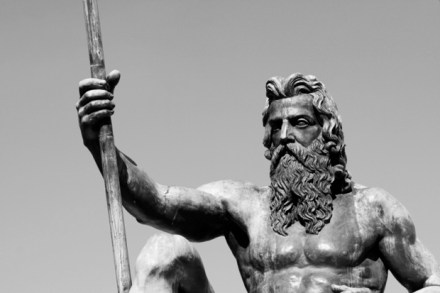
Writing to a god seems a presumptuous thing. Who are we, feeble mortal creatures whose lives pass in the blink of an eye, to address the great immortal deities? The Dutch writer Cees Nooteboom, now entering his ninth decade and never knowingly lacking in chutzpah, is not one to be deterred by such considerations. Nooteboom is an immensely civilised and civilising writer, rich in curiosity and armed with a dazzling literary style. Those who already know his writing will not be surprised to discover that on the page, if not in the briny, he is more than a match for the trident-bearing earth-shaker, god of the sea.

I’ve spent years in war zones. And the most terrifying moment of my life just happened in Norfolk

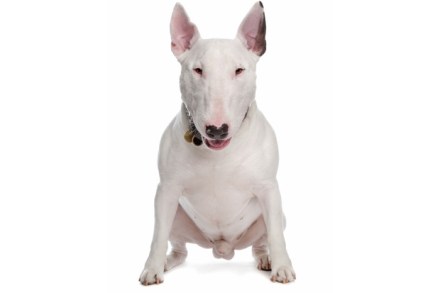
[audioplayer src="http://traffic.libsyn.com/spectator/TheViewFrom22_9_Oct_2014_v4.mp3" title="Justin Marozzi and Caroline Kisko, Kennel Club Secretary, discuss vicious dogs" startat=1287] Listen [/audioplayer]It happened so quickly, as these things always do. My wife Julia and I were pootling about on Wells beach with our fluffy mongrel Maisie when suddenly two fighting dogs, English bull terriers, came flying towards us like calf-high missiles. Declining the usual canine politesse of a bit of bum-sniffing, one immediately locked its jaws around Maisie’s throat, the other clamped its teeth into her right back leg. They then tossed her around like a rag doll, as my wife and I desperately tried to haul them off. Maisie was howling in terrible distress.

More derring dos and don’ts from Paddy Leigh Fermor

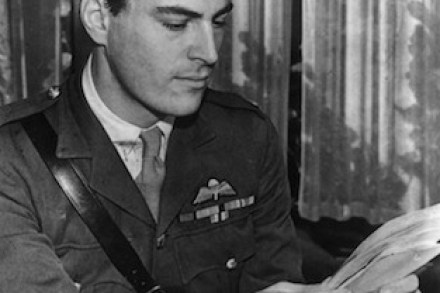
Recent years have seen the slim but splendid Patrick Leigh Fermor oeuvre swell considerably. In 2008 came In Tearing Haste, an entertaining collection of letters to and from Deborah Devonshire, followed last year by The Broken Road, the posthumously sparkling and long-awaited completion of the ‘Great Trudge’ trilogy, which finally delivered the 18-year-old Paddy from the Hook of Holland to Constantinople. Now comes another volume, setting out in full for the first time one of the great moments in a life heavily laced with glamour and incident. It takes some chutzpah to kidnap a German general — and serious presence of mind to get away with it.

Genghis Khan was tolerant, kind to women – and a record-breaking mass-murderer

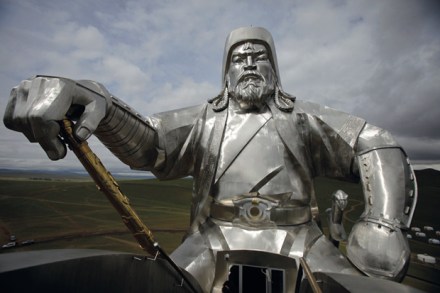
Genghis Khan, unlike most Mongols in history, is a household name, regularly misappropriated as a right-wing totem. If we recall the genocidal killing sprees of, say, Stalin and Mao, perhaps it would be more historically accurate to say ‘to the left of Genghis Khan’. In the popular imagination he is the despot’s despot, a one-man killing machine who led his army of mounted archers to triumph after triumph, terrorising and slaughtering by the million to carve out an empire that stretched from the Caspian to the Pacific. His martial conquests place him in the top trio of world conquerors, alongside Alexander the Great and Tamerlane.

In defence of Herodotus

How many writers would give their eye teeth to have a book reissued 2,500 years after their death? It certainly beats being pulped after a year or two. And who better to receive the Penguin Hardback Classic treatment than Herodotus, the fifth-century BC ‘Father of History’, he to whom historians today owe so much, whether they know it or not? This is a new translation. of a book that remains more relevant than ever. by the popular historian Tom Holland, with an introduction by the Cambridge professor Paul Cartledge, doyen of classicists, citizen of Sparta and a Herodotean to the core.

The Broken Road, by Patrick Leigh Fermor – review

Sound the trumpets. Let rip the Byzantine chorus of clattering bells and gongs, the thunder of cannons, drums and flashing Greek fire. Raid cellars and let champagne corks fly. Eighty years after Patrick Leigh Fermor’s epic trudge across Europe, 20 years after the death of his long-suffering publisher Jock Murray, ten years after the passing of his wife Joan, and two years after his own death, the elusive third volume that so tormented him is published at last. The travel trilogy is complete. It is, as John Murray reminds us, the literary event of the year. But for those who admire Paddy’s densely beautiful prose, can this awkward, unformed orphan live up to its billing?

Revealed: Essays of a tyrant’s son

Tripoli Someone somewhere must have decided it was worth keeping. Like many parents around the world, Colonel and Mrs Gaddafi were probably terribly proud of their child’s progress at school. But you can't take everything with you when the mob is storming the barricades. So there it was strewn on a patch of sun-parched lawn, next to a bizarre take on a Swiss chalet. For your average Tripoline indulging in some light pilfering of the abandoned Bab al-Aziziya compound, it wouldn't have been worth a second look. For anyone hunting down incriminating intelligence files linking the UK to torture in Libya, it wouldn’t have been up to much, either.

Embattled dystopia

Pity the modern dictator. Time was he could bump off a recalcitrant opposition figure, take out a dissident stronghold, massacre the entire population of a town and the world would be none the wiser. There might be a pesky reporter trying to get to the truth, but that could be taken care of, as President Assad’s security forces demonstrated earlier this year. Yet the digital world has made it much harder to brush war crimes and atrocities under the kilim. Thanks to Youtube, Facebook and Twitter, surveillance states now find themselves under constant surveillance in turn. The spies are spied upon, lifting the lid — albeit only partially — on what is happening inside places like Syria.

Travails with Auntie

He’s the Housewives’ Favourite, the Voice of Middle England on Radio 2, one moment discussing the perils of your other half leaving the gas on, the next slipping on an Elvis Costello track to liven up your lunch. Bit of a cheeky chappie, affable, engaging, amusing, doesn’t appear to take himself too seriously. We like that in a broadcaster. Self-important windbags James Naughtie, Nick Robinson and John Simpson, do please take note. Jeremy discusses neighbours who keep sofas and old cars in their garden, no-fault dismissal, how a tragic car crash shattered one family’s lives and breastfeeding three-year olds, the show’s website declares of his latest programme. This is the sort of stuff that he and his several million listeners are preoccupied by.

The post-Gaddafi future | 20 October 2011

We tweeted a link to this earlier, but thought CoffeeHousers would appreciate this Spectator article from August on the future of Libya. The question for Libyans, as they take their first momentous steps into the post-Gaddafi era, is whether they can now build a government and country worthy of their heroic struggle against one of the world’s worst tyrants. For decades, conventional thinking about Arab nations, especially among the experts, argued that they were best ruled by ‘strongmen’, a western euphemism for pro-western dictators such as the deposed Egyptian president Hosni Mubarak and his former counterpart in Tunisia Zine el Abidine Ben Ali. According to this line of thought, Arabs don’t do democracy.

“Tripoli is our capital”

Tripoli East is East and West is West, as Kipling once reminded us, but in Libya at least the twain have certainly met. For the past six months Free Libya has been headquartered in eastern Libya, or ancient Cyrenaica. When Tripoli started sliding out of Gaddafi's control on 20 August, the dribble from east to west began. It was given added oomph on Wednesday with the arrival in Tripoli of the interim prime minister Mahmoud Jabril. Now we're going to see if Libyans can upset the gloomiest predictions once again. There have been all sorts of received wisdoms about Libya and the NATO campaign since the revolution kicked off in February. We have heard how Al-Qaeda was infiltrating the freedom-giddy rebels. Journalists were quick to diagnose a military "stalemate".

Black gold: the key to Libya’s future

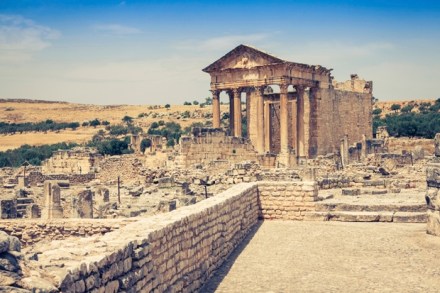
Tripoli The Roman theatre in Sabratha simmers in the afternoon sun, glowing a warm terracotta. It is a magnificent site as we head west from Tripoli to the Mellitah Oil and Gas Complex. Dating back to the irrepressibly commercial Phoenicians, who founded a trading post here sometime between the fourth and seventh centuries BC, Sabratha is essentially a Roman creation, built in the late second century AD at the outset of the Severan dynasty. Septimius Severus was Africa’s first Roman emperor and he liked to build big. The word imperial scarcely does justice to his finest creation, Leptis Magna, east of Tripoli towards the wreckage of Misratha.

A day out at Gaddafiland

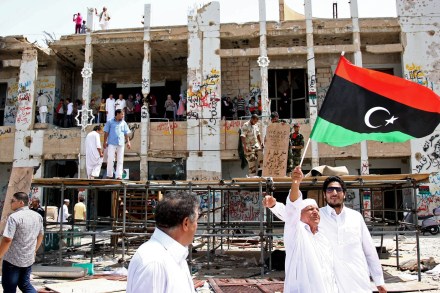
Tripoli What to do on a weekend in revolutionary Tripoli? There’s no doubt about the city’s most popular family day out. Hundreds of cars and thousands of Tripolines drive into Bab al-Aziziya, the Gaddafi family fortress. A vast compound strictly off limits for ordinary Libyans until only a few days ago is now the scene of the unlikeliest traffic jams. Threading their way through shot-up, burnt-out armoured BMWs, drivers wind down their windows, honk their horns and shout out anything that comes to mind, “Free Libya!”, “Fuck off Gaddafi!”, “The rat is finished!” Gaddafi’s house resounds to cries of “Allahu akbar! God is great!” Crowds mill through with mobile phone cameras to the fore.

Libya’s next battle

Tripoli Two months ago Mazin Ramadan, senior advisor to Ali Tarhuni, the oil and finance minister recently promoted to deputy prime minister, was, in his own words, fire-fighting a liquidity crisis in Benghazi. Today, after the first tranche of the £1.8 billion frozen Libyan dinars sitting in Britain finally reached Libya after five months, he’s feeling more relaxed. It arrived in the nick of time. Another reason for his bonhomie? He says he’s just received $300 million in frozen assets released by the US. The most immediate challenge is tomorrow. Literally. The million dinar question is whether Tripoli goes back to work on Saturday. On paper it’s the first day for civil servants to return to their desks.

The warmest of welcomes

Tripoli It would probably be stretching the truth a little to say that the British prime minister runs Allah a close second when it comes to expressions of gratitude at checkpoints on the way into Tripoli from the Tunisian border, but there’s no doubting his popularity. “David Cameron, veery, veeeery good!” is a typical reaction to the discovery that a vehicle is carrying a British journalist. “The Brits are number one among all the expat Libyans who’ve come back to join the revolution,” says Ahmed, recently returned from San Antonio.

The post-Gaddafi future

The question for Libyans, as they take their first momentous steps into the post-Gaddafi era, is whether they can now build a government and country worthy of their heroic struggle against one of the world’s worst tyrants. For decades, conventional thinking about Arab nations, especially among the experts, argued that they were best ruled by ‘strongmen’, a western euphemism for pro-western dictators such as the deposed Egyptian president Hosni Mubarak and his former counterpart in Tunisia Zine el Abidine Ben Ali. According to this line of thought, Arabs don’t do democracy. They are too tribal and fractious for such enlightened politics. For western leaders, it has been a case of better the devil you know, and hang the consequences for the Arabs.

Ways of escape

When I compiled a list of the top dozen travel writers of the past century for an American magazine the other day, it required some effort not to come up with an entirely British cast. Freya Stark, Norman Lewis, Patrick Leigh Fermor and Jan Morris were musts. So too were V. S. Naipaul and Colin Thubron, still writing up a storm, and the Ibn-Battutah-mad Tim Mackintosh-Smith for a younger generation. Although there was no space for Byron, Bell, Thesiger or Chatwin, no great legerdemain was needed to squeeze in the brilliant Dutchman Cees Nooteboom, Ryszard Kapuscinski, the Polish master of literary reportage, the Irishwoman Dervla Murphy and Martha Gellhorn from across the Atlantic. That left one space.