Justin Marozzi

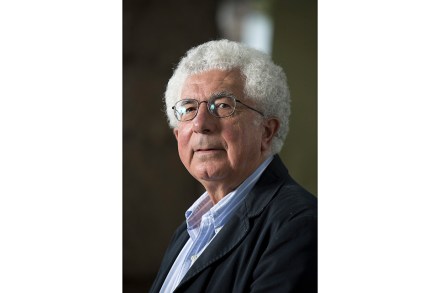
Justin Marozzi is the author of Captives and Companions: A History of Slavery and the Slave Trade in the Islamic World, published by Allen Lane on 9 July.

A visit to the world’s worst capital city

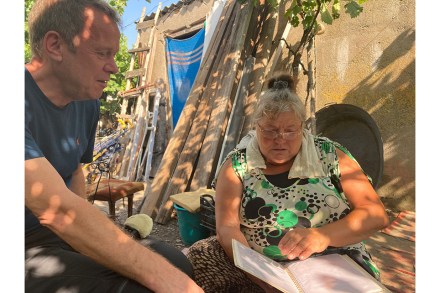
Nouakchott in Mauritania is often referred to as the ‘worst capital city in the world’. That may be a little harsh, but it is difficult to recommend it to Spectator readers as a must-visit destination. The heat is savage, the poverty endemic, corruption is off the scale and this west African country is one of the last on Earth where you can still find hereditary slavery. Which is why I’m here. Troubles begin on arrival. A succession of three police officers grill me in the airport. Why have I come to Nouakchott, who am I working for, who am I planning to meet, why, what are their telephone numbers, what am I going to talk to them about, where am I staying? They are flummoxed by the word ‘historian’.

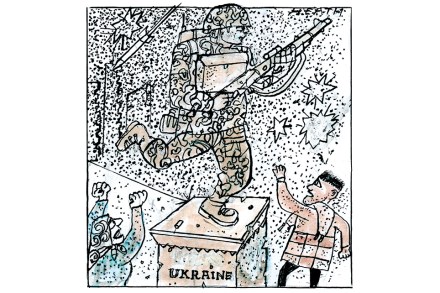
How a small town in Ukraine stopped the Russians in their tracks

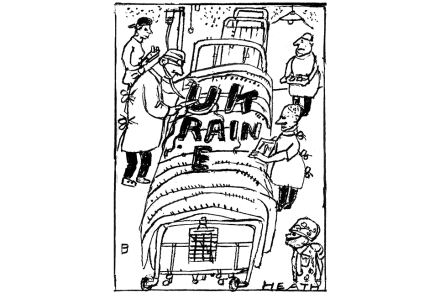
The other day, John Simpson, He Who Cannot Be Removed From The BBC, tweeted something purportedly about Volodymyr Zelensky. What it was really about, though, was John Simpson – how many world leaders he had interviewed (200), over how long (more than 50 years), and who he most admired (Zelensky, Nelson Mandela and Vaclav Havel). It is difficult to imagine Andrew Harding, a veteran BBC foreign correspondent, tweeting something like that. He is a much more understated reporter, and less prone to foreground himself at the expense of his interviewees. He is just as likely to be on receive as transmit and understands that he is not the story.

Tall tales of the Golden East: the fabulous fabrications of two 20th-century con artists

Have literary deceit and spiritual self-invention ever been this entertaining? The question arises on almost every page of this galloping exposé of two men who were exceedingly relaxed about not telling the truth throughout their professional lives. They would have called it ‘storytelling’. Those who questioned the reliability of their often outlandish claims were dismissed as academic nonentities. One minute Ikbal’s journey across the Middle East was 15,000 miles, the next it was 25,000 miles Sirdar Ikbal Ali Shah was the great-grandson of Jan Fishan Khan, a 19th-century Arab nobleman who had supported the British in Afghanistan and been rewarded with an Indian title, palace and pension.

Men, step away from the trainers

What is it with men and trainers? Or rather, men of a certain age and trainers. I’m still trying to banish the horror-show image of Rishi Sunak wearing Adidas Sambas in No. 10 in an interview to promote his tax policies. Has western civilisation really come to this? Are we destined to succumb to rubber-soled hell, or is there still a place left for those of us who prefer shoes that last decades, not a couple of years before being consigned to the dustbin of athleisure history? For years I’ve played a game checking out men’s footwear on the London Underground. The proportion of trainers has risen exponentially, like grey squirrels stealing lebensraum from their indigenous red cousins, so that today you’re lucky if you even spot a leather-soled shoe.

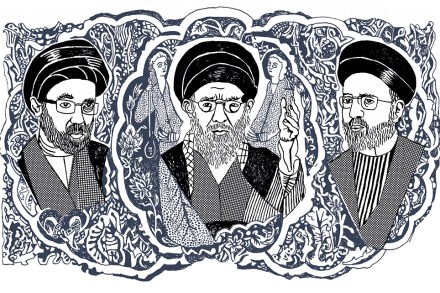
Could Iran shift to dynastic rule when Khamenei dies?

Who will rule Iran after Ali Khamenei? The question is being asked with increasing frequency and concern as the Supreme Leader approaches his 85th birthday amid rumours of ill health, and it will be raised again on 1 March, when Tehran holds elections to the parliament and the Assembly of Experts, the body which will determine his successor. Neither of the principal contenders is squeamish about shedding blood in the interests of regime survival Successions in dictatorships, or in Iran’s case an oppressive theocracy, are fraught with danger. Uncertainty and instability, with the prospect of great violence, are priced in.

How dangerous is the Sunni-Shia schism?

In 2014, with the Middle East convulsed by the murderous, self-styled Islamic State, a Daily Mail reader wrote a letter to the editor which began: ‘Are you confused by what is going on in the Middle East? Let me explain...’ Aubrey Bailey went on to describe the dizzying complexity of diplomatic relationships thrown into turmoil: So, some of our friends support our enemies and some of our enemies are our friends, and some of our enemies are fighting our other enemies, whom we don’t want to lose, but we don’t want our enemies who are fighting our enemies to win... And all this was started by us invading a country to drive out terrorists who weren’t actually there until we went in to drive them out – do you understand now?

A 1,000-mile trek through the Caucasus finally clears the mind

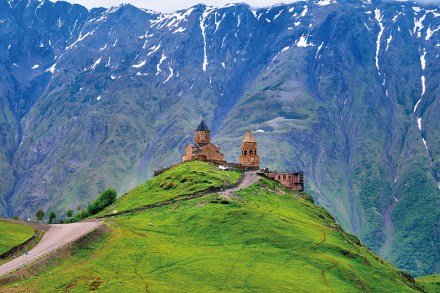
It takes a brave writer, even in an age transfixed by the workings of our inner woo, to bare their soul on the page. Tom Parfitt, a former Moscow correspondent, was scarred by the horrifying Beslan school siege and massacre which he saw unfold in North Ossetia in 2004. For years he was haunted by a recurring dream of ‘endless purgatory’ in which a grief-stricken woman, who has just learnt that her child has been killed in the terrorist attack, falls through the air, groaning like a wounded animal. There are scrapes and scares – how could there not be? Wolves, bears and dogs are regular worries An outdoors type who enjoyed a bucolic childhood on a Norfolk farm, Parfitt yearns to free himself from the hack’s daily shackles.

A shocking claim about the Baghdad bombings of 1950 and 1951

Avi Shlaim’s family led the good life in Baghdad. Prosperous and distinguished members of Iraq’s Jewish minority, a community which could trace its presence in Babylon back more than 2,500 years, they had a large house with servants and nannies, went to the best schools, rubbed shoulders with the great and the good and sashayed elegantly from one glittering party to the next. Shlaim’s father was a successful businessman who counted ministers as friends. His much younger mother was a socially ambitious beauty who attracted admirers, from Egypt’s King Farouk to a Mossad recruiter. For this privileged section of Iraqi society, it was a rich, cosmopolitan and generally harmonious milieu. And for the young Shlaim, born in Baghdad in 1945, these were halcyon days.

In Kyiv, tech start-ups are thriving

What better cocktail to try in Kyiv than ‘Lesya Ukrainka’s Dream’? Born in 1871, Ukrainka was a fierce feminist, poet, titan of Ukrainian literature and the angel-faced symbol of independent nationhood. In this time of war, writers like Ukrainka and Taras Shevchenko, the great 19th-century poet persecuted by the Russians, a man who has come to define Ukrainian national identity and liberation, are all the rage. The last verse of Ukrainka’s poem ‘Contra Spem Spero’ (‘I hope against hope’) captures the national mood: Yes, I will laugh despite my tears, I’ll sing out songs amidst my misfortunes; I’ll have hope despite all odds, I will live! Away, you sorrowful thoughts!

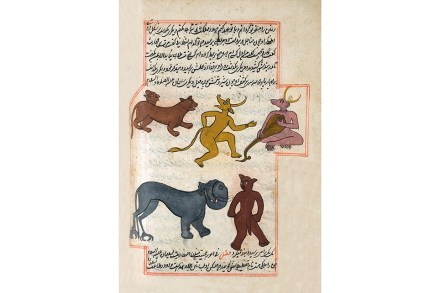
Here be dragons, dog-headed men and women growing on trees

I have to confess that this book sat on my desk for several months. The words ‘Harvard University Press’ cast a strange and unsettling spell which prevented me from even opening it. Let’s be honest: academic presses are not always synonymous with rollicking reads, nor indeed are academics. They can ask an awful lot of the general reader – that would be most of us. Given how short life is, there is no good reason why reading should be more of a pain than a pleasure. Thankfully, the spell finally wore off, which was fortunate, because this book about a book, like the book it describes, is a rare and marvellous thing.

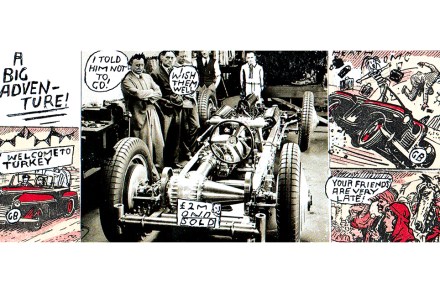
My 6,000-mile adventure of a lifetime

‘Oh, you’ll hate it, Julia. It’s men talking about cars all the time. Really, really boring. You drive all day, it gets incredibly hot, you’ve got no air-conditioning and then – if and when you make it to your hotel – the men start talking about cars again. It’s awful. Never again.’ This is not the kind of pep talk I’m hoping for on the eve of our 6,000-mile expedition to the Syrian border with my wife in Frieda, our 1956 Bristol 405. Our friend, the novelist Raffaella Barker, knows what she’s talking about. Her husband, who sells classic cars for a living, comes to my rescue. ‘Zip it!’ he says, but the seed of doubt has been sown. Sceptical friends reckon this trip has all the makings of a divorce.

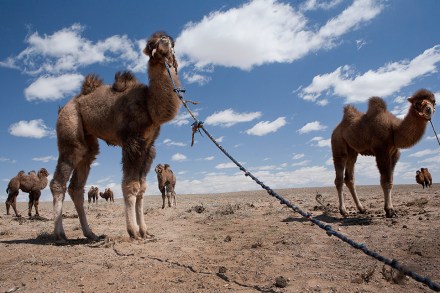
How to tether your camel and other useful tips

Here’s a treat for Christmas: a bona fide literary treasure for under a tenner. And a handsome little hardback, too, which you could certainly squeeze into a stocking. On Travel and the Journey Through Life is an anthology of one-liners and observations on travel, from the high-spirited and romantic to the moody and downright cynical. When it comes to travel writing, all roads lead one way or another to Eland, that elegant publisher and gritty survivor. All sorts of brilliant people say nice things about Eland. Colin Thubron, the doyen of travel writers, to cite just one, admires its ‘nearly extinct integrity’ and ‘eccentric passion for quality’.

The Nazi influence in Egypt

The law of supply and demand is a powerful thing. In the aftermath of the second world war there were many thousands of suddenly underemployed German and Nazi rocket scientists, jet engine technicians, military leaders, chemical engineers, propagandists and other specialists on the international market. While many were snapped up by the Americans and Soviets, voluntarily or otherwise, there was no shortage left for countries such as Argentina and Egypt, which reckoned they could learn a thing or two from the market leaders in internal repression and weapons of mass destruction. As the government communications specialist and Middle East watcher Vyvyan Kinross reveals in this darkly gripping story, this wasn’t a question of a handful of advisers.

Light and shade in the Holy Land – a century in spectacular images

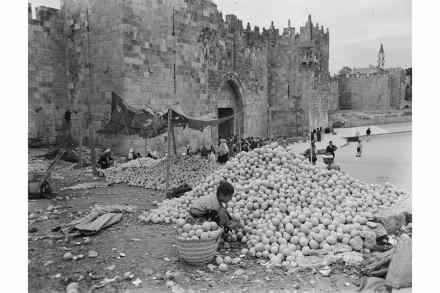
Roger Hardy is a romantic. That much I deduce from the language he uses to describe how photographers were drawn to the special quality of light in Palestine. Their images, he writes, ‘capture the play of light and shade on the limestone walls of Jerusalem’s Old City, the glistening watermelons on sale at open-air markets, the white apartment blocks of the new metropolis of Tel Aviv, the dusty rubble of houses blown up by soldiers during the rebellion of the 1930s’. The last few words reveal a steely realism, too, a quality developed, no doubt, during the more than 20 years he worked as a Middle East analyst for the BBC World Service.

Hubris, blunders and lies characterised the war in Afghanistan from the start

And so the reckoning begins. As frantic Afghans wrestle with the agonising, life-and-death choice between staying in Kabul and risking execution by the Taliban or running the gauntlet of checkpoints around the airport in search of freedom overseas, it’s noises off in the West. Pundits and policy- makers pontificate, grizzled generals rue another foreign adventure ending in defeat and the media provide a live stream of grief and anguish. ‘I’m terrified,’ an Afghan friend and former colleague in the Ghani government WhatsApped me as Kabul fell. The Taliban had already killed two of his close colleagues and were searching for him. ‘I need to get out. Now it is time that our international friends do something to support me.

Edward Said — a lonely prophet of doom

It had been billed as a clash of the Titans. Boston, 22 November 1986: two giants of their field slugging it out in the circus, a shootout at the scholars’ corral. The atmosphere was electric. Here was the long-awaited confrontation between Edward Said, professor of English and comparative literature at Columbia University, and Bernard Lewis, emeritus professor of Near Eastern Studies at Princeton. It didn’t disappoint. Ten minutes into the debate on ‘The Scholars, the Media and the Middle East’, Said took the microphone and let rip, unleashing his blistering attack on American scholars, journalists and ‘the Zionist lobby’.

Is there anything left worth joking about?

Here are a couple of books that seek to tackle the difficult issue of comedy on the front line. One deals with an increasingly toxic global cultural war; the other plunges into the battle to take on jihadists by laughing at them. In their different ways both ask the same questions: what’s funny and what’s not? And both examine the consequences of challenging those who police what is and what is not considered acceptable. Find yourself on the wrong side of cancel culture and you lose your career. Take on the jihadists and you lose your head. Andrew Hankinson, a journalist and writer from Newcastle, is the author of the cult study You Could Do Something Amazing With Your Life [You Are Raoul Moat], a modern take on Truman Capote’s In Cold Blood.

In just eight years Selim I became ‘God’s Shadow on Earth’

Faber must take a rather dim view of British readers’ historical awareness these days. This is a biography of one of the greatest Ottoman sultans in the empire’s 600-year history, yet the publishers cannot bring themselves to mention his name in the book’s title. Perhaps they thought Selim I was too obscure, and maybe they’re right, but their reticence is not shared by Alan Mikhail’s American publishers, who rightly give the sultan his due. Never mind. Mikhail, chair of Yale’s history department and a specialist in Ottoman history, makes it his mission to demonstrate how this utterly compelling leader helped define his age, bending the world to his will. And he succeeds with a flourish.

In Afghanistan, Trump and the Taleban want the same thing – Americans out

‘Incoming! Incoming! Incoming!’ As morning alarms go, this one leaves a lot to be desired. Normally I wake up to the long, trippy build-up of ‘Shine On You Crazy Diamond’, which I used to love in the searing heat of Mogadishu. But this is Kabul and the occasional grating siren is part and parcel of life in the Green Zone. It turns out to be a false alarm, but not before I have thrown myself to the floor in my duvet and buggered my back. Talking of bed linen, Al-Shabaab suicide bombers once attacked the Somali capital’s presidential compound where I lived. They missed the president but killed my best friend Mohamud, the prime minister’s chief of staff. Seven corpses of brainwashed young men were piled up outside my bedroom.

A legend under siege

As rousing death-and-glory speeches go, it is one of the best. With a besieging Roman army only hours from storming the mountain stronghold of Masada, where 967 Jews were making their last stand in around AD 73, the rebel leader Eleazar Ben-Yair gathered the men together and called for a mass suicide. He told them: We have it in our power to die nobly and in freedom. Our fate at the break of day is certain capture; but there is still the free choice of a noble death with those we hold most dear. That way their wives would not be dishonoured by Roman soldiers, nor their children enslaved: Let us spare nothing but our provisions; for they will testify, when we are dead, that it was not want which subdued us, but that… we preferred death to slavery.