Justin Marozzi

Justin Marozzi is the author of Captives and Companions: A History of Slavery and the Slave Trade in the Islamic World, published by Allen Lane on 9 July.

Istanbul Notebook

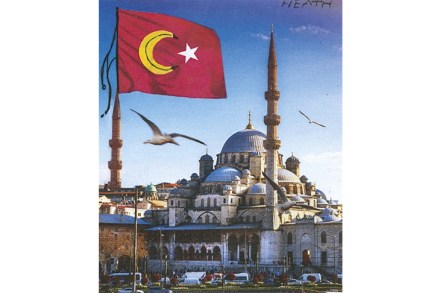
‘It’s official. Turkey is a banana republic!’ My friend Mustapha, a serial entrepreneur, sends me a flurry of doom-laden WhatsApp messages on hearing the news that Istanbul’s mayoral election is being re-run. One of them is a cartoon of President Recep Tayyip Erdogan standing in front of the national flag, crescent turned into a banana. In March, his ruling AKP lost Istanbul, the engine of what remains of the Turkish economy, together with Izmir and Ankara. It was a historic breakthrough for the opposition CHP and its victorious mayoral candidate Ekrem Imamoglu. But it was also a massive threat to Erdogan, a former mayor of Istanbul, who hasn’t lost an election since 1994. He alleged dirty tricks and leant on the election authority to order a re-run.

Full of eastern promise

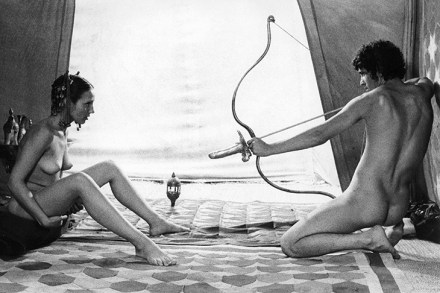
Most of Hollywood’s Arabian Nights fantasies are, of course, unadulterated tosh. The Middle East, wrote the American film critic William Zinssner, is transformed into ‘a place where lovely young slave girls lie about on soft couches, stretching their slender legs… Amid all this décolletage sits the jolly old Caliph, miraculously cool to the wondrous sights around him, puffing his water pipe.’ It is box-office commercialisation at its worst. As a cinematic franchise, however, Arabian Nights is the gift that keeps on giving, which goes a long way to explaining why Wikipedia has a list of 72 films (nowhere near complete) based on One Thousand and One Nights, starring everyone from Catherine Zeta-Jones to Scooby Doo.

Horror show | 21 March 2019

OK, Archers fans out there. All five million of you. Ask yourselves a straightforward question. Why on earth do you — do we — listen to this show full of completely awful people? Why do we subject ourselves to this 13 minutes of daily torment, not to mention the Sunday omnibus, wallowing in the lives of fictitious characters who, let’s be ruthlessly honest, are almost universally loathsome? Don’t get me wrong. I love The Archers. I have lain in bed sweating with a fever in Mogadishu, glued to the comings and goings in Ambridge. In 2005, as al Qaeda’s bearded bombers did their worst in Baghdad, I hunkered down in my trailer hooked on Ed and Will’s fight over Emma.

Hair-raising stuff

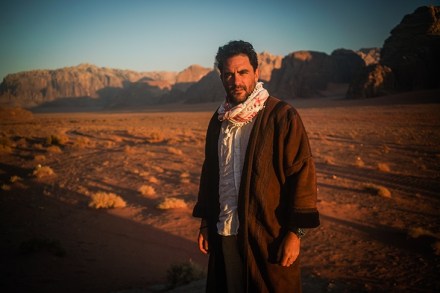
Ask most people whether they fancy a four-month, 5,000-mile trek across the Middle East and they might conclude you need your head seen to. With civil war raging in Syria, Iraq mired in internecine conflict while mopping up the remnants of Daesh, al-Qa’eda running amok in southern Yemen and simmering strife between Israelis and Palestinians, walking across 13 countries might not seem like an obvious itinerary. But Levison Wood, it is fair to say, is not your average traveller. A committed biped, he is the author of a trio of books on walking the Nile, Himalayas and Americas respectively. Ostensibly unlike the other television-led journeys which preceded it, this expedition was meant to be a lower key affair, though online publicity for an accompanying documentary suggests otherwise.

Lone and level sands

Here’s a treat for desert lovers. William Atkins, author of the widely admired book The Moor, has wisely exchanged the dank, wind-lashed chill of Britain’s moorland for eight of the world’s fieriest deserts, from the Empty Quarter of Oman and Egypt’s Eastern Desert to the Taklamakan in China and an unlikely stint at Burning Man in America’s Black Rock Desert. It’s not entirely clear what prompted these particular journeys or this specific quest. We learn in the second sentence that a long-standing girlfriend has gone to live and work abroad and Atkins is not going with her; so perhaps a retreat into the desert is the wholly appropriate response in a travel writer searching for new territory to furrow.

The hell-raiser from Baghdad

You know you’re in good hands when the dedication reads: ‘To the writers, drinkers and freethinkers of the Arab and Islamic worlds, long may they live.’ Abu Nuwas was all three, and a complete hoot. Why he is so little known in Britain should be a mystery. But outward-looking as we are as a nation, we remain peculiarly parochial in our literary tastes outside the Western canon. Born in the late 750s in Ahvaz, Abu Nuwas came to Baghdad during the reign of the Abbasid caliph Harun al Rashid in what was Islam’s golden age. In and out of favour as much as he was in and out of prison, he led a free-spirited, wine-drenched, sex-filled life, recorded in electrifying verse.

Reconsider Phlebas

So the Phoenicians never existed. Herodotus, that unreliable old fibber, made it all up in the Histories. Is this really what Josephine Quinn is saying, or is it just a cunning ruse to stir up a fuss and infuriate the dwindling band of Herodoteans out there? Because Quinn, a professor of ancient history at Oxford University, declares that her mission is not so much to rescue the Phoenicians from their ‘undeserved obscurity’ so much as to argue that there were no such people. ‘It is modern nationalism that has created the Phoenicians,’ she writes, citing 19th-century French, English and German historians who spoke of the Phoenician ‘people’ and ‘nation’ in the age of the nation state.

Boxer shorts

Chaps, be honest. Have you achieved nether-region nirvana? Twenty years ago I had reached the summit of underwear style and comfort but was  haunted by the fear that one day I would come crashing down from these Elysian heights. My brand would go out of business and I would be confronting knicker nemesis. And sure enough, a while ago my fashionista friend Kitty Go duly reported that Regatta of Manila, purveyor of the world’s most fabulous baggy boxers in the jauntiest fabrics, was no more. The crisis had struck. Let’s waste no time on jockeys, Y-fronts, briefs or those execrable jersey cotton hybrids or clingy lycra atrocities beloved by the clueless young.

Gold and dust

Timbuktu. Can any other three syllables evoke such a thrill? For travellers, explorers and historians of Africa, the ancient desert city, one-time fabulously rich centre of the Saharan caravan trade and bookish haven for bibliophiles, is one of the great destinations — a place that manages to out-Mecca Mecca in its remote attraction. Leave aside the less romantic truth that the city’s a bit of a dump these days and don’t spoil the fun. The legend lives on. And that’s the point really. There are two Timbuktus, as Charlie English explains at the outset of this excellent book. There’s the real city, a scraggy outpost in northern Mali and, if we’re honest, something of a disappointment.

Lawrence of Arabia

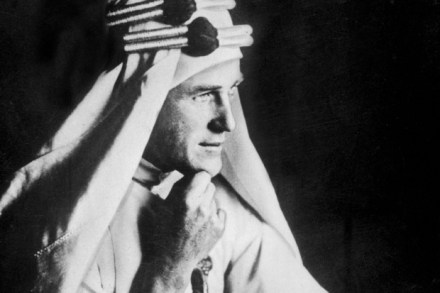
The centenary of General Allenby’s capture of Jerusalem falls later this year. On 11 December 1917, the commander-in-chief of Britain’s Egyptian Expeditionary Force entered the city on foot in recognition of the unique sensitivities surrounding the world’s holiest city. War and farce are never too far removed and, as is so often the case on these extraordinarily important moments, the surrender of Jerusalem almost went hilariously wrong. Mounted on horseback and waving a white flag, the city’s mayor offered to hand over the keys to Private Murch, a British cook who had been sent out to find some eggs for his commanding officer. ‘I don’t want yer city,’ the stalwart Murch told the immaculately-turned-out mayor.

Muslim magic

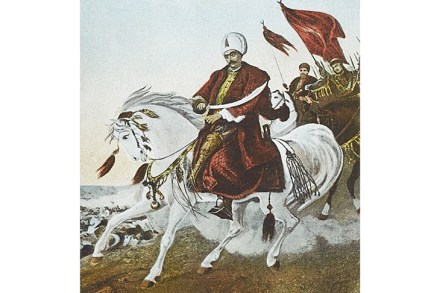
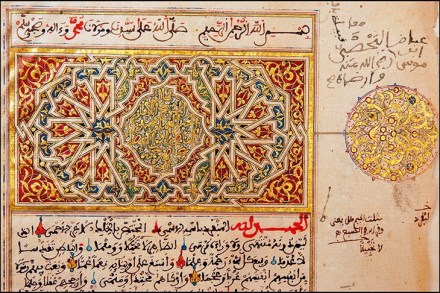
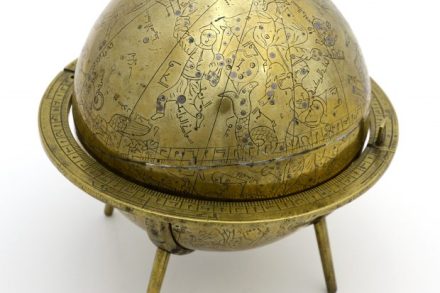
In 1402, when the Turkic conqueror Temur, better known in the West as Tamerlane, was poised to do battle with the mighty Ottoman Sultan Bayazid I, the greatest power in the Muslim world, he called in the astrologers. Knowing which side their bread was buttered on, the court officials duly pronounced that the planets were auspiciously positioned and gave a green light to attack. Temur was victorious. Not for nothing was he known as lord of the ‘Fortunate Conjunction of the Planets’. Half a century later, in 1453, Bayazid’s great-grandson Mehmet II stood at the gates of Constantinople. Anxious to galvanise his siege-weary troops, he summoned court astrologers, diviners and holy men to do their business.

Cocktails, castles and cadging

Here is a veritable feast for fans of Paddy Leigh Fermor. This is the story of a well-lived life through letters. The first is from a 24-year-old recruit eager to do battle with the enemy in 1940. The last is by a tottering nonagenarian of 2010, still hoping, 75 years after his ‘Great Trudge’ across Europe, that he might just finish the final volume that had eluded him for decades. The anthology offers the most vivid explanation yet for why he didn’t. Letters were flying to and from all corners of the world — Adam Sisman reckons that Paddy wrote a whopping 5,000 to 10,000.

Piety and savagery

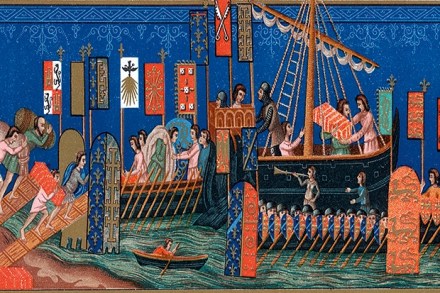
First a confession. Like many modern British readers, I have contracted a severe case of Jihad Overload Syndrome. Symptoms of this unhappy condition include bouts of despair, melancholy, lassitude, irritation and impatience, and an ostrich-like tendency to pretend none of it is really happening. These can be regularly triggered by Muslim taxi drivers attempting to convert infidels to the true faith, newspaper headlines about the latest suicide bombing in Syria/Iraq/Turkey, and pious homilies from western leaders that Islam is a religion of peace. An Amazon search for books with ‘jihad’ in the title reveals 6,256 dispiriting choices. A deep breath may therefore be called for before embarking on Crusade and Jihad. Fortunately, the reader is in extremely good hands.

The tragedy of Arabia

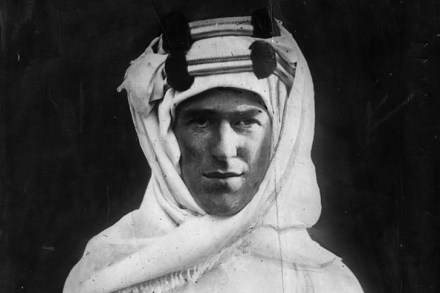
Is there anything new to be said about T.E. Lawrence? I mean, really. In the century since his stirring exploits in the Arabian desert we have had all manner of biographies, from simpering hagiography to heartless hatchet job. We have had Lawrence the colonial hero and faithful imperial servant; Lawrence the linguist, explorer and spy, pioneer of guerrilla warfare; Lawrence the Machiavellian betrayer of the Arabs; Lawrence the preening, self-mythologising sado-masochist. Each generation projects its own prejudices and visions, fears and fantasies upon this unusual man. Even now, 80 years after his death, the torrent of biographies shows little sign of abating.

‘Excess is obnoxious’

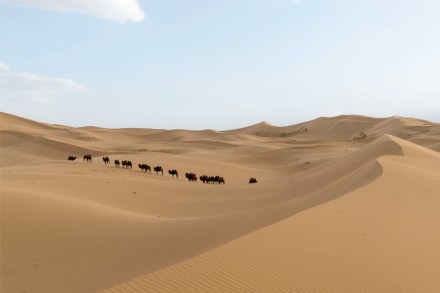
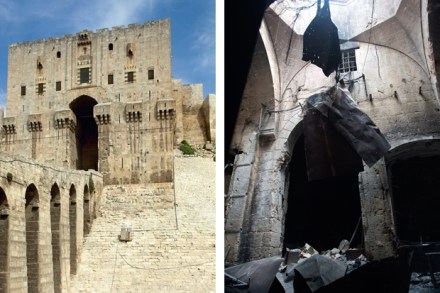
When the German doctor and botanist Leonhard Rauwolff visited the Syrian city of Aleppo during an eccentrically Teutonic herb-hunting mission across the Middle East, he was instantly impressed by the thriving trade he encountered. It was ‘admirably great’, he wrote, ‘for great caravans of pack-horses and asses, but more camels arrive there daily from all foreign countries’. The year was 1573 but the description might have been written at any point during the past several thousand years. For Aleppo, trade and cosmopolitanism were always two sides of the same coin. They were seared into the city’s character long before the Muslim conquest of 637.

A hint of anarchy everywhere

For a genre that is frequently dismissed as dead, travel writing is proving a remarkably stubborn survivor. If anything, this year’s Stanford Dolman Travel Book of the Year Award, won by Horatio Clare with Down to the Sea in Ships, a very British tale of the container-shipping trade, demonstrated how the genre remains in remarkably good health, shrugging off its perennial obituaries with great élan. Bristling with literary talent, the shortlist took in Jens Mühling on Russia, Elizabeth Pisani on Indonesia, a homage to Paddy Leigh Fermor by Nick Hunt, Helena Attlee on Italy and Philip Marsden on Cornwall.

Join the revolution to save cricket!

While Aggers, Blowers, Tuffers and the Test Match Special team entertain us from Edgbaston this week, a different sort of cricket commentary is being broadcast live from a sports bar in north London. Guerilla Cricket, son of the alternative Test Match Sofa, is everything TMS is not. Expect music, drinking, occasional swearing, masses of interaction with fans and plenty of jingles. When Ian Bell trots out to bat, you’ll hear Anita Ward’s 'You can ring my bell,' for Joe Root it’s Odyssey’s 'Going back to my roots'. You get the picture.

Don’t abandon Tunisia!

Just as a pilgrimage to Mecca is a holy obligation for all Muslims, it should now be a patriotic duty for as many Brits as possible to holiday in Tunisia. I say this not to make light of the tragic attack on the beach at Sousse last week, but to urge everyone to show the terrorists that they cannot win. They want to terrify us and shut down Tunisia’s resurgent tourist trade. They want to turn it into a failed state, a recruiting ground for lobotomised self-detonators. What better reaction could there be for those untouched by this attack than to laugh at our enemies and board the next flight to Hammamet? Even now, you’re more likely to be killed in a traffic accident in Britain than by a terrorist in North Africa.

Diary – 23 April 2015

Lunch with the man who hanged Saddam. My irrepressible old Baghdad friend Mowaffak al-Rubaie, Ealing neurologist turned Iraqi national security adviser, is on top form. This may not be unrelated to the news that the noose with which he hanged Saddam is up for auction. Interested buyers are said to include Kuwaiti businessmen, an Israeli family, a bank and an Iranian religious organisation. Mischievous tales are circulating about an offer of $7 million being rejected. Hearing Rubaie relive Saddam’s execution reminded me of the late Sir Wilfred Thesiger recalling how he shot up a tent full of sleeping Germans during the Allied campaigns in North Africa. ‘It felt like murder,’ he said, and you knew he rather liked it. Never mind the general election.

Too little, too late | 16 April 2015

For most of us, the centenary of the Great War means recalling the misery and sacrifices of the Western Front: Ypres, the Marne, Arras, Verdun, Passchendaele, the Somme. Few of us give as much thought to the Eastern Front and, apart from regular studies of the ever-popular, self-mythologising Lawrence of Arabia, fewer still dwell on the first world war in the Middle East. This was the theatre that hosted the Arab Revolt, famously dismissed by Lawrence as ‘a sideshow of a sideshow’. The Great War centenary brings renewed attention to another neglected tragedy of the conflict. Starting in 1915, the Turks embarked on a process that culminated in the systematic extermination of the Armenian people.