Julie Burchill

Julie Burchill

Julie Burchill is a writer living in Brighton. Her Substack is julieburchill.substack.com.

Brighton’s gone Brideshead

[audioplayer src="http://rss.acast.com/viewfrom22/projectfear/media.mp3" title="Julie Burchill and Tim Stanley discuss Brighton's Brideshead set" startat=1352] Listen [/audioplayer]My adopted hometown of Brighton and Hove has always had a somewhat well-to-do image, it’s fair to say. Though we have pockets of poverty, I was surprised by the size of the houses and gardens — room for a pony! — when I started going to house parties on the notorious Whitehawk estate. The old Cockney phrase ‘You think your aunt’s come up from Brighton!’ to denote a person who is free and easy with their money pays tribute to this agreeable state of affairs. But although B&H may appear affluent, it hasn’t really been posh since the Prince Regent pushed off.

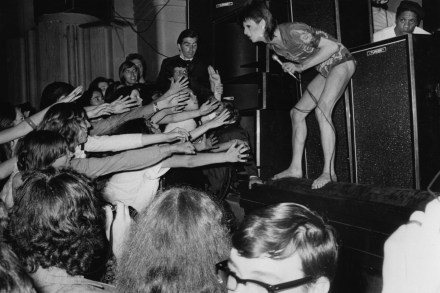
Please spare us the sob signalling over David Bowie

By 9am this morning, I’d turned down two offers from two newspapers to write about the freshly-dead David Bowie. I told both plainly what I felt: ‘I haven't been a fan since I was a teenager, when I worshipped him, and I don't want to add to the chorus of people with nothing to say, but who'll say it anyway, for a fee.’ However, humour is always the exception to the rule. By 10am I’d posted this (totally true) status on Facebook: ‘To illustrate how odd my voice is (accent and speed) I just spent five minutes waking up my husband Dan and telling him that David Bowie had died. I told him that people were weeping in the streets, and that it was like the Queen Mother dying all over again.

France: #ToutsAuBistrot!

My word, I do like the French! That’s up there with things I thought I’d never say, like ‘Just the one, please.’ But after spending three days in Paris two weeks after the Islamist massacre, I have become their biggest fan. Yes, I’m fully aware that the Parisiennes aren’t the French --— but the pedants among you will please overlook the sweeping generalisation. I thought it was important, having read that France had already lost €2 million worth of business due to a wave of cancellations, to show support. When I read that Parisiennes were trending the hashtag ‘#ToutsAuBistrot’, it was a no-brainer. Unfortunately, we arrived on the first day of the climate conference, and the motorways were closed.

Chrissie Hynde writes like an angel on angel dust

‘The day I found out that Suzi Quatro wasn’t a dyke was the worst day of my life!’ a teenage Joan Jett once complained to a teenage me — and, substituting Chrissie H for Suzi Q, I knew well how she felt. Here I am popping up on page 150: Little teenagers out in the sticks like Julie Burchill lapped up my half-baked philosophical drivel and prepared their own versions of nonsensical tirades for the day when they too could make a ‘career’ out of it. I even sold the darling little Julie my typewriter for £15 when my time was over, like passing the baton of ‘how to fuck off the nation and get paid for it’. She insisted on giving me £17.

Spectator books of the year: Julie Burchill discovers the story behind Labour’s self-immolation

Now that I’ve given up drugs, I find myself addicted to psychological thrillers written by women, featuring no gore and a great deal of malice aforethought. My favourites this year were (in order of preference) Disclaimer by Renée Knight (Doubleday, £12.99), You by Caroline Kepnes (Simon & Schuster, £7.99) and I Let You Go by Clare Mackintosh (Sphere, £7.99). And Nick Cohen’s brilliant What’s Left: How the Left Lost its Way (Harper Perennial, £9.99) was reissued just in time to provide an explanation for the Labour party’s current ecstatic self-immolation. I have bought and given away a dozen copies of this book, and I plan to buy and give away a dozen more.

Lunch with the future leader of the Labour party

On 2 September 1939, as Neville Chamberlain sat down after trying to explain away his latest bout of sucking up to Hitler and the deputy leader of the Labour party, Arthur Greenwood (standing in for his absent boss Clement Attlee), rose to reply, the infuriated Tory MP Leo Amery shouted: ‘Speak for England, Arthur!’ It’s telling that it took the threat of imminent fascism to make a member of Parliament a) speak plainly, and b) offer support to a member across the floor. To this day, such incidents are rare, to say the least. Instead, Parliament is plagued by a ceaseless cacophony of casual cat-calling, rising to a pitch of parasexual excitement when one side smells blood.

Is a ‘Transgender Day Of Remembrance’ really necessary?

On hearing that a ‘transgendered flag of remembrance’ was being flown by a government department for the first time (the Department of Education, on November 20th, the Transgender Day Of Remembrance) I was reminded of that old line about prison food - ‘It’s rubbish, and there’s not enough of it!’ It seems the height of duplicity that the sort of people who would mock a flag being flown to support our war dead (indeed, they might well use it as an excuse to break out the DIE TORY SCUM spray-paints) suddenly approve of running a bit of flimsy tat (which looks unpleasingly as if an Argie flag got put in a washing machine with a job-lot of red bedding) up a flagpole to celebrate a man’s right to tuck his tail between his legs and call himself Linda.

Celebrity lives

I learned from this little lot that if one has read The Diary of a Nobody, then one can derive pleasure from even the most pedestrian life story, as there’s always an unintentional chuckle to be had. The former racing driver Nigel Mansell’s Staying on Track (Simon & Schuster, £20) delighted me with its Pooterish charms, from bullied boyhood : One time I was due to race for England abroad. The school announced the exciting news in assembly one morning... that afternoon I was attacked viciously with a cricket bat in the playground. I thought the other children would be proud of me. How wrong can you be? — to triumphant adulthood, bashing himself up for pleasure and profit: Let me tell you about the time I told a priest to get lost.

Summer’s end

Growing up in the West Country in the 1960s and 1970s, summer left me cold. There was only one place where I could bear to be when the sun shone — the lido at Weston-super-Mare, the nearest coastal town to my Bristol home. Unlike most of the banal backdrops to my childhood, it seemed a suitably grand place in which to plan my escape to get to That London and be famous. I would swerve my companions — at first my parents, then later my friend Karen — and hide on the upper level of the lido, slipping in and out of sleep in sunshine, dreaming of freedom.

Mirror, mirror

Body dysmorphia, the unfortunate medical condition whereby a perfectly pleasant/slender person believes themselves to be ugly/fat, is a strange and sad thing. I’d always presumed it to be (like anorexia and bulimia) a primarily female problem, so much more importance being placed on the appearance of women than men. Respectable medical surveys indicate otherwise. Nevertheless, women tend to see themselves as less attractive than they are. A sizeable number of men, on the other hand, suffer from the opposite delusion. I call them Magic Mirror men, because they seem to possess an inner looking-glass which tells them that they are, indeed, the fairest of them all. Why else do ugly men not feel ridiculous passing judgment on the attractiveness, or otherwise, of women?

A walk on the mild side

Novels set in the music business (from blockbuster to coming-of-age) are few and far between — far less than in the film industry, say. Is this because writers are scared of looking square, Daddy-O, being as a breed not the most ‘street’ of types, whereas pop stars have traditionally been quite rough, ready and proletarian? Mind you, these days so many chart musicians are privately educated bedwetters that, shamefully, this shouldn’t be a problem any longer. I look forward eagerly to the roman à clef which reveals the backstage Babylon of Mumford & Sons. It certainly couldn’t be more boring than this stinker.

Tel Aviv

Just so you don’t get it confused with the City That Never Sleeps, Tel Aviv — my favovurite place on earth — now markets itself as the Non-Stop City and, indeed, it never lets up for a moment. We like to refer to the Blitz Spirit; Israel has it. Any of the lovely youngsters playing matkot on the beach (an American journalist once used the bat-and-ball game as a metaphor for Middle Eastern conflict — ‘No rules, no winners and it never ends’) could be called up to fight and die for their country that evening. And life during wartime leads to living for today. At the beach bar every morning at nine sharp, our beautiful waitress serves us G&Ts and tells us: ‘You come to nightclub on beach, near the Dolphinarium, where I work?

Reality check | 21 May 2015

Gore Vidal once famously said that ‘Television is for appearing on, not watching.’ I feel the opposite. I’ve just turned down a financial offer from Celebrity Big Brother for this summer’s series so big it made my eyes water — and I’m not easily impressed, size-wise. Verbal people just don’t do well in such a visual medium — and speech is my second language, anyhow. It would be easier to go in if I was guaranteed first eviction — but Liz Jones was stuck in there for weeks, and I’m a good deal more entertaining and lovable than she is. There’s a chance I would end up walking out, thus losing my fee. I would miss my husband, being alone (a textbook only child, I feel like murdering someone if can’t be by myself for six waking hours each day), and reading.

Barbados

Unusually, I didn’t leave the British Isles until I was 35, when I went to the Maldives for a fortnight. (You bet it was a culture shock, considering that the most exotic place I’d been until then was the Bognor Regis branch of Butlins.) But I’ve globetrotted like a footloose fiend since then, and on my travels I’ve observed that the pricier the watering hole, the less likely vacationers are to look happy. The Crane is one of the most beautiful hotels in Barbados, but plagued by sour-faced English types complaining about there being no skimmed milk or a cloudy swimming pool (‘quite troubling’). There were groups of good-natured Americans scattered about, whose parade the Englishers appeared to take some pleasure in raining on with the intensity of a tropical shower.

Heigh-ho, heigh-ho…

Work is a funny old thing — a four-letter word to some, the meaning of life to others. There have been occasions during the past three years, since I was given the heave-ho from my last regular newspaper column, when I’ve felt that I didn’t exist any more, despite having a happy marriage and more than enough money. Then I recently returned from a carefree holiday, realised that I had four deadlines over the next four days (including this one) and momentarily wished for those wilderness times. But on balance I know I would rather work than not. That is, of course, if one can call reading a book about work, and then scribbling 700 words about it, ‘working’ at all.

Meet the Cry-Bully: a hideous hybrid of victim and victor

In the 1970s, there was a big difference between bullies and cry-babies. Your mum would have preferred you to hang around with the latter, but sometimes the former had a twisted charisma so strong that you found yourself joining in the taunts of ‘Onion Head! ’ at some poor unfortunate creature sporting a cranium of a somewhat allium caste. After a bit, of course, if you had anything about you, you realized what a knob you were being and went off to sample the more solitary, civilized pleasures of shoplifting and reading Oscar Wilde with the bedroom curtains closed. But you could be certain, as you festered in your pilfered Chelsea Girl vest, that bullies were bullies and cry-babies were cry-babies and never the twain would meet.

Fat chance

[audioplayer src="http://rss.acast.com/viewfrom22/theriseofleft-wingpopulism/media.mp3" title="Julie Burchill and Katie Hopkins discuss whether you can be fat and happy" startat=924] Listen [/audioplayer]I’m a very off-message type of fat broad; one who gladly admits she reached the size she is now solely through lack of discipline and love of pleasure, and who rather despises people (except those with proven medical conditions) who pretend that it is generally otherwise. I’m not attached to my fat in any but the most obvious way; would I lose it if I could snap my fingers? Without doubt. Would I work at losing it? Not a chance, Vance. ‘But it’s not about vanity,’ the weight bores bleat, ‘it’s about health.’ Hmm.

What happened to Julie Burchill on silent retreat

When I told my friends that I was planning to attend a silent retreat, they all laughed. It’s true that I am something of a convivialist; my idea of heaven is a big table in a warm restaurant, the table shimmering with the laughter of friends and the glugging of wine, and me picking up the bill. On the other hand, I was a solitary only child and I look back on those days with great fondness. Before the long stagger up the primrose path of pleasure started, the only companion I needed was a book; I well remember my mother crying because I preferred to sit in my room reading rather than hang around on street corners getting drunk and/or pregnant like a normal teenager.

Emer O’Toole is a joyless bore compared with my heroine Caitlin Moran, says Julie Burchill

Looking at the brightly coloured front cover of this book, I felt cheerful; turning it over and seeing the word ‘gender’, my heart sank. When I was a kiddy in the early 1970s, the word (especially when combined with ‘bending’) seemed full of fun and flighty possibilities — David Bowie in a dress, Marc Bolan flouncing about on Top of the Pops like a little girl at her birthday party, Danny La Rue making my mum snort Snowball down her nose on a Saturday night. Now gender-bending appears to have boiled down to a bunch of hatchet-faced transsexuals demanding to use the Ladies, ‘no-platforming’ veteran feminists who have worked all their lives to better the lot of women and children, and generally telling born females what to do.

The rise of ‘living apart together’ – and why I’ve stopped doing it

I’ve never lived with a man I didn’t marry: Tweedledee, 1979–1984, and Tweedledum, 1984–1995. (The names have been changed to irritate the pair of them.) So when I left my second union and moved to Brighton to chase the man who is now my third (and hopefully final) husband, I was keen to establish and keep separate households. I was quite pleased to find that not only was I having a blast seeing Daniel while maintaining a maverick social life (he didn’t want to be in a swimming pool full of drunken, shrieking girls’n’gays any more than I wanted to be in a room full of game-playing, beer-drinking men) but was apparently part of a growing social phenomenon.