Julie Burchill

Julie Burchill

Julie Burchill is a writer living in Brighton. Her Substack is julieburchill.substack.com.

Harriet Harman and Jess Phillips: poles apart in the sisterhood

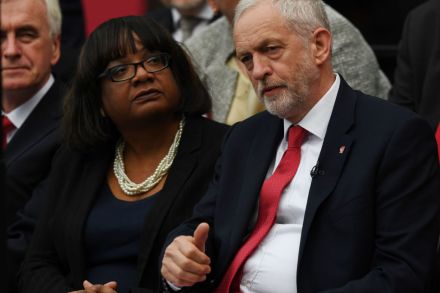
We’re told not to judge books by their covers, but faced with these two it’s hard not to. Harman’s is one of those thick, expensive tomes which, understandably, politicians write when they’ve had enough earache and, unbelievably, publishers keep buying for vast sums, despite the fact that a fortnight after publication you can pick them up cheaper than an adult colouring book in a remainder bin. The old saw that ‘all political careers end in failure’ might now better be: ‘All political careers end with a book on Amazon going for less than the price of the postage.

Brexit tantrums are one of the joys of modern life

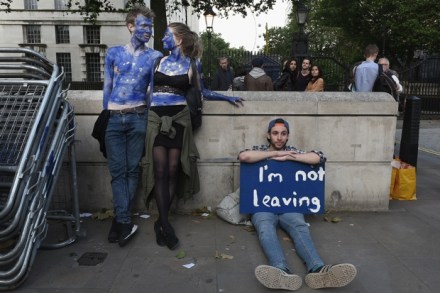
Everyone in London seems to be fuming all the time — although, to be fair, fuming has become the default setting of our time. Historically, it’s the sexually repressed, swivel-eyed Daily Mail reader who fumes hardest, but ever since last June 23, when the glorious chaotic dawn of Brexit was revealed, liberals have been fuming up a storm with all the parasexual frustration of fat-fingered One Direction fans tweeting hatred about the paternity of Cheryl’s baby. Tempering, tantruming and thweatening to thwceam till they’re sick, it’s hard not to feel that what’s making them the most angry isn’t the alleged racism of Brexiteers or the alleged financial ruin waiting just around the corner.

Diary – 23 February 2017

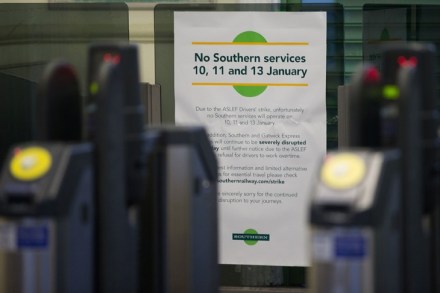
More than 20 years ago, I left my fast life in London for a rather more relaxed one in Brighton and Hove. I never dreamt I could enjoy it more till all the business with the trains started up a few years back. The chaos at Southern Railway — which has seen commuters lose their livelihoods and property prices all along the London–Brighton line plunge, and culminated last summer in the resignation of the rail minister Claire Perry — has effectively put an end to the one thing I disliked about my seaside city. Namely, that it’s too close to That London. I never minded mates coming down to visit — all the better for showing off my beloved playground. The trouble came when they expected one to reciprocate.

The plight of women in Labour

We’re told not to judge books by their covers, but faced with these two it’s hard not to. Harman’s is one of those thick, expensive tomes which, understandably, politicians write when they’ve had enough earache and, unbelievably, publishers keep buying for vast sums, despite the fact that a fortnight after publication you can pick them up cheaper than an adult colouring book in a remainder bin. The old saw that ‘all political careers end in failure’ might now better be: ‘All political careers end with a book on Amazon going for less than the price of the postage.

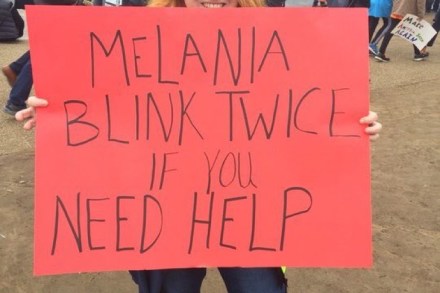
The hypocrisy of the ‘Free Melania’ feminists

I like to prance around showing off in hats and shouting at men as much as the next broad but - apart from the fact that I can get it at home - there were several reasons why I chose not to join a whole batch of my bitches on the Women’s March this weekend. Firstly, I was sure it would be full of 'Strong Women', a phrase I hate at the best of times - and feel should only be used if the lady in question can tear a telephone directory in half with her bare hands - and which seemed especially inappropriate to describe a bunch of overgrown Violet Elizabeth Botts having a collective temper tantrum because their side lost.

The sadism of Saturday night TV shows

It’s easy to see TV talent shows as three-ring circuses of cheap emotion,  empty promises and bitter tears - but they have their bad points, too. While I can appreciate a dancing dog or knife-throwing nutter as much as the next man, surely only a sadist could contemplate the new Saturday evening smorgasbord of stultifying mediocrity - Let It Shine (BBC1) followed by The Voice (ITV) - with anything but sorrow. TV talent shows can be seen as a righteous reaction to the relentless tsunami of nepotism which now drenches the entertainment industry - traditionally one of the very few escape routes for sparky working-class kids too pretty for a life of crime.

Spectator Books of the Year: The myth of meritocracy

I must admit that I write a beautiful essay about my dad in My Old Man: Tales of Our Fathers (Canongate, £14.99, edited by Ted Kessler), but it would be nearly as good without me. James Bloodworth is one of the most elegant and passionate (not an easy combo) writers about politics in this country today, and in The Myth of Meritocracy (Biteback, £10) is especially eloquent on the way the diversity divas have diverted attention from the lack of opportunities for a whole swathe of underprivileged children put beyond the pale of pity by their risibly named ‘white privilege’. We Don’t Know What We’re Doing (Faber, £7.

Daft celebrity mourners have made 2016 the year of the ‘Tearleader’

Despite my 'difficult' reputation, I am a cheery cove in real life, all the more so as I get older. But in true Dorian Grey style, I only stay this way by letting my intolerant side rule the roost on Facebook. Every morning my hot little hands positively itch to unfollow, defriend and block: a day which passes without binning a few dim bulbs is a day wasted. I’ve had an especially good run of it this year, as two things in particular have acted as cracking prompts for my 'negging' narrative. One has been the showing of bad attitude on the part of many Remain-supporting mates. I don’t expect everyone to be a bold Brexiteer like me, but I do expect people to be good losers.

The joy of shoplifting

I was interested to read that police recorded more shoplifting offences in the year ending in March than they have since the introduction of the National Crime Recording Standard in 2003. The trend was unique among other diminishing types of hands-on thieving, single-handedly driving up the number of ‘property crimes’ reported in England and Wales, according to a study published by the Office for National Statistics. For a blissful moment, I was back in the heady days of Pop Sox and Labour landslides - the light-fingered calf-country of my 1970s provincial working-class girlhood - and as if surprised in adolescent self-abuse, I felt a blush creep up my ears and my heart skip a beat, as I recalled the splendid, sordid thrill of it all.

Falling out with Love

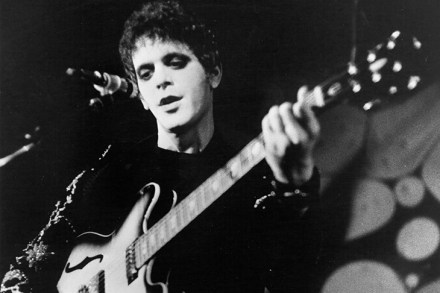
Volcanic fallings out within bands are an ever-recurring motif in the history of rock music. There’s an obvious reason for this: most musicians pick up an instrument in the first place not because they hear the call of Euterpe but because they’re sailing on the HMS Ain’t Gettin’ None. They dream of fame, fortune and the cream of international crumpet, so they form a band with like-minded fellows — and then find that not all musos are created equal. One member will inevitably become the focus of female attention. Usually it’s the lead singer, who will often be the prettiest; imagine how the three ugly Doors felt, expertly playing their instruments while teenage girls screamed with lust at drunk, shambling, beautiful Jim Morrison.

When is a hate crime not a hate crime?

I’ve always been somewhat bemused by the concept of ‘hate crime’ - a phrase which first came into use in the US in the 1980s and into practice in the UK in 1998. I must say that the idea that it is somehow worse to beat up or kill someone because you object to their race or religion, than because you’re a nasty piece of work who felt like beating up or killing someone, strikes me as quite extraordinary - hateful, even, implying that some lives are worth more than others. Are we not all human, do we not all bleed? If we’re murdered, do not those who love us grieve for us equally? Why, then, are attacks on some thought to be worse than attacks on others?

Women – and transwomen – should fight on the frontline

My favourite quote of all time comes from John Stuart Mill: ‘War is an ugly thing, but not the ugliest of things. The decayed and degraded state of moral and patriotic feeling which thinks that nothing is worth war is much worse. The person who has nothing for which he is willing to fight, nothing which is more important than his own personal safety, is a miserable creature and has no chance of being free unless made and kept so by the exertions of better men than himself.

Divorce is a far greater invention than either the wheel or the Pill

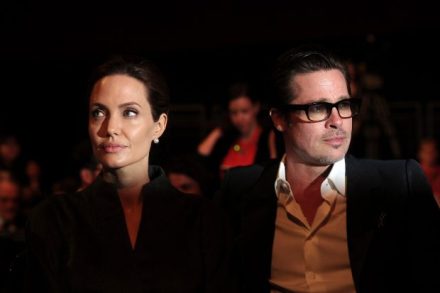
The late Mrs Merton, bless her, would never have seen fit to ask Angelina Jolie and Brad Pitt: ‘So, what first attracted you to each other?’ Perhaps the most beautiful film stars of their generation, they also possessed a devil-may-care air which combined with their charity work to make them seem both reckless and righteous - not an easy look to pull off. And then there was the Sex Angle. The bottom line about Classic Hollywood is that you knew the stars were having far better sex than you; what Lana and Gable and Ava got up to barely bore thinking about without benefit of a waterproof sheet. These days, though, it seems very unlikely indeed that Hollywood’s finest are having anywhere like as much, or as weird, sex as you, your friends and neighbours.

The Swinging Sixties should be renamed the Seedy Sixties

You know you’re getting old not when the policemen start looking young, but when a public figure dies and you say ‘O, I thought they were dead already!’ So it was for me when I heard that the Australian writer Richard Neville had died of dementia at the age of seventy four last week. Neville was never any sort of hero of mine - I was too busy promising my soul to Satan for a quick lick of Marc Bolan. But when I was thirteen and at the peak of my shoplifting prowess, I nicked his book Play Power on exactly the same robbing rampage that saw me take proud possession of The Female Eunuch, the half-mad masterpiece of Neville’s contrary contemporary Germaine Greer.

Unconditional love is a dangerous delusion

When I think about love, that old line by William Goldman about Hollywood comes back to me: Nobody knows anything. It seems that as we grow franker about sex (witness the Naked Attraction TV show, recently described as ‘Blind Date in a brothel’) love reveals less of its mysteries. Just as we’ve all now seen on screen 1001 ways to kill someone and yet know nothing about death, we now know 69 ways to screw someone - once more, often seen on screen for the less adventurous amongst us - and nothing about love. Not even the most basic stuff - how to avoid falling in love with someone we shouldn’t, or how to stay in love with someone we should.

In praise of bisexuality

I've never seen a National Treasure whose head I didn’t have a strong urge to shove down the nearest toilet. So when I read that Christopher Biggins had entered the latest Celebrity Big Brother house for a rumoured £150,000 - far, far less than what I was offered, to put it mildly - I fair hugged myself with glee at how cheap they’d got him. I had every reason to dislike him already; many years ago, when I was showing off about what I’d be like if I was a gay man - ‘Rupert Everett, probably, or Oscar Wilde, or Arthur Rimbaud’ - my husband fixed me with a cold glare (for he dislikes bragging, which often makes me wonder why he married me) and said ‘No - you’d be like Christopher Biggins.

The Brexit divide wasn’t between young and old, but Ponces and Non-Ponces

Ever since Friday’s Glorious Victory, one of the chief recreation activities of we Brexiters of a childish bent has been the Taunting Of The Remnants, mostly online. ‘How are you comforting yourself?’ one Facebook post asked. ‘In the usual way - with the tears of the vanquished,’ I replied. ONLY ONE LIKE! For self-proclaimed ‘progressives’, what a bunch of doom-mongering, curtain-twitching, tut-tutting stick-in-the-muds they’ve proved to be! For this Remnant Zombie Army, out to do in our brains with their bed-wetting ways and bleats for more referenda until they get the result they want, everything that goes wrong over the next few months – the weather, the football – will be Brexit's fault.

Get over it!

As someone who managed to move from enfant terrible to grande dame without ever being a proper grown-up, I must say the menopause passed me by. I make a practise of having mostly much younger or male mates so I don’t have to hear old birds banging on about it, but occasionally my bezzie (who seems to have been undergoing the unfortunate process since the EU was the EC) will start feeling hot — then the next minute, she’s moaning about the British weather and pining to go somewhere warm. Women! My main thought as I pushed, tank-like, through mine was that as a broad who has lived her life in a bid to show that arch-bitch Mother Nature who’s the Daddy, defying her at every turn, I was damned if I was going to cry ‘Uncle!’ at the eleventh hour.

Why would I want to lose weight? Being lazy and fat is far more fun

Let me start by putting my podgy little hand up - the one not ferreting fervently through a big box of Belgian chocs, that is. Starting out positively sylph-like, I’ve reached a size 18 at the age of 56 solely through lack of discipline and love of pleasure. I have no time for people (except those with proven medical conditions) who pretend that it is generally otherwise. Nevertheless, I’m not attached to my flab in any way but the most obvious.  I despise the Righteous Fat. (The Righteous Thin are bad enough, all that running around, sweating and smelling, and somehow believing that it means something.

So much for education, education, education

‘Your old man’s barking!’ I remember hissing indignantly at my then best friend Toby Young way back in the 1980s after his father, Michael, had spent the evening patiently explaining his famous 1958 essay, The Rise of the Meritocracy, over ‘supper’ at the somewhat grand family home in, of course, Islington. I’d obviously been thinking about something more pressing all those times we’d discussed the classic text in GCSE Sociology — probably about which order I’d ‘do’ Pan’s People in, should the opportunity arrive in suburban 1970s Bristol — but of course I’d presumed that ‘Lord’ Young (dead giveaway) would have favoured the rise of a meritocracy, being a man of humble origin himself.