Jonathan Sacerdoti

Jonathan Sacerdoti

Jonathan Sacerdoti is a broadcaster and writer covering politics, culture and religion

Why couldn’t this elite school cope with my talk on anti-Semitism?

From our UK edition

Perhaps it is a rite of passage these days for a journalist to be cancelled. But I never expected that an elite school – one designed to create tomorrow’s international leaders, founded by a Jewish refugee from Nazi Germany – would be the ones to cancel a talk about anti-Semitism from me, the son of a Holocaust survivor. My invitation was not controversial – at least, not at first As a journalist and columnist with extensive experience reporting from Israel, covering terrorist attacks across Europe, and documenting the rise of anti-Semitism internationally, I have encountered hostility before. But I had not expected it to come from an institution dedicated to fostering global understanding.

Why is the LSE hosting a Hamas book launch?

From our UK edition

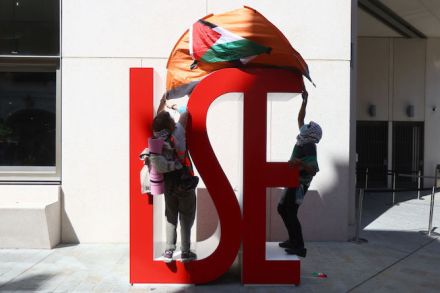
The London School of Economics’ decision to host the launch this week of Understanding Hamas and Why That Matters – a book that attempts to sanitise and fails to properly condemn a terrorist organisation responsible for the worst massacre of Jews since the Holocaust – has rightly sparked outrage. It is a shameless attempt to rehabilitate a group that revels in the slaughter of civilians, delights in hostage-taking, and has openly vowed to repeat its crimes. If there were any doubts about Hamas’ true nature, they should have been put to rest on 7 October But while the LSE controversy is unsettling, it is merely a symptom of a much larger problem: the enduring failure of many in the West to grasp the true nature of Hamas.

Will Hamas take Trump’s Gaza ultimatum seriously?

From our UK edition

'“Shalom Hamas” means Hello and Goodbye – You can choose.' So began Donald Trump’s furious social media post, an ultimatum wrapped in a linguistic dagger. The Hebrew word 'shalom' has a third meaning – peace – but Trump left that one out. Perhaps we can all agree: that option is no longer on the table in any outcome. Instead, what followed was a declaration of war, at least rhetorically. Trump threatened Hamas with total destruction if they do not release the remaining hostages and return the bodies of those they have murdered. He called them 'sick and twisted' for keeping the corpses. He promised Israel everything it needed to 'finish the job'.

No Other Land isn’t what it seems

From our UK edition

The Oscars, an institution that claims to celebrate artistic excellence, this week played a leading role in a sophisticated and cynical propaganda campaign against Israel. The 2024 Academy Award for Best Documentary went to No Other Land, a film that, beneath the veneer of raw storytelling and supposed human rights advocacy, is little more than a masterclass in Palestinian distortion. It is not a documentary in the truest sense of the word but a carefully crafted piece of demagoguery –designed not to illuminate but to vilify, to cast Israel as the villain in a narrative that, in reality, it did not write. The irony is staggering.

The BBC’s reputation is in tatters after its Gaza debacle

From our UK edition

The BBC’s admission of serious editorial failures in its documentary Gaza: How to Survive a Warzone is not just a scandal – it is a moment of reckoning. This is, without doubt, one of the most humiliating debacles in the corporation’s modern history, and it vindicates those who have long highlighted the BBC’s institutional biases when reporting on Israel. The implications of this controversy go far beyond journalistic failure; they touch on issues of public trust, financial accountability, and even national security. At the heart of this disgrace is the BBC’s failure to conduct even the most basic due diligence.

The true meaning of Trump’s AI Gaza video

From our UK edition

Donald Trump’s AI-generated vision of Gaza – complete with golden statues of himself, bearded belly dancers, and a triumphant song declaring, 'Trump Gaza, number one!' – landed like a slap across the face of polite Western discourse. The reactions were swift and predictable. Outraged commentators called it tasteless, delusional, the fever dream of a man obsessed with his own mythology. Newspapers mocked its crudeness, its cartoonish spectacle, its lack of realism. Yet, in all the ridicule, something crucial was missed. This wasn’t just Trump being Trump. This was Trump speaking Arabic again – not linguistically, but in the deeply symbolic, visually driven language of Middle Eastern power. The video was not a policy document. It was not a peace proposal.

Who is responsible for the BBC’s Gaza documentary debacle?

From our UK edition

In 2007, the BBC was engulfed in scandal for an embarrassing – if relatively trivial – misrepresentation of Queen Elizabeth II. A promotional clip for a documentary, A Year with the Queen, was edited to suggest the monarch stormed out of a photoshoot in a huff, when in reality, the sequence had been misleadingly spliced together. The outcry was immediate. Within hours, the BBC issued an apology. By the following day, an internal investigation had been launched. The corporation treated the matter with the utmost urgency, leading to resignations, extensive inquiries, and a near-existential crisis over editorial ethics. Fast-forward to 2025, and the BBC has once again been caught red-handed with a dodgy documentary.

The BBC’s Gaza documentary omitted something astonishing

From our UK edition

The BBC’s documentary Gaza: How to Survive a Warzone at first glance seemed to offer a raw and intimate portrayal of life in Gaza amid the ongoing conflict. However, the programme, which aired on BBC Two on Monday, was deeply flawed. The documentary, narrated by a Palestinian child, Abdullah Ayman Eliyazouri, presented a personal account of the suffering endured by Gaza’s residents. But the investigative journalist David Collier has reported that the BBC seems to have omitted something astonishing. Eliyazouri is not just a random child caught in the crossfire, but the son of Ayman Eliyazouri, the Hamas-run Gazan government’s deputy agricultural minister. Collier’s investigation cross-referenced social media profiles and other publicly available information.

Why do Australian doctors want to kill Israeli patients?

From our UK edition

Imagine the uproar if a white Christian doctor refused to treat a Muslim Arab patient – or worse, boasted of killing them under their care. The public would be outraged, not only at the cruelty but at the sheer incongruity of such malice from a profession defined by care and a faith defined by compassion. Yet when two Australian nurses – Ahmad Rashad Nadir and Sarah Abu Lebdeh – publicly declared their willingness to kill Israeli patients, the horror was accompanied by something more chilling than shock: recognition. Their depravity felt like an affirmation of the darkest fears about imported hatreds and their place within our institutions. The video that surfaced of the pair talking online to an Israeli man on Chat Roulette was harrowing.

The Middle East’s language wars

From our UK edition

When the Middle East gets me down, I sometimes rewatch the video of Donald Trump announcing the death of ISIS leader ‘Abooo… Bakarrrr… al-Baghdadi’ in 2019. It never fails to make me laugh when Donald declares the terrorist leader ‘died like a dog… a beautiful dog’. It’s funny to many in the West, because Trump’s words seem like crass bluster from a primitive communicator. In fact, he was deadly serious, and was not speaking for our ears alone. In essence, Trump was ‘speaking Arabic’ – not linguistically, but culturally – delivering a calculated message to the Muslim and Arab world. To call a man a dog is a profound insult in Islamic culture, evoking contempt and dishonour.

Why does Louis Theroux keep picking on Israeli settlers?

From our UK edition

When is Louis Theroux going to make a documentary where he embeds himself with Hamas in Gaza? Or Palestinian Islamic Jihad in Jenin, Nablus, Tulkarm, or Qalqilya? Probably never, because he’d most likely come to a sticky end. His attempt to make a show about British Muslims who were sympathetic to Isis “fizzled out” Instead, Theroux is once again making a film about Jews in Judea and Samaria – the region known as the West Bank – focusing on so-called “settlers.” His last foray into this subject was The Ultra Zionists, in 2011, a documentary criticised by some for cherry-picking the most extreme and controversial voices from the settler movement to create a caricature of violent, religious fanatics.

Trump has backed Hamas into a corner

From our UK edition

Donald Trump’s second meeting with a Middle Eastern leader in the Oval Office – this time with King Abdullah of Jordan – was even more striking than his first with Israeli Prime Minister Benjamin Netanyahu. If last week’s encounter signalled a seismic shift in US Middle East policy, yesterday’s developments confirmed it: the balance of power has decisively tilted in Israel’s favour. The image of King Abdullah, visibly uneasy, twitching as he unexpectedly declared that Jordan would accept 2,000 sick Gazan children, was a moment of profound significance. It suggested that Trump’s relentless pressure – both public and private – was beginning to bear fruit.

How Hamas used starvation as a weapon of war

From our UK edition

We asked for proof of deliberate starvation in Gaza. On Saturday, we received it. The images of Eli Sharabi, Or Levy, and Ohad Ben Ami – three hostages released by Hamas after 491 days in captivity – were haunting. Frail, skeletal, barely able to stand, they bore the unmistakable marks of prolonged deprivation. The sight evoked painful historical echoes: men whose suffering was etched into their hollowed faces and emaciated bodies, a vision chillingly reminiscent of Holocaust survivors. This was not incidental malnutrition. It was something far worse: starvation as a weapon, inflicted with intent.

Can Hamas ever be defeated?

From our UK edition

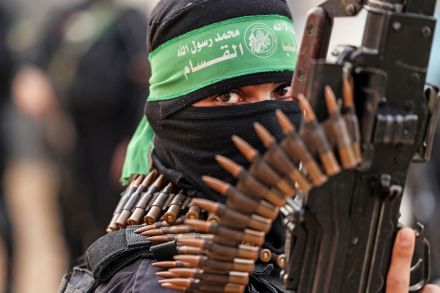
No matter how many times it is vanquished or decisively discredited, 'Palestinianism' persists as an ideology unwilling to die. Rooted in Muslim Arab nationalism, it remains fundamentally opposed to the very existence of Israel – a Jewish, liberal, and free state. Hamas, one of its most notorious champions, has in recent weeks orchestrated a carefully staged spectacle as it releases Israeli hostages from Gaza. Masked gunmen stood triumphantly, their performance captured in high resolution by cameras that had somehow survived the supposed genocide. The message was clear: this was a moment of victory, a display of strength. Never mind that Hamas had suffered catastrophic losses – its military infrastructure shattered, its leaders eliminated, its people’s homes reduced to rubble.

The audacity of Trump’s Gaza plan

From our UK edition

Some moments in history demand recognition, not just for their weight in the present but for the seismic shifts they herald. The Trump-Netanyahu press conference was one such moment – not a perfunctory diplomatic exercise, nor a routine reaffirmation of alliance, but an unambiguous declaration of intent. It was a disruption of long-entrenched, failed orthodoxies and the unveiling of a vision that dares to reimagine the Middle East in starkly different terms. For decades, world leaders have clung to exhausted formulas – peace processes built on illusion, agreements predicated on fantasy, and a wilful refusal to acknowledge the fundamental realities of Palestinian rejectionism and terror. That era is now over.

Is it time to take Trump’s Gaza resettlement plan seriously?

From our UK edition

As Donald Trump toys with the audacious idea of relocating Gaza’s population – whether to neighbouring Jordan and Egypt, or even as far afield as Albania and Canada – he touches on one of history’s most contentious and emotionally charged issues: the relocation of peoples. Resettling large populations is never easy. History is full of cautionary tales The concept carries the heavy weight of historical precedent, fraught with both tragedy and necessity. Refugees, displaced by war or persecution, have long been subject to the capricious winds of political interest and international indifference. The Jewish people, exiled and scattered for centuries, endured persecution before reclaiming sovereignty in Israel.

There is no justice in the Gaza hostage deal

From our UK edition

Imagine waking up to the news that Michael Adebolajo and Michael Adebowale, the brutal killers of British soldier Lee Rigby, were being released from prison. Picture the outrage as the British public remembers the images of Rigby being hacked to death on a Woolwich street in broad daylight, his killers unapologetic and defiant even during their trial. Imagine, too, if Axel Rudakubana – the teenage terrorist who stabbed three young girls to death during a Taylor Swift-themed dance class – walked free, boasting about his satisfaction with the murders. These scenarios are unthinkable. Yet, in Israel, they are a grim reality.

Can the ceasefire last?

From our UK edition

The ceasefire in Gaza, scheduled to begin this morning, has been anything but straightforward. As the agreement unfolds, many have rushed to declare who are the winners and who are the losers. Yet victory does not lie with those who made the most military gains or acted most morally – it leans, perversely, towards those ruthless enough to exploit suffering without moral restraint. In this grim theatre of war the truth is far bleaker, that among the civilized, there can only be losers. After days of fraught negotiations, delays, and brinkmanship, the first steps of this tenuous agreement are now unfolding.

Why Hamas keeps on celebrating

From our UK edition

As plans for a ceasefire were announced on Wednesday night, videos of Gazans celebrating with glee made their way onto international news broadcasts. The celebrations were distinctive in style, and looked nothing like those of a people experiencing the end of a genocide. Many an anchor and analyst overlooked the detail, but we would all do well to pay attention to what the revellers were actually showing and telling us.  No ceasefire can fully address the conflict as long as Hamas remains committed to its ultimate goal: the destruction of Israel and the eradication of Jews in the region This is not the first time Gaza’s civilians have seemed quick to celebrate.

This Israel-Hamas agreement defines an ‘uneasy peace’

From our UK edition

After 15 gruelling months of war and negotiation, a ceasefire and hostage release agreement between Israel and Hamas has been brokered, following intensive diplomatic activity led by the United States, Qatar,and Egypt. Announced this evening, the deal marks a critical yet deeply contentious milestone in the ongoing Israeli-Palestinian conflict. While it offers hope for the families of hostages, it also raises serious questions about the long-term implications for both sides and the precarious nature of such agreements. The deal resembles that initially outlined in May 2024 by President Biden and endorsed by the UN Security Council. It includes the release of 33 hostages held by Hamas, primarily women, children, and elderly individuals.