Jonathan Sacerdoti

Jonathan Sacerdoti

Jonathan Sacerdoti is a broadcaster and writer covering politics, culture and religion

Jewish doctors are sick of the BMA

From our UK edition

Around sixty Jewish doctors, including senior consultants and general practitioners, have left or are planning to leave the British Medical Association. Their decision is not a fleeting protest, but a serious response to what they consider to be a deeper institutional malaise that has gone untreated for too long. Many Jewish doctors feel their concerns have been ignored The BMA, whose purpose is to protect its members’ welfare, is now regarded by many Jewish doctors as compromised. They feel that it is no longer impartial, no longer safe. For a professional body that prides itself on care, inclusion and advocacy, this represents a systemic failure of grave consequence.

Is Britain an ally or an enemy of Israel?

From our UK edition

Even as the British parliament’s Intelligence and Security Committee (ISC) published its stark warning yesterday that the Islamic Republic of Iran’s Quds Force orchestrates spy rings on British soil, the UK continues its public ostracisation of Israel, the very country on the frontline of seeing down that exact threat. Britain must choose. Not between Israelis and Palestinians, but between honesty and hypocrisy Earlier this week, an Afghan-Danish spy working for Iran was arrested for photographing Jewish and Israeli targets in Berlin. The intelligence trail ran through Israel, Denmark, Switzerland, Turkey and the UK.

Grok’s praise for Hitler wasn’t a ‘glitch’

From our UK edition

We are deep into the AI boom – an age in which large language models have moved from novelty to necessity at a pace that has outstripped our capacity to reflect or adapt. There is breathless enthusiasm, endless hype and a sense that caution is for the timid and delay for the doomed. But sometimes, something happens to make people look up from the dashboard and realise they’re hurtling down the motorway with no map, no brakes and a robot at the wheel.

Israel steps up its campaign to destroy the Houthis

From our UK edition

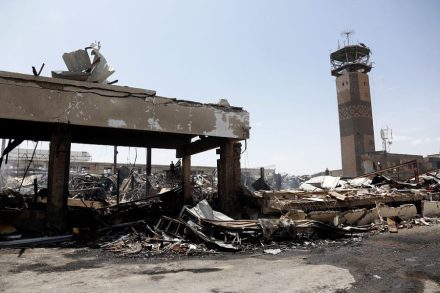
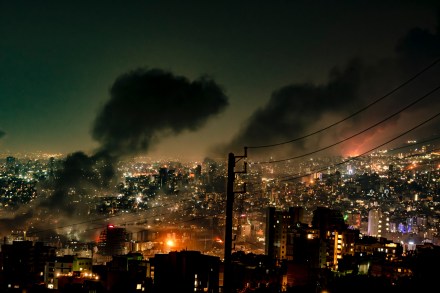
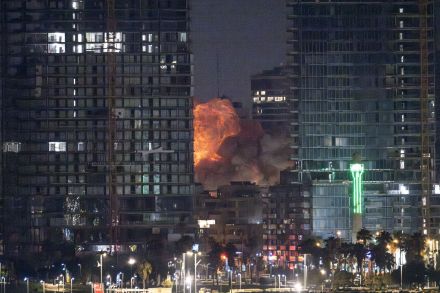
Last night, Israeli fighter jets struck multiple military targets belonging to the Houthi terrorist regime in Yemen, marking one of the most expansive and targeted responses to date. Among the sites hit were the ports of Al Hudaydah, Ras Isa, and Salif, as well as the Ras Kanatib power plant. The IDF confirmed that the Galaxy Leader, a commercial vessel seized by the Houthis in November 2023 and repurposed for terrorist use, was also among the targets struck. The Israeli military described the operation as a direct and forceful response to the repeated missile and drone attacks launched by the Houthis against Israeli territory.

Could Hebron join the Abraham Accords?

From our UK edition

You've heard of the two-state solution (or delusion, as I call it). But have you heard of the eight-state solution? Or the Palestinian Emirates plan? This is the idea of Professor Mordechai Kedar, who I spoke to in February 2024, just four months into the war started by the Palestinians on 7 October, 2023. If his vision once seemed outlandish or unrealistic to many, it now seems considerably less so in light of the fascinating developments emerging from Hebron.

Who won the 12-day war?

From our UK edition

As the dust settles from the United States and Israel’s sweeping strikes on the Islamic Republic regime’s nuclear infrastructure, a new battle has begun – one of narratives. Who really won? What damage was truly done? And what, precisely, has changed? The regime in Tehran claims resilience. Israel says deterrence has been re-established. Washington insists it achieved total destruction and victory. But beneath the declarations is the harder reality: wars don’t end with scoreboards, but with contested facts and uncertain consequences. Caution is warranted. The regime survives. Its ideology remains intact. Its opacity has deepened.

Will Iran seize this moment for revolution?

From our UK edition

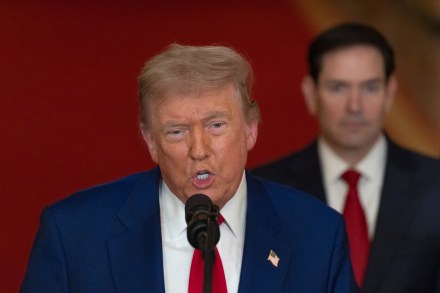
Last night began with dramatic news: the Islamic Republic of Iran had launched a volley of ballistic missiles at the US-run Al Udeid airbase in Qatar, a retaliatory gesture following the devastating American strikes on the Iranian regime’s nuclear facilities. In Washington, President Trump entered the National Security Council, according to some reports accompanied by the nuclear 'football'. The world held its breath in what was turning into the highest-stakes game of chess. Soon it happened: Trump had indeed pressed the button and unleashed chaos and mayhem across the region. But it was not the one that launches missiles. Instead, it was the presidential CAPS LOCK.

Israel is right to strike Evin prison

From our UK edition

Israel announced today that it has launched an unprecedented strike against regime targets in central Tehran, including the notorious Evin prison. Evin is infamous for holding foreign hostages and dual nationals, many of whom are detained by the regime as part of what human rights groups call ‘hostage diplomacy’. It has long been associated with arbitrary detention, torture, forced confessions and inhumane conditions, especially for political prisoners and those accused of spying or threatening national security. The facility is run by the Islamic Republic’s Ministry of Intelligence and the Revolutionary Guards, serving as the central site for imprisoning those accused of anti-regime activity.

Trump’s Iran strike is a victory for the free world

From our UK edition

Tel Aviv To America and Israel, the free world owes a debt – for courage, for clarity, for doing what had to be done. When the moment came, they did not hesitate. They bore the weight, braved the cost, and moved with the strength history demands. When Israel first struck inside Iran nine days ago, its government made a fateful decision: to sound the sirens and send its people into bomb shelters across the country. It was a moment of collective alertness, a signal that the threat was near and real. Last night, there were no sirens. No mass alerts. Most of Israel slept soundly as the United States acted with precision, strength, and resolve to bomb Iran’s nuclear sites.

Trump’s two-week delay will unsettle Iran

From our UK edition

In a statement relayed by press secretary Karoline Leavitt, the White House declared that President Donald Trump would decide ‘within the next two weeks’ whether to join Israel’s air campaign against Iran’s nuclear facilities. In isolation, it might seem a routine delay – an effort to keep diplomatic channels open, to stage manage an American entry into the conflict or even to row back on Trump’s previous gung-ho position. But by now we should all be attuned to Trump’s history and methods, and appreciate that this declaration could in fact carry a more intricate calculus. Beneath its surface lies a lattice of strategic ambiguity, political choreography and psychological pressure.

Will Trump pull the trigger and strike Iran?

From our UK edition

This morning’s sirens shattered the early calm across much of Israel. Quiet anticipation had already been building, as signs pointed to a long anticipated American entry into the conflict, but no one yet knows when, or if, it will truly come. It had been a relatively quiet night; after a brief stint in the bomb shelter around midnight, I had managed to sleep uninterrupted until around 7 a.m. when the Home Front Command app sent the 'pre-alert' warning. A sign of how quickly you adapt, I first warmed up the Gaggia and made myself an espresso, before entering the shelter in our building as the sirens began to wail through the streets. ‘You've become Israel,’ chuckled one of my bunker mates, also in his pyjamas. Israel is not waiting passively for American intervention.

Israel will not be cowed by Iran

From our UK edition

Yesterday morning, as families in central Israel emerged from bomb shelters after yet another sleepless night, the air was once again rent by sirens and the thunder of incoming missiles. Fires ignited across multiple cities. In Petah Tikva, a building lay smouldering from a direct hit. In Haifa, Iranian missiles struck near the port, severely damaging a power facility and forcing Bazan, Israel’s major oil refining and petrochemicals company, to suspend activity at all its plants. With grim efficiency, medics and emergency teams scrambled to locate survivors. It was the largest barrage of the war so far – around 100 ballistic missiles launched in a single salvo. And yet, amid the wreckage, Israel stood upright.

The delusion of western Palestine activists in Egypt

From our UK edition

As the news cycle shifts its gaze to Iran and the escalating war to prevent the psychotic Islamic theocracy from going nuclear, spare a thought for the few hundred virtue-signalling westerners who thought it would be clever to traipse through Egypt and attempt to approach the Gaza border, armed not with aid or expertise, but with slogans, smartphones, and a boundless belief in their own moral radiance. They came, allegedly, to show solidarity with Gaza. What they revealed, instead, was the sheer delusion of performative activism gone rogue. Egypt, they quickly discovered, is not Glastonbury These self-styled heroes of humanity had absorbed the wildest claims from Hamas propagandists: tales of genocide, disproportionality, and babies being starved by 'Zionists' for sport.

The danger of recognising a Palestinian state

From our UK edition

As Western leaders prepare to gather in New York this week to discuss international recognition of a Palestinian state, a stark signal from Washington demands their attention. US Ambassador to Israel Mike Huckabee has openly stated that he does not believe Palestinian statehood remains an American foreign policy goal. 'Unless there are some significant things that happen that change the culture, there's no room for it,' Huckabee told Bloomberg News this week, adding that such changes 'probably won't happen in our lifetime'. The White House, far from rebuking him, referred reporters to past remarks from President Trump questioning whether a two-state solution 'is going to work'.

Iranian rockets will not dim Israel’s resolve

From our UK edition

Tel Aviv, Israel Israelis last night once again found themselves seeking shelter as the Islamic Revolutionary forces in Iran launched their long-anticipated retaliation for Israel’s 15-hour offensive against their nuclear and ballistic missile facilities. The Israeli strikes themselves had come as something of a surprise, not entirely unforeseen, but unexpected in their timing. Perhaps as part of an elaborate decoy, or perhaps as an unfortunate casualty of circumstance, the annual Tel Aviv Pride parade – whose stages, tents and other facilities had been installed and tested throughout Thursday – was dismantled on Friday before the event could take place. Caitlyn Jenner, perhaps the world’s most famous ‘trans’ activist, had flown in specially for the occasion.

Israel’s shadow war on Iran has burst into the open

From our UK edition

Woken by sirens outside my window in Israel at 3 a.m. I made my way to the bomb shelter in the basement, reaching for my phone on the way. An unusual and urgent message appeared on the screen which had been sent to the entire nation: Home Front Command had updated its guidelines with immediate effect. Israelis are instructed to know where their nearest protected space is, to avoid unnecessary movement, and to prepare for possible extended periods in shelters. Public institutions are not to open. The meaning was clear: the long-anticipated Israeli operation against Iran’s nuclear and ballistic missile programmes had begun.

Is Israel preparing to strike Iran?

From our UK edition

While much of the Western debate remains trapped in tired slogans and false moral narratives, events on the ground in the Middle East have taken a decisive turn. In the past 24 hours, U.S. embassies have begun evacuating non-essential staff. Military dependents are being authorised to leave key bases. Multiple reports say U.S. officials have been told Israel is fully ready to launch an operation against Iran if required, and Washington expects possible Iranian retaliation on American sites in Iraq. The U.S. anticipates that Iranian retaliation against U.S.

Britain’s sanctioning of Israeli ministers is a grave mistake

From our UK edition

The United Kingdom’s decision this week to impose personal sanctions on two Israeli cabinet ministers, National Security Minister Itamar Ben-Gvir and Finance Minister Bezalel Smotrich, is a grave error – not only strategically, but morally. In concert with Canada, Australia, New Zealand, and Norway, Britain claims this move defends human rights and opposes settler violence. In truth, it represents a striking double standard, a capitulation to domestic partisan pressures, and even a step towards decreased relevance on the international stage. The UK is posturing for domestic political gain The contrast between Britain’s treatment of Israeli ministers and its posture towards the enablers of terrorism is glaring.

Is Hamas’s grip on Gaza weakening?

From our UK edition

The emergence of Yasser Abu Shabab and his 'Popular Forces' militia in eastern Rafah has become an unexpected fault line in the shifting landscape of Gaza. In recent days, a flurry of claims, counterclaims, and raw facts has begun to seep through the fog of war. Cracks are appearing in Hamas's once unchallenged grip, and new and uncertain dynamics are taking shape. Where these currents will lead is unclear. Abu Shabab himself has stepped into the spotlight with remarkable audacity. He has granted interviews, issued voice recordings, and cloaked his movement in the language of civic virtue. In a recent audio recording, he insisted: 'We have not and will not work with the occupation. Our goal is to protect Palestinian human rights from Hamas's terrorism.

Greta Thunberg should thank Israel for intercepting her Gaza selfie ship

From our UK edition

Once again, the Mediterranean has hosted a familiar theatre of self-satisfied spectacle. This time, however, the curtain has come down swiftly. The latest vessel to set sail in defiance of Israel’s naval blockade of Gaza – the Madleen, a boat bloated with virtue signalling and the vanity of performative compassion – has been intercepted by the Israeli Navy. The Madleen, a boat bloated with virtue signalling and the vanity of performative compassion, has been intercepted by the Israeli Navy The operation was executed peacefully and without casualties by fighters from Fleet 13, Israel’s naval commando forces.