Jonathan Sacerdoti

Jonathan Sacerdoti

Jonathan Sacerdoti is a broadcaster and writer covering politics, culture and religion

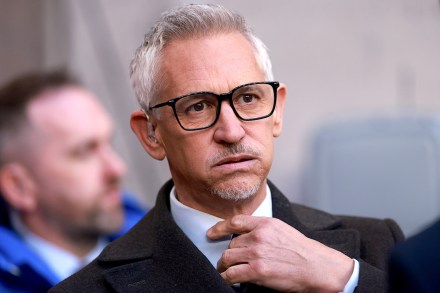
What does Gary Lineker know about Zionism?

From our UK edition

When I was a schoolboy, on the rare occasions I was required to line up against the wall to be picked for a football team, I would be picked last. It was fair enough: my abilities matched my interest level – zero. Not much has changed in the intervening decades, and thanks to my lack of any real knowledge or ability in the game, I would be most unlikely to comment on the World Cup or the Euros. But when it comes to coverage of Israel and the Middle East, I’ve spent enough time on the ground amassing knowledge, sources, and experience that this publication entrusts me to explain it to others.

Palestine and the truth about the Nakba

From our UK edition

The Nakba – Arabic for 'the catastrophe' and commemorated today – marks a profound moment of trauma in the Palestinian Arab consciousness. In 1948, following the Arab world’s rejection of the United Nations' partition plan and their subsequent military assault on the fledgling State of Israel, around 700,000 Palestinians were displaced. While Israel accepted the partition and declared independence, the Arab states and local militias initiated a war they would lose. Yet the memory of the Nakba, though born from an aggressive campaign that ended in defeat, has been carefully curated into a narrative of pure victimhood, a perennial wound severed from the choices and actions that preceded it. This phenomenon is not unique to the Palestinian case.

The ICC’s moral reckoning over sex abuse claims

By any standard, the International Criminal Court (ICC) is in crisis. But the revelations in The Wall Street Journal – detailing explosive allegations of non-consensual sexual acts and abuse of office against its chief prosecutor, Karim Khan – have not just shaken the court’s credibility. They have obliterated it. The Journal reported that Khan faces “multiple allegations of coerced sexual intercourse,” based on documents, testimony and interviews with ICC officials. At the heart of the Journal’s investigation is a horrifying accusation: that Khan, while leading the most controversial prosecution in the ICC’s history, was allegedly engaged in a sustained pattern of sexual abuse against a junior female lawyer on his team.

The narcissism of Kanye West

From our UK edition

We live in an age of liberation, in which we are told endlessly by some that freedom of speech, taken to its furthest boundaries, is the crowning achievement of democratic culture. And freedom of speech, alongside freedom of thought and conscience, freedom of (or from) religion, freedom of the press, of movement, of assembly and to legal equality, all safeguard human dignity, personal autonomy, and the ability to participate meaningfully in civic life. But what if one of the clearest signs of civilisational decay is precisely that the right to say anything is now used most energetically by people with nothing worthwhile to say? ‘Ye’, formerly known as Kanye West, a man I am told was once a cultural innovator of some sort, now presents himself as one such cautionary tale.

Tehran’s cruelty is closer than we think

From our UK edition

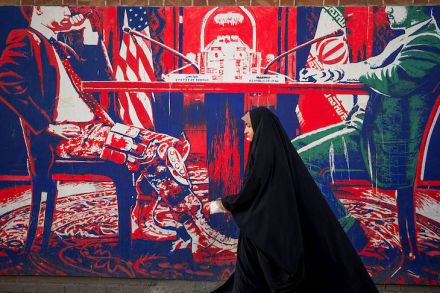
The arrest of eight men – seven of them Iranian nationals – across the United Kingdom in two separate counter-terrorism operations is a chilling reminder that the Islamic Republic of Iran is not a distant threat. It is here, embedded within our cities, probing the limits of our law, our patience and our willingness to defend our democratic integrity. Scotland Yard has revealed only sparse details: a suspected plot to target a ‘specific premises’, and a parallel but unrelated investigation into national security threats. But while the particulars remain classified, the pattern is anything but new.

Nike’s ‘Never again’ slogan is a disgrace

From our UK edition

Fifty-six thousand runners completing the London Marathon yesterday may well have gasped the words ‘never again’ as they staggered across the finish line. I have never been a runner, but I imagine that even those who willingly endure the 26.2-mile ordeal must feel not only a profound sense of accomplishment but also, at the very least, a fleeting pang of regret. How could a giant like Nike fail to recognise the most solemn and famous usage of those words? Yet when I saw the Nike advertisement – hoisted from a crane like an executed Iranian dissident, swaying precariously in front of that modern-day emblem of our capital city, the London Eye – bearing the slogan "Never again. Until next year," my mind immediately traveled to darker places.

Renewing the promise of ‘never again’

From our UK edition

What does it mean to say 'never again'? It is etched into memorials, inscribed in textbooks, whispered in the shadows of history’s darkest hour. It is a phrase uttered by world leaders at solemn ceremonies, by teachers guiding young minds through the horrors of the past, by those who stand in Auschwitz, tracing their fingers over the cold, cracked walls of the barracks. It is repeated so often that it risks becoming just that – a repetition. Is it a promise? A warning? A plea? A moral incantation to ward off the unthinkable? For some, 'never again' means that Jews will never again be led to slaughter – that the gas chambers, the mass graves, the methodical machinery of annihilation will never be allowed to return.

Parliament’s moral posturing on Israel is delusional

From our UK edition

What’s the point of parliament’s foreign affairs committee holding mock-trial style hearings about Israel’s defensive war against Iranian-backed terror groups? Do its members genuinely believe that such performative enquiries contribute to peace in the Middle East? One wonders how Britain might respond if the Israeli Knesset held public hearings into British issues – on Muslim rape gangs, on two-tier policing, or on the stifling of political speech through Orwellian 'non-crime hate incidents'. The UK would howl in protest. Yet it presumes the right to dissect Israel’s wartime conduct as if from a position of moral superiority, devoid of historical context and strategic understanding.

Hamas is exploiting the freedoms it wants to destroy

From our UK edition

In any sane world, it would be dismissed as grotesque fantasy: Hamas – the Iranian-backed terror group responsible for the 7 October massacre – petitioning British courts to lift its designation as a terrorist organisation. But this is one of those times it seems the entire world has gone mad.  For here we are, in Great Britain, witnessing Hamas, aided by British lawyers, seeking to launder its blood-soaked record under the false banners of ‘liberation’ and ‘resistance’. This is not mere absurdity. It is a direct assault on the integrity of British democracy – and on very survival of western civilisation.

Hamas has a history of using ambulances for war

From our UK edition

Before the facts had even settled, western media outlets rendered their verdict: Israel was guilty. Guilty of deliberately targeting ambulances. Guilty of murdering humanitarian workers. Guilty because in the court of international opinion, Israel’s guilt is the default setting. Only later did the complicated reality emerge. Israeli forces near Rafah, acting on intelligence that Hamas operatives were exploiting ambulances for military purposes, opened fire on a suspicious convoy. People were killed, including members of the Palestinian Red Crescent and Civil Defence.

Why did Israel block two British MPs at its border?

From our UK edition

In 2008, under the UK’s Labour government, Israeli politician Moshe Feiglin – a Likud central committee member – was denied entry into Britain. Then home secretary Jacqui Smith cited public safety concerns, quoting Feiglin’s provocative articles and speeches as justification. There was no court appeal available to him, no diplomatic immunity by virtue of his office; he was simply barred, his presence deemed not 'conducive to the public good'. Few, if any, in the British political establishment rushed to his defence. Fast forward to today, and the diplomatic chaos caused over the weekend by two Labour MPs, Yuan Yang and Abtisam Mohamed, being denied entry into Israel.

Sadiq Khan’s Eid message is a disgrace

From our UK edition

London’s Muslim mayor Sadiq Khan published a video online earlier this week to mark the Muslim festival of Eid. Released under the guise of seasonal goodwill, this glib social media greeting is not merely problematic – it is an outright disgrace. Cloaked in the warm language of unity and peace, the Mayor of London delivered a politicised monologue that whitewashes terrorism, stokes division, and fundamentally misrepresents the moral landscape of the Israel–Palestinian conflict. This is not the conduct of a responsible leader. It is the conduct of a man either wilfully blind to barbarity or all too willing to exploit a religious holiday for ideological gain.

Why Israel is ramping up its war on terror

From our UK edition

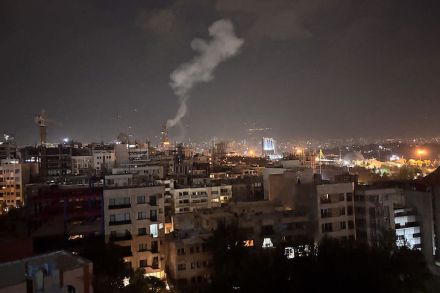
The war in Gaza has entered a more consequential and unforgiving phase. Early this morning, Palestinian sources reported that Israeli tanks had begun advancing into central Rafah, following a night of intense airstrikes across the southern Gaza Strip. This military escalation came after Israeli Defence Minister Israel Katz announced the expansion of Operation ‘Oz veCherev’ (‘Strength and Sword’), aimed at dismantling terror infrastructure, neutralising Hamas operatives, and securing areas of Gaza to be integrated into Israel’s defensive perimeter.

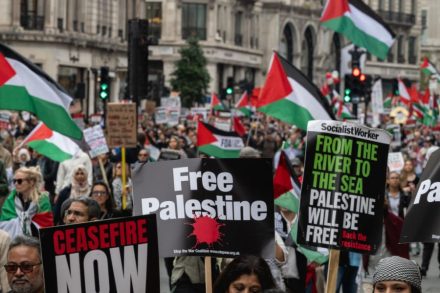
The truth about the Gaza protests

From our UK edition

A series of striking videos have emerged from the Gaza Strip over the last week. Crowds of Palestinians, chanting slogans against Hamas, have taken to the streets in a rare public display of dissent. Some have criticised the mainstream Western media for treating these images with restraint, claiming a missed opportunity to spotlight what could be interpreted as a grassroots uprising against a regime they have long failed to critically interrogate. Others have dared to raise the point: where are the Palestinian ‘solidarity’ activists now?

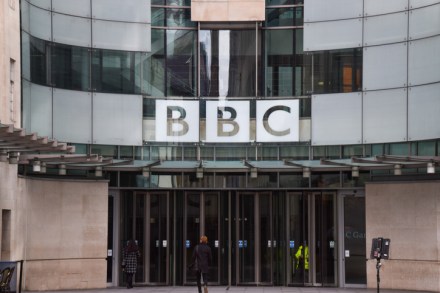
The trouble with BBC Arabic

From our UK edition

A peculiar incident occurred this month at an Israeli army base in the Negev: a wild caracal – a desert feline native to the region – bit two Israeli soldiers. Though minor and medically insignificant, the episode subsequently found its way across BBC Arabic’s platforms: X, Facebook, Instagram, and YouTube. Within a couple of days, the BBC had published this story across its Arabic-language social media properties, giving it a visibility usually reserved for serious geopolitical events. Far from treating it as harmless filler, the framing and timing of the coverage encouraged a deluge of celebratory comments from Arabic-speaking users, who gleefully described the cat as a hero or a symbol of resistance.

Who will stand up for Jews today?

From our UK edition

Awoken by sirens wailing over large parts of central Israel last weekend, I pulled on whatever clothes I could find beside my bed and shuffled down to the bomb shelter in the basement. The missiles, launched from Yemen by the Iranian-backed Houthis, didn’t distinguish between ideologies or identities. More or less every Israeli in the strike zone – left-wing or right-wing, religious or secular, Jew, Arab, Christian, Muslim, or other – did the same. Those without safe-rooms of their own rely on communal shelters, often meeting their neighbours dressed in pyjamas or wrapped in bath towels. Those who get caught away from home rush into the nearest building to be ushered into someone else’s shelter.

Israel’s Gaza campaign is far from over

From our UK edition

The war in Gaza has resumed with a new intensity, but it would be a mistake to see this as a straightforward continuation of what we have witnessed over recent months. This phase of the conflict suggests a shift in strategy – one shaped by Israeli military recalculations, a more accommodating US administration, and the failure of ceasefire negotiations to yield further meaningful results. Washington and Jerusalem are now aligned in their broader strategic objectives For some weeks, Israel has found itself in a strategic deadlock. The lull in fighting had given Hamas time to reorganise, rearm, and reinforce itself, while the humanitarian aid flowing into Gaza ended up helping to finance the terrorists as they seized it and sold it to their own people.

Israel has ‘opened the gates of hell’ in Gaza

From our UK edition

In the early hours of Tuesday morning, Israel launched a surprise wave of strikes across the Gaza Strip, targeting key Hamas infrastructure and leadership. This escalation comes after Hamas repeatedly refused to release Israeli hostages under conditions proposed by Israel and backed by US mediators. Despite extensive negotiations, including direct involvement from Washington, Hamas chose to reject every proposal put forward, prompting Israel to resume military operations aimed at further weakening the terror group’s capabilities.

There is no more hiding from the chilling truth of 7 October

From our UK edition

The 7 October Parliamentary Commission Report, chaired by Lord Andrew Roberts, has now been published. It provides a meticulously researched, forensic account of the atrocities committed against Israel by Hamas on 7 October 2023. Compiled by the UK-Israel All Party Parliamentary Group, this report is an essential document, recording in stark detail the murder, torture, and sexual violence inflicted upon innocent civilians. It ensures that this horror is preserved in the historical record, beyond the reach of those who would seek to distort or deny it. That such a report is necessary at all speaks to the disturbing times we live in.

Britain is facing a reckoning on anti-Semitism

From our UK edition

It is difficult to fathom how an incident as horrifying as the kidnapping of Israeli musician Itay Kashti by three men in Wales barely registered as a blip on the national news agenda. In any just world, this crime – motivated by anti-Semitic hatred, religious fanaticism, and a chilling sense of political grievance – should have dominated headlines. It should have sparked national debate, serious introspection, and urgent discussions about the growing wave of anti-Semitism sweeping the UK and beyond. And yet, aside from a handful of reports, silence reigned. Kashti was lured to a remote cottage in Llanybydder, Wales, on 26 August 2024, under the false pretence of a music collaboration.