Jonathan Sacerdoti

Jonathan Sacerdoti

Jonathan Sacerdoti is a broadcaster and writer covering politics, culture and religion

What price will Israel pay for a ceasefire with Hamas?

From our UK edition

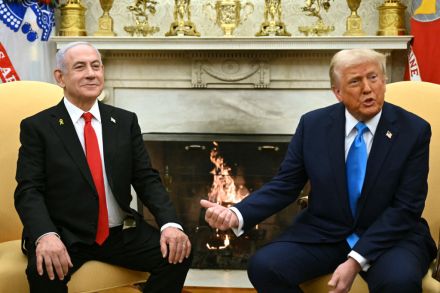
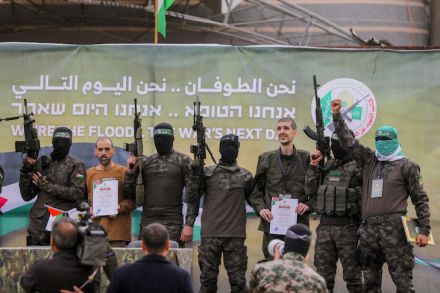
As reports swirl of an imminent ceasefire agreement between Israel and Hamas, Israel stands at a crossroads, grappling with the profound dilemmas that such a deal entails. While the full details of the agreement remain unknown until officially announced, the fragments emerging suggest a complex and controversial arrangement that raises difficult questions: How much is Israel willing to concede for the return of hostages? And what price, in lives and security, will the nation pay in the future? Within Israel’s government, opposition to the deal is mounting According to reports, the deal is expected to include the release of 33 hostages defined as “humanitarian cases,” a 42-day ceasefire, and the phased release of hostages and Palestinian prisoners.

Iran’s axis is dying

From our UK edition

From the hilltop viewpoint at Misgav Am, Israel’s northernmost kibbutz in the Upper Galilee, the view into southern Lebanon is a panorama of uncertainty. Less than a full day after Assad was finally defeated in Syria, I stand at and look down at the rubble of the Lebanese buildings destroyed in the recent fighting, as close to the Syrian border as the IDF will allow. Beside my feet, spent bullet casings remind me that less than two weeks ago this peaceful spot was a frontline position. The shell of a bombed-out nearby community viewpoint serves as a silent witness to the RPG attacks Hezbollah regularly launched on civilian homes and buildings since it started its war on Israel in October 2023.

The Oxford Union has disgraced itself

From our UK edition

The chamber of the Oxford Union, that once-proud institution, has been breached by the forces of bigotry, hatred, and mob rule. Invited to speak against an anti-Israel motion, I attended with three colleagues, each bringing unique expertise and experience to the room. But what unfolded on Thursday night was not a debate at all. It was an assault on the very principles the Union once claimed to uphold, presided over by organisers who behaved more like a mafia than custodians of an august society dedicated to free speech. This was an extremist mob dressed up like a wolf in black tie The motion for debate was itself a grotesque provocation: “This House Believes Israel is an Apartheid State Responsible for Genocide.

Amsterdam has failed its Jews

From our UK edition

Last night in Amsterdam, a scene unfolded that should send shockwaves across Europe: hundreds of Jews were hunted and beaten by mobs following a football match between Maccabi Tel Aviv and Ajax. Whether a spontaneous flare-up or organised assault, terrified fans were forced to jump into the city’s canals to escape violence. At least ten were injured, and three remain missing. As Israel dispatched emergency flights to evacuate its citizens, one must ask: how long until this happens in London or elsewhere in the UK?The Netherlands must confront this issue immediately, not only for the safety of its Jewish residents and visitors but for the stability of its own society. The embassy of Israel in the US wrote that the attackers 'proudly shared their violent acts on social media'.

Will Israel strike Iran again?

From our UK edition

Israel’s major airstrike operation deep within Iranian territory last night was unprecedented, reportedly targeting over 20 military sites in a coordinated, multi-wave attack. For the first time, Israel not only conducted such a large-scale operation but also openly acknowledged it as it unfolded. According to Israeli sources, the operation achieved its objectives, dealing a decisive blow to the Iranian regime’s military infrastructure.  The entire mission returned safely to Israel, sending a clear message of the Jewish state’s total aerial superiority over Iranian defences, all while presumably avoiding or minimising civilian casualties.

Benjamin Netanyahu has been vindicated

From our UK edition

The death of Yahya Sinwar, the top military commander of Hamas, is an important and symbolic moment in Israel’s ongoing war against the terror group. His elimination was finally made official by an evening statement from Prime Minister Benjamin Netanyahu, following hours of rumours fuelled by the circulation of unmistakable pictures of his corpse. Yet not one rocket was fired into Israel by Hamas in response. This is what progress looks like. The man who threatened to ‘take down the border with Israel and tear out their hearts from their bodies’ is now dead, marking a critical juncture in the conflict that reverberates beyond the battlefield and carries profound implications for the region’s future.

Can Lebanon ever be free of Hezbollah?

From our UK edition

Lebanon is teetering on the edge of a seismic political shift, facing increasing pressure both from internal factions and external military threats. Years of dominance in Lebanon’s political and military arenas have not shielded the terror group Hezbollah from devastating external blows, including the assassination of its longtime leader, Hassan Nasrallah. The group’s entrenched power within the country’s political, military, and social structures has long presented a seemingly insurmountable challenge. As the group’s grip appears to weaken, a rare moment of vulnerability has emerged, one that could reshape Lebanon’s future. Yet the question remains: will this be a fleeting opportunity or the beginning of Lebanon’s long-awaited liberation from Hezbollah’s shadow?

Israel’s triumphant response to 7 October

From our UK edition

One year after the brutal attacks of 7 October 2023, Israel’s global reputation has undergone a remarkable transformation. Far from being undermined by the actions it has taken in Gaza and beyond, Israel’s standing has been fortified, its image strengthened with steel. While some voices –particularly in the West – have feigned concern about Israel sacrificing its international standing in its pursuit of victory, the reality is starkly different. Israel’s reputation has not been diminished but has evolved into one of decisiveness, strategic intelligence, and strength.

Could Iran target Jews outside Israel?

From our UK edition

After the massive direct Iranian attack on Israel, many breathed a sigh of relief that Israel’s defences were mostly well prepared and highly effective. The one death reported was that of a Gazan Palestinian man killed by shrapnel near Jericho. So much for Iranian solidarity with the Palestinians. Yet tensions remain high as further Iranian aggression may follow. This time, it could the Jews of Europe, the UK or America who are the targets.  Iran has a history of responding to setbacks with global terrorism Israel’s impressive strategic operational activities in Lebanon and Syria have not only severely limited Hezbollah’s abilities, but also restored Israel’s intelligence and military deterrence in the region.

Why didn’t the BBC air this 7 October documentary earlier?

From our UK edition

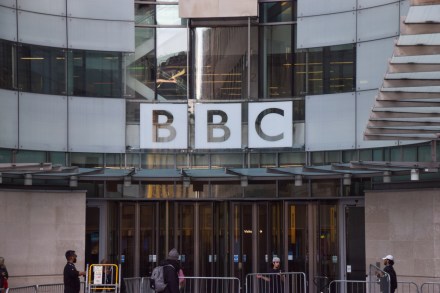
We all know what happened on 7th October 2023. But those of us who have watched the Israeli government’s compilation of footage from the day, as well as other videos sourced from the darker corners of the internet, know more than most the extent of atrocities carried out by the Palestinian terrorists who invaded through the Gaza border. There is no sanitisation here, no softening of the terror Now everyone can get a sense of what truly happened, thanks to Surviving October 7th: We Will Dance Again, the film by Yariv Mozer which screened last night on the BBC and is available on iPlayer and Paramount+ in the US.

Could this tree planting scheme bring down Israel’s prime minister?

From our UK edition

Planting trees is not usually a controversial activity, especially in the eco-conscious twenty-first century. But as ever, the rules are different where Israel is concerned, and government sanctioned forestation is currently threatening to tear apart the country’s delicately balanced coalition government. As is often the case in the region, the problem lies in competing claims over who owns the land where the trees are being planted. Bedouins in Israel’s southern Negev region insist that the Jewish National Fund (JNF) is planting trees in their land, whereas the state claims ownership of the same territory. There was a time when the iconic JNF charity box could be found in many a Jewish diaspora home.

HBO’s The Prince should leave George alone

From our UK edition

Last year Netflix refused to add a disclaimer to the beginning of every episode of The Crown, warning viewers that it is part fiction. HBO Max’s new cartoon The Prince, however, had no choice: the series has been sitting on the shelf so long that it was out of date before it was even broadcast, so every episode bears a warning that ‘this isn’t really the royal family. It’s like, a parody, or whatever. And certain recent events will not be reflected in this programme.’ The streaming service’s new cartoon comedy (if one can call it that) is based around an imagined child’s-eye-view of life in the palace. The protagonist is eight-year-old Prince George.

Why Israel is rolling-out third vaccine doses

From our UK edition

It’s time to think about your third Covid vaccine dose. That might sound like a premature suggestion when many people are still waiting for their second dose, and millions have not even received one. But Israel has just become the first place in the world to start giving a third, booster dose of the vaccine, and we should watch carefully to see if we can do the same. There is growing concern that those who received the vaccine earliest in Israel could be the ones who are currently getting infected with the delta variant. Might that indicate their immunity has dropped to a lower level, and that the vaccine’s efficacy wears off over time? Experts working with the Israeli health ministry suggest it is too early to draw such conclusions.

What’s the real reason Israel’s vaccines were rejected by Palestinians?

From our UK edition

Sipping an iced coffee in a Tel Aviv café this week, it felt like it was 2018 again. Nobody wears a face mask, tables are close together and there’s no hand gel in sight. Very few people one meets even talk about Covid-19. Though a tiny increase in the occurrence of the Indian variant has been noted in recent days, Israel is rightly proud of its vaccination and mass immunity success. It is therefore surprising that Israel’s offer to advance over one million Pfizer vaccines to the Palestinians has been rejected by the Palestinian Authority only hours after they initially accepted the deal. Many countries are still grappling with the ethical dilemma of when to offer their own supply of vaccines abroad to help others; few are expecting such offers to be rejected.

The disinformation war continues between Israel and Hamas

From our UK edition

The ceasefire between Hamas and Israel has started, and the gates to Gaza have opened for the international press. Now a new battle will begin over numbers and ratios. There will be calls for investigations, and endless debates about who ‘won’. Israel’s claims of precision targeting will come under scrutiny, but so too should Palestinian accounts, including claims of mass civilian deaths. At least 243 people are reported to have died in the Gaza Strip during Israel’s military action, including a reported 65 children. These figures rely on claims by the Gaza Health Authority – an unreliable body under Hamas control.

Hamas’s rockets are killing Palestinians too

From our UK edition

Israel’s military action in Gaza is widely reported daily across the world. Images of hundreds of rockets lighting up the skies over Israeli cities and of the rubble of destroyed buildings in the Gaza Strip are once again part of the daily cycle of print and broadcast news. But most reports are thin on details of Israel’s military activities. What exactly are their aims? How are they pursuing them? And how much success are they having? Often Israel’s military activities seem baffling to the wider world. The country’s reluctance to give a detailed, running-commentary on every strike frustrates journalists and citizens, who then assume the worst of motives for these unexplained acts.

What the fight against HIV can teach us about defeating Covid-19

From our UK edition

In the eighties, we were warned to beware an easily spread, deadly virus. The government’s ominous HIV adverts told us not to 'die of ignorance'. Thus a generation was educated through fear how to avoid infection by practicing safer sex and avoiding contact with the blood of those who are positive.  While those messages are still important today, HIV no longer represents the death sentence it once did. Still a life-altering and permanent disease, it can now be managed in a way that means people often live full lives with HIV, rather than die early because of it. No successful vaccination has been developed for HIV, but other medical developments helped to change the prognosis for those who contract it.

How should we honour the ‘angels’ of the Holocaust when they’re gone?

From our UK edition

Yom HaShoa is Israel and the Jewish people’s day of remembrance for the Shoa, or Holocaust. It falls this year on 8th April. Its official Hebrew name means ‘Holocaust and Heroism Remembrance Day’, emphasising how we should remember not only the six million Jews who were killed by the Nazis, but also the heroes like those who rose up against their persecution in the Warsaw Ghetto. There is also another group of heroes we should remember. Their actions provide a model of human decency we should all seek to emulate. An apparently disparate group from varied backgrounds, they are known as the ‘Righteous Among the Nations’ – special people who have been recognised for saving the lives of Jewish people.

The trouble with ‘BAME’

From our UK edition

Are Black people and Asians the same? Are they different from other ethnic minorities? What about Jews? And who do we include when we talk about Asians? Korean, Thai and Chinese people, or those from Afghanistan, Pakistan and India? Does ‘Asian’ refer to a set of skin colours or geographical locations? And what exactly is BAME? One of the hallmarks of a functional democracy is to protect the needs of minority groups. As well as ensuring they are not unfairly discriminated against, we must also make certain adjustments to accommodate their specific needs. But modern sensibilities and sociological fashions risk lumping groups together and simply emphasising differences. The effect of this can be division and confusion rather than fairness and harmony.

Should we judge Roald Dahl’s work by his anti-Semitism?

From our UK edition

Roald Dahl died in 1990. So why does it matter today that he was an anti-Semite? Why has his family apologised thirty years on? And should his work be cancelled as a result? Or, to paraphrase the bible, should the sins of the author be visited upon the third and fourth generations who profit from his work? In September 1983, Israeli TV stopped broadcasting Roald Dahl’s Tales of the Unexpected to avoid paying royalties to an anti-Semite, making Dahl the third person whose work was excluded from the still-young state’s airwaves after Wagner and Strauss.