Jonathan Sacerdoti

Jonathan Sacerdoti

Jonathan Sacerdoti is a broadcaster and writer covering politics, culture and religion

What’s the real reason Israel’s vaccines were rejected by Palestinians?

From our UK edition

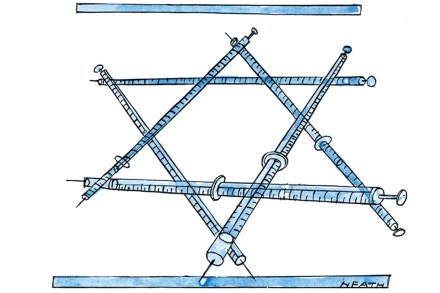
Sipping an iced coffee in a Tel Aviv café this week, it felt like it was 2018 again. Nobody wears a face mask, tables are close together and there’s no hand gel in sight. Very few people one meets even talk about Covid-19. Though a tiny increase in the occurrence of the Indian variant has been noted in recent days, Israel is rightly proud of its vaccination and mass immunity success. It is therefore surprising that Israel’s offer to advance over one million Pfizer vaccines to the Palestinians has been rejected by the Palestinian Authority only hours after they initially accepted the deal. Many countries are still grappling with the ethical dilemma of when to offer their own supply of vaccines abroad to help others; few are expecting such offers to be rejected.

The disinformation war continues between Israel and Hamas

From our UK edition

The ceasefire between Hamas and Israel has started, and the gates to Gaza have opened for the international press. Now a new battle will begin over numbers and ratios. There will be calls for investigations, and endless debates about who ‘won’. Israel’s claims of precision targeting will come under scrutiny, but so too should Palestinian accounts, including claims of mass civilian deaths. At least 243 people are reported to have died in the Gaza Strip during Israel’s military action, including a reported 65 children. These figures rely on claims by the Gaza Health Authority – an unreliable body under Hamas control.

Hamas’s rockets are killing Palestinians too

From our UK edition

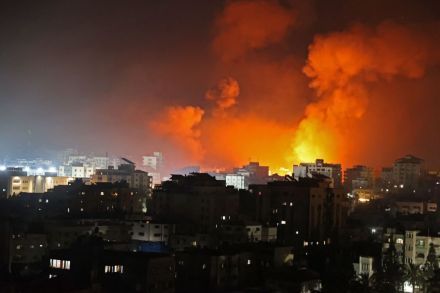
Israel’s military action in Gaza is widely reported daily across the world. Images of hundreds of rockets lighting up the skies over Israeli cities and of the rubble of destroyed buildings in the Gaza Strip are once again part of the daily cycle of print and broadcast news. But most reports are thin on details of Israel’s military activities. What exactly are their aims? How are they pursuing them? And how much success are they having? Often Israel’s military activities seem baffling to the wider world. The country’s reluctance to give a detailed, running-commentary on every strike frustrates journalists and citizens, who then assume the worst of motives for these unexplained acts.

What the fight against HIV can teach us about defeating Covid-19

From our UK edition

In the eighties, we were warned to beware an easily spread, deadly virus. The government’s ominous HIV adverts told us not to 'die of ignorance'. Thus a generation was educated through fear how to avoid infection by practicing safer sex and avoiding contact with the blood of those who are positive.  While those messages are still important today, HIV no longer represents the death sentence it once did. Still a life-altering and permanent disease, it can now be managed in a way that means people often live full lives with HIV, rather than die early because of it. No successful vaccination has been developed for HIV, but other medical developments helped to change the prognosis for those who contract it.

How should we honour the ‘angels’ of the Holocaust when they’re gone?

From our UK edition

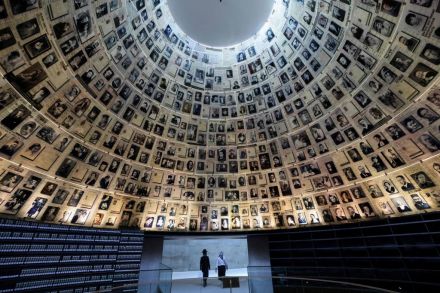
Yom HaShoa is Israel and the Jewish people’s day of remembrance for the Shoa, or Holocaust. It falls this year on 8th April. Its official Hebrew name means ‘Holocaust and Heroism Remembrance Day’, emphasising how we should remember not only the six million Jews who were killed by the Nazis, but also the heroes like those who rose up against their persecution in the Warsaw Ghetto. There is also another group of heroes we should remember. Their actions provide a model of human decency we should all seek to emulate. An apparently disparate group from varied backgrounds, they are known as the ‘Righteous Among the Nations’ – special people who have been recognised for saving the lives of Jewish people.

The trouble with ‘BAME’

From our UK edition

Are Black people and Asians the same? Are they different from other ethnic minorities? What about Jews? And who do we include when we talk about Asians? Korean, Thai and Chinese people, or those from Afghanistan, Pakistan and India? Does ‘Asian’ refer to a set of skin colours or geographical locations? And what exactly is BAME? One of the hallmarks of a functional democracy is to protect the needs of minority groups. As well as ensuring they are not unfairly discriminated against, we must also make certain adjustments to accommodate their specific needs. But modern sensibilities and sociological fashions risk lumping groups together and simply emphasising differences. The effect of this can be division and confusion rather than fairness and harmony.

Should we judge Roald Dahl’s work by his anti-Semitism?

From our UK edition

Roald Dahl died in 1990. So why does it matter today that he was an anti-Semite? Why has his family apologised thirty years on? And should his work be cancelled as a result? Or, to paraphrase the bible, should the sins of the author be visited upon the third and fourth generations who profit from his work? In September 1983, Israeli TV stopped broadcasting Roald Dahl’s Tales of the Unexpected to avoid paying royalties to an anti-Semite, making Dahl the third person whose work was excluded from the still-young state’s airwaves after Wagner and Strauss.

A Jewish view on lifting lockdown for Christmas

From our UK edition

I never expected to become a fake Rabbi. But this year, on Yom Kippur of all days, it happened. In the middle of the Pandemic, Jews were faced with the problem of marking the holiest day of the year without being able to meet up even for prayer. Communal prayer is a central feature of Judaism, especially on the day when we collectively atone for our sins. As the day approached, my family’s discussions (by FaceTime, of course) increasingly focused on how depressing it was going to be sitting at home alone, not eating. An idea quietly formed in my mind. What if I could put on some sort of Covid-safe substitute?