Jonathan Sacerdoti

Jonathan Sacerdoti

Jonathan Sacerdoti is a broadcaster and writer covering politics, culture and religion

Why does Louis Theroux keep picking on Israeli settlers?

When is Louis Theroux going to make a documentary where he embeds himself with Hamas in Gaza? Or Palestinian Islamic Jihad in Jenin, Nablus, Tulkarm, or Qalqilya? Probably never, because he’d most likely come to a sticky end. His attempt to make a show about British Muslims who were sympathetic to Isis “fizzled out” Instead, Theroux is once again making a film about Jews in Judea and Samaria – the region known as the West Bank – focusing on so-called “settlers.” His last foray into this subject was The Ultra Zionists, in 2011, a documentary criticised by some for cherry-picking the most extreme and controversial voices from the settler movement to create a caricature of violent, religious fanatics.

Trump has backed Hamas into a corner

Donald Trump’s second meeting with a Middle Eastern leader in the Oval Office – this time with King Abdullah of Jordan – was even more striking than his first with Israeli Prime Minister Benjamin Netanyahu. If last week’s encounter signalled a seismic shift in US Middle East policy, yesterday’s developments confirmed it: the balance of power has decisively tilted in Israel’s favour. The image of King Abdullah, visibly uneasy, twitching as he unexpectedly declared that Jordan would accept 2,000 sick Gazan children, was a moment of profound significance. It suggested that Trump’s relentless pressure – both public and private – was beginning to bear fruit.

How Hamas used starvation as a weapon of war

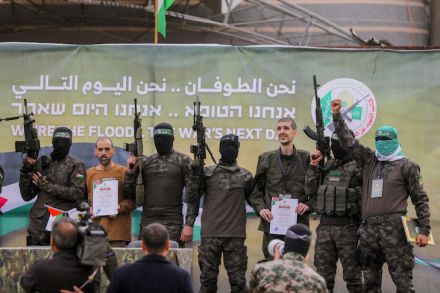
We asked for proof of deliberate starvation in Gaza. On Saturday, we received it. The images of Eli Sharabi, Or Levy, and Ohad Ben Ami – three hostages released by Hamas after 491 days in captivity – were haunting. Frail, skeletal, barely able to stand, they bore the unmistakable marks of prolonged deprivation. The sight evoked painful historical echoes: men whose suffering was etched into their hollowed faces and emaciated bodies, a vision chillingly reminiscent of Holocaust survivors. This was not incidental malnutrition. It was something far worse: starvation as a weapon, inflicted with intent.

Can Hamas ever be defeated?

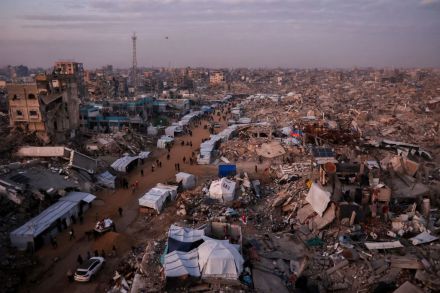
No matter how many times it is vanquished or decisively discredited, 'Palestinianism' persists as an ideology unwilling to die. Rooted in Muslim Arab nationalism, it remains fundamentally opposed to the very existence of Israel – a Jewish, liberal, and free state. Hamas, one of its most notorious champions, has in recent weeks orchestrated a carefully staged spectacle as it releases Israeli hostages from Gaza. Masked gunmen stood triumphantly, their performance captured in high resolution by cameras that had somehow survived the supposed genocide. The message was clear: this was a moment of victory, a display of strength. Never mind that Hamas had suffered catastrophic losses – its military infrastructure shattered, its leaders eliminated, its people’s homes reduced to rubble.

The audacity of Trump’s Gaza plan

Some moments in history demand recognition, not just for their weight in the present but for the seismic shifts they herald. The Trump-Netanyahu press conference was one such moment – not a perfunctory diplomatic exercise, nor a routine reaffirmation of alliance, but an unambiguous declaration of intent. It was a disruption of long-entrenched, failed orthodoxies and the unveiling of a vision that dares to reimagine the Middle East in starkly different terms. For decades, world leaders have clung to exhausted formulas – peace processes built on illusion, agreements predicated on fantasy, and a wilful refusal to acknowledge the fundamental realities of Palestinian rejectionism and terror. That era is now over.

Is it time to take Trump’s Gaza resettlement plan seriously?

As Donald Trump toys with the audacious idea of relocating Gaza’s population – whether to neighbouring Jordan and Egypt, or even as far afield as Albania and Canada – he touches on one of history’s most contentious and emotionally charged issues: the relocation of peoples. Resettling large populations is never easy. History is full of cautionary tales The concept carries the heavy weight of historical precedent, fraught with both tragedy and necessity. Refugees, displaced by war or persecution, have long been subject to the capricious winds of political interest and international indifference. The Jewish people, exiled and scattered for centuries, endured persecution before reclaiming sovereignty in Israel.

There is no justice in the Gaza hostage deal

Imagine waking up to the news that Michael Adebolajo and Michael Adebowale, the brutal killers of British soldier Lee Rigby, were being released from prison. Picture the outrage as the British public remembers the images of Rigby being hacked to death on a Woolwich street in broad daylight, his killers unapologetic and defiant even during their trial. Imagine, too, if Axel Rudakubana – the teenage terrorist who stabbed three young girls to death during a Taylor Swift-themed dance class – walked free, boasting about his satisfaction with the murders. These scenarios are unthinkable. Yet, in Israel, they are a grim reality.

Can the ceasefire last?

The ceasefire in Gaza, scheduled to begin this morning, has been anything but straightforward. As the agreement unfolds, many have rushed to declare who are the winners and who are the losers. Yet victory does not lie with those who made the most military gains or acted most morally – it leans, perversely, towards those ruthless enough to exploit suffering without moral restraint. In this grim theatre of war the truth is far bleaker, that among the civilized, there can only be losers. After days of fraught negotiations, delays, and brinkmanship, the first steps of this tenuous agreement are now unfolding.

Why Hamas keeps on celebrating

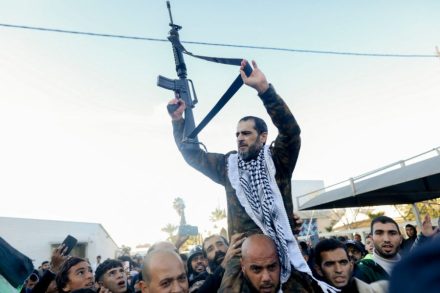
As plans for a ceasefire were announced on Wednesday night, videos of Gazans celebrating with glee made their way onto international news broadcasts. The celebrations were distinctive in style, and looked nothing like those of a people experiencing the end of a genocide. Many an anchor and analyst overlooked the detail, but we would all do well to pay attention to what the revellers were actually showing and telling us.  No ceasefire can fully address the conflict as long as Hamas remains committed to its ultimate goal: the destruction of Israel and the eradication of Jews in the region This is not the first time Gaza’s civilians have seemed quick to celebrate.

This Israel-Hamas agreement defines an ‘uneasy peace’

After 15 gruelling months of war and negotiation, a ceasefire and hostage release agreement between Israel and Hamas has been brokered, following intensive diplomatic activity led by the United States, Qatar,and Egypt. Announced this evening, the deal marks a critical yet deeply contentious milestone in the ongoing Israeli-Palestinian conflict. While it offers hope for the families of hostages, it also raises serious questions about the long-term implications for both sides and the precarious nature of such agreements. The deal resembles that initially outlined in May 2024 by President Biden and endorsed by the UN Security Council. It includes the release of 33 hostages held by Hamas, primarily women, children, and elderly individuals.

What price will Israel pay for a ceasefire with Hamas?

As reports swirl of an imminent ceasefire agreement between Israel and Hamas, Israel stands at a crossroads, grappling with the profound dilemmas that such a deal entails. While the full details of the agreement remain unknown until officially announced, the fragments emerging suggest a complex and controversial arrangement that raises difficult questions: How much is Israel willing to concede for the return of hostages? And what price, in lives and security, will the nation pay in the future? Within Israel’s government, opposition to the deal is mounting According to reports, the deal is expected to include the release of 33 hostages defined as “humanitarian cases,” a 42-day ceasefire, and the phased release of hostages and Palestinian prisoners.

Iran’s axis is dying

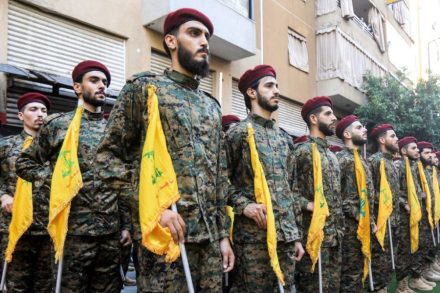
From the hilltop viewpoint at Misgav Am, Israel’s northernmost kibbutz in the Upper Galilee, the view into southern Lebanon is a panorama of uncertainty. Less than a full day after Assad was finally defeated in Syria, I stand at and look down at the rubble of the Lebanese buildings destroyed in the recent fighting, as close to the Syrian border as the IDF will allow. Beside my feet, spent bullet casings remind me that less than two weeks ago this peaceful spot was a frontline position. The shell of a bombed-out nearby community viewpoint serves as a silent witness to the RPG attacks Hezbollah regularly launched on civilian homes and buildings since it started its war on Israel in October 2023.

The Oxford Union has disgraced itself

The chamber of the Oxford Union, that once-proud institution, has been breached by the forces of bigotry, hatred, and mob rule. Invited to speak against an anti-Israel motion, I attended with three colleagues, each bringing unique expertise and experience to the room. But what unfolded on Thursday night was not a debate at all. It was an assault on the very principles the Union once claimed to uphold, presided over by organisers who behaved more like a mafia than custodians of an august society dedicated to free speech. This was an extremist mob dressed up like a wolf in black tie The motion for debate was itself a grotesque provocation: “This House Believes Israel is an Apartheid State Responsible for Genocide.

Amsterdam has failed its Jews

Last night in Amsterdam, a scene unfolded that should send shockwaves across Europe: hundreds of Jews were hunted and beaten by mobs following a football match between Maccabi Tel Aviv and Ajax. Whether a spontaneous flare-up or organised assault, terrified fans were forced to jump into the city’s canals to escape violence. At least ten were injured, and three remain missing. As Israel dispatched emergency flights to evacuate its citizens, one must ask: how long until this happens in London or elsewhere in the UK?The Netherlands must confront this issue immediately, not only for the safety of its Jewish residents and visitors but for the stability of its own society. The embassy of Israel in the US wrote that the attackers 'proudly shared their violent acts on social media'.

Will Israel strike Iran again?

Israel’s major airstrike operation deep within Iranian territory last night was unprecedented, reportedly targeting over 20 military sites in a coordinated, multi-wave attack. For the first time, Israel not only conducted such a large-scale operation but also openly acknowledged it as it unfolded. According to Israeli sources, the operation achieved its objectives, dealing a decisive blow to the Iranian regime’s military infrastructure.  The entire mission returned safely to Israel, sending a clear message of the Jewish state’s total aerial superiority over Iranian defences, all while presumably avoiding or minimising civilian casualties.

Benjamin Netanyahu has been vindicated

The death of Yahya Sinwar, the top military commander of Hamas, is an important and symbolic moment in Israel’s ongoing war against the terror group. His elimination was finally made official by an evening statement from Prime Minister Benjamin Netanyahu, following hours of rumours fuelled by the circulation of unmistakable pictures of his corpse. Yet not one rocket was fired into Israel by Hamas in response. This is what progress looks like. The man who threatened to ‘take down the border with Israel and tear out their hearts from their bodies’ is now dead, marking a critical juncture in the conflict that reverberates beyond the battlefield and carries profound implications for the region’s future.

Can Lebanon ever be free of Hezbollah?

Lebanon is teetering on the edge of a seismic political shift, facing increasing pressure both from internal factions and external military threats. Years of dominance in Lebanon’s political and military arenas have not shielded the terror group Hezbollah from devastating external blows, including the assassination of its longtime leader, Hassan Nasrallah. The group’s entrenched power within the country’s political, military, and social structures has long presented a seemingly insurmountable challenge. As the group’s grip appears to weaken, a rare moment of vulnerability has emerged, one that could reshape Lebanon’s future. Yet the question remains: will this be a fleeting opportunity or the beginning of Lebanon’s long-awaited liberation from Hezbollah’s shadow?

Israel’s triumphant response to 7 October

One year after the brutal attacks of 7 October 2023, Israel’s global reputation has undergone a remarkable transformation. Far from being undermined by the actions it has taken in Gaza and beyond, Israel’s standing has been fortified, its image strengthened with steel. While some voices –particularly in the West – have feigned concern about Israel sacrificing its international standing in its pursuit of victory, the reality is starkly different. Israel’s reputation has not been diminished but has evolved into one of decisiveness, strategic intelligence, and strength.

Could Iran target Jews outside Israel?

After the massive direct Iranian attack on Israel, many breathed a sigh of relief that Israel’s defences were mostly well prepared and highly effective. The one death reported was that of a Gazan Palestinian man killed by shrapnel near Jericho. So much for Iranian solidarity with the Palestinians. Yet tensions remain high as further Iranian aggression may follow. This time, it could the Jews of Europe, the UK or America who are the targets.  Iran has a history of responding to setbacks with global terrorism Israel’s impressive strategic operational activities in Lebanon and Syria have not only severely limited Hezbollah’s abilities, but also restored Israel’s intelligence and military deterrence in the region.

Why didn’t the BBC air this 7 October documentary earlier?

We all know what happened on 7th October 2023. But those of us who have watched the Israeli government’s compilation of footage from the day, as well as other videos sourced from the darker corners of the internet, know more than most the extent of atrocities carried out by the Palestinian terrorists who invaded through the Gaza border. There is no sanitisation here, no softening of the terror Now everyone can get a sense of what truly happened, thanks to Surviving October 7th: We Will Dance Again, the film by Yariv Mozer which screened last night on the BBC and is available on iPlayer and Paramount+ in the US.