Jonathan Sacerdoti

Jonathan Sacerdoti

Jonathan Sacerdoti is a broadcaster and writer covering politics, culture and religion

Will the occupation of Gaza allow Israel to crush Hamas?

From our UK edition

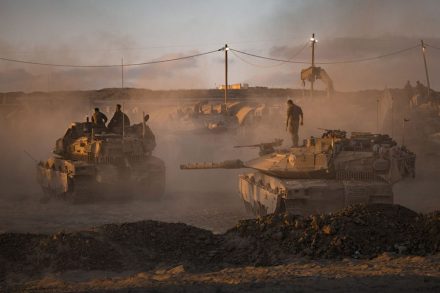
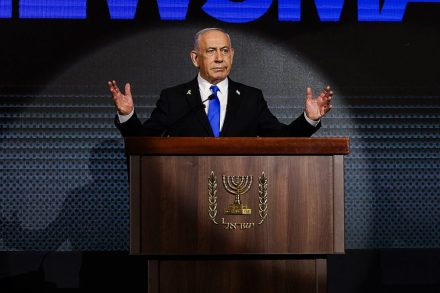
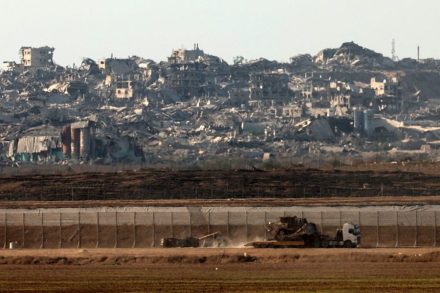
In a decision of historic weight, the Israeli government has formally approved a plan to expand its military operation and establish full control over the Gaza Strip. This has come despite the opposition of Chief of Staff Eyal Zamir, who raised pointed warnings during a meeting that began at 6:00 pm Israeli time last night and stretched late into the night. Tensions between Zamir and Prime Minister Benjamin Netanyahu surfaced throughout the protracted session, with several ministers directly challenging the chief of staff over his stance. Eventually, the Political-Security Cabinet voted by an ‘overwhelming' majority to endorse Netanyahu’s proposal to defeat Hamas through a combination of military occupation, strategic disarmament, and post-conflict governance.

Israel’s plan to occupy Gaza is a last resort

From our UK edition

Reports last night from Israeli Channel 12 quoting a senior official in Prime Minister Benjamin Netanyahu's office have confirmed what has long been rumoured, feared, and for some, awaited: the decision has been made to occupy the Gaza Strip. This is not yet formal policy, pending cabinet approval, but the trajectory is now unmistakable. The prelude has ended. The war is entering a new, graver phase. Western commentary will, as usual, rush to treat this as a moral failure of Israeli restraint, or as the inevitable result of hawkish ideology. Yet that interpretation is not only false, it is profoundly dishonest and the opposite of the truth. The occupation of Gaza is not a first resort. It is, tragically, the last.

Starmer’s Palestine position is perverse

From our UK edition

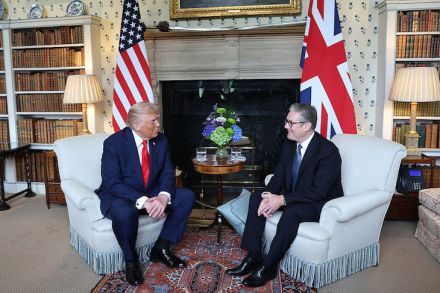
Keir Starmer’s declaration that Britain will recognise a Palestinian state unless Israel takes ‘substantive steps’ to end the war in Gaza is, on its face, a symbolic diplomatic gesture. Yet symbols, particularly in international affairs, carry weight. And this one is a blow to Israel, both politically and strategically. The question is not whether this decision is consequential, but how and for whom. If recognition is contingent on Israel achieving a ceasefire, then Hamas has every reason to prolong the conflict Framed as a humanitarian imperative, the British ultimatum appears, on closer inspection, to rest on an unsettling inversion of logic.

Why Israel is forced to sabotage itself

From our UK edition

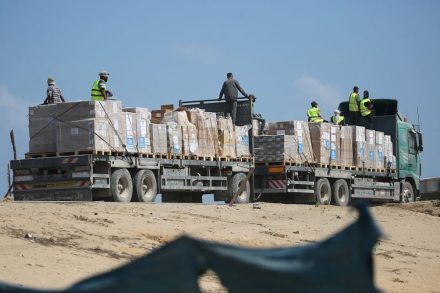
Israel’s recently announced tactical pause in several sectors of Gaza, aimed at facilitating the distribution of humanitarian aid, is not merely a gesture of compassion under fire. It is a tactical adjustment born of necessity and certainly not a shift in moral posture. To understand this move properly is to grasp the complex interplay of military constraint, media manipulation, psychological warfare, and political coercion. This is the bitter paradox: to maintain moral and strategic legitimacy in the eyes of its allies, Israel must act against its own operational interests The decision to implement a daily ten-hour pause in military activity in areas such as Al-Mawasi, Deir al-Balah, and Gaza City reflects more than an internal policy shift.

The leaked email that blows apart the BBC’s impartiality claims over Gaza

From our UK edition

A leaked internal email from a BBC executive editor reveals that the Corporation has issued prescriptive instructions to staff on how to cover the humanitarian situation in Gaza. The memo, titled 'Covering the food crisis in Gaza', amounts to a top-down editorial diktat that discards impartiality, elevates one side of a deeply contested narrative, and imposes a specific anti-Israel legal-political framing as settled fact. The existence of this email is a telling sign of how the Corporation works to ensure its journalists stick to its own ideological angles.

Will one final push by Israel destroy Hamas?

From our UK edition

For more than 650 days of war in Gaza, one swathe of territory remained mostly untouched by Israeli ground manoeuvres: the dense, urban core of the central camps – Nuseirat, Deir al-Balah, Maghazi, and Bureij. That pattern has now decisively changed. On Sunday morning, the Israel Defence Forces (IDF) issued evacuation orders for southern Deir al-Balah. Within 24 hours, the area was under sustained air and artillery assault, with Gazan sources reporting the advance of Israeli tanks near the Abu Holi junction, adjacent to Salah al-Din Road. Though precise details of the strikes remain unclear, what is beyond doubt is that Israel is now expanding its war effort into one of the last remaining Hamas redoubts in the Strip.

What’s happening in southern Syria – and why Israel is involved

From our UK edition

Over the last 24 hours, southern Syria has seen a sharp escalation in violence involving Syrian government forces, local Druze militias, and Israeli airpower. The developments centre on the city of As-Suwayda and the surrounding region, home to much of Syria’s Druze population, and have drawn renewed attention to the complex relationship between the Druze community, the Syrian regime, and Israel. Prospects for normalising relations between Israel and Syria have significantly worsened The Syrian army has begun heavily shelling areas in and around As-Suwayda. Israeli aircraft launched strikes against regime positions in Suwayda and Daraa, and reportedly targeted a military convoy belonging to Abu Amsha, a Turkish-backed militia commander.

The BBC Gaza documentary report is a cover-up

From our UK edition

The BBC’s long-awaited editorial review of its documentary Gaza: How to Survive a Warzone was published today. It reads not like a rigorous investigation into serious journalistic failures, but like a desperate institutional whitewash. The report bends over backwards to defend the indefensible, trying to sanitise a catastrophic editorial misjudgment as little more than ‘a significant oversight by the Production Company.’ At the heart of the scandal lies the BBC’s failure to disclose that the documentary’s narrator, a Palestinian boy named Abdullah Al-Yazouri, is the son of Ayman Al-Yazouri, a senior official in the Hamas-run government in Gaza. This, the report acknowledges, was ‘wrong’ and constituted a breach of guideline 3.3.

Jewish doctors are sick of the BMA

From our UK edition

Around sixty Jewish doctors, including senior consultants and general practitioners, have left or are planning to leave the British Medical Association. Their decision is not a fleeting protest, but a serious response to what they consider to be a deeper institutional malaise that has gone untreated for too long. Many Jewish doctors feel their concerns have been ignored The BMA, whose purpose is to protect its members’ welfare, is now regarded by many Jewish doctors as compromised. They feel that it is no longer impartial, no longer safe. For a professional body that prides itself on care, inclusion and advocacy, this represents a systemic failure of grave consequence.

Is Britain an ally or an enemy of Israel?

From our UK edition

Even as the British parliament’s Intelligence and Security Committee (ISC) published its stark warning yesterday that the Islamic Republic of Iran’s Quds Force orchestrates spy rings on British soil, the UK continues its public ostracisation of Israel, the very country on the frontline of seeing down that exact threat. Britain must choose. Not between Israelis and Palestinians, but between honesty and hypocrisy Earlier this week, an Afghan-Danish spy working for Iran was arrested for photographing Jewish and Israeli targets in Berlin. The intelligence trail ran through Israel, Denmark, Switzerland, Turkey and the UK.

Grok’s praise for Hitler wasn’t a ‘glitch’

From our UK edition

We are deep into the AI boom – an age in which large language models have moved from novelty to necessity at a pace that has outstripped our capacity to reflect or adapt. There is breathless enthusiasm, endless hype and a sense that caution is for the timid and delay for the doomed. But sometimes, something happens to make people look up from the dashboard and realise they’re hurtling down the motorway with no map, no brakes and a robot at the wheel.

Israel steps up its campaign to destroy the Houthis

From our UK edition

Last night, Israeli fighter jets struck multiple military targets belonging to the Houthi terrorist regime in Yemen, marking one of the most expansive and targeted responses to date. Among the sites hit were the ports of Al Hudaydah, Ras Isa, and Salif, as well as the Ras Kanatib power plant. The IDF confirmed that the Galaxy Leader, a commercial vessel seized by the Houthis in November 2023 and repurposed for terrorist use, was also among the targets struck. The Israeli military described the operation as a direct and forceful response to the repeated missile and drone attacks launched by the Houthis against Israeli territory.

Could Hebron join the Abraham Accords?

From our UK edition

You've heard of the two-state solution (or delusion, as I call it). But have you heard of the eight-state solution? Or the Palestinian Emirates plan? This is the idea of Professor Mordechai Kedar, who I spoke to in February 2024, just four months into the war started by the Palestinians on 7 October, 2023. If his vision once seemed outlandish or unrealistic to many, it now seems considerably less so in light of the fascinating developments emerging from Hebron.

Who won the 12-day war?

From our UK edition

As the dust settles from the United States and Israel’s sweeping strikes on the Islamic Republic regime’s nuclear infrastructure, a new battle has begun – one of narratives. Who really won? What damage was truly done? And what, precisely, has changed? The regime in Tehran claims resilience. Israel says deterrence has been re-established. Washington insists it achieved total destruction and victory. But beneath the declarations is the harder reality: wars don’t end with scoreboards, but with contested facts and uncertain consequences. Caution is warranted. The regime survives. Its ideology remains intact. Its opacity has deepened.

Will Iran seize this moment for revolution?

From our UK edition

Last night began with dramatic news: the Islamic Republic of Iran had launched a volley of ballistic missiles at the US-run Al Udeid airbase in Qatar, a retaliatory gesture following the devastating American strikes on the Iranian regime’s nuclear facilities. In Washington, President Trump entered the National Security Council, according to some reports accompanied by the nuclear 'football'. The world held its breath in what was turning into the highest-stakes game of chess. Soon it happened: Trump had indeed pressed the button and unleashed chaos and mayhem across the region. But it was not the one that launches missiles. Instead, it was the presidential CAPS LOCK.

Israel is right to strike Evin prison

From our UK edition

Israel announced today that it has launched an unprecedented strike against regime targets in central Tehran, including the notorious Evin prison. Evin is infamous for holding foreign hostages and dual nationals, many of whom are detained by the regime as part of what human rights groups call ‘hostage diplomacy’. It has long been associated with arbitrary detention, torture, forced confessions and inhumane conditions, especially for political prisoners and those accused of spying or threatening national security. The facility is run by the Islamic Republic’s Ministry of Intelligence and the Revolutionary Guards, serving as the central site for imprisoning those accused of anti-regime activity.

Trump’s Iran strike is a victory for the free world

From our UK edition

Tel Aviv To America and Israel, the free world owes a debt – for courage, for clarity, for doing what had to be done. When the moment came, they did not hesitate. They bore the weight, braved the cost, and moved with the strength history demands. When Israel first struck inside Iran nine days ago, its government made a fateful decision: to sound the sirens and send its people into bomb shelters across the country. It was a moment of collective alertness, a signal that the threat was near and real. Last night, there were no sirens. No mass alerts. Most of Israel slept soundly as the United States acted with precision, strength, and resolve to bomb Iran’s nuclear sites.

Trump’s two-week delay will unsettle Iran

From our UK edition

In a statement relayed by press secretary Karoline Leavitt, the White House declared that President Donald Trump would decide ‘within the next two weeks’ whether to join Israel’s air campaign against Iran’s nuclear facilities. In isolation, it might seem a routine delay – an effort to keep diplomatic channels open, to stage manage an American entry into the conflict or even to row back on Trump’s previous gung-ho position. But by now we should all be attuned to Trump’s history and methods, and appreciate that this declaration could in fact carry a more intricate calculus. Beneath its surface lies a lattice of strategic ambiguity, political choreography and psychological pressure.

Will Trump pull the trigger and strike Iran?

From our UK edition

This morning’s sirens shattered the early calm across much of Israel. Quiet anticipation had already been building, as signs pointed to a long anticipated American entry into the conflict, but no one yet knows when, or if, it will truly come. It had been a relatively quiet night; after a brief stint in the bomb shelter around midnight, I had managed to sleep uninterrupted until around 7 a.m. when the Home Front Command app sent the 'pre-alert' warning. A sign of how quickly you adapt, I first warmed up the Gaggia and made myself an espresso, before entering the shelter in our building as the sirens began to wail through the streets. ‘You've become Israel,’ chuckled one of my bunker mates, also in his pyjamas. Israel is not waiting passively for American intervention.

Israel will not be cowed by Iran

From our UK edition

Yesterday morning, as families in central Israel emerged from bomb shelters after yet another sleepless night, the air was once again rent by sirens and the thunder of incoming missiles. Fires ignited across multiple cities. In Petah Tikva, a building lay smouldering from a direct hit. In Haifa, Iranian missiles struck near the port, severely damaging a power facility and forcing Bazan, Israel’s major oil refining and petrochemicals company, to suspend activity at all its plants. With grim efficiency, medics and emergency teams scrambled to locate survivors. It was the largest barrage of the war so far – around 100 ballistic missiles launched in a single salvo. And yet, amid the wreckage, Israel stood upright.