
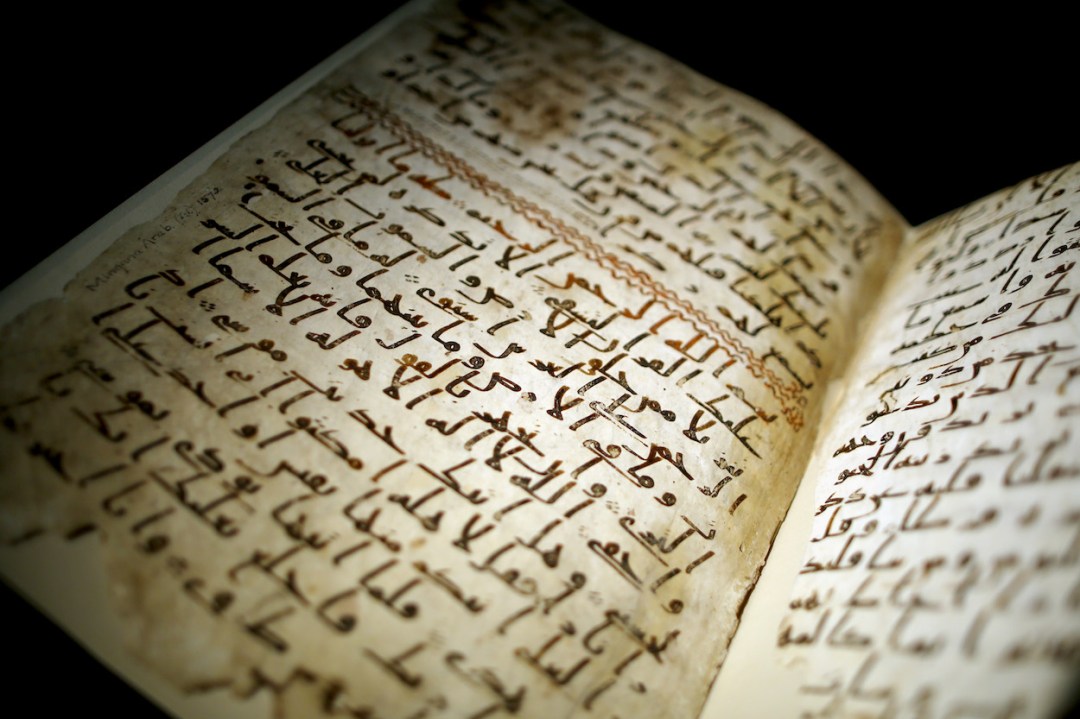
I did not come to Islam through theology. I came to it through fear, threat and hatred directed at me and the world I live in. I think the first time I became aware of something called Islam was in 1989, when Salman Rushdie was sentenced to death by Iran’s ‘Supreme Leader’ for writing his novel, The Satanic Verses. Images of furious men immolating books spread around the world and seared themselves into my childhood mind, fixing fear and confusion to something I did not yet know how to name. My father, a bookseller, insisted on continuing to sell the book, but decided, soberly, that it would have to be kept behind the checkout desk, available only if a customer asked for it by name.
My exposure to Islam grew as I did – through bombings justified in God’s name, through chants that promised erasure of my coreligionists, through the casual way anti-Semitism travelled across borders and languages wearing religious dress. Like many non-Muslim westerners of my generation, my first encounters with Islam were not in a library or a classroom but in the shadow cast by violence: the planes of September 11th, the suicide bombings of the early 2000s, the long years of jihadist attacks in Europe, and now October 7th and what followed. That history does not grant me or anyone else moral authority, but it does impose on us a responsibility. When an ideology repeatedly intrudes into people’s life uninvited, through bloodshed and intimidation, indifference ceases to be a neutral position.
Jews carry an inherited memory of what happens when a minority faith is blamed, caricatured, or collectively indicted, and liberal societies are built, rightly, on restraint, on the instinct to protect belief from suspicion. Criticising another minority’s religion feels perilously close to betraying those instincts. But October 7th and its aftermath intensified an inquiry that had already been running quietly for years. I have reported from the scenes of Islamic terror attacks around the world, from London Bridge to the Manchester Arena, the Bataclan and Le Petit Cambodge to the Brussels Metro, from Tel Aviv, Kibbutz Be’eri and others in between. As the cries of ‘Allahu Akbar’ echoed in the air, mass murder was followed by celebration. Children and journalists were murdered for satire or music. Rape was followed by denial. Jewish deaths were followed by caveats. Slogans promising elimination were waved away as metaphor. Attacks on non-Muslims in western cities were treated as regrettable spillover rather than ideological consequence. Again and again came the reassurance: this isn’t Islam.
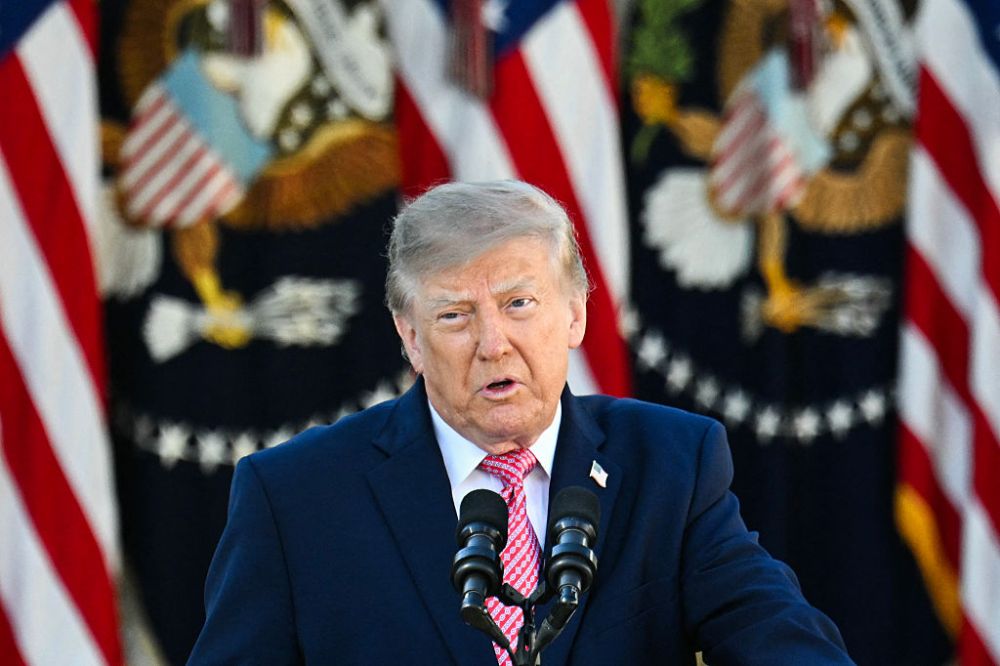
The claim itself is familiar and authoritative. Islamism, we are told, has nothing to do with Islam. Extremists are impostors. Their violence represents a distortion of a peaceful faith. Western leaders across liberal democracies have insisted on this distinction for more than two decades. In 2001, speaking at the Islamic Center of Washington, D.C., George W. Bush declared: ‘The face of terror is not the true faith of Islam. That’s not what Islam is all about. Islam is peace. These terrorists don’t represent peace. They represent evil and war.’ In 2014, Barack Obama declared that ‘Isil is not Islamic’. Theresa May spoke of ‘a perversion of Islam’ after the London Bridge attack. Emmanuel Macron described Islamist separatism as ‘a political ideology’ distinct from the religion itself. Anthony Albanese’s language after the Bondi Beach attack likewise emphasised unity and condemned extremist violence, framing the incident in terms of violent ideology, rather than detailed theological distinction.
This reassurance signals decency. It protects innocent believers from collective blame. It allows plural societies to breathe. But as an explanation, it is weak. Comforting language becomes fragile when it cannot bear explanatory weight. Islamism has emerged repeatedly across continents, cultures and generations. It has done so in majority-Muslim states and minority diasporas, in conditions of poverty and relative prosperity, under dictatorships and within democracies. It survives military defeat and rhetorical condemnation. An account that treats this recurrence as accidental strains credibility. An explanation that requires redefining millions of self-identified Muslims out of their own religion sidesteps the phenomenon.
Even many Muslims who oppose extremism reject that move. Several reformist voices I have spoken to insist that denying Islamists their Muslim identity is theologically incoherent and politically counterproductive. Others argue that once theology declares itself irrelevant to violence, the entire burden of containment falls on secular law and security services. The idea that Islamism is not Islam fails because it resolves anxiety rather than answering questions.
Those questions shaped several interviews I conducted over the past year for my podcast series. I deliberately sought out Muslims, ex-Muslims, scholars, reformers, former insiders, and survivors who disagree profoundly with one another, for in-depth, long-form discussions. These were not ‘gotcha’ conversations or exercises in moral exhibitionism. They were stress tests. I pressed where answers hardened into slogans. I asked the same question in different forms, sometimes to discomfort, sometimes to silence. Is Islamism an abuse of Islam, an authentic expression of it, or something uncomfortably in between?
What emerged were four broad frameworks to approach this question, each internally coherent, but each incomplete.
One answer treats Islamism as Islam applied without disguise once political power is available. Mosab Hassan Yousef, the son of a Hamas co-founder who later worked covertly with Israeli intelligence to prevent attacks, was the most uncompromising voice I encountered. Sitting with me in my home, he explained that Islam is not primarily a spiritual faith but a political and legal system, and that movements like Hamas are not distorting it but implementing it coherently. In his view, the illusion lies in ‘moderate Islam’, which he described as people already living outside the doctrine while retaining its label. Yasmine Mohammed, a Canadian activist who escaped an extremist upbringing and later a forced marriage, reached a similar conclusion through her own experience, rather than ideology. She argued that Islamism flows naturally from doctrines governing law, gender, obedience, and supremacy when taken seriously. For both, Islamism is not a corruption but a revelation.
Even well-meaning moderates are foot soldiers in a broader conquest
A second framework treats Islamism as a modern ideological mutation rather than a theological core. Dr Qanta Ahmed, a Muslim British-American physician who has practised medicine in Saudi Arabia, Pakistan, and post-Isis Iraq and examined forensic evidence from October 7th, described Islamism as a totalitarian ideology that mimics religion while hollowing it out. In her account, Islamism arises from within Muslim societies but operates like fascism: disciplined, transnational, and adept at capturing institutions and moral language. It draws on Islamic symbols because those symbols mobilise loyalty, even as genuine religious literacy collapses.
A third answer comes from reformist theology. Imam Paul Salahuddin Armstrong, a British convert to Islam, and Amir and Managing Director of the Association of British Muslims, argued that Islamism represents a deliberate misreading of scripture. Islamists, he said, extract fragments, ignore context, and weaponise grievance while abandoning Islam’s ethical tradition. His response lies in education, textual literacy, and firm secular law. Islamists are Muslims, he insisted, but what they do is a betrayal of Islam read holistically.
A fourth framework is structural rather than theological. Professor Mordechai Kedar, an Israeli scholar of Arab political culture and a former intelligence officer, treated Islamism as a civilisational dynamic. In his view, Islam does not separate religion from governance, and once demographic and cultural dominance emerges, political Islam follows regardless of individual intention. In his analysis, even well-meaning moderates are foot soldiers in a broader conquest. Reform, dialogue, and reinterpretation miss the point. Containment is achieved by denying Islamism the conditions under which it flourishes – something western societies struggle with today as it challenges their principles of tolerance, freedom and acceptance.
These positions contradict one another, but all agree on something: Islamism is real, organised and dangerous. More specifically, every person I spoke to about this subject, across every disagreement, treated Islamism as arising from within Islam’s civilisational and theological ecosystem, rather than arriving as an external contaminant. The argument was never about whether Islamists speak Islamic language, cite Islamic sources, and claim Islamic legitimacy. The argument was about what that reality means, and what obligations it imposes on everyone living under its shadow.
Armstrong refused the manoeuvre of removing extremists from Islam by linguistic fiat. When I asked him directly whether Salafist, Islamist, violent readings could be classed as Muslim, he answered in full: ‘If a person says they’re a Muslim, I can’t deny that. That’s between them and Allah. But at the same time, if they are doing things which are either criminal or worse, violent and extremist, I condemn what they do and I don’t see that as a true reflection of Islam or how a Muslim should be.’ He continued: ‘But like I said, I can’t deny. If we say that they’re not Muslims and play takfir [the act of declaring another Muslim an apostate] on them, that’s the game they play. I’m not going to get into that.’ His position leaves no route to denial.
Ahmed went further, because she treats denial as strategically dangerous. She explicitly addressed the post-9/11 instinct among leaders to declare Islamists outside the religion, and rejected it. ‘All Islamists would…say that they subscribe to Islam and describe themselves as Muslim. And I would not disagree with their description…they are coming from among us,’ she told me. She then underlined the point with a bluntness that no political leader has ever risked: ‘But I don’t deny that these individuals are Muslims. They’re part of Muslim society.’ Later in the same conversation she returned to it not just as a regrettable admission, but as a practical rule for liberal societies: ‘If an Islamist says that they’re Muslim, believe them, I can’t deny that they are Muslim. Do I think that they’re following the spirit of Islam? No. But if they say that they are Muslim, I have no choice but to believe them.’
Mosab comes at the same point from a harsher angle, and the significance lies in the direction of his criticism. He does not spend his time arguing that Islamists have mislabelled themselves. On the contrary, he argues that vast numbers of non-Islamist, self-described Muslims have detached their identity from the implications of the belief system they still claim. His wording is abrasive because he wants it to be. ‘You don’t believe in any of the values, you oppose all the values of Islam, but you still identify as a Muslim,’ he said, describing what he sees as the central psychological contradiction of modern Muslim identity, especially in the West. When I pressed him on whether this meant that moderate Muslims should, in effect, explicitly leave the religion, he said: ‘They are already out of Islam.’ Whatever one makes of the claim, it confirms the underlying premise: Islamism remains tied to Islam in his mind, and the burden of inconsistency sits elsewhere.
Yasmine’s account is less doctrinal in tone and more experiential, yet it converges at the same fault line. ‘The entire premise of Islam is wrong,’ she told me. Then she made the political point concrete, naming the mechanism by which scriptural ideology becomes governance: ‘The worst country in the world for women right now is Afghanistan – historically it’s always a Muslim majority country… because of all the Sharia they implement.’ The language around Sharia is not metaphorical for her. It is an operating system that, once installed, governs women first and then everyone. For her, Islam leaves little option: ‘One of the worst parts of Islam is the fact that it’s so totalitarian and it leaves no room for any kind of critical thinking, any kind of humanity really.’ She is blunt about her view of Paul Armstrong’s approach: ‘If somebody like Paul is saying, “No, it’s not a part of Islam. Those guys are just perverting our beautiful religion,” well, that’s just wrong.’ To prove it, she emphasises that the patterns seen across Muslim-majority countries are not accidental or marginal: ‘There’s a reason why when you look across these 57 Muslim majority countries, you’re seeing some very clear common threads.’ For her, Islamist practices follow Islamic edicts: ‘Yes, those people are following the edicts of Islam.’
‘I love my faith. But I’m against radical Islamists’
Loay Alshareef is a Saudi-born Muslim educator and public reformist who has built a large online following by challenging anti-Semitism and Islamist assumptions in Arabic and English. Having once absorbed those ideas himself, he now confronts them openly, arguing that Islamism must be rejected clearly and publicly from within Islam, not explained away or euphemised. He spoke to me as a believer, arguing for reform and moral courage, drawing an explicit line between his own faith and political Islam, framing it as a responsibility crisis within Muslim societies rather than a misunderstanding forced from outside. ‘I love my faith. But I’m against radical Islamists,’ he said. And he insists that moderation without speech becomes complicity: ‘Moderate Muslims now should speak up.’ Yet Alshareef does not pretend the problem floats free of Islamic institutions. ‘We have a problem in the mosques. We have a problem in the madrassas,’ he said, and he tied the issue to interpretative habits, not distant politics. ‘If these verses are taken to the literal meaning that they are applicable every time and everywhere, you would always have a problem.’
Kedar shares Loay’s emphasis on institutions and demographic power, while refusing the western habit of treating Islamism as some secret fringe plot. ‘Conspiracy has the meaning of something which is being done behind the scenes by all kinds of deception. No, this is being done openly,’ he said. Later he offered a definition that matters because it sets a boundary that liberal societies can actually legislate around. ‘Once you spread this, these ideas or others, once you want to implement it on others, you become Islamist,’ he said. In that formulation, Islam as personal devotion remains tolerable; Islamism begins at imposition on others.
So the interviews yield something that slogans obscure. Islamism sits inside the category of Islam as lived identity and as claimed authority, even when its legitimacy is contested. Some of my interviewees treat it as doctrinal consistency, some as ideological capture, some as deliberate abuse, some as a civilisational emergence. But none treat it as unrelated from the original religion. That recognition clears the ground. It forces the conversation away from reassurance and towards strategy.
So how do we respond? The first tool is internal moral confrontation, the Loay model: Muslims speaking plainly, refusing euphemism, refusing the insulation of silence. The strength of this response is that it can puncture the social taboo that protects hatred from scrutiny. Its weakness is that mosques, schools, networks, intimidation and money can overwhelm moral courage, especially in communities where dissent carries social and sometimes physical risk. Reformers often get killed.
The second tool is theological education and contextualisation, the Armstrong model: treating Islamism as deliberate manipulation and answering it with literacy. Its strength is that it engages the text that Islamists use. Its weakness is that ideological entrepreneurs can move faster than educators.
The third tool is institutional disruption and narrative clarity, the Ahmed model: naming Islamist ideology, mapping its networks, refusing to let it disguise itself as a mere religious minority while it works to ‘undermine the very democracy that gives you a home, food, shelter, a political voice’, which Ahmed calls ‘completely hypocritical behaviour.’ This approach offers a realistic diagnosis of how capture happens in the West: committees, councils, curriculum, grievance bureaucracies, intimidation through accusations of bigotry. Its weakness is that it can sound bloodless next to the religious heat that fuels the movement, and it risks fighting symptoms while the underlying theological plausibility remains available for reuse.
The fourth tool is civilisational containment, the Kedar model: denying Islamism the demographic and legal conditions under which it can harden into parallel authority. Its strength is that it treats the phenomenon as cumulative and therefore addresses the cumulative drivers. Its weakness lies in moral discrimination. It can struggle to protect the loyal minority from suspicion, and it can tempt the state towards broad-brush policies that punish integration alongside extremism. If even assimilated or moderate Muslims are part of a rising tide, albeit unknowingly, then even they pose a potential threat to civilisational drowning once the water has risen high enough for extremism to take control.
The first act of policy, however, should be honesty. A society cannot defend what it cannot name. A democracy cannot draw boundaries around an ideological threat while insisting, in public language, that the threat has no relationship to the religion whose symbols and texts it uses, and whose communities it recruits from. My interviews, taken together, point to a grimly practical conclusion: the problem demands protection of peaceful Muslims and confrontation of organised Islamism, at the same time, in the same breath, without resorting to fictions that dissolve under the slightest pressure.
These questions matter because western societies are already acting on assumptions about Islamism while refusing to name them. Institutions accommodate demands they would reject from any other ideology. Language shifts. Boundaries blur. Religious grievance is converted into moral currency and, increasingly, into administrative doctrine. Attempts to formalise concepts such as ‘Islamophobia’ illustrate the pattern: definitions so elastic that they risk collapsing hostility toward people into immunity for ideas, and prejudice into a shield against scrutiny. The result is not protection but confusion. Legitimate critique is chilled, while genuine hatred is neither isolated nor confronted. At the same time, public frustration curdles into suspicion, feeding movements that collapse critique into collective blame. Denial produces appeasement on one side and backlash on the other. Saying that Islamism draws on Islamic sources does not indict every Muslim.
This inquiry has never aimed to put Islam on trial. It asks whether our prevailing narrative has become a shield against thinking. Pretending the problem does not exist helps no one, least of all Muslims who resist extremism under pressures most westerners never face. If we cannot say what Islamism is, where it comes from, and how it relates to Islam itself, then we are not practising tolerance. We are practising negligence.
There is a pattern liberal societies struggle to acknowledge: every idea carries within it the conditions of its own failure when pursued without restraint. The enemy of an idea is often its excess.
Since the end of the Cold War, western democracies have increasingly mistaken moral absolutism for moral clarity. Good principles are treated as if they were exempt from limits, as if freedom, openness, transparency, and tolerance could only ever heal. Yet every intervention operates within a dosage range. Medicines cure at one concentration and poison at another. Political principles are no different.
This is visible in the way liberal states speak about Islamism. The insistence on total tolerance, applied without boundary or hierarchy, has produced a language that cannot name threats without apologising for doing so. ‘The word jihad has a number of meanings,’ said the Metropolitan Police, after a caliphate of clowns called for it on a London street not long after the October 7th massacre. The result is paralysis. Public debate fixates on protocols, optics, and disclaimers, while the underlying question of what preserves a free society remains unaddressed.
The problem is not that liberal values are wrong. It is that they are treated as self-executing. Strategy is assumed to flow automatically from virtue. Yet in reality it requires choosing which goods must yield in order to preserve others. It demands prioritisation, sequencing and limits. A society that refuses to rank its values ends up unable to protect any of them.
What is demanded, then, is the recovery of judgement of the application of liberal values
Islamism exposes this weakness with particular efficiency because it operates as an absolutist system confronting a relativist one. It does not negotiate. It advances. It exploits procedural openness, moral hesitation, and the fear of appearing discriminatory. It thrives in environments where ideology is mistaken for identity, and where questioning ideas is conflated with attacking people.
There is an uncomfortable symmetry here. Just as western liberalism falters when it becomes absolutist about tolerance, Islam falters when it becomes absolutist about doctrine. Islamism emerges where interpretative restraint collapses, where scripture is treated as total law rather than moral inheritance, and where compromise is recast as betrayal. As a comparatively young religion, Islam may yet develop stronger internal mechanisms of restraint, but that internal evolution may take generations. The pace of that evolution cannot dictate the safety requirements of the societies in which Islam now operates, and we cannot suspend our own safeguards while waiting for it. Plural societies must protect themselves against absolutism, not accommodate it. Otherwise, they will collapse.
What is demanded, then, is the recovery of judgement of the application of liberal values, the critical distinction being not theological but political. Belief as private devotion is compatible with a free society. Belief as imposed authority is not. When western states refuse to enforce that line they outsource coexistence to chance.
Societies fail when they treat their best ideas as untouchable abstractions rather than instruments of self-preservation. They endure when they remember that principles exist to serve human flourishing, not to override it, and that survival is not an embarrassment to liberalism but its precondition.





Comments