Jonathan Sacerdoti

Jonathan Sacerdoti

Jonathan Sacerdoti is a broadcaster and writer covering politics, culture and religion

For Jews, the Bondi beach shooting is grimly recognisable

From our UK edition

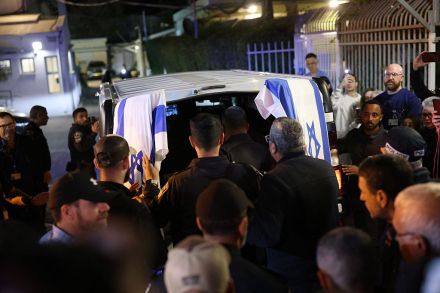
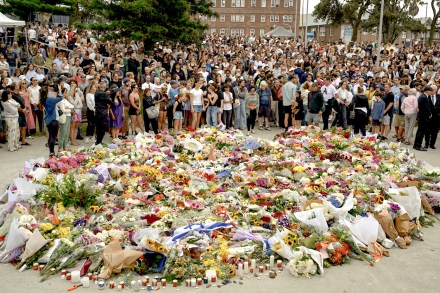
The attack at Bondi beach during a Hanukkah celebration, killing nine, has sent a fresh wave of horror through the Jewish diaspora. What might once have been regarded as unthinkable – a targeted assault on a Jewish gathering in the heart of a peaceful, democratic society – has now become grimly recognisable. It must be placed starkly within the context of a global surge in antisemitic violence. What might once have been regarded as unthinkable has now become grimly recognisable To grasp the scale of what is unfolding, one must look beyond Bondi. Australia has seen an alarming escalation of anti-Jewish violence throughout 2025.

Piers Morgan fell into Nick Fuentes’s trap

From our UK edition

When Michael Gove introduced me to Piers Morgan last week at the Spectator Christmas reception, Morgan seized my hand and beamed, ‘I know Jonathan. We're old friends.’ This was generous of him, not least because it isn't true. We'd met once before, briefly. But some months earlier I had written a critique of his YouTube show for The Spectator which, to judge by his response, he did not enjoy. He called me a ‘disingenuous twerp’ on X and blocked me there. He then wrote a piece in the magazine entitled, ‘In defence of Piers Morgan, by Piers Morgan’. I mention this not to litigate any grievance, but in the interest of full disclosure. Fuentes thrives on provocation. His method is not to win the argument but to distort its shape.

The BBC’s anti-Semitism training is an offensive parody

From our UK edition

The BBC has unveiled its compulsory training course for all staff on how not to be racist to Jews. I completed the online module and found it laughable, feeble and entirely beside the point. This isn’t education. It’s parody. A cartoonish exercise in HR-driven pseudo-virtue, dressed up as moral instruction. I have written before that if one were writing a sitcom about the modern BBC, and wanted to script a scene satirising its institutional absurdities, one might invent a plotline in which a woke producer commissions a documentary about the children of Gaza and secretly casts the 13-year-old son of a Hamas minister as its narrator. As we know, that’s exactly what the BBC did.

Marwan Barghouti isn’t the ‘Palestinian Mandela’

From our UK edition

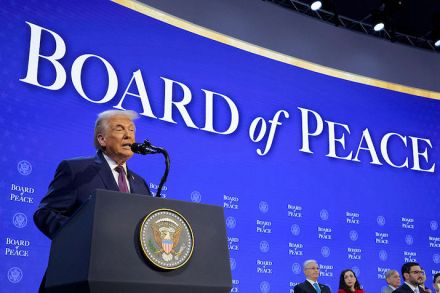
Some scoffed when Donald Trump thought to tap Tony Blair’s decades of involvement in the Middle East for his future plans in Gaza. Perhaps they were right to. But not to worry: the global search for strategic wisdom has now been resolved. The path to peace lies not through seasoned statesmen or regional experts, but through the collective judgment of Delia Smith, Stephen Fry, Benedict Cumberbatch, and naturally, Gary Lineker. They are joined by Mark Ruffalo, Tilda Swinton, Simon Pegg and a list of figures known for their contributions to film, fiction, and light entertainment: people with no background or expertise in jihadist Islamic terror movements, counter-extremism, Middle Eastern politics, or international law.

Nigel Farage must come clean about his Dulwich College schooldays

From our UK edition

The allegations concerning Nigel Farage’s conduct as a schoolboy have returned with unusual force, not because the country is suddenly preoccupied with the internal sociology of Dulwich College, but because Farage now leads a party that sits at the centre of the national debate. Any claim about his past, however old and recycled, is inevitably refracted through the lens of present politics. The BBC reports, the Guardian testimonies, and Farage’s own responses raise a set of questions that extend far beyond the details of adolescent behaviour. They touch on character, trust, political identity and the delicate task facing any new political movement seeking broad public legitimacy.

The revelations about what the Gaza hostages suffered are the most painful yet

From our UK edition

The Israeli hostages recently freed from Gaza have begun to speak, and among the new revelations is that some were subjected to sexual assault and degradation, including male hostages. They describe being stripped, groped, violated, and threatened at gunpoint. The scale and cruelty of what they endured should have triggered sustained, front-page attention in the UK, not least on the BBC. But it has not. The testimonies began surfacing in recent weeks. Rom Braslavsky, seized by Palestinian Islamic Jihad while recovering the bodies of murdered women at the Nova music festival, described being stripped naked and left that way for days. 'They took all my clothes. Underwear too. Everything. They tied me up from my... while I was completely naked. I was torn apart, starving, naked.

A lethal standoff is playing out deep beneath Gaza

From our UK edition

In 1929, René Magritte painted a picture that has since become iconic in both art and philosophy. The Treachery of Images depicts a finely detailed tobacco pipe with a caption beneath: Ceci n’est pas une pipe – 'This is not a pipe'. Magritte’s point is subtle and enduring. It is indeed not a pipe, but an image of one. You cannot fill it with tobacco, light it, or smoke it. It is a representation, not the object itself. Israel manoeuvres within it, cautiously. Hamas exploits it, selectively. Saudi Arabia nods along, calculating Magritte was exploring the gap between signifier and reality, between the name and the thing named. His visual paradox is echoed in Alfred Korzybski’s famous aphorisms: 'The word is not the thing…The map is not the territory.

What Trump’s Gaza peace plan means for Israel

From our UK edition

This may not be the conclusion Israel imagined when it launched its campaign in Gaza. Not all the hostage bodies are home. Hamas is bruised, but not broken. The region remains volatile. Yet even as combat continues, the United Nations Security Council, backed by an American administration long assumed to be 'pro-Israel', yesterday endorsed a resolution that places an armed international force in Gaza, sketches a vague pathway to Palestinian statehood, and outlines a governing arrangement in which neither Israel nor the Palestinian Authority is central. For Israel this is a moment of profound uncertainty – a reminder that military operations, however successful, do not automatically dictate the shape of the political landscape that follows.

The rot at the BBC runs far deeper than Tim Davie

From our UK edition

The resignations at the top of the BBC mark a critical juncture for an institution long seen as a pillar of British public life. Yet their departures, while welcome, are insufficient. The BBC’s failure is not confined to the mistakes of individual executives. It is institutional, entrenched, and long overdue for a reckoning. The BBC has repeatedly blurred moral lines on Israel and antisemitism Unlike privately funded media outlets, be it GB News, Talk, The Spectator, the Daily Telegraph, or the Daily Mail, the BBC is funded by coercion. Britons are compelled by law to finance its operations if they own a television, regardless of whether they watch or endorse its content.

The looming threat to Israel

From our UK edition

In the aftermath of war, a new front opens. Not in the ruins of Gaza’s cities, but in the corridors of diplomacy, where maps are redrawn with words and allegiances. Israel now finds itself encircled not by tanks but by treaties, resolutions, and incentives: a web of international manoeuvres that promises ‘stability’ while redefining the terms of its own strategic freedom. At the centre of this recalibration is the United States, whose post-conflict blueprint projects a pacified region steered by pragmatism, compromise, and multilateral oversight. But beneath the rhetoric of reconstruction lies a more perilous logic: one that treats deterrence as destabilising, ambiguity as maturity, and the survival instincts of a sovereign state as obstacles to a larger design.

Hamas’s return is revealing Gaza’s true colours

From our UK edition

Remember that weird little Covid ritual of 2020, when every Thursday at 8pm people stepped out onto their doorsteps and applauded? Banging saucepans, clapping their hands, they lit up the miserable skies with cheers for the National Health Service. It was mawkish, and orchestrated to the point of theatre. But its aim was to express a kind of collective gratitude for those who had become the most visibly important figures in the national story. Nurses and doctors were held in the highest esteem. They were ‘society’s best’. That’s why all those people applauded. Crowds of Palestinian Arabs whooped and whistled, and filmed on their smartphones.

Activist silence over Sudan speaks volumes

The city of El Fasher, long a symbolic and strategic stronghold in Darfur, has in recent days become the site of atrocities so grave that the United Nations has openly warned of the risk of genocide. Videos reviewed by the Office of the High Commissioner for Human Rights show scores of unarmed men executed in cold blood, some lying dead at the feet of Rapid Support Forces fighters, others dragged off and detained. Journalists and aid workers have disappeared. The last remaining functional hospital was shelled, killing patients and staff. The Saudi Maternity Hospital, once a rare lifeline, is now a mass grave.

Sudan

Hamas is testing Israel’s patience

From our UK edition

In the wake of yet another rupture in the fragile ceasefire between Israel and Hamas, the region finds itself suspended in an unstable equilibrium – tense, volatile, but for now, deliberately held back from tipping into open war. On Tuesday, Hamas terrorists launched a coordinated double attack against Israeli troops operating inside the designated 'yellow zone' in Rafah – territory under clear IDF operational control. First came sniper fire, killing Master Sergeant (Res.) Yona Efraim Feldbaum. Minutes later, anti-tank missiles struck an engineering vehicle.

Hamas’s hostage remains deception is a new low

From our UK edition

The grotesque return of a body part falsely presented as one of Israel’s remaining hostages marks a new low in Hamas’s campaign of calculated cruelty. Israeli authorities confirmed today that the casket transferred by Hamas did not contain the remains of any of the 13 captives whose remains are still known to be in Gaza. The part belonged instead to Ofir Tzarfati, a 27-year-old abducted from the Nova music festival and buried in Israel last December. Ofir’s body had already been recovered and laid to rest in Kiryat Ata. His headstone, chosen by his grieving family, bore a line that now seems almost unbearably tragic: 'You were a world and a fullness of love for life and humanity.

The Palestinian question can no longer be ignored

From our UK edition

The war in Gaza has not ended; it has changed its shape. What began as a brutal confrontation has now hardened into a political and geographic experiment, one whose contours may define the region’s next decade. Beneath the surface of ceasefires and reconstruction plans lies a deeper transformation: the reappearance of the Palestinian question, after years of deliberate absence, as a central axis in the regional and global conversation. For nearly two decades, Israel and much of the Arab world succeeded in marginalising that question. Strategic normalisation, economic incentives, and the pursuit of calm made it possible to sustain the illusion that the conflict could be frozen indefinitely. That illusion has collapsed.

The searing testimony of Eli Sharabi

From our UK edition

Now that the remaining live hostages have been freed, and the remains of those killed are slowly being located and returned to their families, we can think more on the details, the testimonies, and the traumas which we couldn’t fully comprehend as the war raged within our minds. Those former hostages now search for recovery and familiarity back home, as they emerge into a world vastly and for ever changed. The same is true for those of us who have never spent a day in a filthy, airless Palestinian tunnel. We didn’t experience the fear, the violence, the hunger or the torture they did. But our world, too, has shifted on its axis, jolted into a different rotation. It will never be the same again.

The Gaza ceasefire isn’t broken

From our UK edition

The ceasefire in Gaza, barely settled just six days ago, has already been tested. Hamas was accused of violating the deal by firing rocket-propelled grenades and sniper fire at Israeli forces while the US warned the terror group was planning an ‘imminent’ attack on Palestinian civilians. In response, Israel struck a wave of targets within the Gaza Strip, reportedly killing at least 11 people. It was a swift and forceful retaliation, prompting immediate speculation: is the war back on? Not necessarily. What unfolded in Gaza this morning bears a structural resemblance to events on the northern front nearly a year ago. In the days following the November 2024 ceasefire with Hezbollah, the Lebanese militia launched two mortars at Mount Dov.

Thank God for Donald Trump

From our UK edition

Imagine, for a moment, the world we narrowly escaped. A world in which Joe Biden, frail and fading, remained in the 2024 presidential race and, with the exhausted assent of a compliant media and a protective establishment, was returned to the White House. A world in which his decisive televised collapse never quite happened or was quickly obscured. In this alternate reality, Biden staggered through the campaign and secured just enough ground to claim victory.

The relief, joy and grief of Israel’s hostage homecoming

From our UK edition

This morning in Israel began like no other: layered, dissonant, momentous. A collision of spectacle and salvation, of grief and hope, of noise and meaning. It was a morning composed of many parts: part show, part hope, part illusion, part bluster, part redemption, part commercial deal, part peace plan, part threat, part diplomacy, part war. For a few hours, all those contradictions briefly aligned to form a kind of harmony. They may yet fall apart again but, for now, they have converged in one extraordinary sequence of events. Palestinians not aligned with the regime’s grip are being hunted down, tortured, and silenced On one side of the news screen, Donald J.

The real Gaza deal unfolds in the next 72 hours

From our UK edition

The machine is beginning to turn. The ceasefire agreed between Israel and Hamas, brokered with the direct involvement of President Trump, his envoy Steve Witkoff, and adviser Jared Kushner, has now formally taken effect. Hostages are not yet returned, but the mechanism for their release is in place. According to the agreement, Hamas must release all 20 living hostages within 72 hours. The countdown has begun. Hamas must release all 20 living hostages within 72 hours. The countdown has begun Israel is redeploying troops along new lines in accordance with the terms. American forces, around 200 personnel, are arriving in Israel to support a joint control centre intended to coordinate humanitarian logistics and the entry of international actors into Gaza.