
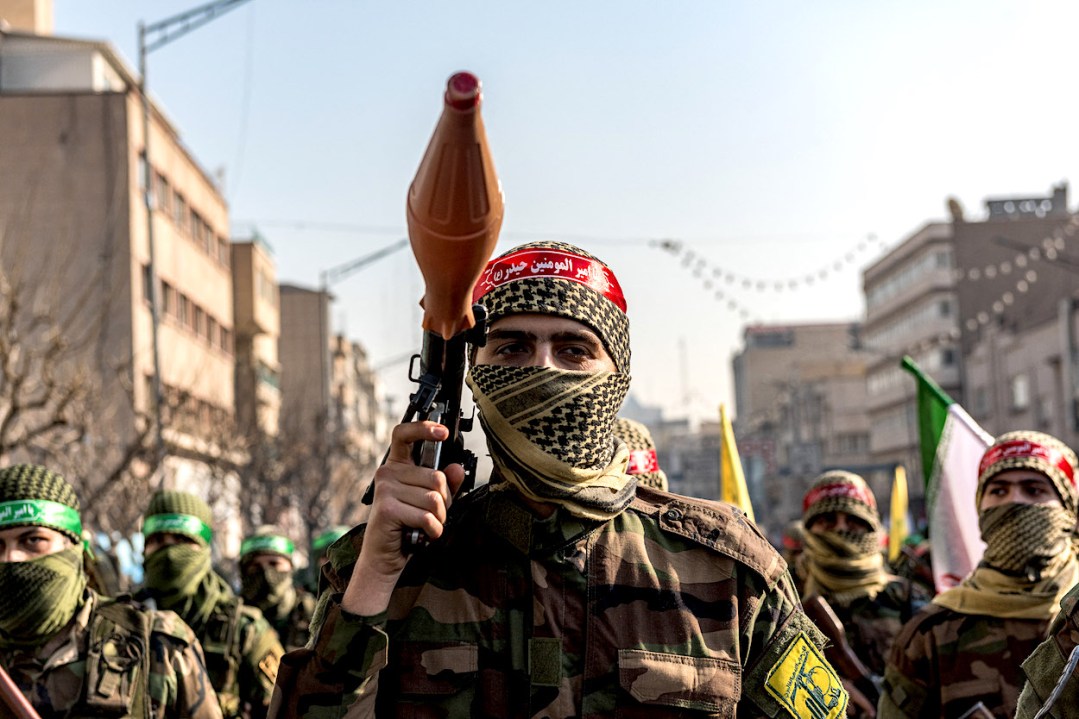
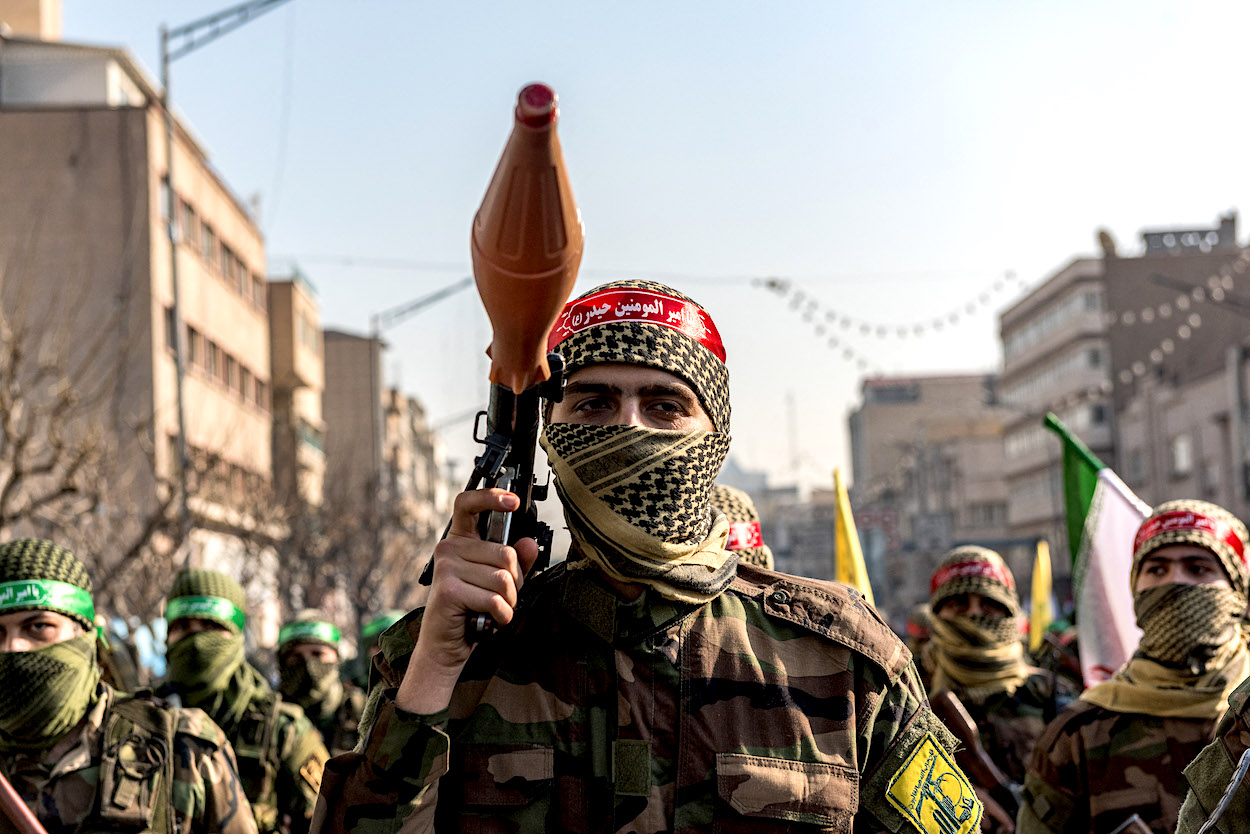
The European Union has finally done what it long argued it could not. Yesterday, the bloc formally designated Iran’s Islamic Revolutionary Guard Corps as a terrorist organisation, placing it in the same legal category as al-Qaeda and Islamic State. The decision was framed by Europe’s foreign ministers as a response to mass repression, extrajudicial killings and the systematic use of terror by the Iranian state against its own population. ‘Repression cannot go unanswered,’ said Kaja Kallas, vice-president of the European Commission, announcing the move.
It was not a symbolic flourish. The designation means the EU can now freeze assets, assign criminal liability and enforce travel bans. It signals, at least on paper, that Europe has accepted a basic reality: the IRGC is not a conventional military force but the Iranian regime’s primary instrument of internal repression, regional violence and transnational intimidation. What took them so long?
Iran’s formal response to the EU designation was delivered through ministries and generals: denunciations, threats of ‘consequences’, and claims that Europe is subservient to Washington and Israel. Meanwhile, Iranian state-aligned media escalated the rhetoric. Kayhan, a mouthpiece closely associated with the so-called Supreme Leader’s office, openly threatened to sink American ships and close the Strait of Hormuz. Days later it announced live-fire naval drills that would disrupt shipping. None of it fooled anyone.
But where does Britain now stand?
The United Kingdom, having left the European Union in order, among other things, to pursue an independent foreign and security policy, remains conspicuously outside this decision. At least ministers are now signalling that the IRGC should be proscribed, with legislation being prepared to facilitate that. Briefings have begun, but the problem is time. The organisation is still legal on British soil. So is the Muslim Brotherhood, by the way. If Brexit was sold as a means of restoring sovereignty and strategic clarity, few of its proponents can have hoped independence would translate into a posture that is slower, softer and more permissive than that of Brussels.
David Lammy condemned Iran’s ‘brutal oppression’ this week, but initially reaffirmed the government’s long-standing line that it does not comment on whether specific organisations are being considered for proscription – a formula designed to sound serious while committing to nothing. The contrast with the EU’s decision could not be starker. Separately, the government finally confirmed yesterday that new powers are being drafted to allow the proscription of hostile state agencies, including the IRGC. But those same briefings emphasised that the legislation will not be fast-tracked and is not imminent.
This gap matters because declarations without enforcement change little. Terror designations derive their force from coordinated action by banks, regulators, shipping authorities and intelligence services. Without that machinery, sanctions become theatre. Britain has refined the language of moral outrage while allowing process to substitute for action. Our systems are exposed, our financial markets open, our legal thresholds conveniently distant. Westminster has moved cautiously in the past partly because successive US administrations have quietly valued the British embassy in Tehran as a channel for indirect communication with the regime, but any such argument for caution has well and truly been outrun by events. There have been numerous Islamic Republic murder and terror attempts on British soil; we have seen the horrific slaughter of Iranian protestors over recent weeks in Iran.
The consequences are visible in London itself. The ‘Islamic Centre of England’, based in a former cinema in Maida Vale, west London, remains operational. Everyone in Westminster knows what it is. Regulators know. Neighbours know. Journalists know. Iranian dissidents certainly know. It functions as an institutional hub of Iranian state religious and political influence in Britain, with documented links to the Supreme Leader’s office and a record of activity aligned with regime narratives. It has been investigated, warned, temporarily closed and then allowed to reopen. Its continued presence speaks volumes about the limits of British resolve.
At the same time, Britain is being used as a safe deposit box for the regime’s elite. A recent Bloomberg investigation by Ben Bartenstein detailed how Mojtaba Khamenei, the Supreme Leader’s son and a pivotal figure in Iran’s power structure, has built a sprawling overseas property and investment network. London features prominently. Mansions, shell companies, compliant intermediaries, western banks. Oil money flows out while Iranians are left with worthless currency. Europe moves to blacklist the IRGC. Britain hosts the beneficiaries of the system it claims to oppose. It is shameful.
All of this is unfolding against a rapidly hardening military backdrop. The United States continues to pour forces into the region: missile destroyers, electronic warfare aircraft, airborne command platforms. The language coming from Washington is increasingly explicit. Unlike June’s stealth bomber mission, this is meant to be seen clearly and in advance. It is meant to focus minds.
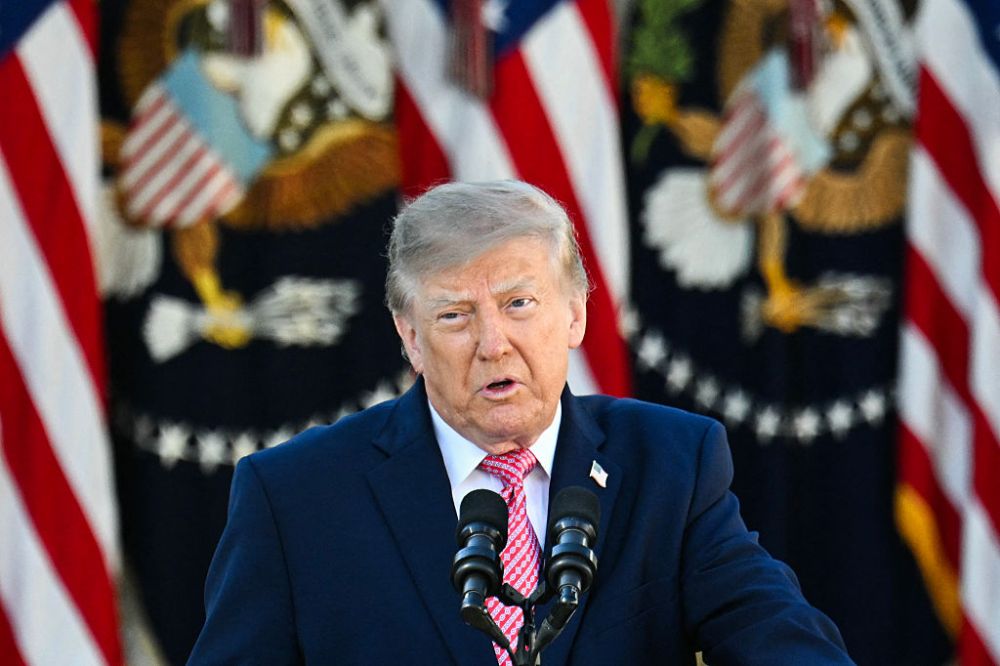
Yesterday, I interviewed Colonel Richard Kemp for my podcast series. A former British Army colonel with command experience in Northern Ireland, the Balkans, Iraq and Afghanistan, and later a government adviser on counter-terrorism, Kemp understands how quickly signalling can collapse into action. The last time we met, in June, we ended up together in a bomb shelter in Tel Aviv as Iranian ballistic missiles rained down during the Twelve-Day War. Speaking to me on Thursday, Kemp was blunt about the uncertainty ahead. Decisions of this magnitude, he said, are known only to Donald Trump and Benjamin Netanyahu. Everyone else is guessing. But he added that President Trump is unlikely to assemble a force of this magnitude without serious intent, pointing to past cases where military build-ups were followed by action.
Iranians have paid an appalling price for protesting
Iran’s own posture reflects both belligerence and strain. The regime talks loudly while its currency collapses. Yesterday morning, the Iranian rial opened trading at roughly 1.67 million to the US dollar, down around 16 per cent since Sunday. Its internet remains throttled. Three weeks after access was cut, connectivity has been only partially restored and confined largely to regime-approved, heavily filtered websites. Most Iranians still cannot browse the internet freely, and there has been no meaningful surge in protest videos emerging from the country. The regime announces naval drills and threatens to close the Strait of Hormuz, gambling with global energy flows. It insists it controls the battlefield while preparing contingency plans for ‘all enemy scenarios’. This is the language of a system in chaos and under pressure.
That pressure is also mounting from below. Iranians have paid an appalling price for protesting, with credible reports of mass killings in the streets and thousands more detained. They are not fooled by legislative timetables or procedural caution. They know who holds power, and who delays action against it.
The Middle East is again on the edge. Israelis are braced for the possibility of more nights and days in bomb shelters. I experienced that rhythm myself during the last war with Iran: the sirens, the dash to the mamad, the sense of time being organised into intervals between impacts. Even with extensive protective civil facilities and broad home-front compliance, 28 civilians were killed. America is signalling resolve to allies and adversaries alike, determined to show that, under Donald Trump’s leadership at least, its warnings carry weight.
No one can say which scenario will unfold, or where it will end. But one thing is already clear. In a moment of sharpening lines and hard choices, Britain is currently positioned awkwardly, talking tough while acting timid. Europe has moved. Others have acted. We are left explaining why the IRGC remains legal here, why regime influence hubs continue to operate openly, why London still serves as a refuge for the architects of repression while Parliament drafts. History is rarely patient with such timing.




Comments