Jim Lawley

Jim Lawley is a former university lecturer who has lived and worked in Spain for 40 years.

The peculiar ritual of Spain’s Christmas lottery

From our UK edition

Half of Britain is said to have watched The Morecambe and Wise Christmas Show in 1977. Spain’s Christmas lottery, broadcast live to the nation each year on the morning of 22 December and marking for many the start of the holidays, is a similar moment of national unity. Spaniards everywhere down tools, watching with bated breath as lives throughout the country are transformed. Lottery tickets are untraceable so previous years have seen furtive-looking men carrying suitcases full of banknotes descend on bars, lottery outlets and banks This year the television cameras and the giant spherical cage containing thousands of numbered wooden balls will be in place as usual.

Why are the Spanish so loyal to the EU?

From our UK edition

An upright Englishman, some years after marrying into a Spanish family, finally breaks his cardinal rule. In a moment of sudden daring at an extended family lunch, he challenges the totem of the Spanish renaissance: the Euro. The stunned silence that follows this blasphemy is filled by one of his in-laws: ‘Aha! Just what I expected... I know exactly what you are... You’re an euroescéptico!’ ‘Eh-oo-ro-es-THEP-ti-co’, she repeats slowly, each of the seven syllables a hammer blow to the poor Englishman’s standing. As this scene from the novel Spanish Practices suggests, the Spanish people’s faith in the European Union is often as blind as it is widespread – not a breath of criticism is permitted.

Pedro Sanchez’s grubby deal to stay in power

From our UK edition

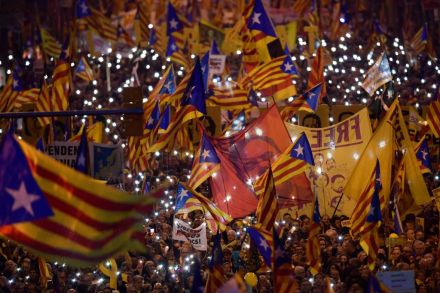
In 2017 the Catalan premier, Carles Puigdemont, having first organised an illegal referendum and then declared unilateral independence from Spain, escaped arrest by hiding in the boot of a car. While other Catalan leaders went to prison for sedition, Puigdemont fled to Belgium where he’s spent most of the last six years living comfortably in self-imposed exile. Now he’s preparing to make a triumphant return to Spain as a free man. The socialist prime minister, Pedro Sánchez, who has just been officially re-elected, has granted an amnesty to Puigdemont and hundreds of others facing fines and imprisonment for their part in that push for independence. Sánchez had previously promised the Spanish people that such an amnesty was impossible.

The Catalan volte face that has disgusted Spain

From our UK edition

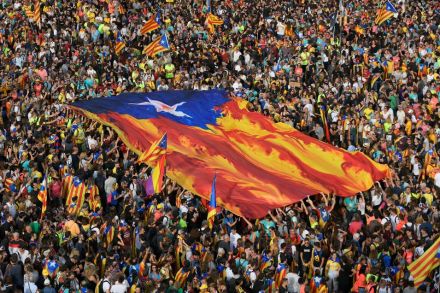
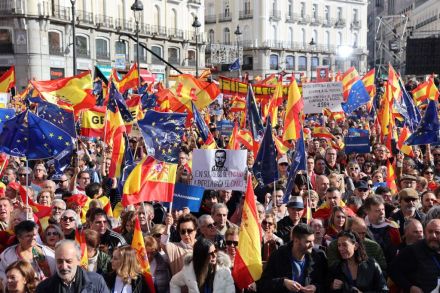
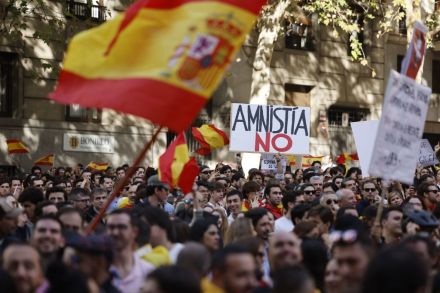
This weekend saw protests across Spain after the acting prime minister, socialist Pedro Sánchez, agreed to a general amnesty for Catalan separatists in return for parliamentary votes to enable him to stay in power. The amnesty will benefit hundreds of separatists facing fines or imprisonment for their involvement in the illegal referendum on independence for Catalonia in 2017, the subsequent unilateral declaration of independence and the concomitant street violence. There have been nine consecutive nights of often violent protest outside the socialist party’s headquarters in Madrid. But Sunday’s demonstrations, convened by the conservative opposition, held at noon in over 50 Spanish cities and attended by hundreds of thousands, were peaceful.

Spaniards are horrified by an amnesty for separatists

From our UK edition

When has a government ever offered an amnesty to fugitives from justice in order to stay in office? That’s what’s happening in Spain at the moment. Following July’s general election the only way in which the caretaker prime minister, the socialist Pedro Sánchez, can cling to power is by cutting a deal with a hodgepodge of small parties, including two Catalan separatist groups. Their price includes a general amnesty for those indicted for their involvement in the illegal referendum on independence for Catalonia in 2017 and the subsequent unilateral declaration of independence. In July’s election Sánchez’s left-wing party, PSOE, won just 121 seats.

Can Spain’s monarchy survive?

From our UK edition

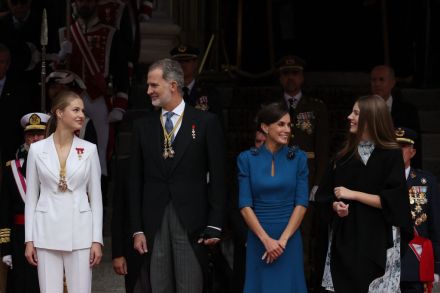
‘We, who are as good as you, swear to you, who are no better than us, to accept you as our king and sovereign lord, provided you observe all our laws and liberties; but if not, not.’ This famous oath of allegiance, sworn hundreds of years ago by the noblemen of Aragon in northern Spain to their king, also neatly expresses the transactional attitude of many contemporary Spaniards to their monarchy. They were willing to accept the restoration of the Bourbon dynasty as part of the post-Franco democratic settlement provided the king deserved their loyalty – but if not, not. And for many, the alleged misdemeanours (personal and financial) of ex-King Juan Carlos mean that he broke that covenant and so forfeited his right to their loyalty.

The secret to learning a language quickly

From our UK edition

Becoming proficient in a so-called ‘easy’ language (for English speakers, French is relatively easy) often takes hundreds of hours; a difficult language (Mandarin anyone?) takes several thousand. That’s good for language teachers, but not so good for the learners.  Language teaching today is where medicine was in the 18th century Even after putting in all those hours of following an expensive course, many people never become proficient. How can so much time and effort amount to such little progress? Language learning happens inside the brain, making the processes involved difficult to observe and understand – that’s why language teaching today is where medicine was in the 18th century, and why, all too often, language lessons are associated with failure.

What to do about rude words in Scrabble

From our UK edition

‘Nice,’ my junior school teacher once surprised the class by announcing, ‘isn’t nice.’ We shouldn’t, Miss Morris went on to explain, describe food as ‘nice’ but instead as ‘tasty’, ‘delicious’ or perhaps ‘tempting’. Similarly, rather than saying that a person is ‘nice’ we should indicate in what way they are nice, describing them for example as ‘charming’, ‘generous’, ‘thoughtful’ or ‘drop dead gorgeous’. All scatological terms will only score half points (but anyone who adds ‘scato-’ to the front of ‘logical’ obviously deserves bonus) Well, she didn’t say that last one. In fact, she rather had it in for the word ‘gorgeous’.

The quiet thrill of moss hunting

From our UK edition

Did you know that an expert on mosses is called a bryologist? And did you know that there are 754 species of moss in The British Isles? No? Well then you can be forgiven for not knowing that my brother, Mark, I write with pride, recently discovered another moss – number 755 – new not only to The British Isles but also to science. Only about 40 naturalists actively study mosses in Britain Poking around along the banks of the River Camlad (the only river, I’m told, that flows from England into Wales) in Montgomeryshire, Mark came across an unfamiliar plant growing in dispersed patches on a riverbank at the edge of a pasture.

Spain’s controlled anarchy

From our UK edition

Life expectancy in Spain is 83 years – amongst the highest in the world. Deep, trusting relationships with family and friends surely contribute to this longevity. Orwell emphasised the ‘essential decency’ of the Spanish people, ‘above all, their straightforwardness and generosity. A Spaniard’s generosity, in the ordinary sense of the word, is at times almost embarrassing … And beyond this, there is generosity in a deeper sense, a real largeness of spirit, which I have met with again and again in the most unpromising circumstances.

When will Spain’s political paralysis end?

From our UK edition

Sunday’s general election in Spain was supposed to answer the question: will Spain be governed for the next four years by a right-wing coalition or by a left-wing coalition? If the question was easy to understand, the answer certainly isn’t. Like the four previous general elections, this one was inconclusive – only even more so.  The right-wing Partido Popular won 136 seats and Vox, even further to the right, won 33, giving a Partido Popular/Vox coalition a total of 169 seats – fewer than most polls had predicted. Unfortunately for the just over 11 million Spaniards who voted for these two parties, this leaves them seven seats short: in a 350-seat parliament, 176 is the number needed for a majority.

How Spain’s politics succumbed to radicalism

From our UK edition

If Spain’s left-wing government loses tomorrow’s general election, thousands of people including many senior civil servants stand to lose their jobs. Their positions are discretionary; if the political masters change, so do the personnel. When the left took office in 2018, for example, an estimated 6,000 public servants were fired, including several hundred advisers. The incoming Prime Minister Pedro Sánchez also put trusted supporters in charge of the state-run broadcasting company, the Paradors (a chain of state-owned hotels) and the social research organisation that organises opinion polls. Not surprisingly, its polls have been biased to the left ever since.

Can Spain forgive Pedro Sánchez?

From our UK edition

Voters in Spain’s general election on 23 July have a clear-cut choice. They can choose to continue with the left-wing coalition currently in power or they can replace it with a staunchly right-wing government. Since 2019 Spain has been governed by a minority coalition consisting of PSOE, Spain’s main left-wing party, with 120 seats, and Podemos, further to the left, with 35. With a total of only 155 of the 350 seats in the national parliament, in order to pass legislation the left-wing bloc has had to seek ad hoc support from various regional parties, including Basque and Catalan separatists.

What the rise of Vox means for Spain

From our UK edition

Vox, the most right-wing of Spain’s mainstream political parties, has emerged considerably strengthened from Sunday’s local and regional elections. With the left-wing vote slumping badly, the Partido Popular, the largest right-wing party, also had an excellent night, but crucially it will need the support of Vox to govern in many regions and town halls.          These elections then suggest that Vox may be a highly influential (albeit junior) partner in the central government after the general election which, it has just been announced, will be held on 23 July. At present it is the third-strongest party in the national parliament with 52 of the 350 seats, while the Partido Popular is the second-strongest with 88 seats.

Spain’s shift towards the radical right

From our UK edition

Yesterday’s snap election in Castile-León, one of the 17 regional autonomies into which Spain is divided, was another excellent day for Vox, the most right-wing of Spain’s mainstream parties. Vox, which previously had just one seat in the 81-seat regional assembly, now has 13 and holds the balance of power. Vox’s success prevented the Partido Popular, which has governed in Castile-León for over three decades, achieving an absolute majority (41 seats or more). Instead after winning only 31 seats, the Partido Popular, Spain’s main party of the right, said it would begin discussions with all the parties.

Can Spain save its dying villages?

From our UK edition

In a little village on the Spanish Meseta, I once asked an old lady about the next village some three or four miles away. She shook her head as if considering a hopeless case and said, 'Oh, the people there are very different.' To me, those villages seemed like two peas in a pod. But to her, they were worlds apart. Spaniards often refer to their home town or village as their patria chica: the little fatherland. 'Every village, every town,' wrote Gerald Brenan in The Spanish Labyrinth, 'is the centre of an intense social and political life. As in classical times, a man’s allegiance is first of all to his native place, or to his family or social group in it, and only secondly to his country and government.

Bronze is the best medal

From our UK edition

In the 50-kilometre walk at the 1948 Olympics, the gold and silver medallists were aged 28 and 33 respectively. The man who took bronze, Britain’s ‘Tebbs’ Lloyd-Johnson, was 48 years old. Still the oldest person ever to win an Olympic track and field medal, Tebbs is now more famous than the men who finished ahead of him. Another British bronze at those 1948 London Olympics was also worth more than most gold medals. Just three years previously when released from forced labour in a Japanese prisoner of war camp, weightlifter Jim Halliday had weighed a skeletal six stone (38 kg).

Spain’s growing culture war over General Franco

From our UK edition

There are hundreds of mass graves dotted around the Spanish countryside. In roadside ditches, down hillside gullies, dumped in pits and down disused wells lie thousands of bodies: civilians murdered in cold blood by Franco’s death squads during the civil war that convulsed Spain between 1936 and 1939. Over the nearly forty years of Franco’s dictatorship, few spoke of what had happened during the war; silence and selective amnesia were safer. And even when Franco died in 1975, the overriding priority was the transition to democracy. The old Francoist establishment indicated that it would make way for the new era — provided that there was no digging up of the past and no reprisals. Spaniards were happy to look to the future.

Spain’s pardoning of Catalan separatists may backfire

From our UK edition

In one of his adventures on the highways of 17th-century Spain, Don Quixote encounters a gang of prisoners ‘manacled and strung together by the neck, like beads, on a great iron chain'. Undeterred by Sancho’s protestations that these are criminals on their way to serve as galley slaves in just punishment for their crimes, Don Quixote, declaring that it is his duty as a knight errant to provide ‘succour for the wretched’, fights off the guards and frees them. In something of the same spirit, Spain’s prime minister has just announced a pardon for Catalan separatist leaders. Nine politicians, serving sentences of up to 13 years for offences including sedition, are now to be released after almost four years in jail.

Is this a new dawn for the Spanish right?

From our UK edition

In Tuesday’s regional elections in Madrid, the right-wing Partido Popular emerged as by far the most successful party, more than doubling its representation to win 65 of the 136 seats in the assembly. Isabel Díaz Ayuso, the 42-year-old local Partido Popular leader who was seeking re-election, won more seats than the three left-wing parties combined. Vox (13 seats), the most right-wing party on the Spanish political spectrum, has already promised Ayuso the support she needs in order to govern. Despite not quite delivering an outright majority, Ayuso’s bold decision to call the snap election has clearly paid off.