Jim Lawley

Jim Lawley is a former university lecturer who has lived and worked in Spain for 40 years.

Juan Carlos’ exile may not save the Spanish monarchy

From our UK edition

In the ‘bad bank’ model, a bank protects itself by dumping its toxic assets onto a second, newly-created institution. By taking the problems off its books, the first bank hopes to restore its reputation and financial health so that it will be able to carry on business as usual. The Spanish monarchy has just carried out an analogous operation. The 82-year-old former king, Juan Carlos I, who reigned for 38 years until his abdication in 2014, has gone into exile because, as he explains in his farewell letter, of the ‘public repercussions of certain episodes in my private life’. The ‘episodes’ have included ongoing investigations into a gift of £77m he is alleged to have received from the previous king of Saudi Arabia.

Can Spain stomach another lockdown?

From our UK edition

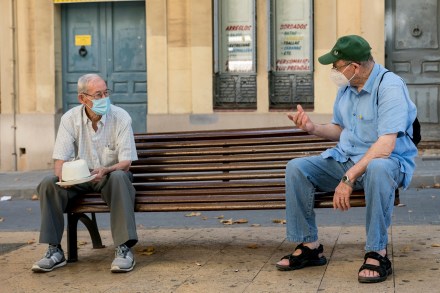
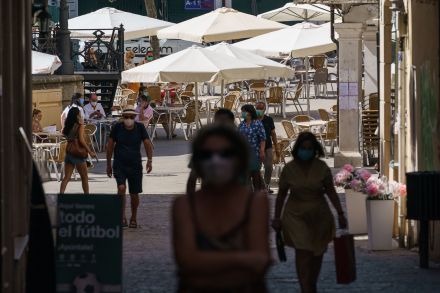
'Don’t it always seem to go that you don’t know what you got 'til it’s gone?' sang Joni Mitchell. In the Spanish city of Zaragoza, people certainly know what they all too briefly had and what they’re now missing. Thanks to Covid-19, over the last few months they’ve gone from having a busy bustling city to not having it, to having it again and now back to not having it once more. Like all Spanish cities, Zaragoza is normally a vibrant social centre with bars and restaurant terraces every few yards, with parks and plazas full of life where people meet, children play and everybody seems to talk at the same time. Lockdown brought all that vitality to an abrupt halt.

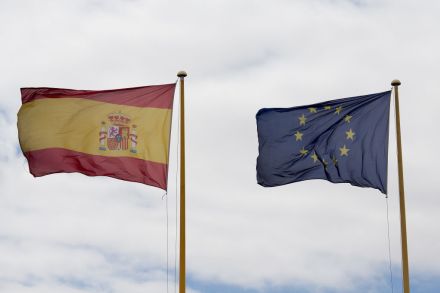
Spain faces its own Brussels conundrum

From our UK edition

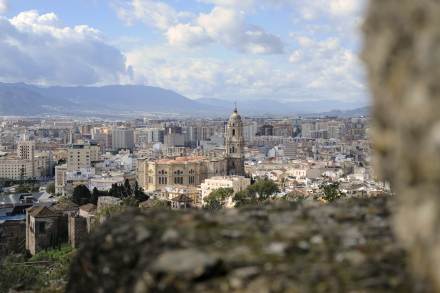
The north tower of Malaga cathedral stands nearly 300 feet high. The south tower doesn’t. According to the plaque at its foot, the funds originally destined for its completion were instead diverted to help the rebels fight against the British in the American war of independence. Whenever I look at that south tower – well, what there is of it – I’m reminded of the anti-Brexit tirades of El País. El País is one of Spain’s leading national dailies. Founded in 1976 as democracy was returning to Spain, it prides itself on being a serious, centre-left newspaper which, like Spain itself, has always been staunchly pro-EU. Usually warmly appreciative of British culture, it’s nevertheless frequently critical of British governments.

Could Felipe be the last king of Spain?

From our UK edition

With a huge Covid-induced economic crisis looming, many Spaniards are wondering if, through no fault of their own, they are about to lose their jobs. Among them is King Felipe VI. It’s not that Felipe has done much wrong in his brief reign. Indeed in many ways he has been that historical rarity – a Spanish Bourbon who takes his duties seriously. But there’s a chance that he might soon become the innocent victim of the dynasty’s many shortcomings, and in particular the declining reputation of his father. Felipe came to the throne in 2014 when his father, Juan Carlos I, worried about his growing unpopularity, abdicated.

Coronavirus, Spexit and the remarkable rise of Vox

From our UK edition

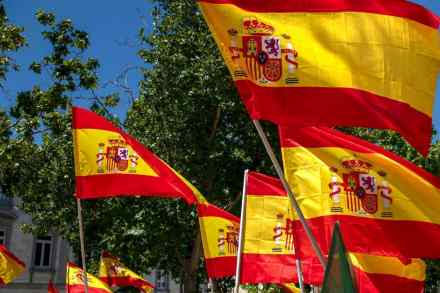
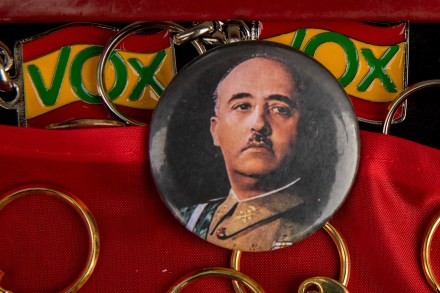
Eladio’s bar on the outskirts of Avila in central Spain has splendid views of the ancient town’s medieval walls. It also has a remarkable collection of Francoist memorabilia. Indeed, the whole bar is a shrine to the memory of the dictator who ruled Spain with an iron fist from 1939 until his death in 1975. It’s not just the photographs and posters; even the names of the tapas celebrate the Falange and the ‘glorious victory’ over the ‘communist hordes’ in Spain’s Civil War. No one who enters the bar is likely to be shocked by any of this; the facade is painted with a huge Spanish flag visible from afar. ‘Everyone knows what they’re coming to,’ says Eladio, the proprietor, with evident pride.

Spain’s fiendishly complex rules for easing the lockdown

From our UK edition

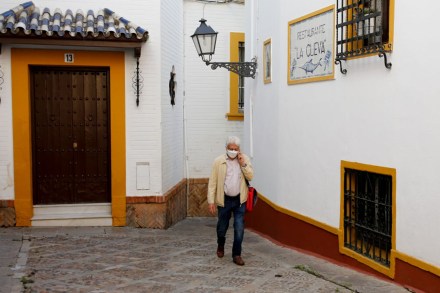
Once upon a time, when travel was still allowed, I checked into a small hotel in back-of-beyond Extremadura, in South-West Spain. The receptionist asked for my passport, I searched my pockets in vain, went to look in the car and then remembered that I’d left it on the table at home. 'Well, your national identity card then.' 'We British,' I replied 'don’t have identity cards.' She stared at me. 'If you don’t have identity cards … how do you know who you are?' Leaving the house just got a lot more complicated in Spain. As of Saturday there are a whole raft of new rules to obey. After 48 days of strict confinement – proper lockdown – millions of adult Spaniards (and me) are finally allowed out for a walk, fresh air and exercise.

Spain faces a political reckoning after its coronavirus crisis

From our UK edition

Here in Spain we have proper lockdown. We're not ‘allowed out once a day for exercise’ over here. ‘You Brits don’t get it,’ my neighbour chuckled over the wall. ‘You’re teetotallers – apart from a glass of whisky every day,’ he continued. ‘You say, “Brexit means Brexit”. Well, lockdown means lockdown!’ But even though we have ‘proper’ lockdown, he and I can’t complain. We live in Avila in central Spain. From our houses we have beautiful views of the town’s medieval walls and ancient cathedral, and beyond to the snow-capped mountains. Most Spaniards live in flats but we have gardens and patios.