Jawad Iqbal

Jawad Iqbal

Jawad Iqbal is a broadcaster and ex-television news executive. Jawad is a former Visiting Senior Fellow in the Institute of Global Affairs at the LSE

What will happen to Iran now?

What now after the collapse in peace talks between America and Iran in Pakistan? The gap between the two sides on the two critical issues – Iran’s nuclear programme and the Strait of Hormuz – proved too big in the end. Is it back to war? What does the failure to reach a deal mean for the fragile, two-week ceasefire the two sides agreed? Whose fault is it that the discussions, which lasted for a marathon 21 hours, broke down? So far, there is little in the way of concrete facts about what exactly happened in Islamabad but the blame game is already under way. First out of the blocks was J.D. Vance, who led the American side. He said the US had given the Iranian regime its ‘final and best offer’ but to no avail.

What can we expect from the Iran negotiations?

The eyes of the world are on Pakistan’s capital Islamabad as it plays host to this weekend’s make or break negotiations between the United States and Iran. The Pakistanis, whose mediation efforts pushed the two warring countries to agree a fragile two-week ceasefire, are taking no chances. Security has been stepped up, with thousands of police officers and security forces patrolling the streets of the capital. Hope and trepidation are the order of the day when it comes to ending a Middle East war that has already cost thousands of lives and plunged the world into economic crisis. Any peace agreement will require a degree of conciliation and compromise – alien concepts to the hardliners of Tehran The American delegation is being led by J.D. Vance, the US vice-president.

Why Pakistan is brokering peace in Iran

From our US edition

Pakistan, the world’s only Muslim nuclear power, has traditionally been an international sideshow. No longer. The country has reportedly been passing messages between Washington and Tehran in efforts to bring an end to the Iran war. It is has a five-point plan aimed at restoring “peace and stability” across the region. How have the Pakistanis pulled off this remarkable diplomatic makeover? The answer starts with some critical decisions the Pakistanis took last year. After the four-day armed conflict between Pakistan and India in May 2025, both sides claimed “victory”. But crucially Islamabad publicly acknowledged Washington’s role in achieving a ceasefire (something India refused to do). Pakistan later nominated President Donald Trump for the Nobel Peace Prize.

Pakistan

Suella Braverman’s ludicrous football intervention

Talking nonsense about football is a lucrative and growing business, hence the explosion in podcasts in which former players exchange inanities about the game. A surprising new entrant to this festival of footballing gibberish – a right winger fresh from the subs’ bench, so to speak – is Suella Braverman. The former Conservative home secretary, who joined Reform UK in January, has called on the Football Association to scrap its ‘woke’ diversity and inclusion policies. She wrote to the FA’s chief executive, Mark Bullingham, this week claiming its strategy was ‘fundamentally flawed, inherently racist and bad for the game’ because ‘the best coaches should get the job, not because of their skin colour, but because they are the best person for the job.

The Foremans can’t blame the UK for their imprisonment in Iran

Lindsay and Craig Foreman, the British couple imprisoned in Iran on spying charges, have issued a desperate plea for help, saying they feel abandoned by the UK. The pair want the Prime Minister, Sir Keir Starmer, to ‘step up’, describing how they feel ‘let down, alone and completely frustrated’. It was reckless, and simply asking for trouble, to enter a country with a longstanding reputation for randomly imprisoning westerners (Nazanin Zaghari-Ratcliffe, anyone?) on trumped-up charges Speaking in a recorded phone message from Evin prison in Tehran, Craig described life in a war zone. ‘We have gone from a challenging situation to a life-threatening situation… There is a serious lack of commitment for our safety.’It is heart-wrenching stuff.

Decapitating Iran’s leadership might not topple the mullahs

Iran’s most powerful leaders are being picked off one by one by Israeli and American military strikes. The latest scalp claimed by Israel is Ali Larjani, Iran’s security chief, and widely believed to be the most powerful figure in the present Iranian leadership. The reported killing comes just days after Larjani went on a public walkabout in Tehran, all defiance and bombast as he greeted members of the public during the Quds Day rally last Friday in the capital. Larjani also spoke to state media during the march, claiming that the Americans and Israelis were “running out of steam”. Well, not quite in his case, it turns out. Few will mourn the demise of Larjani.

Is Keir Starmer really, truly sorry about Peter Mandelson?

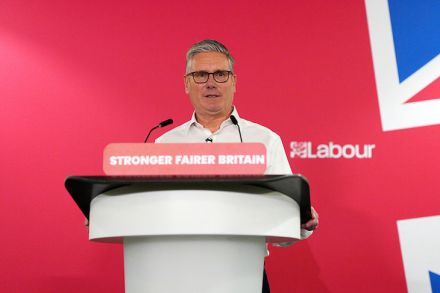
Sir Keir Starmer wants everyone to know how sorry, really sorry, he is for giving Lord Mandelson the job of Ambassador to the United States. On a visit to Belfast yesterday, the Prime Minister issued his latest and perhaps most abject mea culpa so far. It came just hours after the publication of embarrassing government documents detailing the process (or more accurately, the lack of one) that existed when it came to appointing the now disgraced peer to the plum diplomatic role in Washington. Sir Keir told reporters:   The release of the information shows what was known. That led to further questions being asked…But that doesn’t take away from the fact that it was me that made a mistake, and it’s me that makes the apology to the victims of Epstein, and I do that.

The Gulf states have a big decision to make about Iran

Iran threatened harsh retaliation in the wake of the American-Israeli attacks that killed the country’s supreme leader and many of its senior commanders. Its response consisted of a barrage of missiles aimed at Israel. So far, so predictable. Yet, at the same time, Tehran chose to direct its firepower at neighbouring Gulf states, countries that have been encouraging diplomacy and warning against war. Iran’s actions are an object lesson in how to alienate your friends and neighbours. So far, they have continued to employ the rhetoric of de-escalation. But that’s untenable if Iran continues to target their territory The Iranians targeted Saudi Arabia, the United Arab Emirates (UAE), Qatar, Bahrain, Kuwait, Oman and Jordan. Explosions rocked the Saudi Arabian capital Riyadh.

An Iranian uprising remains unlikely

President Donald Trump was crystal clear at the start of the military action against Iran that it was all about regime change. The United States, in co-ordination with Israel, would do its bit by targeting Iran’s leadership and command structure – but it was up to ordinary Iranians to rise up and finish the job. “The hour of your freedom is at hand, “he declared as US and Israeli warplanes bombed Iran, targeting the country’s supreme leader Ayatollah Ali Khamenei and his inner circle. “When we are finished, take over your government. It will be yours to take…”. There is no figurehead or leader to galvanise the masses, nor is there any common platform beyond a hatred of the mullahs So, how will Iranians respond?

Will anyone be held to account for the Post Office scandal?

More than 13 people may have taken their own lives as a result of the Post Office Horizon IT scandal. These are the first findings from the public inquiry into what has been called the worst miscarriage of justice in UK history. Sir Wyn Williams, chairman of the inquiry, said that a further 59 victims had contemplated suicide, and ten had attempted it. His 162-page report follows evidence from 298 witnesses over three years and the examination of 2.2 million pages of documents. He does not hold back in his criticism.

India’s war on English makes no sense

India’s Hindu nationalist rulers are waging war on the English language. They like to claim it is the language of colonial subjugation. Amit Shah, the home minister and a powerful ally of Prime Minister Narendra Modi, has predicted that the day is coming when Indians who speak English will feel 'ashamed' to do so. In his eyes, the English language is a legacy of colonial rule and should be stamped out. It is hard to think of anything more stupid and counterproductive than this shameless campaign. Rahul Gandhi, the leader of the opposition Congress party, was withering in his condemnation: ‘English is not shameful; it is empowering. English is not a chain; it is a tool to break the chains.’ Hear, hear to that!

Iran’s supreme leader looks more deluded than defiant

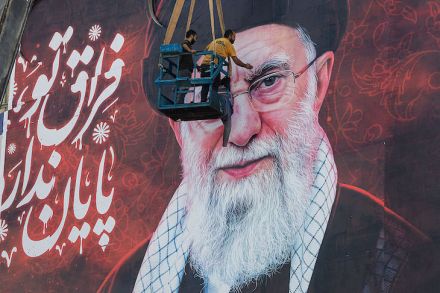
Ayatollah Ali Khamenei, Iran’s supreme leader, has made his first public comments since the ceasefire with Israel took hold. Khamenei, who has ultimate authority over all major decisions in the country, has not been seen or heard from in more than a week. His pre-recorded speech, aired on state television, is meant to put an end to rising speculation about his fate after he went into hiding at the start of the conflict. In the televised address, the Iranian leader hailed his country’s 'victory' over Israel and vowed never to surrender to the United States.

Mark Rutte is right to suck up to ‘daddy’ Donald Trump

Mark Rutte, the Nato secretary-general, has two jobs. The first is to lead the 32-member alliance at a time of unprecedented threat and challenges. His other equally significant task is to keep America, and in particular President Donald Trump, on side. Rutte’s ability to sweet talk Trump is one of the reasons why he got the job of Nato chief Rutte is in effect tasked with doing and saying whatever it takes to keep Trump sweet. Why so? For the simple and obvious reason that, without the US leader’s support, Nato is in even bigger trouble than ever. That is why the criticism of Rutte in some quarters for lavishing praise on Trump is misguided.

Will Khamenei accept that it’s over?

It is a fair bet that Ayatollah Ali Khamenei, Iran’s 'so-called supreme leader' in the words of president Trump, didn’t expect it to end like this. Holed up in a bunker somewhere in Tehran, exchanging messages with a small and ever-diminishing group of allies, and impotently raging against the West, namely America and Israel. Khamenei is no longer master of his own destiny What can the 86-year-old Khamenei, plagued by ill-health in recent years, really be thinking? He has ruled Iran with an iron fist for more than three decades, but is now reduced to cowering for his life underground. Just as humiliating must be the realisation that he owes his life to the 'Great Satan', America.

Will Iranians rise up against the mullahs?

Iran’s crumbling regime is fighting a war to the death on two fronts. The first and foremost is the conflict with Israel. It is safe to say that the Israelis – so far at least – are winning comfortably. The other conflict is the fight the mullahs are waging against their own people. The outcome of that battle is much harder to predict. The initial success of the Israeli strikes has given Iranians an unprecedented chance to seize the moment and topple their oppressors. Can they do it? Will they do it? And what becomes of the country if it frees itself from despotic rule? The rift between Iranians and their rulers is as great as it has ever been The rift between Iranians and their rulers is as great as it has ever been.

Paris Saint-Germain’s win was a triumph for sportswashing

Paris Saint-Germain (PSG) are champions of Europe for the first time in their history. They demolished Inter Milan 5-0 in the Champions League Final in Munich. Football clubs have become the playthings of autocratic nation states with bottomless pockets Forget the Premier League and the sporting abomination that is the revamped Fifa Club World Cup. The Champions League is the pinnacle of club football -the competition that every top team wants to win.The final was billed as a mouth-watering clash of opposites: youth and free-flowing football (PSG) versus experience and the nous to always find a way to win (Inter). But the final was a huge anticlimax: PSG dominated the match from start to finish.

We expect too much of Emma Raducanu

No one seriously expected Emma Raducanu to beat Iga Swiatek in her second round match at the French Open. Swiatek, a four-time champion in Paris, is nicknamed the ‘Queen of Clay’, having won 37 of her 39 matches at Roland Garros. Even so, few will have anticipated the scale of the drubbing that took place. Raducanu admitted ‘I have to improve’ after being completely outplayed during the 6-1, 6-2 defeat. One match commentator even went as far as to describe Raducanu as ‘Iga’s personal ball machine’. That is cruel and unfair. Raducanu was simply outclassed by a far better opponent and given a brutal lesson in tennis at the highest level. The Briton was out-thought, outplayed and swiftly dispatched in just one hour and 19 minutes.

Is Barbara Woodward right for MI6?

This time last year Britain’s top cyber spy warned that China represents an ‘epoch-defining challenge’. Anne Keast-Butler, the director of GCHQ, accused China of defying international norms and said that the country was the agency’s ‘top priority’. Beijing has been blamed for a string of cyber attacks on British institutions, including hacking the Ministry of Defence’s payroll system and stealing data about UK voters from the Electoral Commission. In recent months the intelligence services have alleged that Chinese spies have penetrated the inner circle of the Duke of York, infiltrated Westminster circles, and targeted Hong Kong dissidents in the UK. This is alleged spying and disruption on a grand scale by China.

Football’s beer ban makes no sense

Should football fans be allowed to have a pint in the stands during a game? Luke Charters, the Labour MP for York Outer, certainly thinks so, and is calling for trials to see what impact lifting the ban on booze in the stands might have. ‘The days of hooliganism are gone’, he said. ‘Fans of other sports can drink in the stands but football fans cannot.’ The booze ban, in its present incarnation encourages fans to drink more ahead of the match The Labour backbencher raised the issue in the House of Commons during a debate on the Football Governance Bill, proposing designated drinking zones in view of the pitch as a potential way forward.

India and Pakistan could spiral out of control

India and Pakistan – two nuclear armed states – have a history of fighting wars. Tensions have been growing between the two nations after last month’s deadly terror attack in the Indian-administered part of Kashmir, with the drum beat of a deadly military confrontation growing louder by the day.  On Tuesday night, India an attack on nine sites in Pakistan and Pakistan-administered Kashmir. The Indian government said its forces launched ‘Operation Sindoor’, hitting ‘terrorist infrastructure’ in locations ‘from where terrorist attacks against India have been planned and directed’. India said its actions ‘have been focused, measured and non-escalatory in nature’.