James Walton

James Walton is The Spectator’s TV critic

Old hat | 25 January 2018

These days, when it comes to people who used to be on the telly, the answer to the classic newspaper question ‘Where are they now?’ tends to be a fairly predictable one: they’re still on the telly — if, that is, you look carefully enough. They’re also quite likely to be travelling abroad with a few of their peers while wearing a large hat. The BBC started the trend — possibly even the genre — with The Real Marigold Hotel. ITV has provided the weirdest example so far, with Gone to Pot, in which the likes of Christopher Biggins and Pat Butcher from EastEnders investigated the legalisation of marijuana in California by smoking bongs and giggling a lot.

Thinking outside the box

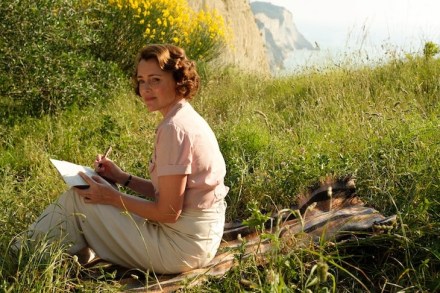
These days a genuinely controversial TV drama series would surely be one with an all-white, male-led cast that examined the problems of a bunch of middle-class people. (Just imagine the Twitter outrage!) But while we await that — possibly for a while yet — we’ve now got two highly promising new shows of the more approved ‘controversial’ kind: where racial issues are tackled in a thoughtful and scrupulously responsible way. Kiri (Channel 4, Wednesday) has the distinct advantage of starring Sarah Lancashire, whose character Miriam proves that TV mavericks needn’t always be doctors, lawyers or cops. They can, it seems, also be social workers. So it was that Miriam was first seen adding something a little stronger to her breakfast coffee.

Men behaving badly | 13 December 2017

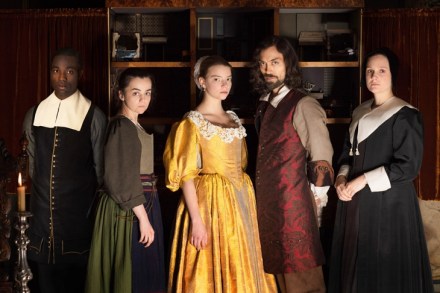
BBC1’s The Miniaturist (26/7 December) is a lavish two-part adaptation of Jessie Burton’s bestseller. It’s also further proof that almost any geographical and historical setting can be conscripted to tell us what’s apparently the only story we’re interested in these days: an alliance of plucky and unfailingly virtuous black people, gay people and women taking on the repressive forces of straight white blokes. The main character, Nella (Anya Taylor-Joy), is ostensibly a young 17th-century Dutchwoman who’s been married off to a rich Amsterdam merchant. On closer inspection, though, she turns out to be a 21st-century feminist who’s somehow been transported back in time to show our benighted forebears the error of their patriarchal ways.

Easy on the hard stuff

It’s one of the more mysterious features of human history that people of every era and in almost every place have regularly striven to reduce their intelligence, impair their reflexes and generally ensure that everything about them functions far less well. So what is about getting drunk that we love so much? According to Mark Forsyth’s breezy new book, the best answer comes from somebody not often thought of as a classic roisterer: William James, the American philosopher and brother of Henry. ‘Sobriety,’ James wrote, ‘diminishes, discriminates, and says no; drunkenness expands, unites, and says yes.’ And the way Forsyth tells it, drink has caused us to say yes to an awful lot.

Living dolls

This week on Channel 4, we watched a cheery 58-year-old American engineer called James going on a first date. He was meeting Harmony, an extravagantly shapely blonde who was obliging enough to be wearing a low-cut crop top and tiny shorts, and who greeted him with a charming smile. After a spot of small talk and a dumb-blonde joke, she then alternated between assuring him how great he was and inviting him to masturbate over her. ‘You’re awesome,’ a visibly smitten James declared — apparently not at all bothered that Harmony was a robot.

Adult entertainment | 16 November 2017

Any readers of the Sun who excitedly tuned in to Howards End on Sunday night with their pause button at the ready will, I fear, have been in for a disappointment. Before the programme went out, the paper had assured them that this new BBC1 adaptation would ‘do a Poldark’, with ‘a hot cast’ providing ‘a sexed-up remake’ of the 1992 Merchant Ivory film. (The sub-editors may have missed a trick by not headlining the piece, ‘It’s E.M. Phwoar-ster!’) In the event, what they got was a quietly thoughtful exploration of Edwardian intellectual life. The first episode, in fact, didn’t differ very much from the non-sexed-up film version — and when it did, it was generally by being even more faithful to the book.

Paradise lost | 2 November 2017

Anybody who wants to maintain a strong and untroubled stance against mass migration to Europe should probably avoid BBC2’s Exodus: Our Journey Continues. In theory, the case for limiting the numbers may be more or less unanswerable — but this is a joltingly uncomfortable reminder of what it can mean in practice. Any viewers suspicious of the BBC’s pinko tendencies will presumably have noticed that all the refugees we’ve met so far are completely lovely. Yet, faced with Thursday’s episode, even they might have found it tricky to preserve a steely primacy of head over heart. Or not to notice that these are people very much like us — only a lot unluckier in where and when they were born.

Amazing Grace

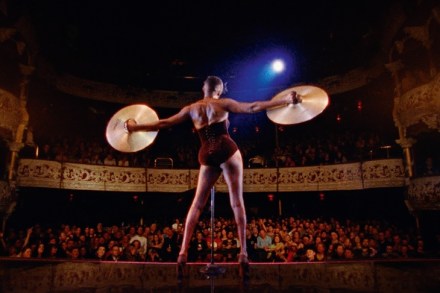
In the first scene of this distinctly odd documentary, Grace Jones meets a group of fans, who squeal with delight at the sight of her and nearly pass out with excitement when they hear her speak. And that, I suspect, is the effect which the film confidently expects to have on the rest of us. OK, it seems to be saying, so you’re not going to learn how Jones got from the Jamaican childhood we see her revisiting to the globetrotting life we see her living now. OK, so there’s no structure, sometimes no clue as to where scenes are taking place or who the other people in them might be — and for quite a lot of the time she’s just pottering around not doing very much. But look! It’s Grace Jones!

Saints and sinners | 19 October 2017

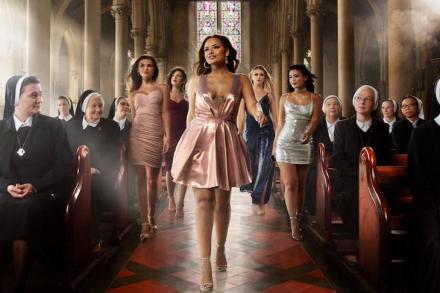
Any rival reality-TV makers watching Channel 5 on Thursday will, I suspect, have been both mystified and slightly embarrassed at not having thought up Bad Habits, Holy Orders themselves. After all, the concept is a blindingly obvious one. Take five young women whose primary interests are selfies, booze and clubbing and make them live like nuns for a month. And not metaphorically either: the five are staying with the Daughters of Divine Charity at the Convent of the Sacred Heart in Swaffham, where days filled with prayer, reflection, manual work and wholesome play end at a 10 p.m. bedtime.

Gleaming pictures of the past

If you think you know what to expect from an Alan Hollinghurst novel, then when it comes to The Sparsholt Affair, you’ll almost certainly be right. Once again, Hollinghurst explores British gay history by plunging us into haute bohemia over several decades of the 20th century. (A few years ago he told an interviewer that the main characters in his next book ‘will all be more or less heterosexual’: a plan that sounded pretty unlikely at the time and, seeing as this is his next book, was evidently abandoned.) Once again, he combines his broad sweep with plenty of equally impressive close-up analysis — and all in prose that manages to be both utterly sumptuous and utterly precise.

Mourning glory

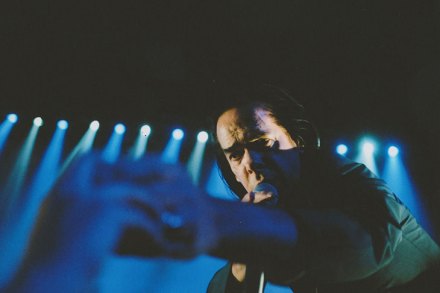
  On the face of it, Nick Cave & the Bad Seeds aren’t exactly a natural fit with the O2. Cave’s songs range from the thrillingly cacophonous to the quietly lovely. But with their recurring themes of death, violence and religion, and a muse that rarely leads Cave in the direction of the mainstream, very few have ever seemed particularly arena-friendly. And that was before his latest album, Skeleton Tree, which forms the basis of his current tour — and which Cave completed after his 15-year-old son Arthur died falling from a cliff in Brighton. Cave has warned against seeing the album as a direct response to the tragedy, emphasising that many tracks were written before it happened.

Playing it safe | 5 October 2017

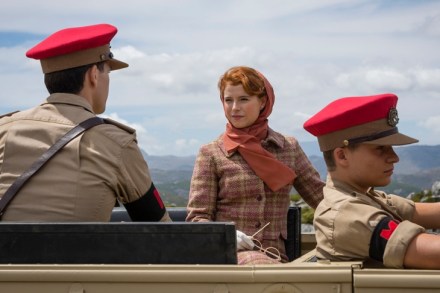
BBC1’s latest Sunday-night drama The Last Post, about a British military base in Aden in 1965, feels like a programme on a mission: that mission being to avoid getting shouted at by either the Guardian or the Daily Mail. To this (possibly doomed) end, it goes about its business very gingerly, with an almost pathological devotion to balance, and a safety-first reliance on the trusty methods of the well-made play, where each scene makes a single discrete point and the characters are as carefully differentiated as the members of a boy band. The first episode opened with the base’s new captain landing at Aden airport with his wife. ‘It must be a hundred degrees,’ she said scene-settingly as they descended from the plane.

Loose ends

On Sunday night, Holliday Grainger was on two terrestrial channels at the same time playing a possibly smitten sidekick of a gruff but kindly detective with a beard. Even so, she needn’t worry too much about getting typecast. In BBC1’s Strike, she continued as the immaculately turned-out, London-dwelling Robin, who uses such traditional sleuthing methods as Google searches. On Channel 4, not only was she dressed in rags, with a spectacular facial scar and a weird hairdo, she was also living in an unnamed dystopian city, where her detective work relied on a handy capacity to read minds. This was the first and highly promising episode of Electric Dreams, which has set itself the ambitious task of adapting ten sci-fi stories by Philip K.

Second thoughts | 7 September 2017

I had planned to review David Mitchell and Robert Webb’s new Channel 4 sitcom Back without constantly referring to their last one Peep Show. Not only did it seem too obvious a way to go; it also felt a bit unfair to compare a deservedly revered programme that ran for 12 years with a single episode that went out on Wednesday. But then I saw that single episode. It’s possible, I suppose, that one day Mitchell and Webb may head in a completely different sitcom direction. Mitchell may not play an uptight, well-meaning loser, or Webb a preening, conscience-free charmer. For now, though, it’s pretty much as you were.

For goodness’ sake

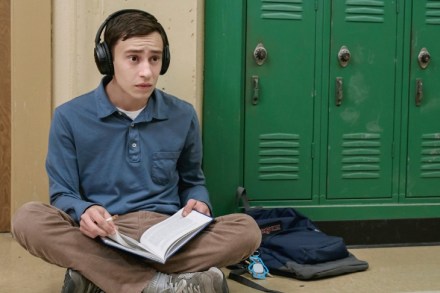
Most new Netflix series are greeted not merely with acclaim, but with a level of gratitude that the returning Christ might find a little excessive two minutes before Armageddon. In this respect, then, Atypical is proving rather atypical. The reason for the mixed reception is that its 18-year-old protagonist, Sam, has autism — and, as we know, in these righteous times fictional characters are judged not on whether they’re convincing individual creations but whether they’re virtuous enough as representatives of an entire group. Happily for the bloggers, by that all-important criterion, Atypical was bound to fall a little short.

1967 and all that

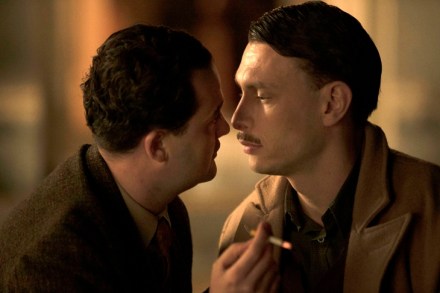
As you may have spotted, the BBC is marking the 50th anniversary of the decriminalisation of male homosexuality with an extended gay season. (And if you haven’t, I can only assume you’ve seen and heard no BBC trailers for months.) The centrepiece this week was Against the Law (BBC2, Wednesday), which dramatised the story of Peter Wildeblood, a Daily Mail journalist imprisoned for 18 months in 1954 for the possibly overlapping crimes of buggery and gross indecency. But — double entendre alert — Wildeblood didn’t take this lying down. After his release, he published a book making the case for legalisation.

Playing Stalin for laughs

Christopher Wilson’s new novel is much easier to enjoy than to categorise. And ‘enjoy’ is definitely the right word, even though The Zoo tackles subject matter that should, by rights, make for a punishingly bleak read. The narrator is 12-year-old Yuri, whose misfortunes start with the fact that he’s growing up in Moscow in 1953 — and that a road accident when he was six damaged his brain, leaving him with a curious set of symptoms that couldn’t be worse suited to life under Stalin: a total lack of guile, a tendency to ask awkward questions and a face so angelically trustworthy that everybody tells him their deepest secrets.

Candid camera?

Channel 4’s Catching a Killer offered the rare TV spectacle these days of a middle-aged white male copper leading a murder inquiry. Then again, it was a documentary rather than a drama. In its resolutely sober way, it also proved a riveting one, if at times piercingly sad. The programme followed the Thames Valley police as they investigated the killing of Adrian Greenwood in April 2016. The fact that Greenwood was an Oxford historian and book-dealer, and that the motive was the theft of a first edition of The Wind in the Willows, led one detective to suggest early on that ‘It’s like an episode of Morse.’ In the event, it proved a lot more straightforward, and a lot grimmer, than that.

Mad about the girls

It’s not unusual to see a pop concert on TV where teenage girls and a group of middle-aged men are separated by safety barriers, as the glow sticks wave and the band’s name is excitedly chanted. But in Storyville: Tokyo Girls (BBC4, Tuesday), there was one fairly major twist: the teenage girls were the band, and the middle-aged men their swooning fans. As this jaw-dropping documentary explained, the girls in question are known in Japan as ‘idols’. Their songs tend to be about how demure and innocent they are; and to prove it, they often perform in school uniforms — although with skirts a lot shorter, I suspect, than is traditional in most Tokyo schools.

Never knowingly understated

At one uncharacteristically low-key point in Sunday’s Poldark — back for a third series on BBC1 — Ross (Aidan Turner) left off the brooding and cliff-top galloping for a while to review his finances. They were, his genial banker Harris Pascoe told him, in good shape. Hearing that Ross’s marriage was going through one of its happier phases too, Harris then turned even more reassuring. ‘What could possibly go wrong?’ he concluded with a cheerful smile. Which just goes to show that Harris Pascoe must never have seen Poldark — because the answer to his question was, of course, ‘Almost everything’.