James Walton

James Walton is The Spectator’s TV critic

Paradise lost | 2 November 2017

From our UK edition

Anybody who wants to maintain a strong and untroubled stance against mass migration to Europe should probably avoid BBC2’s Exodus: Our Journey Continues. In theory, the case for limiting the numbers may be more or less unanswerable — but this is a joltingly uncomfortable reminder of what it can mean in practice. Any viewers suspicious of the BBC’s pinko tendencies will presumably have noticed that all the refugees we’ve met so far are completely lovely. Yet, faced with Thursday’s episode, even they might have found it tricky to preserve a steely primacy of head over heart. Or not to notice that these are people very much like us — only a lot unluckier in where and when they were born.

Amazing Grace

From our UK edition

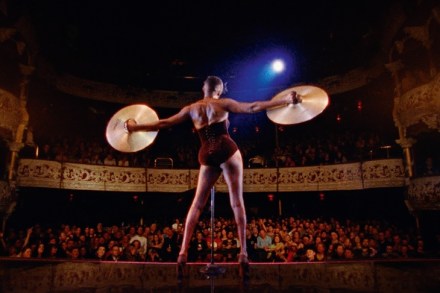
In the first scene of this distinctly odd documentary, Grace Jones meets a group of fans, who squeal with delight at the sight of her and nearly pass out with excitement when they hear her speak. And that, I suspect, is the effect which the film confidently expects to have on the rest of us. OK, it seems to be saying, so you’re not going to learn how Jones got from the Jamaican childhood we see her revisiting to the globetrotting life we see her living now. OK, so there’s no structure, sometimes no clue as to where scenes are taking place or who the other people in them might be — and for quite a lot of the time she’s just pottering around not doing very much. But look! It’s Grace Jones!

Saints and sinners | 19 October 2017

From our UK edition

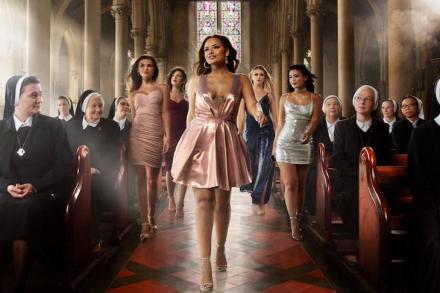
Any rival reality-TV makers watching Channel 5 on Thursday will, I suspect, have been both mystified and slightly embarrassed at not having thought up Bad Habits, Holy Orders themselves. After all, the concept is a blindingly obvious one. Take five young women whose primary interests are selfies, booze and clubbing and make them live like nuns for a month. And not metaphorically either: the five are staying with the Daughters of Divine Charity at the Convent of the Sacred Heart in Swaffham, where days filled with prayer, reflection, manual work and wholesome play end at a 10 p.m. bedtime.

Gleaming pictures of the past

From our UK edition

If you think you know what to expect from an Alan Hollinghurst novel, then when it comes to The Sparsholt Affair, you’ll almost certainly be right. Once again, Hollinghurst explores British gay history by plunging us into haute bohemia over several decades of the 20th century. (A few years ago he told an interviewer that the main characters in his next book ‘will all be more or less heterosexual’: a plan that sounded pretty unlikely at the time and, seeing as this is his next book, was evidently abandoned.) Once again, he combines his broad sweep with plenty of equally impressive close-up analysis — and all in prose that manages to be both utterly sumptuous and utterly precise.

Mourning glory

From our UK edition

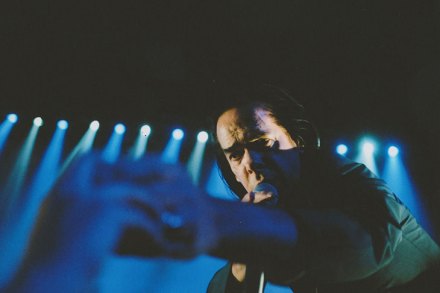
  On the face of it, Nick Cave & the Bad Seeds aren’t exactly a natural fit with the O2. Cave’s songs range from the thrillingly cacophonous to the quietly lovely. But with their recurring themes of death, violence and religion, and a muse that rarely leads Cave in the direction of the mainstream, very few have ever seemed particularly arena-friendly. And that was before his latest album, Skeleton Tree, which forms the basis of his current tour — and which Cave completed after his 15-year-old son Arthur died falling from a cliff in Brighton. Cave has warned against seeing the album as a direct response to the tragedy, emphasising that many tracks were written before it happened.

Playing it safe | 5 October 2017

From our UK edition

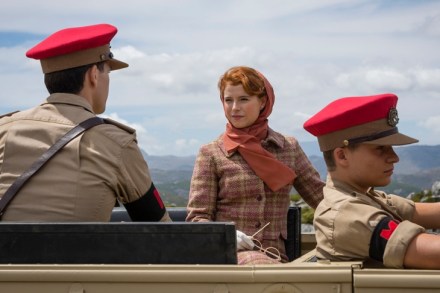
BBC1’s latest Sunday-night drama The Last Post, about a British military base in Aden in 1965, feels like a programme on a mission: that mission being to avoid getting shouted at by either the Guardian or the Daily Mail. To this (possibly doomed) end, it goes about its business very gingerly, with an almost pathological devotion to balance, and a safety-first reliance on the trusty methods of the well-made play, where each scene makes a single discrete point and the characters are as carefully differentiated as the members of a boy band. The first episode opened with the base’s new captain landing at Aden airport with his wife. ‘It must be a hundred degrees,’ she said scene-settingly as they descended from the plane.

Loose ends

From our UK edition

On Sunday night, Holliday Grainger was on two terrestrial channels at the same time playing a possibly smitten sidekick of a gruff but kindly detective with a beard. Even so, she needn’t worry too much about getting typecast. In BBC1’s Strike, she continued as the immaculately turned-out, London-dwelling Robin, who uses such traditional sleuthing methods as Google searches. On Channel 4, not only was she dressed in rags, with a spectacular facial scar and a weird hairdo, she was also living in an unnamed dystopian city, where her detective work relied on a handy capacity to read minds. This was the first and highly promising episode of Electric Dreams, which has set itself the ambitious task of adapting ten sci-fi stories by Philip K.

Second thoughts | 7 September 2017

From our UK edition

I had planned to review David Mitchell and Robert Webb’s new Channel 4 sitcom Back without constantly referring to their last one Peep Show. Not only did it seem too obvious a way to go; it also felt a bit unfair to compare a deservedly revered programme that ran for 12 years with a single episode that went out on Wednesday. But then I saw that single episode. It’s possible, I suppose, that one day Mitchell and Webb may head in a completely different sitcom direction. Mitchell may not play an uptight, well-meaning loser, or Webb a preening, conscience-free charmer. For now, though, it’s pretty much as you were.

For goodness’ sake

From our UK edition

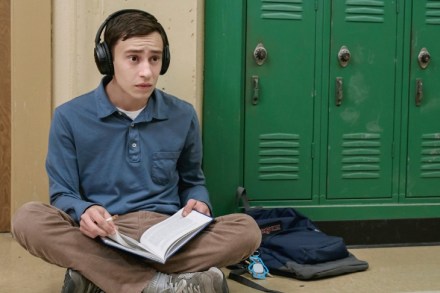
Most new Netflix series are greeted not merely with acclaim, but with a level of gratitude that the returning Christ might find a little excessive two minutes before Armageddon. In this respect, then, Atypical is proving rather atypical. The reason for the mixed reception is that its 18-year-old protagonist, Sam, has autism — and, as we know, in these righteous times fictional characters are judged not on whether they’re convincing individual creations but whether they’re virtuous enough as representatives of an entire group. Happily for the bloggers, by that all-important criterion, Atypical was bound to fall a little short.

1967 and all that

From our UK edition

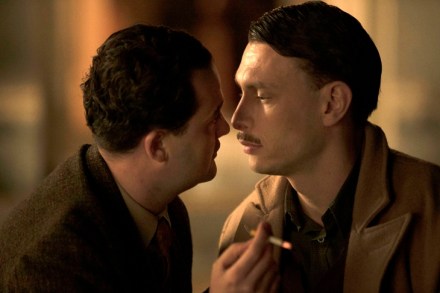
As you may have spotted, the BBC is marking the 50th anniversary of the decriminalisation of male homosexuality with an extended gay season. (And if you haven’t, I can only assume you’ve seen and heard no BBC trailers for months.) The centrepiece this week was Against the Law (BBC2, Wednesday), which dramatised the story of Peter Wildeblood, a Daily Mail journalist imprisoned for 18 months in 1954 for the possibly overlapping crimes of buggery and gross indecency. But — double entendre alert — Wildeblood didn’t take this lying down. After his release, he published a book making the case for legalisation.

Playing Stalin for laughs

From our UK edition

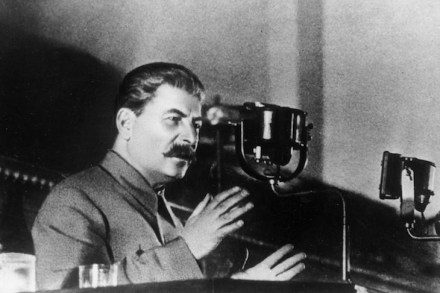
Christopher Wilson’s new novel is much easier to enjoy than to categorise. And ‘enjoy’ is definitely the right word, even though The Zoo tackles subject matter that should, by rights, make for a punishingly bleak read. The narrator is 12-year-old Yuri, whose misfortunes start with the fact that he’s growing up in Moscow in 1953 — and that a road accident when he was six damaged his brain, leaving him with a curious set of symptoms that couldn’t be worse suited to life under Stalin: a total lack of guile, a tendency to ask awkward questions and a face so angelically trustworthy that everybody tells him their deepest secrets.

Candid camera?

From our UK edition

Channel 4’s Catching a Killer offered the rare TV spectacle these days of a middle-aged white male copper leading a murder inquiry. Then again, it was a documentary rather than a drama. In its resolutely sober way, it also proved a riveting one, if at times piercingly sad. The programme followed the Thames Valley police as they investigated the killing of Adrian Greenwood in April 2016. The fact that Greenwood was an Oxford historian and book-dealer, and that the motive was the theft of a first edition of The Wind in the Willows, led one detective to suggest early on that ‘It’s like an episode of Morse.’ In the event, it proved a lot more straightforward, and a lot grimmer, than that.

Mad about the girls

From our UK edition

It’s not unusual to see a pop concert on TV where teenage girls and a group of middle-aged men are separated by safety barriers, as the glow sticks wave and the band’s name is excitedly chanted. But in Storyville: Tokyo Girls (BBC4, Tuesday), there was one fairly major twist: the teenage girls were the band, and the middle-aged men their swooning fans. As this jaw-dropping documentary explained, the girls in question are known in Japan as ‘idols’. Their songs tend to be about how demure and innocent they are; and to prove it, they often perform in school uniforms — although with skirts a lot shorter, I suspect, than is traditional in most Tokyo schools.

Never knowingly understated

From our UK edition

At one uncharacteristically low-key point in Sunday’s Poldark — back for a third series on BBC1 — Ross (Aidan Turner) left off the brooding and cliff-top galloping for a while to review his finances. They were, his genial banker Harris Pascoe told him, in good shape. Hearing that Ross’s marriage was going through one of its happier phases too, Harris then turned even more reassuring. ‘What could possibly go wrong?’ he concluded with a cheerful smile. Which just goes to show that Harris Pascoe must never have seen Poldark — because the answer to his question was, of course, ‘Almost everything’.

The sting of betrayal

From our UK edition

This may seem an odd thing to say about a writer who’s been officially declared a National Living Treasure in his native Australia, and was shortlisted for the Booker Prize three times before winning it with Schindler’s Ark — but I sometimes think Thomas Keneally is badly underrated. After all, Schindler’s Ark won that Booker Prize 35 years — and 19 Keneally novels — ago, and since then his reputation appears to have settled down into that of a solid craftsman: the sort of novelist who rarely lets you down, but who never quite hits the literary heights either.

Heaven knows they’re miserable now | 1 June 2017

From our UK edition

On the face of it, the two new big drama series of the week don’t have a great deal in common, with one set in a determinedly present-day Britain, the other in a dystopian American future. What they do share, though, is a general air of classiness, some impressively understated central performances and, above all, an almost heroic commitment to unrelenting misery. In the first episode of Broken (BBC1, Tuesday), a typical scene consisted of single mother Christina — who’d just been sacked from her badly paid job and told she was ineligible for benefits — reluctantly selling off her wedding and engagement rings, before returning home to find her mother dead.

Police force

From our UK edition

I’ve often thought that a good idea for an authentic TV cop show would be to portray the police as neither dazzlingly brilliant (the traditional approach) nor horrifically corrupt (the traditionally subversive one) — but just a bit hopeless at solving crimes. There is, though, one thing that prevents the idea from being as original as I’d like: this is how the police already come across in many true-life dramas. Take, for instance, the harrowing and — given its high-profile scheduling — extremely brave Three Girls (BBC1, Tuesday to Thursday), which provided an unsparing and wholly believable account of the Rochdale child-grooming scandal.

Arms race | 4 May 2017

From our UK edition

Like most documentaries, Britain’s Nuclear Bomb: The Inside Story (BBC4, Wednesday) began by boasting about all the exclusives it would be serving up. Unlike most, it was as good as its word. What followed did indeed contain much previously unseen footage and interviews with people — including ‘this country’s bomb-maker in chief’ — who’ve never before spoken about the part they played in Britain becoming a nuclear power. It also did a neat job of fitting the story to our favoured national myth: the one about old-fashioned British pluck and know-how triumphing over both the odds and the shamefully professional ways of other countries. In the 1930s, for example, the race was on to split the atom.

Cover stories

From our UK edition

These days, Aubrey Powell is a genial 70-year-old who can be found most mornings having breakfast at his local Knightsbridge café. But in the late 1970s, he did something that surely no other human being has done before or since. He photographed a sheep lying on a psychiatrist’s couch on a beach in Hawaii. Its coat had been treated with Vidal Sassoon products, and it was sedated with Valium because it was scared of waves. So what on earth was he up to? The answer — as anybody who recognises Powell’s name will guess — was creating one of the 373 album covers that his company Hipgnosis designed back when LPs ruled the world. (In this case, for 10cc’s Look Hear?

A cuckold’s revenge

From our UK edition

Perhaps the least necessary piece of advice ever given to a Hanif Kureishi protagonist comes in 2014’s The Last Word. ‘Harry,’ a wise old writer tells the main character, ‘always put your penis first.’ It’s a suggestion, needless to say, that Harry has no trouble accepting — not least because, like so many Kureishi protagonists, he shares the belief that ‘the body of the young woman is the world’s most significant object’. (Or as the narrator of 1998’s Intimacy puts it, ‘women’s bodies… are at the centre of everything worth living for’.) Admittedly, Kureishi’s men do occasionally agonise between betraying their partners and betraying themselves — i.e.