James Walton

James Walton is The Spectator’s TV critic

Question time | 6 October 2016

At my wife’s first 12-week scan, I was expecting — and duly got — that much-documented sense of thrilled wonder at the grey blobby thing on the screen. What came as a genuine shock, though, was realising the scan also had the entirely undisguised aim of calculating the baby’s chances of Down’s syndrome, on the apparent assumption that, if they were high, we’d want to terminate. In the event, this wasn’t a dilemma we faced — which possibly makes it easy to take the moral high ground. Even so, the whole process left me feeling both uneasy and rather naive. How long had this been going on? Did everybody else know about it? And if so, when had they discussed it? A World without Down’s Syndrome?

Cautionary tale

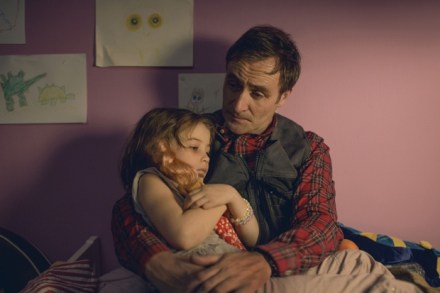
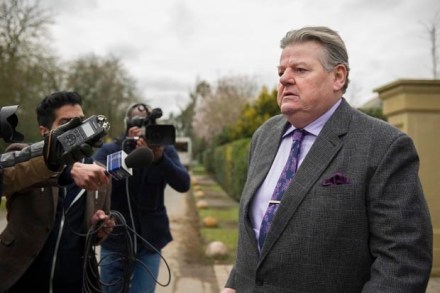
The closing credits of National Treasure (Channel 4, Tuesday) contain the usual disclaimer that any resemblance between its characters and real people is merely coincidental. Well, coincidental maybe, but also entirely inevitable — because this is a drama based on Operation Yewtree. With its choice of subject matter, a cast including Robbie Coltrane and Julie Walters and a script by Jack Thorne (author of the all-conquering Harry Potter and the Cursed Child), the series is clearly intended as an Important Piece of Television. Yet, partly for that reason, it’s so far proving a rather careful one. Nobody who watched the first episode could accuse it of sensationalism.

Time to change the record

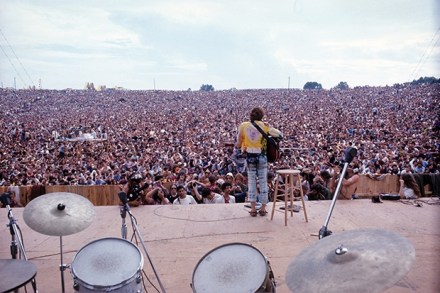
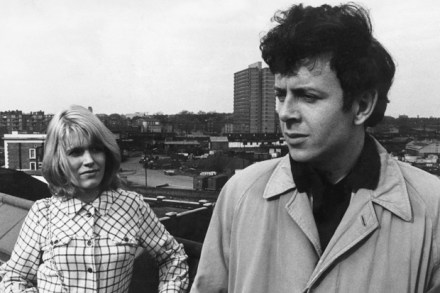
Back in the high optimism of the 2008 presidential campaign, one of Barack Obama’s more extravagant hopes was that ‘the psychodrama of the baby boom generation’ would finally be left behind: that no longer would the kind of radical late-Sixties politics ‘hatched on a handful of college campuses long ago’ be seen by both its supporters and its opponents as the key to understanding more or less everything about modern life. Sadly, though, if Obama needs proof of how comprehensively this hope has been dashed, he need only head to the V&A — where, with the supporters firmly in charge, the whole story of how great the late Sixties were, how much they’ve shaped today’s world, and how much they still could (fingers crossed!

Fashion shoot

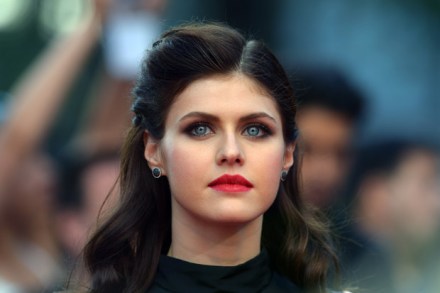
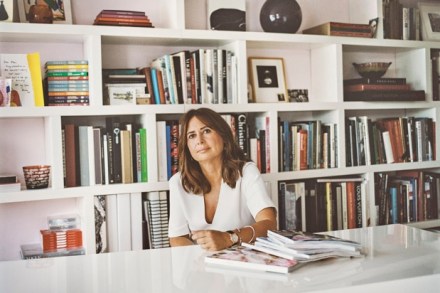
With documentary-makers these days, it can be hard to tell the difference between faux-naivety and the real thing. (Personally, I blame Louis Theroux.) Take BBC2’s Absolutely Fashion: Inside British Vogue (Thursday), directed and narrated by Richard Macer, who often seems suspiciously dazzled by whatever he sees: the editor’s office! The editor’s chair! He also has a tendency to proudly offer observations that aren’t necessarily as startling as he thinks: that the magazine appears to be largely run by women, for instance. But where it’s even trickier to decide whether he’s faking or not is when his off-screen voice anxiously wonders whether Alexandra Shulman, the editor in question, wants him there at all — because she so obviously doesn’t.

All the way to Memphis

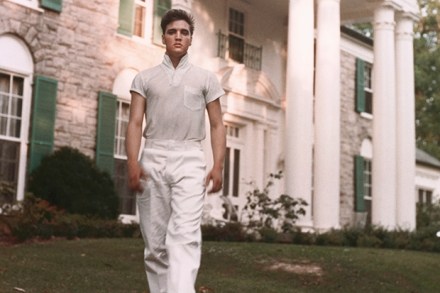
The bad news for old rock’n’rollers is that there’s not much time left to stay at Heartbreak Hotel — these days located not at the end of Lonely Street, but on Elvis Presley Boulevard, Memphis. In October it will close, to be replaced by the demurely named Guest House at Graceland: in reality a swanky new hotel with nearly twice as many rooms as the Dorchester. But this is only the latest addition to Elvis’s former pad since the operating rights were bought by the Authentic Brands Group in 2013.

The decade of Delia

Proof that someone has really made it as a TV historian comes, I would suggest, when they join the likes of David Starkey and Simon Schama by getting their name into the programme’s title. So it is that Dominic Sandbrook’s The 70s, from 2012, has now been followed by The 80s with Dominic Sandbrook (BBC2, Thursday), a series that confirms his ability to put across moderately big ideas in a light easy style — and in a parka. Sometimes when watching television, you might be in the mood for a serious history documentary, and sometimes for a show that’ll just wash over you pleasantly. With Sandbrook — and I’m pretty sure I mean this as a compliment — you can have both.

1966 and all that

In the song ‘All the Young Dudes’, David Bowie gamely tried to reassure the youth of the Seventies that, despite what their Sixties elders were always telling them, they hadn’t been born too late after all. On the contrary: it was the ‘brother back at home with his Beatles and his Stones’ who was missing out. Sadly, for those of us growing up at the time, even Bowie at his most thrilling wasn’t quite as persuasive as we’d have liked. OK, so it was definitely annoying to be surrounded by people banging on about how great the Sixties were. But once we’d heard the music, there was an uncomfortable sense that they might also be right.

The prodigy

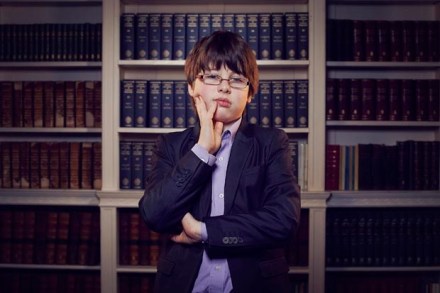
On Tuesday night on Channel 4, a stern male figure peered over his glasses (as equipped with one of those cords favoured by themiddle-aged specs-wearer) and offered us his robust views on how government benefits encourage laziness. Which might not sound that unusual — except that the male figure in question was 12. His name, no less improbably, was Mog and he was a contestant in the new series of Child Genius, now hosted by Richard Osman — these days almost as ubiquitous on television as Susan Calman is onRadio 4. As ever, the first few minutes were spent assuring us how fiendish the quiz would be; but, as ever too, this was no mere hype.

MPs and DTs

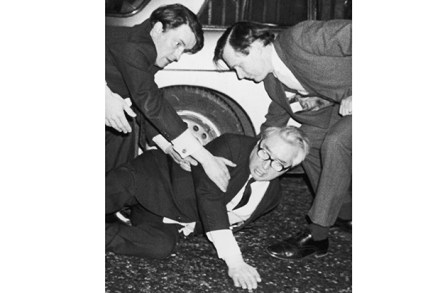
In 1964, a newly elected Labour MP was put in charge of the House of Commons kitchen committee. (An unpromising start to a review, I appreciate, but bear with me.) His idea of selling off the House’s rather splendid wine cellar duly appalled some MPs, but was accepted as a useful money-making scheme. Only later did it emerge that he’d bought/ripped off a collection of the best bottles for himself at a bargain price, and that this was not untypical behaviour — because the Labour MP was Robert Maxwell. Order, Order! is packed with memorable tales like this.

The big chill | 30 June 2016

It’s sadly possible to imagine that The Living and the Dead was sold to BBC1’s commissioning editors as ‘Poldark meets The Exorcist’. Yet, while that wouldn’t be a completely inaccurate summary, the overall result is a lot more coherent, clever and ambitious than that. At heart, in fact, Tuesday’s first episode was a nifty twist on another genre: the one where a retired detective/gunslinger/master criminal comes out of retirement for one last job. The programme began in Somerset in 1894, where we met Harriet Denning, an unusually bright 16-year-old, whose intellectual curiosity alarmed her mother but who was encouraged in her reading of Ibsen, Zola and Darwin by her proud father.

My big fat Gypsy fortune

In his latest documentary for the This World series, the Romanian film-maker Liviu Tipurita could have been forgiven for treading carefully — and not just because it meant him entering the world of organised crime. After all, his previous film in the series, the uncompromisingly titled Gypsy Child Thieves, was ferociously denounced by Roma groups for showing how some Roma parents send their children into European cities with strict instructions to beg and steal — the charge being not that this was necessarily untrue, but that it might confirm ugly prejudices. So how would Tipurita tackle the equally awkward facts behind The New Gypsy Kings (BBC2, Thursday)?

War on want

Radiohead have been at the top of the musical tree for so long now that it’s easy to forget what an irreducibly strange band they are. Last Thursday, during the first of their three hugely anticipated gigs at the Roundhouse, they uncharacteristically played three popular favourites on the run — in their defence, it was the encore — causing someone in the audience to call out for another one. ‘No,’ replied Thom Yorke with a smile, ‘this is all getting too much fun.

Impure thoughts

Spoiler alerts aren’t normally required for reviews of Shakespeare — but perhaps I’d better issue one before saying that in BBC1’s A Midsummer Night’s Dream (Monday) Theseus dies near the end. Not only that, but Hippolyta and Titania fly off on butterfly wings to become lovers, and the mechanicals’ play goes down a storm. Personally, I’ve never been sure about the existence of that mysterious tribe known as ‘Shakespeare purists’. If they do exist, though, Russell T. Davies’s heavily cut and cheerfully tweaked adaptation seems almost deliberately designed to flush them out.

Animal attraction

Let me start this week with an admittedly hard quiz question: in 1954, how did the sudden illness of Jack Lester, head of London Zoo’s reptile house, transform British television? The answer is that his reluctant stand-in as the presenter of BBC’s Zoo Quest was the show’s director, David Attenborough. Offhand, it’s not easy to think of many people whose 90th birthday could overshadow the Queen’s, but this month Attenborough’s is coming pretty close. The latest tribute was David Attenborough’s Zoo Quest in Colour (BBC4, Tuesday), which dedicated an appropriate 90 minutes to his first TV hit. As the title indicates, the big coup here was that the archive clips were no longer in grainy black-and-white.

… and sense and sensibility

Book reviews, John Updike once wrote, ‘perform a clear and desired social service: they excuse us from reading the books themselves’. It’s a theory, I’m afraid, that doesn’t apply to this review — but it certainly does to this book: an impeccably wide-ranging collection of Ferdinand Mount’s own non-fiction reviews, including for The Spectator, over three decades. Find yourself unaccountably vague on the premiership of Lord Rosebery? A little rusty on the life of George Gissing? Embarrassingly patchy on the history of Methodism? Thanks to Mount, there’s no need to plough through 500 pages on any of them — nor the more than 50 other subjects he covers.

That’s entertainment | 5 May 2016

The big returning show of the week began with servants laying out the silverware at a large country house in 1924. But rather than a shock comeback for Downton Abbey, this was — perhaps even more unexpectedly — Tommy Shelby’s new home in Peaky Blinders (BBC2, Thursday). Which explains why so many of the guests were carrying guns, and why the family matriarch was using the word ‘fuck’ a lot more than Lady Grantham ever did. When we last saw gang-leader Tommy (Cillian Murphy), he was still based in the Birmingham backstreets. He was also having a fairly tough time — what with juggling two women, trying not to get murdered and being required by the government to start the Irish Civil War. Two years on, however, things are clearly looking up.

Special delivery

Five Star Babies: Inside the Portland Hospital won’t, I suspect, have been a hard sell to BBC2’s commissioning editors. Childbirth and rich people are both reliably popular subjects for TV documentaries. So why not combine them into one handy package by showing us life at the UK’s only private maternity hospital? And yet, however artificial the programme’s conception, any sociologists studying contemporary Britain’s peculiar attitudes to the very wealthy could have done a lot worse than to tune in to Wednesday’s episode. ‘Parenthood: the great leveller,’ began the narrator — somehow managing not to add a hollow laugh. This sense of irony, though, was short-lived.

Singing Ireland into being

In recent years there’s been a fashion for arts documentaries presented by celebs rather than boring old experts — presumably on the grounds that knowledge and insight are no match for vague enthusiasm and a touch of showbiz glamour. (In a particularly gruesome episode of ITV’s Perspectives, Pop Idol winner Will Young established his credentials for discussing the life and works of René Magritte with the words, ‘I’ve been collecting bowler hats for 12 years now.’) Even so, one channel you might have expected to hold out against such frivolity is BBC4, the natural home of resolutely untelegenic academics telling us stuff they really know about. But then on Sunday came Bob Geldof on W.B.

When pop gave way to rock

According to David Hepworth, the year he turned 21 was also the year when ‘a huge proportion of the most memorable albums ever made were released’. Having been a rock journalist for four decades, he does of course know the theory that everybody thinks music was at its best when they were young. But, as he puts it with untypical — if presumably ironic — machismo, the ‘important difference in the case of me and 1971’ is that ‘I’m right’. The strange thing is that he might well be.

Good cop, bad cop | 23 March 2016

Which is better, British TV drama or American? A couple of years ago, merely asking the question would have had the hipsters chortling into their obscure US box sets — and even now a strange cultural cringe seems to persist. Nonetheless, I’d suggest, British television drama these days really is in the midst of an era that will have commentators in 20 years’ time routinely (if a bit unimaginatively) reaching for the adjective ‘golden’. Already in 2016 we’ve had War and Peace, Murder, The Night Manager and Happy Valley — and that’s before the hugely welcome return of Line of Duty (BBC2), Jed Mercurio’s riveting thriller about a police anti-corruption unit.