James Tidmarsh

James Tidmarsh

James Tidmarsh is an international lawyer based in Paris. His law firm specialises in complex international commercial litigation and arbitration.

Could Marine Le Pen save Macron’s presidency?

From our UK edition

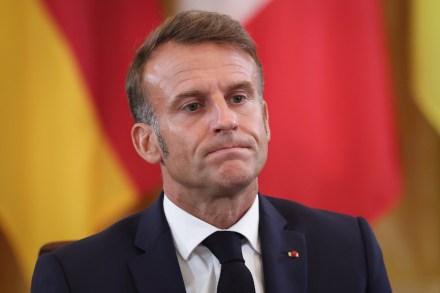
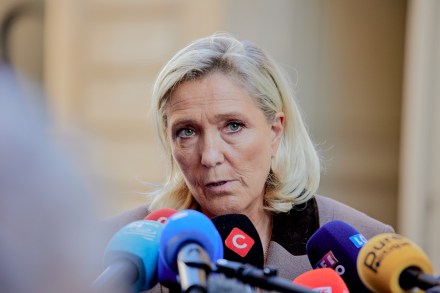
Emmanuel Macron is cornered, his presidency unravelling under relentless pressure. From left and right, there are demands to dissolve the National Assembly or for Macron himself to resign. Prime Minister Sébastien Lecornu’s resignation after just 27 days has shattered Macrons fragile coalition. The man who once straddled France’s political divide now faces its united wrath. Yet, in a cruel irony, Macron’s survival may hinge on his nemesis, Marine Le Pen. By calling an election and letting her National Rally form a government, Macron could cling to the Élysée, his power gutted but his title intact, saved by the National Rally he vowed to destroy.
How the judiciary took down Nicolas Sarkozy

From our UK edition

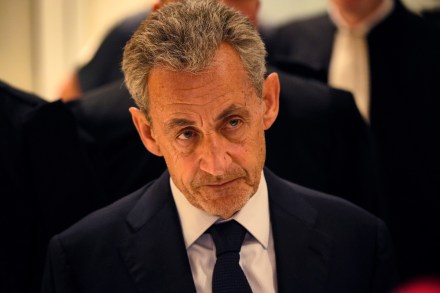
A Paris court has sentenced France’s former president Nicolas Sarkozy to five years, three of which must be served behind bars, for criminal conspiracy tied to alleged Libyan funding of his successful 2007 presidential campaign. He’ll be imprisoned within weeks, irrespective of any appeal. The image of a former French president heading to prison is brutal and France is shaken by it. The law is being used not just to punish, but to shape the field of politics. What makes today’s decision extraordinary isn’t just the verdict. It’s the court’s choice to immediately enforce its judgment. Appeal or not, Sarkozy will be behind bars. This so-called exécution provisoire is the French legal mechanism that strips an appeal of its usual suspensive effect.

French town halls are weaponising the Palestinian flag

From our UK edition

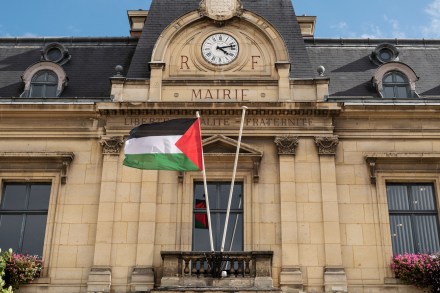
As Emmanuel Macron took to the global stage to recognise Palestine at the UN, over 80 defiant left-wing mayors back home turned their town halls into protest zones, draping them with Palestinian flags in open rebellion against a government ban. They call it solidarity. In truth, it's brazen political theatre. Outgoing interior minister Bruno Retailleau had rightly ordered prefects to halt this, declaring public spaces must stay neutral, not tools for the left's divisive games. By turning their buildings into platforms for international causes, town halls betray the very neutrality that holds the Republic together In France, raising a Palestinian flag has become less about the Middle East than domestic politics, a way for the left-wing to posture.

The tyranny of tipping

From our UK edition

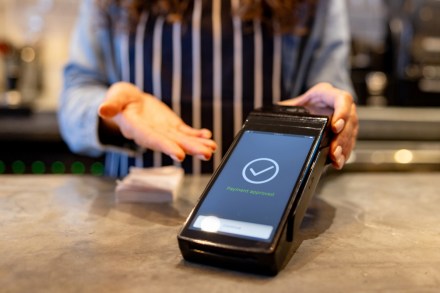
At the Eurostar terminal at London St Pancras, on my way back to Paris, I stopped at the Station Pantry. It’s a counter at the back of the terminal, and it does a roaring trade because it’s the only coffee place between immigration, security and the trains. There’s little else to do while you wait to be called to board, particularly when there aren’t enough seats for everyone. I ordered an espresso for £3.60. The cashier swung the screen around for me to pay. Ten, 15, 20 per cent? A tip for a cup I was about to carry away myself. I said it was wrong to be asked for a tip on takeaway coffee. She said that if I didn’t like it, I could press the red button and decline. But that’s not the point. This practice of prompting us to leave tips hasn’t come from customers.

Sébastien Lecornu is Macron’s last hope

From our UK edition

Emmanuel Macron has named Sébastien Lecornu, a loyal confidant, as France’s new prime minister after François Bayrou’s resignation. At 39, Lecornu is Macron’s last stand, a bid to reset a deadlocked presidency. Lecornu is one of Macron’s most trusted allies. His appointment is a deeply personal choice, signalling that Macron is circling the wagons and relying on his innermost circle as the crisis deepens. Lecornu is not a compromise candidate or a unifying figure, he’s Macron’s man, appointed to hold the line and protect the president’s political legacy. Lecornu inherits a fractured parliament, a looming budget crisis and a country on the brink of strikes. There is no doubt that he is accepting a poisoned chalice.

Marine Le Pen is calling the shots now

From our UK edition

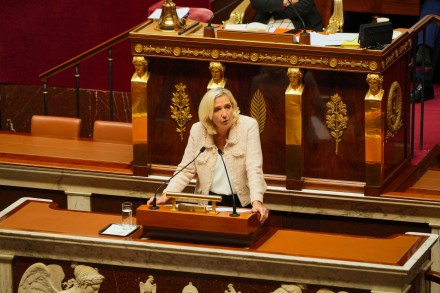
Emmanuel Macron projects authority, but he’s trapped. After the collapse of François Bayrou’s government yesterday evening, Macron faces a divided parliament, hostile blocs on both sides, and no obvious way forward. After the crushing no-confidence vote, Macron insists that he will appoint a new prime minister ‘in the coming days’. But appointing a successor without dissolving parliament won’t resolve anything. Without a clear majority, any new government would face the same hostile Assembly and the same threat of immediate censure as his previous appointees. The numbers don’t change just because the names do. Each option Macron explores risks failure. Increasingly, it is Marine Le Pen, and the choices she makes, that will decide what happens next.

France has been plunged into crisis – again

From our UK edition

Prime Minister François Bayrou’s government has collapsed after a bruising no-confidence vote in the French National Assembly. MPs rejected his budget by a margin of 364 votes to 194, with 25 abstentions, forcing his resignation and plunging Emmanuel Macron’s second term into chaos. On Monday evening, the Élysée released a statement saying that Macron has ‘taken note’ of Bayrou’s fall and will name his successor ‘in the coming days’. The president will meet Bayrou to formally accept his government’s resignation. But naming a new prime minister without calling elections risks prolonging the very deadlock that has brought the country to this point.

Will the Bloquons Tout strikes cripple France?

From our UK edition

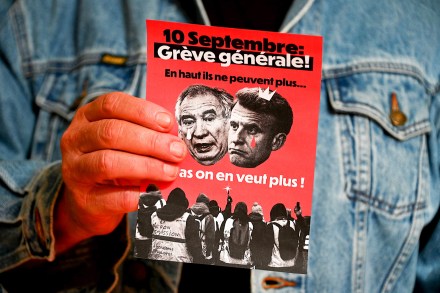
The French intelligence services are warning that next week’s Bloquons Tout mobilisation, set to start on 10 September, could dwarf the chaos of the gilets jaunes protests of 2018 to 2020. Up to 100,000 people are expected to join the ‘Block Everything’ campaign against a €44 billion austerity plan, undeterred by the near-certain collapse of François Bayrou’s government. Motorway blockades, refinery occupations, fuel depot seizures, and targeted strikes to cripple logistics hubs threaten nationwide paralysis. Police have identified 40 coordinated actions, with Marseille, Toulouse and Lyon flagged as flashpoints. The gilets jaunes occupied roundabouts and negotiated concessions.

The folly of blaming boomers for France’s financial crisis

From our UK edition

Ministers are packing up their offices. Emmanuel Macron’s government, desperate to shift the narrative and rally support ahead of its confidence vote on 8 September, is now blaming baby boomers for the financial crisis. Prime minister Bayrou is reframing the crisis as the result of decades of policies favouring older voters: generous pensions, protected benefits, early retirement – all funded at enormous cost to younger generations.

Migrant riots have come to Switzerland

From our UK edition

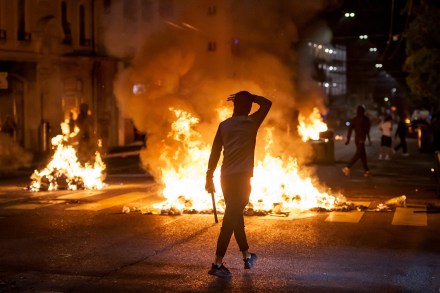
A stolen scooter, a police chase, and a fatal crash left a 17-year-old of migrant background dead. Within hours, Lausanne erupted in the worst rioting Switzerland has seen in decades. Two nights of violence tore apart Switzerland’s image as a stable and quiet country. Masked youths, overwhelmingly black, took to the streets, setting bins alight, vandalising buses, and clashing with police using fireworks and stones. By the second night, more than 200 rioters clashed with Swiss police as tear gas clouded the air and water cannons roared through the city. It could very well have been a suburb of Paris or Lyon, but this was Lausanne, just along the lake from Geneva, in supposedly calm and orderly Switzerland.

In defence of Notting Hill Carnival

From our UK edition

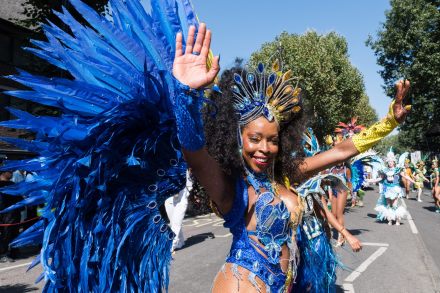
Every August Bank Holiday my neighbours in Notting Hill Gate pull down the shutters and disappear. Cornwall, Tuscany, anywhere but here. ‘You’re mad to come back for it’, they tell me. It is, of course, the Notting Hill Carnival. Does two million people celebrating together lose its value because a few hundred are arrested? I would argue not. I've been going for years. Mobile and bank card in my front jeans pocket. Earplugs, because the sound systems move your ribcage. I've never seen any trouble. Yes, it gets busy, yes, it's crowded, but that's the point. What I have seen is colour, joy and a city that remembers how to be alive. The costumes are outrageous. The food on its own is worth the trip. Strangers laugh together and the bass shakes the streets.

Is this the end for Emmanuel Macron?

From our UK edition

Prime Minister François Bayrou has recalled parliament for a confidence vote on 8 September, betting he can outmanoeuvre a surging protest movement before it paralyzes France. The grassroots ‘Bloquons tout’ campaign, echoing the gilets jaunes and fuelled by the hard left, plans to halt trains, buses, schools, taxis, refineries and ports. It is a general strike in all but name. Bayrou’s move aims to reassert control before chaos takes hold, but with the vote just two days before the open-ended strike begins, failure could topple his government and ignite a broader assault on President Macron’s authority.

The death of a streamer is being used to stifle free speech

From our UK edition

One viewer whispered on the livestream: ‘Yes, keep going… Keep going’. Moments later, Jean Pormanove was dead. Last Sunday night around 10,000 people watched as 46-year-old Raphaël Graven slumped forward on camera, unresponsive. As he died the chat spiralled into a frenzy, as the moment was streamed from a quiet village north of Nice in the French Alpes-Maritimes. Nobody called for help. Nobody stopped the broadcast. By the time the authorities arrived in the once quiet village, Graven was dead.

The awkward truth about tourists in Paris

From our UK edition

As Parisians slowly return from their long summer breaks, locals are beginning to do what they do best: complaining. Montmartre, one of Paris's most visited neighbourhoods, has become the centre of a growing backlash against overtourism. ‘Behind the postcard: locals mistreated by the Mayor’, reads one banner in English. Another declares: ‘Montmartre residents resisting’. The neighbourhood around Sacré-Cœur, once Paris’s bohemian hilltop village, says it’s had enough. Tourists aren’t destroying Paris, they’re underwriting it.

The sad decline of the French village fête

From our UK edition

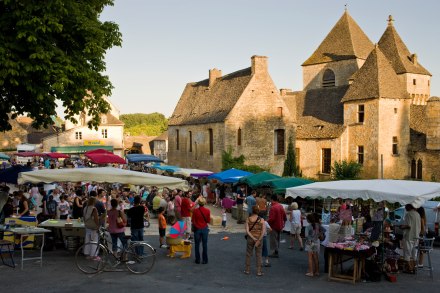
France’s village fêtes are disappearing. A survey by the association Les Plus Belles Fêtes de France found that in just four years, nearly a third are no longer held. Once the highlight of rural life, they’re now falling victim to shrinking municipal budgets, falling household income, a chronic shortage of volunteers, endless administrative obstacles and rising security fears. In some places, tension between communities has turned violent. Only two summers ago, a teenager was murdered when a group of young men arrived to disrupt a fête. Elsewhere, fights break out so regularly that prefects now warn mayors to be ‘particularly vigilant’ during celebrations. For centuries, the fête was a rare moment when the whole village came together without suspicion.

Could the Arctic be key to ending the Ukraine war?

From our UK edition

‘It is in Alaska and in the Arctic that the economic interests of our countries converge and prospects for implementing large-scale mutually beneficial projects arise,’ said Yuri Ushakov, Vladimir Putin’s long-time foreign policy adviser and former Russian ambassador to the United States, at a Friday press conference in Moscow. His words pointed to Arctic economic cooperation being firmly on the agenda when Donald Trump meets Vladimir Putin in Alaska on Friday. For Trump, a massively important commercial deal of this kind is his typical negotiating strategy. It’s the ‘Art of the Deal’ – offer something big, lucrative and tangible, then leverage it to unlock political concessions.

Donald Trump is humiliating Switzerland

From our UK edition

The Swiss president and economy minister are rushing to Washington in a last-ditch attempt to reverse Donald Trump’s decision to impose a devastating 39 per cent tariff on Swiss exports. That decision landed in Bern with the force of a punch to the stomach. Officials were blindsided and the stock market and Swiss franc slumped. The tariff, higher than what the EU or UK received, threatens the very foundations of Switzerland’s export-led economy. With just one day to go before the tariffs come into effect, the mood in Bern is one of quiet panic. A country that once prided itself on independence is learning that deference earns no favours in the age of Trump Right up until the announcement Switzerland thought it had done everything right.

What we could learn from Swiss bins

From our UK edition

Every time I’m in Switzerland, where I grew up, I find myself madly squeezing as much rubbish as I can into a garbage bag. It’s a delicate and messy task. In Switzerland, every bag of non-recyclable waste comes with a price tag – and it’s expensive. You won’t be surprised that the Swiss have perfected the art of recycling, aiming to minimise the amount that ends up in those pricey bags. The system is both simple and ruthless. Across Switzerland – except for the canton of Geneva – every household is required to use government-sanctioned bin bags for anything that can’t be recycled. They’re not your ordinary supermarket variety – these bags are sold at a premium to cover the cost of waste disposal. The less you throw away, the less you pay.

Why France is cracking down on topless tourists

From our UK edition

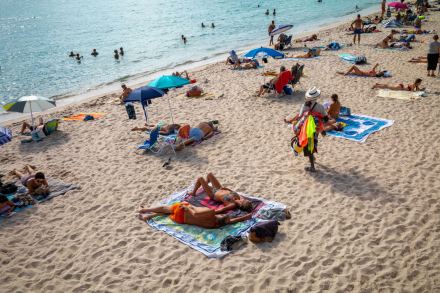
Police have been sent out to patrol France's seaside promenades. Not to chase hardened criminals – but to look for bare-chested tourists. From Les Sables-d’Olonne to Cassis, and in a growing number of coastal towns, local authorities are introducing by-laws banning shirtless men from wandering around in public. The fines are €150 if you’re caught walking from the beach to the bakery in swim shorts and flip-flops, but no shirt. Uniformed gendarmes have been instructed to enforce the rules. Posters have gone up at beaches. Police are stopping tourists, handing out tickets and giving lectures. The summer’s great threat to republican order, it seems, is the male torso.

Remembering Jonathan Miller

From our UK edition

The long-time Spectator contributor Jonathan Miller has died. James Tidmarsh remembers him here: Jonathan Miller liked to say that Emmanuel Macron was the gift that never stops giving. ‘The Spectator can’t get enough of him,’ he told me. ‘Macron serves up fresh spin, scandals and missteps, an endless supply of stories for any journalist willing to look behind the official line.’ When we first crossed paths on X, we’d swap messages about ministers, café gossip, and the small absurdities that make French politics so irresistible. Jonathan was usually in his village in the Languedoc sunshine. He loved it there and seemed content when describing the rhythm of village life.