James Tidmarsh

James Tidmarsh

James Tidmarsh is an international lawyer based in Paris. His law firm specialises in complex international commercial litigation and arbitration.

France wants to know the true cost of immigration

From our UK edition

The right-wing UDR group in the French parliament, led by Eric Ciotti, has called for a parliamentary commission to calculate the true cost of immigration. Ciotti is demanding a line-by-line accounting of France’s spending on healthcare, housing, education, and emergency aid for migrants, alongside their economic contributions. The French left recoiled instantly and predictably. To move the debate on, the Socialists tabled a no-confidence motion against the Bayrou government, ostensibly over pension reform, but widely seen as a bid to deflect Ciotti’s challenge. In Paris, few are fooled: immigration is the real flashpoint.
Has Trump brought peace to the Congo?

From our UK edition

It remains to be seen whether Trump’s ceasefire between Iran and Israel will hold, but on the other side of the world he has showcased his deal-making prowess in a very different conflict. In a few days, Rwanda and the Democratic Republic of Congo are set to sign a peace agreement, under US auspices, to halt the bloodshed in eastern Congo. The deal was classic Trump – blunt, transactional, and built on leverage. He applied pressure, offered incentives, and out of it came a deal. His approach delivered results where traditional diplomacy failed For years, Eastern Congo has been one of the most violent regions on earth. Earlier this year, the city of Goma in Congo fell to M23 rebels backed by Rwanda.

Why the fatwa against Gabriel Attal is so dangerous

From our UK edition

An imam at the Grand Mosque of Massy, just outside Paris, has threatened to issue a fatwa against former Prime Minister Gabriel Attal, head of Macron's party Renaissance, for his proposal to ban the hijab for girls under 15. In a video that has gone viral in France, the imam declared that Attal is ‘pushing us to issue a fatwa’ and that ‘I will be the one to dictate it’. His words have sparked outrage on the right. Interior Minister Bruno Retailleau has referred the matter to the courts, and Attal himself is weighing legal action. The left meanwhile remains mostly quiet.

France’s toddler screen ban is pure state overreach

From our UK edition

The French government is preparing to ban all screen time for children under the age of three. The measure, announced by the Minister of Labour, Health, Solidarity and Families, Catherine Vautrin, will form part of a broader national plan to combat screen use among the very young. Due to be launched in the autumn, the policy will ban tablets, televisions and smartphones in nurseries, hospitals, and other childcare settings, with sanctions for anyone who breaks the rules. The aim, according to the minister, is to change behaviour around early childhood and screen use. What next? A ban on loud toys? Fines for bedtime past eight o’clock? ‘This is how you change things’, Vautrin told Le Journal du Dimanche.

How can France ban outdoor smoking?

From our UK edition

Faced with a cost-of-living crisis, rising delinquency, failing public services, and riots in the suburbs, the French government has finally sprung into action  –  it’s banning smoking outdoors. Not entirely, of course, just in places where children might be. The new rules, coming into force in July, prohibit lighting up in any space ‘frequented by children’, which is as vague and self-important as it sounds. We’re told this includes parks, beaches, bus stops and pavements near schools. Where else? No one knows. What is clear is that the state is now more concerned with puffing parents, than with knife crime or collapsing hospitals. This isn’t really about second-hand smoke.

Anne Hidalgo has ruined Paris – now she wants to be UN refugee chief

From our UK edition

Anne Hidalgo, the mayor of Paris, is being lined up for one of the world’s most powerful humanitarian jobs: United Nations High Commissioner for Refugees. With Emmanuel Macron’s backing, she hopes to swap the Hôtel de Ville in Paris for Geneva, taking charge of a $10 billion global operation that defines who counts as stateless, who deserves protection, and indirectly who gets to enter countries like Britain. Now the very policies that have fuelled Paris’s dysfunction could be about to be exported globally Anne Hidalgo ruined Paris. She has destroyed its ancient heritage, dug it into a giant financial black hole, and left the city choking on traffic, crime, and ideological nonsense. She brags about planting trees and engages in green posturing while pavements crumble.

Why France’s taxi drivers are on strike

From our UK edition

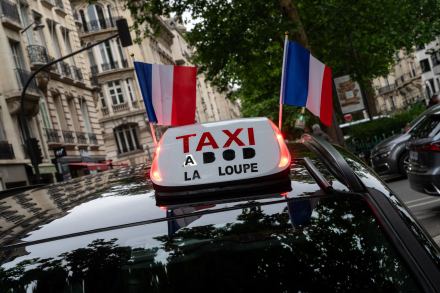
A taxi drivers’ strike has plunged Paris, Marseille, and other big cities into chaos. Approximately 5,000 taxi drivers have taken to the streets, blocking motorways, torching pallets, and clashing violently with police. On Boulevard Raspail in Paris, police repeatedly confronted protestors with clouds of tear gas. Airports and train stations have been blockaded by angry taxi drivers. At Marseille-Provence airport, thousands of tourists were stranded, including Brits forced to walk along motorways dragging their suitcases behind them just to get to or from the terminal. Convoys of taxis have been crawling along major roads to deliberately snarl up traffic and maximise disruption, in an operation dubbed by the unions as 'operation snail’s pace'.

Brussels is dropping a bureaucratic bombshell on Europe

From our UK edition

Brussels makes one thing better than anywhere else: regulation. Reporting duties, due diligence checks, ESG disclosures, and endless frameworks for climate and labour compliance – if it can be mandated, Brussels has a directive for it. Now Brussels has outdone itself with a directive that makes companies legally liable for the behaviour of every entity in their global supply chain. It’s due to come into force in 2027. The law has triggered a rare backlash. This week, Emmanuel Macron has called for it to be taken 'off the table'. Germany’s Chancellor Friedrich Merz has also demanded its repeal. But it seems even the bloc’s two most powerful governments can’t stop this from going through.

Bruno Retailleau’s quiet revolution

From our UK edition

Bruno Retailleau has done something nobody expected. He has made himself the most serious contender for the French presidency, not by campaigning, but by governing. In a government few thought would last, under a president widely seen as disengaged and more focused on foreign stages than domestic affairs, Retailleau has taken the hardest job in the country and quietly mastered it. This week he was elected leader of Les Républicains with 74 per cent of the vote – a crushing result that signalled just how completely he has taken control of the party. He is already Minister of the Interior. Now he is starting to look like the man most likely to replace Macron.

Can France dismantle the NGO-migrant complex?

From our UK edition

France’s interior minister, Bruno Retailleau, and his party Les Républicains (LR) are moving to end the decades-long monopoly on providing legal advice held by left-leaning NGOs inside migrant detention centres. A new Senate bill seeks to strip NGOs such as Cimade and France terre d'asile of their exclusive role providing legal assistance to undocumented migrants awaiting expulsion. In their place, the government wants a more neutral, accountable system without publicly funded activists obstructing its deportation policy. Critics argue that activist lawyers file migrant appeals in large volumes, often with little legal merit. These automatic suspensions delay deportations The bill, tabled by Les Républicains, is part of a broader crackdown.

Why is Macron courting the Freemasons?

From our UK edition

Emmanuel Macron turned this week to France’s shadowy Freemasons for support. In a speech delivered to the secretive Grande Loge de France, he asked for their help to defend the Republic's core values, and urged them to stand up to extremes, by which he means Le Pen’s National Rally. Macron needs to stabilise the political centre, which he once comfortably occupied, but which is shrinking fast under pressure from the right. That a sitting French president would attempt to enlist the Freemasons is astonishing That a sitting French president would attempt to enlist the Freemasons is astonishing. Normally shrouded in discretion, the group has never been publicly courted by any president.

France is quietly tightening its citizenship rules

From our UK edition

Bruno Retailleau, the hardline French Minister of the Interior, has issued a confidential circular to regional prefects with a simple instruction: tighten the rules on naturalisation. For decades, France has handed out its passport to people who may speak French, but have little understanding of French history or values, and, in some cases, entered the country illegally. That era may finally be coming to an end. Retailleau has revived the principle that nationality is not a right, but a privilege Retailleau is hardening the assessment of who deserves French nationality, instructing regional prefects, who take the decision as to who gets a passport, to be considerably more tough. No more box-ticking. No more treating citizenship as a reward for simply being in France for five years.

Was this right-wing TV host joking about taking on Marine Le Pen?

From our UK edition

A controversial and wildly popular right-wing television star says that he orchestrated a ‘prank’ that he was about to jump into the French presidential race. Cyril Hanouna is a foul-mouthed and hugely influential television star. His politics are messy, his delivery erratic, but he has a vast audience and momentum. He’s anti-woke and talks a tougher line than Le Pen on immigration. Hanouna’s ‘prank’ should worry the National Rally, which is becoming too eager to be accepted by the establishment it once claimed to oppose News of Cyril Hanouna’s potential presidential candidacy set France’s media ablaze, with comparisons to Trump and Zelensky, media stars who leapt into politics. But was it a prank, as Hanouna later claimed, or a calculated test of the waters?

Medical migration is crippling France’s healthcare system

From our UK edition

Doctors are sounding the alarm. Across France patients are unable to get appointments and wait times in hospital emergency departments have been known to stretch to more than two days. In Nantes, such was the backlog that four people died in emergency rooms over just a three-week period while waiting to be admitted. This is a system stretched far beyond capacity. France’s hospitals are buckling, not because of a pandemic or a natural disaster, but some say because the country offers free, lifelong medical care, and often residency, to anyone from abroad with a serious illness.

The African cardinal who terrifies Macron

From our UK edition

Cardinal Robert Sarah from Guinea in West Africa has been named among the potential successors to Pope Francis and the prospect is sending a jolt through the French establishment. He has accused the West of betraying its Christian roots and described mass migration as a form of ‘self destruction’. He has spoken of immigration as a ‘new form of slavery’ created by Europe’s failure to defend its identity and has called on young Africans to remain in their own countries and build their futures at home. In 2021, during an interview on French radio, he made one of his most quoted comments: ‘If Europe continues in this way, it will be invaded by a foreign population.’ In today’s France, those words land like a grenade. The unease at the Élysée is palpable.

Pet theft in France is out of control

From our UK edition

Dog theft in France is soaring. Animal protection groups estimate that up to 70,000 dogs are stolen each year – nearly 200 a day. The scale of the problem is staggering, and it's getting worse. Small, high-value breeds are the main targets. French Bulldogs, Pugs, Chihuahuas and Siberian Huskies are among the most frequently stolen. A purebred French Bulldog can sell for up to €2,500 on the black market. Some are resold within hours. Others are trafficked to illegal breeding operations. It is not only dogs that are disappearing. Cats, particularly purebreds, are increasingly being targeted as well. According to animal welfare organisations, the number of cat thefts is rising in parallel with dogs. Breeds such as Maine Coons, Bengals and Persians are especially sought after.

Donald Trump is taking on China in Africa

From our UK edition

Donald Trump has opened a new front in his trade war with China, deploying a family confidant to Kinshasa to challenge Beijing’s control of critical minerals. Almost unnoticed amid the tariff battles, Trump is working to reclaim the mineral supply chains that power the modern world – starting in the Democratic Republic of Congo at Africa’s heart. His plan is to give US military assistance to the beleaguered government of President Félix Tshisekedi in return for access to cobalt and copper reserves worth trillions. Congo produces 70 per cent of the world’s cobalt – used in electric vehicles, smartphones, and advanced weaponry. It also exports copper, tantalum and lithium – everything needed to build batteries, missiles, and data centres.

The end of the pick ’n’ mix passport

From our UK edition

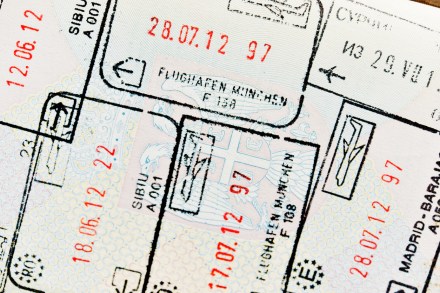
The second passport used to be a backdoor: a legal hack for the well-advised, well-connected or well-heeled. You could acquire nationality in a country you’d hardly visited, without necessarily even speaking the language, and still find yourself welcomed with open arms – or at least waved through the fast-track lane at immigration. But that game is ending. More and more governments are closing the door on tenuous ancestral claims and pay-to-play citizenship. Whether through lineage or liquid assets, the old tricks to get a second passport no longer work. Nationality is being redefined – not as a loophole, but as a bond. The appeal of a second passport has always been practical. For Britons, Brexit turned the post-Brexit navy passport into a travel straitjacket.

Should Marine Le Pen step down?

From our UK edition

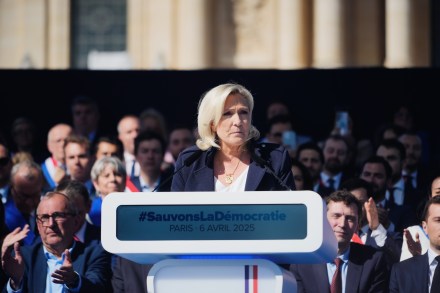
It was a rally for Marine Le Pen billed as a rendez-vous historique. In the end, barely a few thousand people showed up on Sunday afternoon in Paris. In a city where more than a million marched after the Charlie Hebdo attacks, and where hundreds of thousands protested against racism and police violence in recent years, Sunday’s rally for Marine Le Pen barely registered. The Rassemblement National had promised a great mobilisation to denounce Le Pen’s recent conviction and her five–year ban from public office. What it delivered was a media production surrounded by journalists and padded out by militants bussed in from the provinces. The rally failed to convince or to inspire.

Could France’s GB News be shut down?

From our UK edition

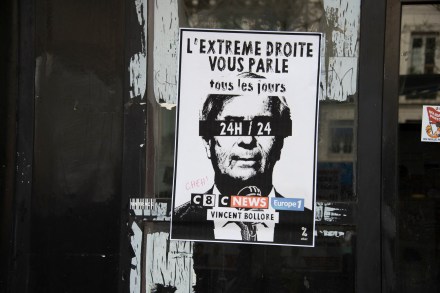
France’s media regulator, Arcom, has been asked to investigate the right-leaning news channel CNews over its coverage of Marine Le Pen’s conviction this week. The 24-hour news channel is accused of being too one-sided, too sympathetic to Le Pen, and too critical of the judiciary in its editorial response to the decision that knocked her out of the presidential race. On Monday, Marine Le Pen was convicted by the Paris Criminal Court of misusing European Parliament funds – a four-year sentence, with two years suspended and two years with an ankle tag, a €100,000 fine (around £85,000) – and a five-year ban from holding public office which came immediately into effect.