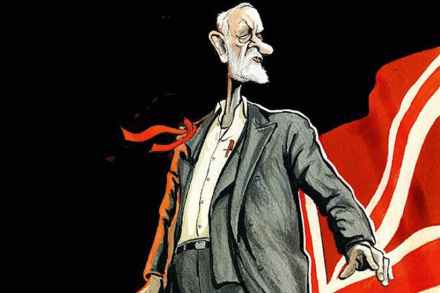
James Kirkup

James Kirkup

James Kirkup is a partner at Apella Advisors and a senior fellow at the Social Market Foundation.

The Independent Group is already changing politics for the better

Most people at Westminster are betting against the Tiggers. Most people, if forced to guess, would predict that the Independent Group won’t become a new political party that wins scores of seats in the Commons. We can all recite the reasons: no membership, no machine, no leader, no policy platform, the electoral system… But maybe that doesn’t matter. Because there are more ways to change things than winning seats. Just ask Ukip – if you can find it these days. Ukip only ever won one seat in the Commons, and in truth it was Douglas Carswell not the party who delivered it. But Ukip still changed history: without it, David Cameron would very likely have got out of calling the EU referendum.

What MPs are still getting wrong about the trans debate | 25 February 2019

I am a little late in coming to the recent report on community cohesion by the All Party Parliamentary Group on Hate Crime. It was published earlier this month but drew little attention at Westminster: yet another example of Brexit smothering the domestic policy agenda, I suppose. The report has lots to say about lots of different types of nasty behaviour.  Among the topics it covers is the gender debate, the discussion of trans rights and their potential impact on the rights of others. One one level, this is a good thing.  It is the job of MPs to debate and discuss matters of contention and controversy.

Honda’s departure is bad news for Brexiteers – and Remainers

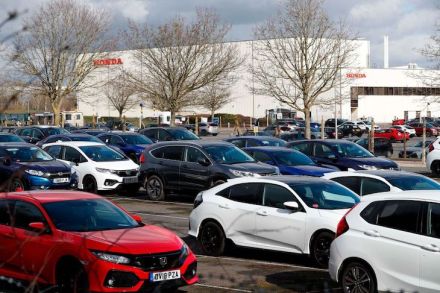
The story of Honda leaving Swindon is another case-study in how Brexit is a political circus-mirror, warping and twisting perceptions on all sides. Basically, everyone is wrong and should shut up. Honda isn’t leaving Swindon because of Brexit. We know that because Honda has said it, about as clearly as a company can. Ian Howells, senior vice-president for Honda in Europe, told the BBC: 'This is not a Brexit-related issue for us.' That, of course, is at odds with the account offered by several politicians and countless #FBPE people on Twitter. David Lammy and Sarah Wollaston are among the MPs who yesterday linked the closure to Brexit. At the time of writing, neither has said anything about the company’s comment.

Corbyn’s cheerleaders are wrong to sneer at Which? magazine

First, a confession. Because I try not to spend too much time on Twitter, I sometimes miss “the story that everyone at Westminster is talking about” and struggle to keep up with village gossip. Worse, I lose track of the minor characters the ceaseless opera of poisonous soap, or fail to recognise them for what they are.  For instance, I only recently discovered that Aaron Bastani is actually a real person and not, in fact, someone’s parody of something. Sorry. Today on political Twitter, it seems that “everyone is talking” about Dr Bastani and Which? magazine, in the context of the new Independent Group of Labour MPs.  Dr Bastani suggested that the new group is “Pro Which? Magazine” in a tweeted list of its other supposed crimes.

Why are the police stopping a 74-year-old tweeting about transgenderism?

Margaret Nelson is a 74-year-old woman who lives in a village in Suffolk. On Monday morning she was woken by a telephone call. It was an officer from Suffolk police. The officer wanted to speak to Mrs Nelson about her Twitter account and her blog. Mrs Nelson, a former humanist celebrant and one-time local newspaper journalist, enjoys tweeting and writing about a number of issues, including the legal and social distinctions between sex and gender. Among the statements she made on Twitter last month and which apparently concerned that police officer: 'Gender is BS. Pass it on'. Another: 'Gender's fashionable nonsense. Sex is real. I've no reason to feel ashamed of stating the truth.

Why are the police stopping a 74-year-old tweeting about transgenderism? | 5 February 2019

Margaret Nelson is a 74-year-old woman who lives in a village in Suffolk. On Monday morning she was woken by a telephone call. It was an officer from Suffolk police. The officer wanted to speak to Mrs Nelson about her Twitter account and her blog. Mrs Nelson, a former humanist celebrant and one-time local newspaper journalist, enjoys tweeting and writing about a number of issues, including the legal and social distinctions between sex and gender. Among the statements she made on Twitter last month and which apparently concerned that police officer: 'Gender is BS. Pass it on'. Another: 'Gender's fashionable nonsense. Sex is real. I've no reason to feel ashamed of stating the truth.

Women get treated far worse than men in Labour’s transgender debate

'Retweets are not endorsements.' It’s possibly the most futile disclaimer of our times. Anyone with the slightest knowledge of the hate-pit that is Twitter knows that sharing something renders you wholly responsible, not just for its contents, but for all the actions and opinions of its author, and the responses that people have to it. If you were, for instance, to retweet a link to a column this week by The Spectator’s Rod Liddle because you thought he made an interesting observation about, say, the BBC, you are of course endorsing something tasteless that he might have written in the Sunday Times last month or something horrible he did in real life a year ago. And you share responsibility for the upset those things have caused.

Is it now a crime to like a poem about transgenderism?

This is a story about Harry Miller, a man who has lived a life that might be described as blameless and even admirable. He’s the director of a company that employs 70-odd people in one of the poorer bits of England, invests in its staff and community, and uses its financial and technical expertise to raise large sums of money and make life better for people who really need it in very poor parts of Nepal. Miller, a former police officer, is not frankly, the sort of person you’d expect to the subject of a police inquiry. Yet according to Miller on Wednesday this week, he found himself answering questions -- for 34 minutes – from an officer from Humberside Police. He doesn’t live in Humberside, incidentally, and nor is his business based there.

Brexit is making Tories unforgivably careless about the union

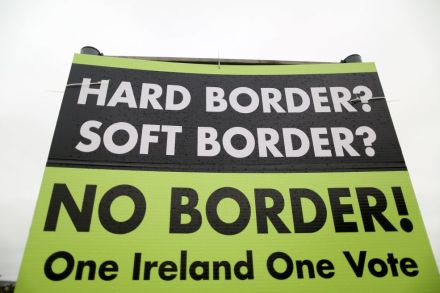
On Saturday, a car bomb went off in the UK. In Londonderry, Northern Ireland, to be exact. It was the latest in a long, long list of terrorist-related incidents in Northern Ireland, many of them carried out by men who wish to unite the island of Ireland in one state. Today, the European Commission stated, more bluntly than it ever has before, that Britain leaving the EU without a deal will mean a hard border between the EU (Ireland) and the UK (Northern Ireland). That means checkpoints and men in uniform policing the physical division of the island of Ireland. Let us, if such a thing is possible, set aside questions of whether that hard border is truly inevitable in a no-deal exit. Let us also set aside any questions of blame for the prospect of that hard border.

Brexiteers are destroying their own dream

Are some Brexiteers addicted to disappointment and frustration? Do they so crave the righteous indignation that flows from being thwarted that they are actively trying to sabotage their own project? How else to explain the extraordinary strategic incompetence of Tory MPs who say they want Britain to leave the EU yet behave in a way that makes it increasingly likely that Britain will not do so? Brexit-backing readers may well dismiss my thoughts on Brexiteer strategy because I am, of course, a dreadful Remainer. More accurately, I voted to remain and I believe that leaving the EU will give the UK a range of possible futures that are less economically beneficial than those we’d have if we remained a member.

The question that Leavers and Remainers still can’t answer

Why did Britain vote for Brexit? As Parliament gazes into the abyss, the question seems worth asking, even if I don’t pretend to be able to offer a simple answer. And that’s the point, really. Britain is teetering on the brink of a grand failure of policy and politics because, insofar as anyone involved has even wondered why a majority of voters rejected Britain’s political-economic settlement in June 2016, they have generally come up with simple, shallow answers. Among No Deal Leavers, most explanations for the referendum result these days refer to “control” (especially over immigration policy) or “sovereignty” or some nebulous idea of the economic opportunities that lie in different trading arrangements.

Five reasons Brexiteers should learn to love the backstop

Westminster conversation about Brexit often suffers a time lag. MPs frequently speak with surprise about things that actually happened months ago and which are regarded as old, established facts in Brussels and policy wonk-world. The backstop is the best example: outlined in the December 2017 Joint Report of the UK and EU negotiators, its meaning and necessity still came as a novelty to some MPs – resigning cabinet ministers included – in June; and to others in November. (The 2017 election result is another instance: it took many Tory MPs at least a year to realise it meant there could be no Commons majority for the hardest form of Brexit; some still haven’t worked that out.

2018: the year that exposed the Brexit fantasies on all sides

When the tide goes out, you see who’s swimming naked. So says Warren Buffett, the folksy billionaire investor, explaining that tough times expose which firms have poor management. The same is true of politics, and especially Brexit. 2018 was the year the tide went out on Brexit, and we saw too many of our politicians' failings exposed in all their shrivelled glory. The tide was, like all tides, predictable. As we neared the end of the two year Article 50 period, the outline of a potential exit deal had to emerge, and that deal would show that, contrary to fantasy, the EU holds the better hand of cards in this game. Any agreement to leave the EU was always going to involve compromises, decisions to accept something less than what you hoped for.

Tory MPs need to face reality, and back Theresa May

Tory MPs should vote for Theresa May in tonight’s confidence vote. Keeping her in place will be painful, difficult and lead to any number of awful problems. But it is far, far better than the horrors that will follow if they remove her. Even if you can, like Owen Paterson, blithely gloss over the fact that Britain would not have a permanent head of government for a month at a time of national crisis, you can’t deny the fact that changing the leader won’t change the parliamentary numbers. Nor — despite the fantasies of the Tory unicorn-herders — will it change the EU position.

The lies and liars of Brexit

I started my first job at Westminster in 1994, more than half a lifetime ago. Almost all of my career has been spent watching politicians, talking to politicians, writing about politicians. I covered the case for war in Iraq and the war’s dismal descent into failure. I was part of the Telegraph team writing about MPs expenses. I’ve written about more ministerial resignations, scandals, failures of public policy and abdications of leadership than I can remember. None of those failures has ever left me quite as bewildered and despairing as I am today, pondering the latest act in the national farce that is Brexit. Bewildered, despairing and surprisingly angry.  Surprisingly because I don’t often get angry with politicians.

Jeremy Corbyn’s Brexit position reveals his greatest secret: he’s a Blairite

Anyone observing or participating in the continuing collective trauma of Britain’s Brexit debate should pay more attention to Jeremy Corbyn and some of the most important — and to some people, surprising — things he has done as Labour leader. Here’s a short list: 1. Promised big handouts for the middle class. Mr Corbyn ran his 2017 general election campaign offering huge middle class subsidies from the state. Scrapping tuition fees and offering “free” universal higher education would be a gift to the better-off, whose kids still dominate university entry. (Just look at Scotland.) And the gift would be funded by non-graduate workers’ taxes. 2.

The question May’s Brexit deal critics must ask themselves

Brexit is an accident born of misunderstanding. One of the biggest miscalculations is about the EU and how it works. Troublingly, that misjudgement, embraced by both unwise Leavers and imprudent Remainers, could just lead Britain off a cliff, for the second time in three years. I attended my first EU summit in 2001 and stopped counting the number of Council meetings, ECOFINs and other EU gatherings when the figure passed 50 some time early in the financial crisis. I’ve seen a lot of British politicians go to Brussels (and elsewhere, in those innocent days before the Belgians captured all council meetings for their capital) and pursue the British national interest, with varying degrees of success.

Women are abused in the name of ‘trans rights’. But do MPs care?

There are some things that pretty much everyone in politics and public life agrees on. Ask any politician about any contentious, heated debate and they’ll immediately talk about the need for respectful debate, for all views to be heard calmly and in a civilised manner. They’ll say that there is no place for harassment and abuse and bullying and threats, because this is Britain, a mature democracy where everyone gets to express their views about things like politics and the law without fear. Except that’s not entirely true. There are some people who aren’t allowed to speak freely, who cannot express their views about things like politics and the law without being abused and threatened and, from time to time, assaulted.

The question May’s Brexit deal critics must ask themselves | 3 December 2018

Brexit is an accident born of misunderstanding. One of the biggest miscalculations is about the EU and how it works. Troublingly, that misjudgement, embraced by both unwise Leavers and imprudent Remainers, could just lead Britain off a cliff, for the second time in three years. I attended my first EU summit in 2001 and stopped counting the number of Council meetings, ECOFINs and other EU gatherings when the figure passed 50 some time early in the financial crisis. I’ve seen a lot of British politicians go to Brussels (and elsewhere, in those innocent days before the Belgians captured all council meetings for their capital) and pursue the British national interest, with varying degrees of success.

A Brexit deal between Tories and Labour is just common sense

Despite – or perhaps because of – the fact that I’ve spent most of my adult life writing and talking about politics and politicians, there are still things about politics that I just cannot, on a fundamental level, understand. Top of the list is tribalism, the “my party right or wrong” stuff that reduces public policy to the level of football chants. (Yes, football is another thing I don’t get. Surprising, I know.) Apart from anything else, taking the view that the people and ideas of the other side are automatically bad is surely utterly self-defeating? Politics is about persuading the greatest number of people to agree and support you, whether at elections or during day-to-day governing.