James Kirkup

James Kirkup

James Kirkup is a partner at Apella Advisors and a senior fellow at the Social Market Foundation.

The truth about David Cameron and the ‘mad, swivel-eyed loons’

Six years ago this week, I went to dinner with four friends. Three were journalists: James Lyons, Sam Coates, Tim Shipman. The fourth does something else; I’m not going to drag him into this tale. Dinner was in the Blue Boar, a cornerstone of Westminster entertaining and then, as now, the sort of place you bump into all sorts of political people. Which is exactly what happened that night. A senior person in the orbit of David Cameron passed our table. Spotting us, the person stopped to chat, gossip and trade information. Business as usual for Westminster, though what happened next was a little out of the ordinary. First, a bit of context. This was May 2013 and Cameron was struggling with backbench Tory discipline.

Theresa May’s successor should be careful what they wish for

Let’s assume this really is the start of the last act of Theresa May’s premiership. Let’s assume too that her Withdrawal Agreement dies a fourth and final death in the Commons in early June. The Conservatives will then go looking for a new leader and prime minister. There are already no end of candidates.  But I have a question: why would anyone want the job in those circumstances? If the WA dies, there are only two options left for Britain: leave with no deal on October 31, or revoke Article 50. Anyone who tells you there is a third option is trying to sell you something.  Yes, I know that various people suggest that a better form of exit deal is possible. It’s not.

What the next Tory leader needs to know about inequality

The Institute for Fiscal Studies has launched an impressive new commission on inequality. What’s most impressive about the project is not the Nobel-winning array of commissioners, it’s the fact that the IFS is trying to broaden public and political understanding of what inequality is. And in so doing, it also describes a political trap that many Conservatives seem keen to fall into. Start with the definition. Here’s the Deaton Commission’s opening publication: “…inequality is not just about money. Inequality exists in the stresses and strains on family life, which shape the environment in which children grow up.

At last, a Tory leadership contender talking about policy

The Tory leadership contest hasn’t formally begun but the shadow-boxing has been uninspiring. Brexit positioning dominates, leavened with a bit of backstory and personal colour: Dominic Raab’s kitchen, Michael Gove’s parental home in Aberdeen, Liz Truss’s Instagram account, Jeremy Hunt’s wife. And Boris Johnson keeping quiet, for some reason. To be fair, Rory Stewart’s simple honesty — he fancies the job and reckons he’d be good at it: why can’t the rest speak so plainly? – has been cheering, but it’s not yet clear if he’s really a serious candidate. On the whole, we’ve heard grimly little from the folk in the running about what they would actually do with the job.

Women are being silenced from speaking about transgender rights

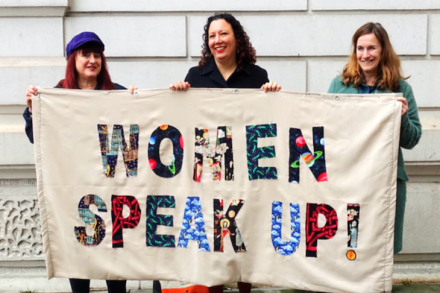
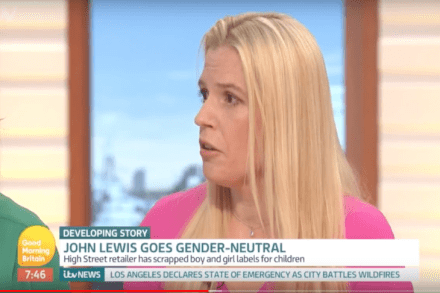
I have written several times here about the fear that some women have about expressing their opinions and concerns about the trans-rights agenda. I know of women in many walks of life, some of them prominent public figures, who think that current and potential policies intended to make life easier for trans women (that is, people born male who know identify themselves as women) will have the effect of diminishing women’s safety, dignity and legal standing. Among their concerns are the gradual erosion of laws that allow companies and organisations to restrict access to particular services and spaces according to sex (which is a biological fact).

At last, an MP brave enough to say: Twitter hates women

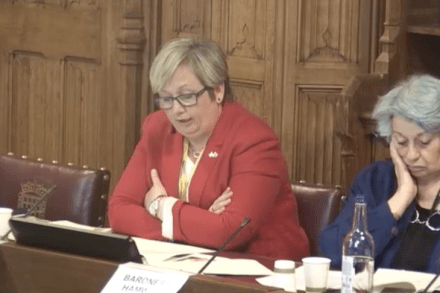
It can never be said enough that Twitter is not real life, and that it is a huge mistake to think that what goes on there is representative of politics, society or humanity as whole. I’m not sure about its overall impact on the world, but I sometimes think that British politics and journalism might be better if Twitter did not exist. But it does exist, and it does matter. Debate there helps to shape conversations more widely. And yes, Twitter gives a voice and a platform to people who might otherwise have none. So when Twitter starts denying a voice and a platform to certain people and certain ideas, that matters. It also matters when Twitter makes it possible for certain people with certain ideas to be violently abused for expressing those ideas.

Clever Tories admit capitalism isn’t perfect

One of the many things that has been neglected in the Conservative Party because of all-consuming Brexit is a meaningful debate about markets and business. Confronted with a Labour leader offering a clear critique of capitalism as a “rigged” system and outflanked by Nigel Farage telling a remarkably similar story about big money financing a self-regarding elite, the Tories have generally offered two responses. Both are flawed. On one hand are those who think the answer to complaints about the economy is to yell about Margaret Thatcher, Milton Friedman and sometimes Singapore. Liz Truss has become the most prominent advocate of what Stian Westlake rather brilliantly calls “live-action role-playing Thatcherism”.

The myth of the Great British Brexit trade policy

It makes almost no sense for the Brexit debacle to have come down to the issue of an 'independent British trade policy'. Trade was not a central issue at the referendum and remains wildly misunderstood by public and politicians alike. But we are where we are. If we end up crashing out by accident, or the May government tears itself apart, it will be on the pretext that significant numbers of Tory MPs want that independent trade policy and cannot stomach the restrictions that a customs union would put on Britain’s freedom over trade. It’s hard to know where to start with trying to dismantle the trade illusion, so long is the shadow it casts over almost the entire Brexit debate.

It is now ‘transphobic’ to report doctors’ fears about trans’ children’s health

The Times today reports serious concerns about the functioning of the Gender Identity Development Service (GIDS) at the Tavistock & Portman NHS Foundation Trust. Lucy Bannerman, the Times reporter, writes: “The Times has spoken to five clinicians who resigned from the service because of concerns over the treatment of vulnerable children who come to the clinic presenting as transgender. “They believe that some gay children struggling with their sexuality are being wrongly diagnosed as “transgender” by the Gender Identity Development Service (GIDS) clinic.” “All five former staff were responsible for deciding which trans-identifying youngsters should be given hormone blockers to halt their sexual development.

The opponents of Common Market 2.0 show why it’s the best Brexit option

Nick Boles’ Common Market 2.0 plan for Brexit has an awful lot going for it: it would honour the instruction of the British people to leave the European Union, while minimising the economic cost of that decision by keeping the UK largely within the Single Market. And the fact that the previous paragraph will drive some people into a frenzy of rage says quite a lot about those people, and even more about the Brexit debate as a whole.  In fact, the story of Common Market 2.0 is the story of Brexit. It captures many of the key disasters of this national debacle and highlights the way in which people on all sides have colluded to destroy a sensible centre where a workable Brexit compromise might have been built.

The prospect of a national government should be taken seriously

It’s come a day earlier than I expected, but we are now entering the 'government of national unity' phase of the Brexit debacle. Nicky Morgan, once a Tory Cabinet minister, said this on the Today programme: 'It may well be that if you end up with a cross-party approach to finding a majority in the House of Commons, it might be that you need a cross-party approach to implementing it. There have been periods in our history when we have had national unity governments or a coalition for a very specific issue.' Tom Watson of Labour has made similar noises.

Nick Boles is a rare hero in a Parliament full of cowards

Failure. A failure of politics, a failure of courage. MPs have failed over Brexit, time and time again. Worse, many MPs fail to realise how badly they’re failing, the harm they are doing.  This isn’t true of everyone in the Commons. There are still some heroes. Nick Boles is one.  His cross-party Common Market 2.0 plan – a Norwegian model of Brexit – is not yet dead but has been grievously wounded. It was attacked from both sides. The hard Brexiteers said it wasn’t hard enough, even though it’s what many of them promised or wanted before the referendum.

In defence of Sarah Vine

The first job of a columnist on a big newspaper is to be noticed. If people aren’t talking about the things you’ve said, what’s the point? By that measure, Sarah Vine is a good columnist. Her name is known. At the Daily Mail she says things that people notice and talk about. She does it on Twitter too. Over the weekend, she had this to say about the anti-Brexit march through London: “There are no leavers there because they would be lynched. These people are so convinced of their righteousness they cannot see anyone who disagrees with them as anything other than a monster. The rhetoric against people who voted to Leave characterises them as sub-human.” That is a mixture of fair comment and daft hyperbole.

MPs must not use May as an excuse to walk into Brexit disaster

Theresa May has united Westminster. Right across the political spectrum, politicians and journalists agree that her televised statement from No. 10 last night was an epic misjudgement, that seeking to pin public blame on MPs for the failure to agree a Brexit outcome has made it even less likely that they will now reach such an agreement. The PM’s awful statement, it is said, has driven away the very MPs she needs to pass her Withdrawal Agreement next week. Consensus like that deserves scrutiny, because it’s often a cloak under which people can hide inconvenient facts. Consider the assertion that May has alienated MPs who will not now vote for her deal.

The journalist investigated by police for ‘using the wrong pronouns’

Here we go again. Another woman is facing a police investigation – and potentially, a jail sentence -- because she wrote things online about sex, gender and a person who changed gender. So far, so familiar, but this tale has a significant feature. The woman is a journalist. A British police force is investigating a journalist over words that she published. Caroline Farrow, 44, is the subject of an investigation by Surrey Police over tweets she sent referring to the adult child of Susie Green, head of Mermaids, a charity concerned with transgender children. Farrow says the investigation arises because she 'misgendered' the child, who was born male but now identifies as female. Farrow is a columnist and occasional TV commentator.

The journalist investigated by police for ‘using the wrong pronouns’ | 20 March 2019

Here we go again.  Another woman is facing a police investigation – and potentially, a jail sentence -- because she wrote things online about sex, gender and a person who changed gender. So far, so familiar, but this tale has a significant feature. The woman is a journalist. A British police force is investigating a journalist over words that she published. Caroline Farrow, 44, is the subject of an investigation by Surrey Police over tweets she sent referring to the adult child of Susie Green, head of Mermaids, a charity concerned with transgender children. Farrow says the investigation arises because she 'misgendered' the child, who was born male but now identifies as female. Farrow is a columnist and occasional TV commentator.

MPs were elected to lead, but they are opting for turmoil and disaster

Whether Britain leaves the European Union and the manner of that departure, are the most consequential decisions that British politicians will face for a generation. The choices our leaders and representatives are making this week are as important as any they will make in their careers. And as things stand, with the European Research Group of Conservative MPs and most Labour MPs pledging to vote against the proposed Withdrawal Agreement, the House of Commons will tonight deliberately and knowingly vote for the country to take an economic, political and constitutional leap into the unknown. MPs who were elected to lead will instead bring the country’s future down to the roll of a dice, unable to say with any certainty what the results of their vote will be.

MPs have failed on a grand scale over Brexit

A Commons defeat for Theresa May’s proposed EU withdrawal agreement this week is priced in. Westminster has shrugged and accepted another Commons drubbing as a given. MPs’ refusal to back the deal is just another fact of life, something mundane and barely worth commenting on; all the action is in considering reactions and responses to that defeat: will Mrs May cling on? Who might follow her? But that assumed Commons refusal deserves more attention because it represents failure, failure on a grand scale. Failure of leadership and failure of courage. MPs’ failure to do their jobs. I think MPs should back the deal. I don’t think it’s a very good deal, because I don’t think any Brexit deal is good.

Jonathan Dimbleby’s Any Questions? was the BBC at its best

The recent history of the BBC is a tale of two Dimblebies. David, the elder, enjoyed the higher profile on television, but at a terrible price: his latter years at Question Time saw him acting as ringmaster for a programme that had become a 'show', a three-ring circus of shallow anger and offence. Now Jonathan, the younger, is retiring from Any Questions?, the Radio Four programme that served as a weekly reminder of what the BBC can be when it remembers its real purpose and stops worrying about being popular. For a generation – 32 years, to be exact – Jonathan has spent Friday nights in town halls, schools and scout huts, chairing with acerbic asperity a serious conversation between serious people about serious things.

What MPs are still getting wrong about the trans debate

I am a little late in coming to the recent report on community cohesion by the All Party Parliamentary Group on Hate Crime. It was published earlier this month but drew little attention at Westminster: yet another example of Brexit smothering the domestic policy agenda, I suppose. The report has lots to say about lots of different types of nasty behaviour. Among the topics it covers is the gender debate, the discussion of trans rights and their potential impact on the rights of others. One one level, this is a good thing. It is the job of MPs to debate and discuss matters of contention and controversy. This is one such issue, yet it has not been fully debated in Parliament, not least because a lot of MPs are too scared to enter an arena where passions run very high indeed.