James Heale

James Heale

James Heale is The Spectator’s deputy political editor.

Keir Starmer and the return of the culture wars

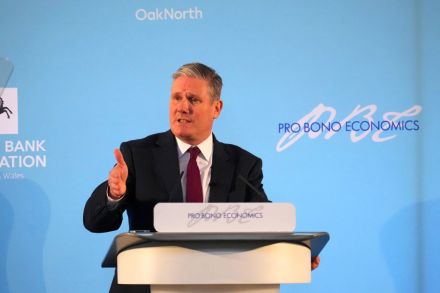
It’s the question every political strategist asks themselves. What is something that the public wants, is incredibly popular – and free? The answer, of course, is a good old-fashioned culture war. Amid ongoing questions about Labour’s commitment to its £28 billion ‘green new deal’, Sir Keir Starmer’s speech this morning eschewed talk of spending commitments. Instead, speaking at the Civil Society Summit in central London, he opted to defend supposedly ‘woke’ institutions against what he called the ‘weird McCarthyism’ of the Tory party. Starmer’s argument was that the Conservatives have sought to clamp down on opposition voices in office by trying to find ‘woke agendas’ in British civic institutions.
How far will Hunt cut taxes?

14 min listen

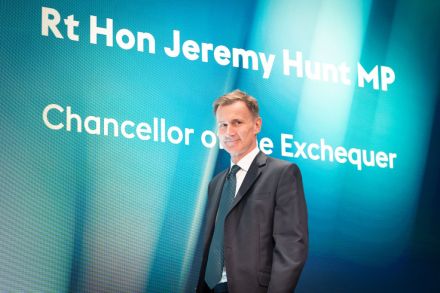
Jeremy Hunt said he would look to cut taxes in the March budget. In the Mail on Sunday, he said he would look to emulate the late Nigel Lawson, who as Margaret Thatcher’s chancellor slashed rates. But Hunt has been promising tax cuts, and hardly delivering, for a while. Will this time be any different? James Heale speaks to Katy Balls and Kate Andrews.

Why won’t the Tories back Birbalsingh?

15 min listen

Katharine Birbalsingh, headteacher at the Michaela community school in Brent, is being challenged in the High Court over a policy which allegedly bans students from praying. Ms Birbalsingh has defended the policy, arguing that it is vital to 'maintain a successful learning environment where children of all races and religion can thrive.' Should the Tories step in? Max Jeffery speaks to Fraser Nelson and James Heale.  Produced by Max Jeffery and Oscar Edmondson.

Rwanda rebels fold to guarantee Sunak victory

The Rwanda Bill will tonight pass its Third Reading in the House of Commons, after right-wing rebels threw in the towel. Speaking after a meeting of the so-called ‘five families’, rebel sources confirmed that a majority of members from the European Research Group (ERG) and Common Sense Group (CSG) will be voting with the government tonight. A minority are expected to vote against the legislation on principle. Estimates for the number of Tories who are likely to oppose the government on its flagship legislation are in the region of 10 MPs; rather than the 30-odd which would be put the legislation at risk of a humiliating defeat.

Why Lee Anderson’s exit is a problem

10 min listen

Last night Rishi Sunak faced the largest rebellion of his premiership over amendments to the Rwanda bill. There were also three resignations – deputy chairs Lee Anderson and Brendan Clarke-Smith as well as PPS to Kemi Badenoch, Jane Stevenson. How much damage could do to his already divided party? Today, MPs will debate for a second time on the government's flagship immigration policy. It is likely the bill will pass through Parliament but that won't mean the Prime Minister is out of the woods yet. How could today play out? Natasha Feroze speaks to James Heale and Katy Balls. The Spectator is hiring! We are looking for a new producer to join our broadcast team working across our suite of podcasts – including this one – as well as our YouTube channel Spectator TV.

Isaac Levido’s warning to the Tory party

11 min listen

With the Tories reeling from yesterday's poll in the Telegraph, it is interesting that the party’s official election strategist Isaac Levido was already scheduled to address Tory MPs last night. Levido ran the 2019 election campaign and holds clout with Conservative MPs. What did he have to say? Is the Tory strategy evolving? Also on the podcast, Rallings & Thrasher have put out polling today which demonstrates how difficult it will be for Labour to achieve a majority considering the new boundaries. They will need a national swing of 12.7 per cent – higher than in 1997 and 1945. Are voters enthusiastic enough about Labour to provide such a huge swing? James Heale speaks to Katy Balls and Isabel Hardman. Produced by Oscar Edmondson. The Spectator is hiring!

The four sets of amendments in the Rwanda Bill

The Rwanda Bill today returns to the House of Commons for two days of debate prior to Third Reading tomorrow night. Rishi Sunak's flagship legislation is now at committee stage – which means that any MP can lay down amendments. Those from Labour and the SNP are unlikely to trouble the government much, given it still has a working majority of 54. Instead, the main focus is on the right of the Conservative party. More than 60 Tory MPs have now signed a series of amendments to try to strengthen the bill, which they predict will be thwarted in the courts. Veteran Eurosceptic Sir Bill Cash and former Immigration Minister Robert Jenrick have led the way on this, tabling amendments that deal with four specific issues in the bill.

Is there a plot to oust Sunak?

15 min listen

Polling published in the Telegraph has ruffled more than a few feathers in Westminster today. The YouGov survey shows that the Tories are on course to lose half of their MPs – including eleven members of the cabinet – at the next election. Are the Tories heading for another 1997 moment? What should we read into the timing of the poll? James Heale speaks to Katy Balls and Paul Goodman, editor of Conservative Home. Produced by Oscar Edmondson. The Spectator is hiring! We are looking for a new producer to join our broadcast team working across our suite of podcasts – including this one – as well as our YouTube channel Spectator TV. Follow the link to read the full job listing: https://spectator.

Grant Shapps says world order ‘shaken to its core’

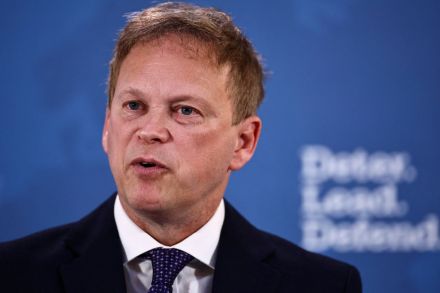
Grant Shapps this morning made his first major speech as Defence Secretary, in the wake of the US/UK airstrikes on Friday against the Houthis in Yemen. The headline announcement at Lancaster House was confirmation that the UK will send 20,000 troops to join one of Nato’s largest military drills since the Cold War, from Eastern Europe to the Arctic Circle. ‘Today our adversaries are busily rebuilding their barriers, old enemies are reanimated, battle lines are being redrawn, the tanks are literally on Ukraine’s lawn,’ warned Shapps as he outlined plans for Operation Steadfast Defender. ‘The foundations of the world order are being shaken to their core.

Why few voters like Sunak

14 min listen

New polling from JL Partners shows how Rishi Sunak has changed, in the eyes of the public. They found that while Sunak was initially seen as a direct ‘breath of fresh air’, he is now frequently described as ‘out of touch’, ‘spineless’ and ‘false’. To discuss what went wrong for the PM, James Heale and Katy Balls are joined by James Johnson, the co-founder of JL Partners.

Why Trump can’t be stopped

36 min listen

This week: can anyone stop Trump?  The Spectator’s deputy editor Freddy Gray takes a look at Trump's ‘second coming’ in his cover story. He says that despite Trump’s legal troubles, he is almost certain to receive the Republican nomination. Freddy joins the podcast alongside Amber Duke, who also writes in the magazine this week about the brides of trump: the women hoping to receive the nod as his running mate. Also this week: the old trope is that there is nothing more ex than an ex prime minister, but what about an ex MP?

Can the economy win Tory votes?

11 min listen

James Heale speaks to Kate Andrews and Katy Balls about Rishi Sunak's new strategy to focus more on the economy as the election year kicks off. Can Rishi Sunak convince the public that he is the best man for the job? And how much control does the government really have when it comes tackling the economy?

At-risk Tories are looking to board the green gravy train

Tory MPs are already war-gaming what follows the election. Defeat seems certain, but then what? There will be an almighty tussle in which up to 200 colleagues scramble for a handful of the same sort of jobs: consultancies, directorships and advisory gigs. In these Tory Hunger Games, the clever thing to do is to start taking the best jobs now. Chris Skidmore, for example, is not hanging about. His 14 years in parliament involved a three-month stint as interim energy minister, after which he wrote a book about net zero. The green job offers came thick and fast. He was made a professor of practice in net zero policy at Bath University and bagged two £80,000-a-year advisory gigs, all while collecting his full-time MP’s salary representing constituents in Kingswood.

Paula Vennells hands back her CBE

10 min listen

Paula Vennells, the former head of the Post Office, has handed back her CBE. Will her decision put more pressure on politicians like Ed Davey, the Liberal Democrat leader who has so far refused to resign? Max Jeffery speaks to Katy Balls and James Heale.

The problem with Chris Skidmore’s resignation

12 min listen

Chris Skidmore has formally announced his resignation today, triggering another by-election in the process. His departure from the Commons is in protest against the government's bill on new oil and gas licenses, which is set to be debated later this evening. What's the reaction been in Westminster? James Heale speaks to Katy Balls and Fraser Nelson. Produced by Oscar Edmondson. The Spectator is hiring! We are looking for a new producer to join our broadcast team working across our suite of podcasts – including this one – as well as our YouTube channel Spectator TV. Follow the link to read the full job listing: https://spectator.

How will Sunak and Starmer run their election campaigns?

15 min listen

Rishi Sunak has all but confirmed that this year’s general election will take place in autumn. How will the Prime Minister, and Keir Starmer, run their campaigns? James Heale speaks to Fraser Nelson and Katie Perrior, former director of communications for Theresa May, and now a director at iNHouse Communications.

Svitlana Morenets, James Heale and Theo Hobson

17 min listen

This week: Svitlana Morenets explains why Ukrainians can't trust Putin's hollow promises (00:57), James Heale reads his politics column on Rishi's January blues (05:42), and Theo Hobson describes the joys of middle-aged football (10:54).  Produced and presented by Oscar Edmondson.

Why aren’t the Lib Dems doing better?

16 min listen

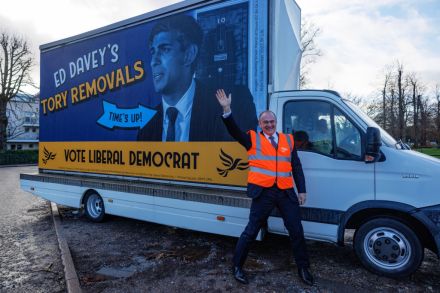
The Liberal Democrats began their 2024 campaigning this week by unveiling a huge poster branding them as ‘Ed Davey’s Tory Removal Service’, but they will have to be more than just the 'none of the above party' if they hope to make a difference come the election. What do the Lib Dems stand for? And can they turn by-election success into election success?  Oscar Edmondson speaks to James Heale and Nick Tyrone, author of the This Week in Brexitland substack. Produced by Oscar Edmondson. The Spectator is hiring! We are looking for a new producer to join our broadcast team working across our suite of podcasts – including this one – as well as our YouTube channel Spectator TV. Follow the link to read the full job listing: https://spectator.

Did Sunak steal Starmer’s thunder?

18 min listen

Keir Starmer delivered his new year's speech, promising 'Project Hope' ahead of the general election. Critics claimed the speech was rhetoric heavy, low on policy. Having attacked the Prime Minister for dithering over the May general election, Rishi Sunak later announced it was his 'working assumption' to hold the general election in autumn 2024. Was this a communications win for No.10? And can Starmer still garner support by playing it safe? Natasha Feroze speaks to James Heale and former Labour advisor John McTernan.  The Spectator is hiring! We are looking for a new producer to join our broadcast team working across our suite of podcasts – including this one – as well as our YouTube channel Spectator TV. Follow the link to read the full job listing: https://spectator.

Starmer returns to old favourites in New Year’s speech

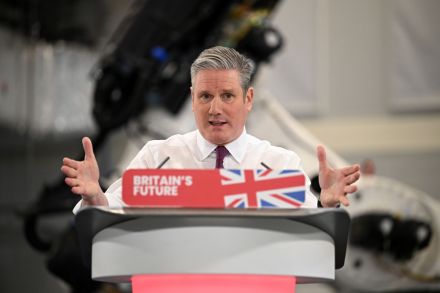
There was a distinctly familiar feel to Keir Starmer's speech today. Preaching change in front of heavy machinery, it was a near-identical setting to the speech he gave this same week last January. For a New Year's speech, it was devoid of new policy but there were plenty of old favourites: the Great British Energy and planning reform pledges that underpinned his last two conference addresses, Labour renewal, Tory cronyism and the obligatory reference to Liz Truss (but no named mention of Rishi Sunak). There was enough in it to get decent write-ups, with the Telegraph focusing on his rejection (again) of Jeremy Corbyn's politics while the Guardian stressing his plans for increased transparency.