James Heale

James Heale

James Heale is The Spectator’s deputy political editor.

Who will replace Mark Drakeford as first minister?

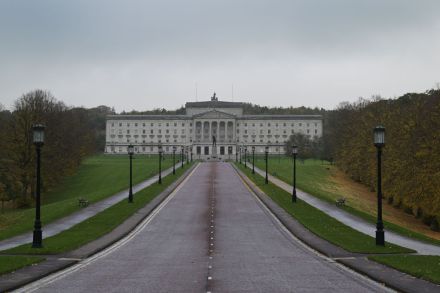
Mark Drakeford has announced this morning that he will stand down as Welsh Labour leader, triggering a leadership contest for a new first minister. The veteran politician pledged at the most recent Welsh elections in 2021 that he would step down mid-parliament. He has chosen to do so today on the fifth anniversary since he was sworn in as FM. Drakeford’s resignation follows growing pressure on him to announce his retirement plans. Welsh Labour is arguably Britain’s most successful electoral force, governing Cardiff Bay since the advent of Welsh devolution some 24 years ago. But in recent weeks, Drakeford has been the subject of some rare negative briefings in the press, amid increased scrutiny over his plummeting popularity.

Sunak wins the Rwanda vote – but the battle is far from over

7 min listen

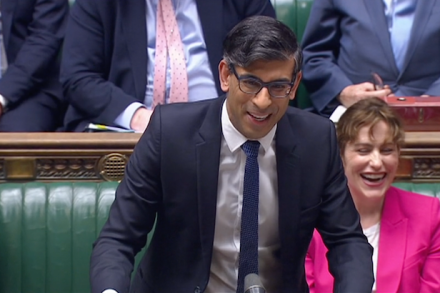
The government has won this evening’s vote on the ‘safety of Rwanda’ bill comfortably at 313 votes to 269 against. This means Rishi Sunak has managed to pass his bill at second reading after a day of negotiations with the various Tory tribes. Not a single Tory MP voted against the bill but 38 conservative MPs abstained. Katy Balls and James Heale discuss what comes next.

What if Rishi Sunak loses his crunch Rwanda vote?

13 min listen

Rishi Sunak faces the first major test of his premiership today over the second reading of the Rwanda bill. How could the day play out? And what will happen if the Prime Minister loses the vote? Natasha Feroze speaks to Katy Balls and James Heale.

Tory tribes gear up for Rwanda clash

The next 48 hours could be among the most important of Rishi Sunak’s premiership. His flagship Rwanda Safety Bill will get its second reading in the House of Commons on Tuesday, with MPs expected to vote on it in the evening. But before that there will be a day of tense meetings in rooms across the parliamentary estate as various Tory tribes gather to discuss the Bill and whether they can support it. Much of the attention is focused currently on the right of the party. A quintet of factions will meet at noon on Monday under the auspices of the European Research Group to hear the conclusions of its ‘Star Chamber’ of lawyers.

Do the Tories have a death wish?

13 min listen

Nick Robinson asked Suella Braverman on the Today programme this week whether the Tories had a death wish. She said no. But why is the party, when it's doing so badly in the polls, fighting among itself? James Heale speaks to Katy Balls ands Craig Oliver, former director of communications in No. 10.

James Heale, Michael Simmons and Mary Wakefield

18 min listen

This week: James Heale reads his politics column on Sunak's migration minefield (00:55), Michael Simmons says that Scotland's 'progressive' teaching methods have badly backfired (05:53), and Mary Wakefield asks: why can't I pray in Westminster Abbey? (11:40) Produced and presented by Oscar Edmondson.

Is Rishi’s Rwanda Bill doomed?

10 min listen

Rishi Sunak is stuck in a migration quagmire and will be spending the weekend drumming up support from MPs ahead of the vote on his amended Rwanda bill on Tuesday. He will be hoping for a Christmas miracle in the form of support from both One Nation MPs and those on the right of the party. Will Tuesday's vote be a de facto confidence vote in the prime minister?  Cindy Yu speaks to Katy Balls and James Heale.

Sunak defends Rwanda plans under fire

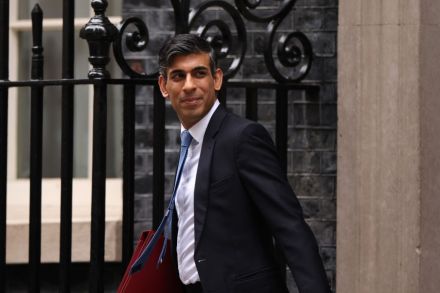
After the resignation of Robert Jenrick last night, Rishi Sunak sought to get on the front foot this morning with a press conference in No. 10. The Prime Minister cut a somewhat frustrated figure as he defended his new Rwanda legislation, insisting that it ‘blocks every single reason that has ever been used to prevent flights.’ ‘The only extremely narrow exception will be if you can prove with credible and compelling evidence that you specifically have a real and imminent risk of serious and irreversible harm’ Sunak told reporters. If the government face challenges from the European Court of Human Rights in Strasbourg, Sunak repeated that he would not allow a foreign court to block flights.

Jenrick’s departure prompts mini-reshuffle

The post of Immigration Minister in 2023 has the potential to be as much of a poisoned chalice as the role of Brexit Secretary in 2018. Robert Jenrick's departure last night created a difficult problem for No. 10. Anyone succeeding him would need to be unshakeable on immigration: a 'sound as a pound' right-winger, in the words of one Brexiteer. This morning we have our answer: Tom Pursglove, perhaps the most right-wing member left in Sunak's government takes up the newly-created post of Minister for Legal Migration and Delivery. In a classic bit of Whitehall jiggery-pokery, Jenrick's role has been split in two. Pursglove takes the legal brief while Michael Tomlinson becomes the Minister for Illegal Migration.

Sunak unveils his ‘emergency legislation’ on Rwanda

Three weeks after the Prime Minister's ‘emergency legislation’ to make the Rwandan scheme viable, tonight it is finally here. The seven-page Bill was published shortly before Rishi Sunak's address to the 1922 Committee and James Cleverly's statement to the House of Commons. The Bill's solution to the Supreme Court verdict last month is to disapply elements of the Human Rights Act which would have exposed the government to legal challenges, while also declaring in law that Rwanda is a 'safe country.' It will let ministers override European Court of Human Rights edicts to block planes from taking off – like the so-called 'pyjama injunctions' of June 2022.

Boris faces the music at the Covid inquiry

12 min listen

It was a big day in the Covid inquiry as Boris Johnson gave evidence for the first time. Just as Johnson launched into an apology during his opening statement, protestors off-camera made their presence known. There were also revelations concerning the attention he paid to Sage minutes and Cobra meetings and the former prime minister defended his decision not to lock down sooner. What else did we learn? Was this a turning point in the perception of the inquiry?  Oscar Edmondson speaks to James Heale and Michael Simmons.

Badenoch overhauls gender recognition list

Ahead of Suella Braverman's big statement this afternoon, it was the turn of another Brexiteer to face the Commons. Kemi Badenoch appeared before the House in her capacity as Minister for Women and Equalities, to update MPs on people who have changed gender under different regimes abroad. Under plans announced today, foreign citizens will be forced to comply with tougher British rules if they move to the UK. This includes providing medical reports to get a gender recognition certificate. The change, in Badenoch's words, was 'long overdue' with the list last updated in 2011. Over the past dozen years, much of the Western world has significantly altered their systems for gender recognition, with New Zealand adopting self-identification.

Sunak is stuck in a migration minefield

At last week’s Spectator Parliamentarian Awards, Suella Braverman was awarded ‘Disruptor of the Year’. In her speech, which seemed to preview her Commons statement on Wednesday, the former home secretary joked that the prize ought, instead, to go to the man responsible ‘for disrupting my plans to cut the [immigration] numbers and deliver our manifesto pledge – the Prime Minister’. Rishi Sunak’s assembled supporters didn’t laugh. On the issue of migration, battle lines have been drawn between the Tory tribes. The night before Braverman’s speech to the Commons, a trio of right-wing groups assembled to plot their strategy. Members were drawn from the European Research Group, the Common Sense Group and the New Conservatives.

Are the Tories too little too late on migration?

14 min listen

As James Cleverly meets leaders in Rwanda to sign a new asylum treaty, the government has laid out a series of plans to bring down legal migration. Some Tories on the right would like the measures to go further, but are these policies too little too late? James Heale speaks to Katy Balls and Spectator writer, Patrick O'Flynn.

Cleverly to sign fresh Rwanda deal

Fresh from his big statement in the Commons, James Cleverly has landed this morning in Kigali. The Home Secretary’s focus yesterday was on legal migration and bringing down the net total down by 300,000; today it’s on illegal migration and fixing the Rwanda scheme. Three weeks ago, the Supreme Court ruled it unlawful on the grounds that Rwanda is not a safe country to process asylum claims. In response, ministers are adopting a two-pronged approach. The first is a new treaty with Rwanda to stop asylum seekers being deported back to their country of origin. This is the purpose of Cleverly’s visit today, with Kigali now expected to receive an additional £15 million on top of the £140 million already budgeted for the scheme.

Cleverly promises to cut migration by 300,000

'Migration to this country is far too high and it needs to come down', began James Cleverly at the despatch box this afternoon. It has been a difficult three weeks since his appointment as Home Secretary, with the Supreme Court's rejection of the Rwanda scheme and then the publication of record migration numbers. It was the latter subject of legal migration that dominated this afternoon's debate in the Commons, ahead of Cleverly's expected visit to Kigali in the coming days. The Home Secretary's tone was hawkish on the subject, with repeated reference to migration being too high. That reflects a concern in his party that Rishi Sunak's government is too blasé about the 1.2 million people who arrived in the country between June 2022 and June 2023.

Was Starmer right to praise Thatcher?

11 min listen

This weekend Keir Starmer's team took the opportunity to discuss Margaret Thatcher in an op-ed for the Sunday Telegraph. Whilst Starmer also praised other former prime ministers – such as Tony Blair and Clement Attlee – his admission that ‘Margaret Thatcher sought to drag Britain out of its stupor by setting loose our natural entrepreneurialism', has ruffled a few feathers in the Labour party. Could this be a genius piece of politics to reach out to those on the right? Or is it a misfire?  Also on the podcast, Rishi Sunak has started the week with the news that he has recorded his lowest rating ever in the latest ConservativeHome league table, racking up a dire -25.4 among card-carrying Conservatives. Can he turn it around?

Starmer risks a backlash with his Thatcher praise

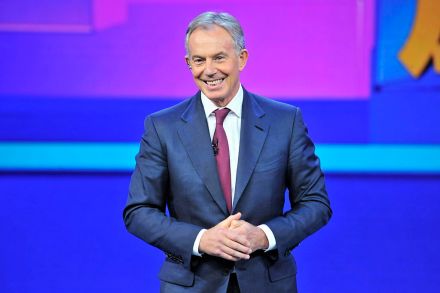
Two Telegraph stories in successive days illustrate Labour's dilemma. Today the paper gives a favourable write-up to the party's Australian-style scheme for AI to analyse hospital scans. It comes after the Sunday edition yesterday splashed Keir Starmer's praise for Margaret Thatcher – a tactic they have previously deployed in the same paper to great success. Alongside warm words for Tony Blair and Clement Attlee, Starmer wrote that the Tory premier effected 'meaningful change' in the UK as she 'sought to drag Britain out of its stupor by setting loose our natural entrepreneurialism.' Both stories are positive for Labour, making use of the opposition's relatively-few tools to try to dominate the news agenda. The key difference between the two though is the sums involved.